Updated: September 2026
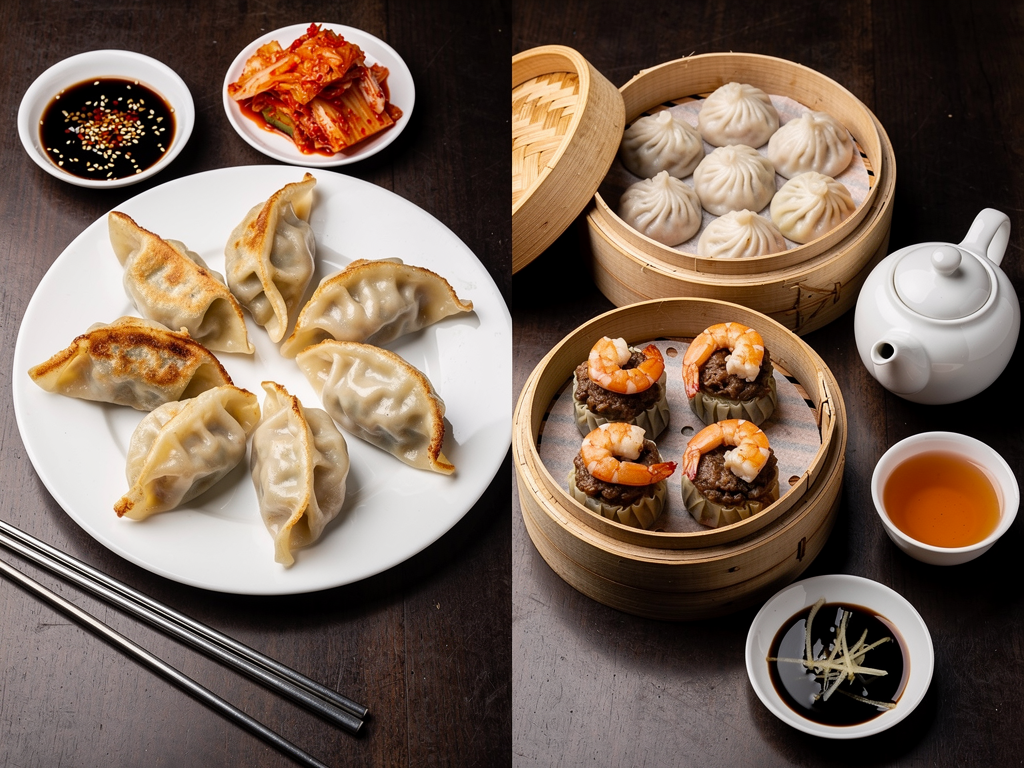
Mandu vs dim sum is one dumpling against a whole meal. Mandu (만두) is the Korean dumpling; dim sum is the Cantonese format of many small dishes, of which dumplings are only a part. On Dubai menus the difference is printed as a unit: dim sum is counted by the piece — Din Tai Fung prints “6pcs” on every line — and mandu is counted by the pot, from a AED 35 plate to a AED 147 casserole.
TL;DR
– Dim sum prints the piece: Din Tai Fung 6 pieces for AED 36–54, one truffle xiao long bao for AED 20; Royal China baskets AED 25–37.
– Mandu prints the pot: plate 35–48, soup 58–59, hot pot 90–110, casserole 78–147.
– Both cuisines have an unlimited format and both wrote the same leftover rule.
– Mukbang Shows sells mandu as a AED 48 plate and a AED 59 soup, beef and chicken only; it sells no dim sum.
What is the difference between mandu and dim sum?
Dim sum is a meal category, not a dish. The encyclopaedia entry on dim sum calls it “a large range of small Chinese dishes that are traditionally eaten in restaurants for brunch”, “commonly associated with Cantonese cuisine”, born in tenth-century Canton’s teahouses where travellers took “small-portion meals with tea called yum cha” — literally “one cup, two pieces”. The dumplings inside it are har gao (prawn), siu mai, xiao long bao and pot stickers, but so are buns, cheung fun rice rolls, turnip cake, rice pots and egg tarts.
Mandu is one dumpling. The encyclopaedia entry on mandu covers the wheat wrapper around minced meat, tofu, glass noodles, spring onion and cabbage or kimchi, and the Korean habit of naming it by how it is cooked: gun-mandu pan-fried, jjin-mandu steamed, mul-mandu boiled, mandu-guk in soup, mandu-jeongol in a casserole. It is a side, a soup or a pot inside a bigger Korean meal, never the meal itself — our mandu explainer walks through every form.
So the fair mandu vs dim sum comparison is mandu against the dim sum dumpling, and the more useful one is how each cuisine counts. That second question is answered on every Dubai menu.
Why is dim sum counted by the piece and mandu by the pot?
Because “one cup, two pieces” is the format’s founding unit, and Dubai’s dim sum menus still print it. Din Tai Fung’s Mall of the Emirates listing prints a count on every dumpling line: Chicken XiaoLongBao (6pcs) AED 41, Crab and Chicken XiaoLongBao (6pcs) 48, Mutton XiaoLongBao (6pcs) 43, Steamed Beef Dumplings (6pcs) 41, Steamed Chicken and Veg. Dumplings (6pcs) 36, Shrimp and Chicken Shumai (6pcs) 46, Shrimp and Chicken Pot Stickers (6pcs) 54 — and a Truffle Chicken Xiaolongbao sold as “1 piece” for AED 20. Buns are “(1pc)”: Chicken and Vegetable 17, Juicy Lamb 22.
Royal China’s own dim sum menu in DIFC prices every steamed basket between AED 25 and 37 — Prawn Dumplings 29, Shanghai Xiao Long Bun 35, Chicken & Radish 27, Vegetarian 25, Steamed Chilli Chicken 37 — and prints “All prices exclude VAT & DIFC authority fees”.
Korean menus count the vessel instead. Hanok in International City prints Kimchi Mandu and Leek Mandu at AED 35 a plate, each “Pan-Fried Korean … Dumplings Served With Sauce”, and a Mando Hot Pot at AED 90 regular or 110 large. Mannaland in Satwa prints Tteok Manduguk, “Korean dumpling soup”, at AED 58 and Mandu Jeongol, “Dumplings cooked in casserole”, at AED 78 regular or 147 large. Mukbang Shows prints Mandu (Fried or Steamed) at AED 48 and Tteok Mandu Guk at AED 59. Not one of those lines prints a piece count. The only Korean menu read for this guide that does is a hotel’s: Nuri Grill & Bar at the Hilton Abu Dhabi Yas Island prints Fried Dumplings and Steamed Dumplings at “5pcs” for AED 70.
The clearest printed price of a dumpling in the UAE, on either side, is on Mukbang’s menu: Tteok Mandu Guk is AED 59 and Tteokguk — the same rice-cake soup without the dumplings — is AED 51. The dumplings cost AED 8.
Mandu vs dim sum: what it costs in Dubai and Abu Dhabi
Read live in September 2026. Din Tai Fung was read on Deliveroo; Royal China, Hanok, Mannaland, Nuri and Mukbang on their own menus.
| Dumpling | Venue | Price | Unit |
|---|---|---|---|
| Chicken XiaoLongBao | Din Tai Fung, Mall of the Emirates | AED 41 | 6 pieces (AED 6.83 each) |
| Truffle Chicken Xiaolongbao | Din Tai Fung | AED 20 | 1 piece |
| Shrimp and Chicken Shumai | Din Tai Fung | AED 46 | 6 pieces |
| Shrimp and Chicken Pot Stickers | Din Tai Fung | AED 54 | 6 pieces |
| Prawn Dumplings (har gao) | Royal China, DIFC | AED 29 | basket, count not printed; ex-VAT and DIFC fees |
| Shanghai Xiao Long Bun | Royal China | AED 35 | basket, ex-VAT and DIFC fees |
| Roast Chicken Buns | Royal China | AED 27 | basket |
| Kimchi Mandu / Leek Mandu | Hanok, International City | AED 35 | pan-fried plate |
| Mandu (Fried or Steamed) | Mukbang Shows, five branches | AED 48 | plate, beef and chicken |
| Tteok Mandu Guk | Mukbang Shows | AED 59 | soup (Tteokguk without dumplings: 51) |
| Tteok Manduguk | Mannaland, Satwa | AED 58 | soup |
| Fried or Steamed Dumplings | Nuri Grill & Bar, Yas Island | AED 70 | 5 pieces (AED 14 each) |
| Mando Hot Pot | Hanok | AED 90 / 110 | regular / large |
| Mandu Jeongol | Mannaland | AED 78 / 147 | regular / large casserole |
The Cantonese side runs AED 20 to 54 and the whole of it is a starter-sized basket; the Korean side runs AED 35 to 147 because the same dumpling climbs from a plate into a soup, a hot pot and a table casserole. A per-piece price can only be computed where a count is printed — Din Tai Fung at AED 6.83 a piece, Nuri at AED 14 — and nowhere else.
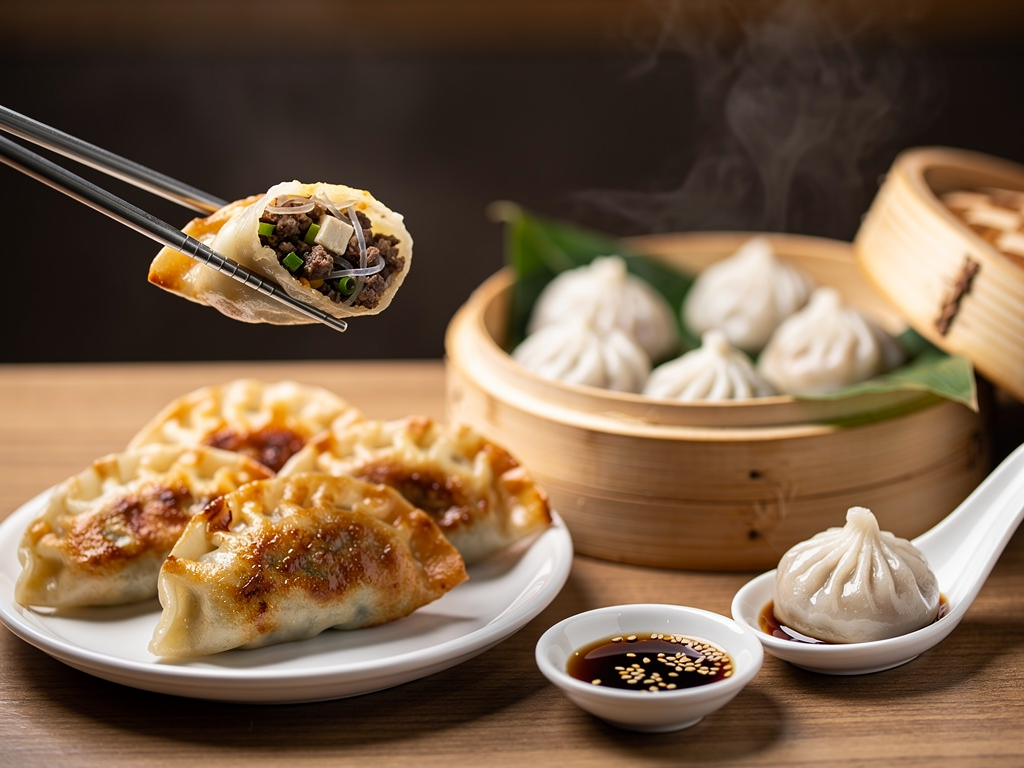
Where does the dumpling sit on the menu?
On a dim sum menu the dumpling is the front page. Royal China’s own menu is a dim sum menu — steamed, fried, cheung fun, rice pots, desserts — with the à la carte on a separate card, and its business lunch (AED 128, or AED 88 for soup with a main, Monday–Friday 11:30am–2pm) opens with “a selection of steamed dim sum (3 pieces)”. Din Tai Fung’s dumplings lead its listing.
On a Korean menu the dumpling is one line among many. Mukbang files Mandu at AED 48 under Street food beside Tteokbokki 55, Rabokki 49, Eomuk Tang 49 and Gimmari 49, then puts the same dumplings into Tteok Mandu Guk under the stews. Hanok’s mandu sit in its fried section beside the pancakes and cutlets, and its Mando Hot Pot in the hot-pot list. Mannaland’s mandu appear only as a soup and a casserole. A Korean menu has no equivalent of going out for yum cha; on every menu read here the dumpling is something the table has beside the meat, the stew or the rice.
That is also the format difference in one sentence: dim sum is many small dishes ordered by the basket and eaten with tea, usually at brunch; mandu is a side or a pot inside a Korean meal built around a grill or a stew.
Both cuisines have an unlimited format — and the same leftover rule
The Cantonese unlimited format is the yum cha brunch. Royal China’s own dim sum menu prints “Brunch (Friday & Saturday) 12:00pm – 3:30pm”, and Time Out Dubai’s dim sum feature describes its “weekly yum cha sessions, featuring unlimited dim sum (though there are penalties for wastage)”. The brunch price is not on the readable menu — confirm directly.
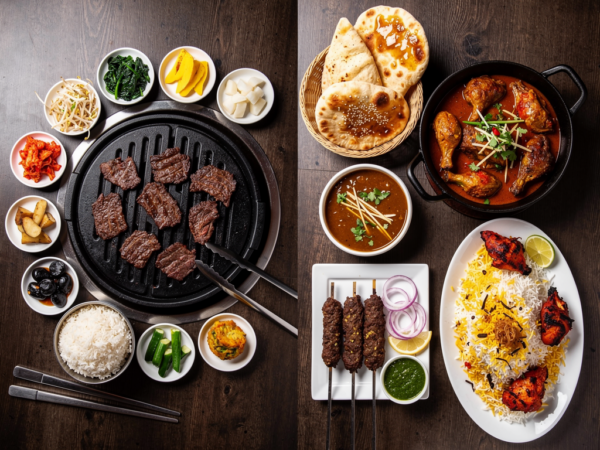
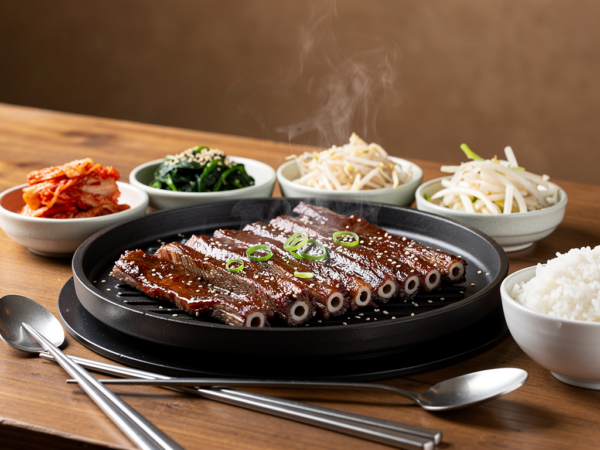
The Korean unlimited format is the per-head seat. Mukbang Shows prints Gangnam AED 69 (Deira, Muroor Road, Electra Street) or 79 (JBR, DWTC), Daegu 89/99, Jeju 99/109 and Bukchon Hanok 129 everywhere — seven kinds of beef and chicken BBQ, eight banchan, two gimbap, soup and rice, minimum two — and “AED 60 leftover charge”.
Two cuisines, one rule: eat what you order. The difference is what the format is built around — baskets of small dishes carried to the table, or meat the diner grills — and where the dumpling sits in it: at the centre of the yum cha table, at the edge of the Korean one.
Is mandu vs dim sum halal in the UAE? The filling test runs both ways
The Cantonese textbook fillings are pork and shrimp: siu mai is pork-and-shrimp, char siu bao is barbecued pork. Dubai’s readable dim sum menus have rewritten both lines. Royal China prints “Minced Chicken & Shrimp Dumplings” on its siu mai line (乾蒸燒賣) at AED 29 and “Roast Chicken Buns” on its char siu bao line (蠔油叉燒包) at AED 27. Din Tai Fung prints “Steamed Shrimp and Chicken Shumai” and, across its whole dumpling section, only chicken, beef, mutton, lamb, shrimp, crab, scallop, fish, cuttlefish and vegetable fillings. Neither menu prints pork. Royal China also prints a “Chinese Cured Sausage & Chicken Rice Pot” at AED 39 without naming the meat of the sausage — ask.
The Korean textbook filling is pork and tofu, and one UAE menu still prints it: Nuri Grill & Bar’s own menu lists its dumplings as “Beef/Pork”. Hanok’s two plates are vegetarian by name (kimchi, leek). Mannaland’s lines do not name the meat. Mukbang Shows’ mandu are beef and chicken only, on a menu with no pork anywhere and no alcohol served.
So the halal question is identical on both sides: read the filling line, then confirm directly. Neither cuisine gets a ruling, and no venue above is being called halal or otherwise — the lines are what the menus print. Nuri is a licensed venue (alcohol served) per its own wine menu; Royal China sits in DIFC and its menu prints DIFC fees — confirm directly on licensing; Din Tai Fung is a mall chain with no label printed.
Which should you order, and when?
Order dim sum when the dumpling is the meal. A table of four at Din Tai Fung can put six baskets down — chicken xiao long bao 41, beef dumplings 41, shumai 46, pot stickers 54, a lamb bun 22 each — and that is lunch. Royal China’s Friday–Saturday brunch is the same idea without a count. This is a brunch format, priced by the piece, built to be shared across many small dishes.
Order mandu when the dumpling is one part of a Korean meal. Hanok’s AED 35 kimchi mandu is the cheapest plate in the country; Mannaland’s AED 147 mandu jeongol is a whole table’s dinner built on the same dumpling. At Mukbang the AED 48 plate or the AED 59 soup sits beside unlimited beef and chicken BBQ, eight banchan, two gimbap and rice for AED 69 a head — see our guide to mandu in Dubai and our guide to mandu in Abu Dhabi for where to find each form.
Order by filling if that is the question that matters: on both sides it is printed, and on both sides the answer in Dubai is mostly chicken, beef and shrimp.
Where Mukbang Shows fits, and where it doesn’t
Mukbang sells no dim sum — no har gao, no siu mai, no xiao long bao, no cheung fun, no baskets — and only two forms of mandu, a plate and a soup. There is no mandu hot pot (Hanok 90/110) and no mandu jeongol (Mannaland 78/147) on its menu, and it prints no piece count on the AED 48 plate. For a dumpling brunch of many small dishes, Din Tai Fung and Royal China are the right doors.
Mukbang wins when the dumpling is one line on a bigger halal Korean table: a AED 48 plate of fried or steamed mandu, or the AED 59 Tteok Mandu Guk, beside seven kinds of beef and chicken BBQ, eight banchan, two gimbap, soup and rice for AED 69 a head (79 at JBR and DWTC), with beef-and-chicken fillings and nothing to ask about. Deira is on Al Ittihad Road in Port Saeed (+971-4-886-4494); JBR at Bahar 7 on The Walk (+971-54-523-1898); Love Mukbang DWTC opposite World Trade Centre metro (+971-54-524-5904); in Abu Dhabi, Muroor Road (+971-50-158-9433) and Electra Street (+971-2-564-0446).
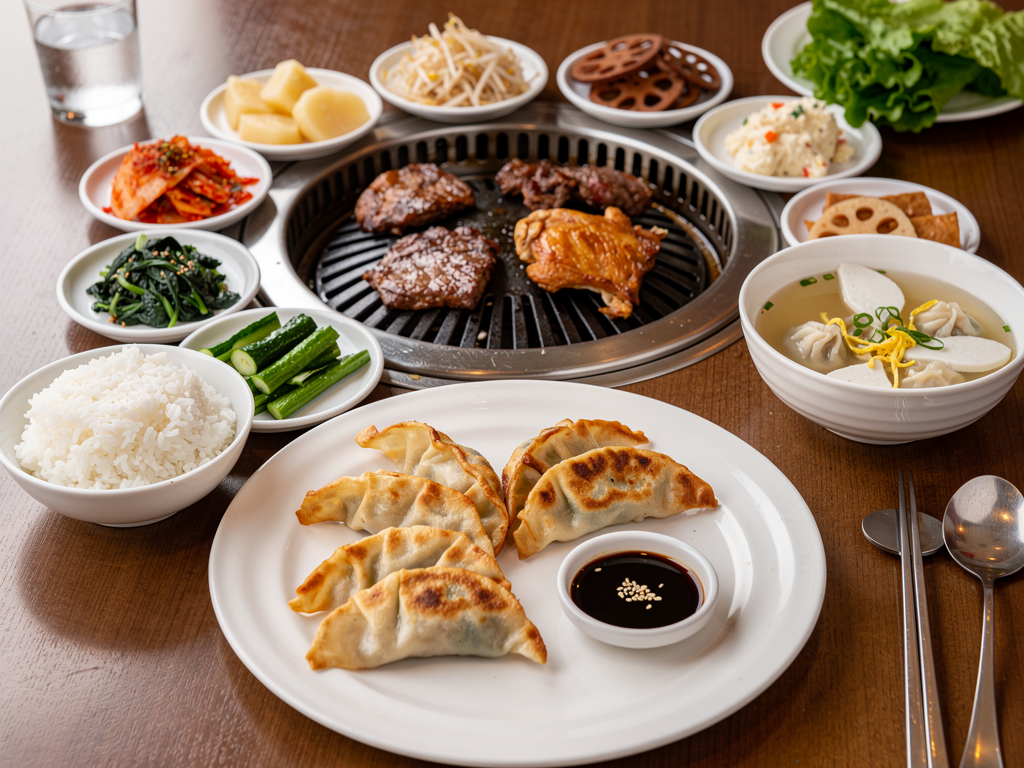
The rest of the Korea-vs-China dumpling question
This page is one spoke of our Korean food vs Chinese food guide, beside Korean fried rice vs Chinese fried rice and tangsuyuk vs sweet and sour chicken. The Korea-vs-Japan version is mandu vs gyoza and the Arabic one is mandu vs sambousek.
The one-paragraph answer to mandu vs dim sum: dim sum is a Cantonese meal of many small dishes counted by the piece — six xiao long bao for AED 41, one for AED 20, a DIFC basket for AED 25–37 — eaten with tea, often as an unlimited brunch; mandu is one Korean dumpling counted by the pot — a AED 35–48 plate, a AED 58–59 soup, a AED 90–147 pot — eaten beside a grill or a stew. On Dubai menus both have rewritten their pork lines as chicken, and both charge you for what you leave.
FAQ
Is mandu the same as dim sum?
No. Mandu is a single Korean dumpling; dim sum is a Cantonese meal format of many small dishes — dumplings, buns, rice rolls, rice pots, tarts — served in baskets with tea. The closest like-for-like is mandu against a dim sum dumpling such as a pot sticker or xiao long bao.
How much does mandu vs dim sum cost in Dubai?
Dim sum: AED 36–54 for six pieces at Din Tai Fung, AED 20 for one truffle xiao long bao, AED 25–37 a basket at Royal China (ex-VAT). Mandu: AED 35 a plate at Hanok, 48 at Mukbang Shows, 58–59 as a soup, 70 for five pieces at Nuri, 90–110 as a hot pot, 78–147 as a casserole.
Why does dim sum print a piece count and mandu not?
Because dim sum’s founding unit is the piece — yum cha means “one cup, two pieces” — and Dubai menus still print it (Din Tai Fung “6pcs”, “1 piece”). Korean menus price the vessel: plate, soup, hot pot, casserole. Only the hotel menu at Nuri prints “5pcs”.
Is dim sum in Dubai made with pork?
The two menus read for this guide do not print it: Royal China’s siu mai line reads “Minced Chicken & Shrimp” and its char siu bao line “Roast Chicken Buns”; Din Tai Fung’s dumpling section prints chicken, beef, mutton, lamb, shrimp, crab, scallop, fish and vegetable fillings. That is what the menus print, not a halal ruling — confirm directly.
Is mandu halal?
At Mukbang Shows, yes by construction — beef and chicken only, no pork anywhere, no alcohol. Elsewhere read the line: Hanok’s are kimchi and leek, Mannaland’s do not name the meat, and Nuri’s own menu prints “Beef/Pork”.
Does Mukbang Shows serve dim sum?
No. Mukbang serves mandu as a AED 48 fried-or-steamed plate and inside Tteok Mandu Guk at AED 59, and no har gao, siu mai, xiao long bao, cheung fun or buns.
Is there an unlimited dim sum in Dubai like unlimited Korean BBQ?
Yes — the yum cha brunch. Royal China’s own menu prints a Friday–Saturday brunch window and Time Out describes its unlimited dim sum with penalties for wastage; the price is not printed, so confirm directly. Mukbang’s unlimited Korean BBQ is AED 69–129 a head with a AED 60 leftover charge.