Updated: August 2026
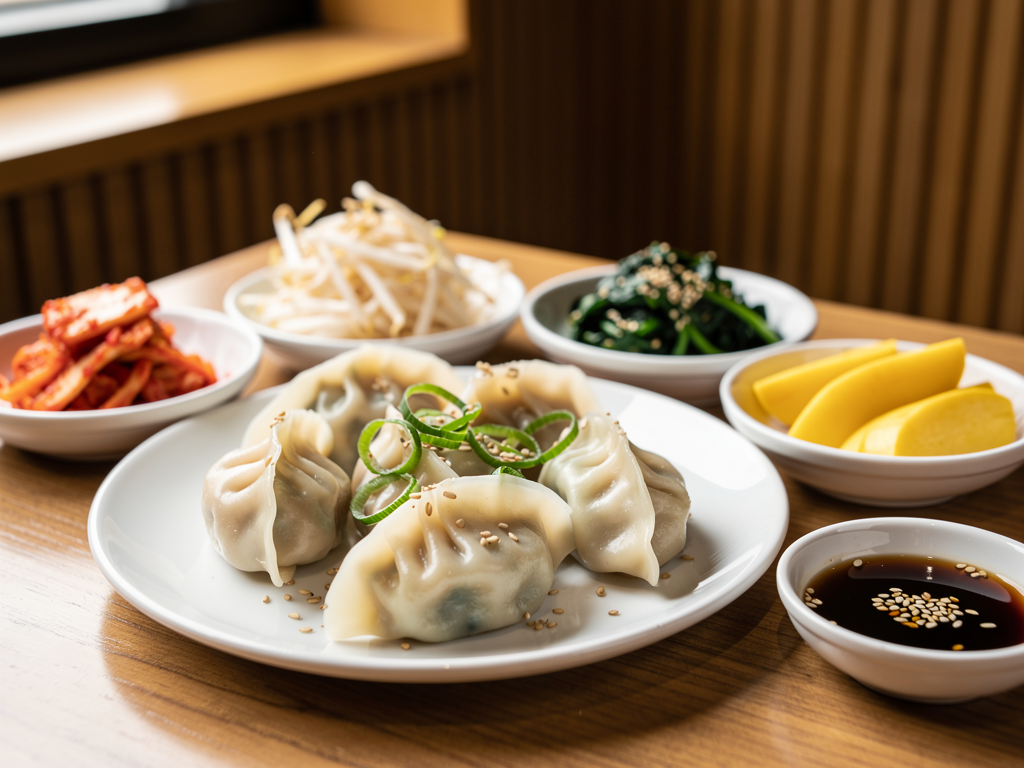
Mukbang Shows on Muroor Road and Electra Street has the best mandu in Abu Dhabi at AED 48, on a narrow basis: it is the only kitchen in the city publishing a standalone plate of dumplings with a price. Everywhere else, mandu is sold inside something — a soup or a hot pot.
TL;DR
– Best plate: Mukbang Shows — AED 48, fried or steamed, five fillings, the only published dumpling plate in the city
– Best pot: Manna Land — Mandu Jeongol AED 78 regular / AED 147 large, a dumpling hot pot nobody else offers
– Best soup: Madang — Tteok Mandoo Guk, tied on its own menu to the Seollal tradition
In Abu Dhabi, dumplings are sold inside things
Search every published Korean menu in the capital and a pattern falls out immediately. Tteok manduguk, the rice cake and dumpling soup, appears at three separate kitchens. Mandu jeongol, a dumpling hot pot, appears with a published price. A plain plate of dumplings you order as a starter appears on exactly one published menu with a number attached.
That inversion is the whole story of this guide, and it has a real explanation behind it — covered further down. It also means this page cannot be a taste ranking. Nobody has eaten every dumpling in Abu Dhabi, and this article is not going to pretend otherwise. What it can do is map which formats actually exist, where, and at what price.
Which restaurant has the best mandu in Abu Dhabi?
Mukbang Shows, for the plate format specifically. The live menu lists Mandu at AED 48, described verbatim as “Fried or steamed. Kimchi, vegetable, beef, chicken or seafood.” That is two cooking methods and five named fillings, with a price attached — and no other Abu Dhabi Korean menu publishes a standalone dumpling plate at all.
It is also 100% halal, beef and chicken only, with no pork of any kind on the premises. That matters here more than for most dishes, because canonical mandu is a pork dish — see the halal section below. The same menu carries Tteok Mandu Guk at AED 59, and the wider street-food section runs Tteokbokki AED 55, Rabokki AED 49, Gimmari AED 49, Eomuk Tang AED 49 and gimbap from AED 41.
Three honest limitations, and the first is the one that will annoy you most:
- Nobody publishes a piece count. Not Mukbang, not anyone else in the city. At AED 48 for what is nominally a snack plate, the number of dumplings is the single fact a reader most wants and cannot get from any published menu in Abu Dhabi. Ask when you order.
- It is one listing, not a range. You choose the method and filling when ordering; you do not get gun mandu and jjin mandu as separate dishes to compare.
- There is no mandu jeongol. Mukbang does not offer the dumpling hot pot at all, and for a table of four that is a genuinely different and arguably better order — which is why Manna Land takes that title below.
Two more things worth flagging. Mandu is not included in any all-you-can-eat tier — those run Gangnam AED 69, Daegu AED 89, Jeju AED 99 and Bukchon Hanok AED 129, minimum two people — so budget for it separately. And there is an older page on the Mukbang site listing five separate mandu types and a list of dipping sauces; that does not match the current live menu, which carries one mandu item. Go by the live menu, or call Muroor Road on +971-50-158-9433 or Electra Street on +971-2-564-0446.
Where can you get a dumpling hot pot in Abu Dhabi?
Manna Land in Al Nahyan, and only Manna Land. Its own site lists Mandu Jeongol at AED 78 regular and AED 147 large — a wide shared pan cooked at the table with dumplings in it, filed in its soup section beside nakji jeongol, haemul jeongol and the syabeu syabeu hot pots. No other kitchen in the capital publishes this format, Mukbang included.
The revealing part is what Manna Land does not publish. It also lists Tteok Manduguk at AED 58 — and no standalone mandu plate at any price. This is the only Korean restaurant in Abu Dhabi that puts a complete itemised priced menu on its own website, fifteen years into trading, with nine noodle dishes and six pan-fried jeon all numbered. If a plate of dumplings were on the menu, it would be on the page. It isn’t.
So if you want a quick shared starter, Manna Land is not the answer — the jeongol is a commitment for a group, not a side order. Halal status is not independently verified; confirm directly on 02 446 6860 or 055 192 3434. It is on Al Muroor Road (East Road), Al Nahyan Camp, near the Al Mamoura building.
Is Madang worth it for tteok mandoo guk?
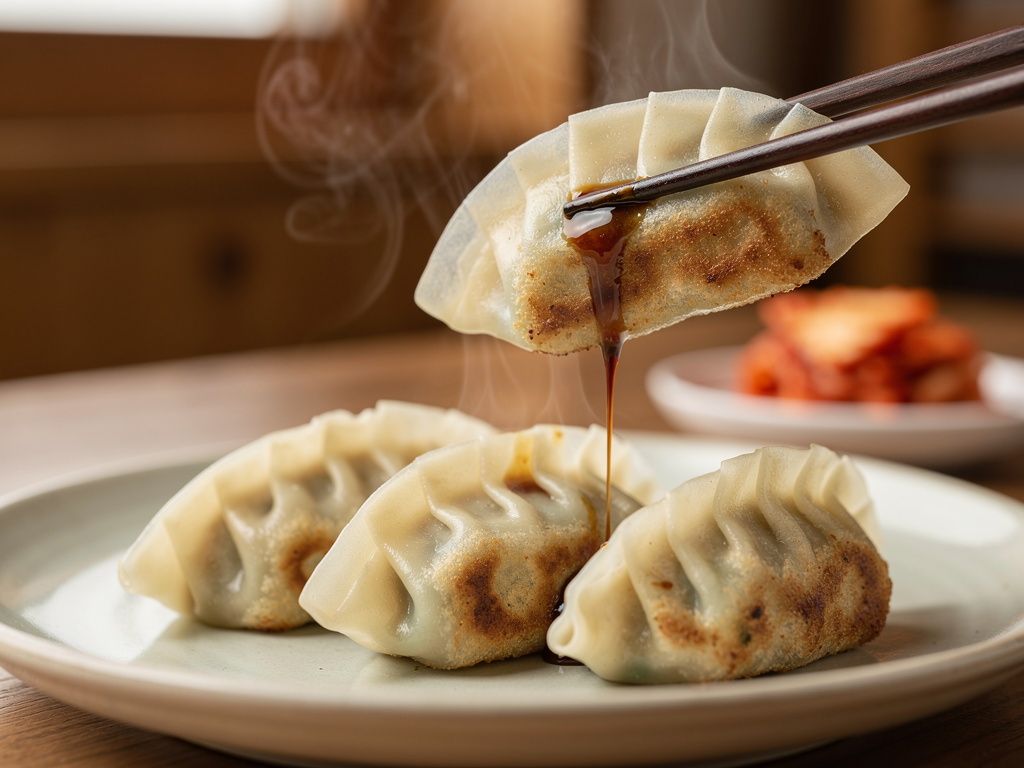
Madang lists Tteok Mandoo Guk on its own stews page and describes it, in the venue’s own words, as a comforting dumpling and rice cake soup often enjoyed on special occasions. That phrasing is a direct nod to Seollal, and it is the only Abu Dhabi menu that makes the connection explicitly.
It sits among fifteen named stews and soups on what is comfortably the longest published Korean menu in the capital. No standalone mandu plate appears on any Madang page we could check — neither confirmed nor ruled out, so ask.
The blocker is money: no individual dish prices are published beyond an AED 65 business lunch, so you cannot plan a spend. The main branch is on the ground floor of the Holiday Inn, 31st Dhafeer Street, Al Sa’adah, with a second at Al Ghazal Golf Club near the old airport. Published hours are 12PM to 12AM daily, last orders 10:30PM. Phone +971 2 585 5441 or +971 56 327 5999. Halal status is not independently verified. MyBayut’s roughly AED 300 cost-for-two figure for the Al Ghazal site is a whole-meal estimate.
Does anyone else in Abu Dhabi serve a mandu plate?
Hankook, possibly — and it is the only other lead in the city. Third-party guides and review write-ups credit the Al Nahyan kitchen with a crisp fried mandu and with vegetable dumplings, and reviewers single the dumplings out consistently. But Hankook publishes no menu and no prices, so this rests entirely on other people’s write-ups. Treat it as a lead, not a listing, and call before you drive. It is on Defence Road beside Centre Villa Hotel, opposite the Central Bus Station. Halal status is not independently verified. MyBayut estimates roughly AED 195 for two, a whole-meal figure.
Seoul Street on Al Reem Island lists a handmade chicken gyoza with cabbage and leeks. Gyoza is the Japanese branch of the same dumpling family, not mandu, and using the Japanese name is a deliberate menu choice rather than a translation slip — so it does not count here. It is included because anyone searching for Korean dumplings on Reem Island will find it and deserves to know what it actually is. The kitchen’s real strength is tteokbokki: it is the only place in the capital publishing two distinct styles, including a sindang-dong version.
Korean Bowl on Hamdan Street publishes menu section headings on its own site — starters, gimbaps, soups, noodles and ramyun, rice bowls, dosirak — without the items inside them. A dumpling could sit under starters or soups and there would be no way to tell. Published hours are 11AM to midnight daily; phone +971 50 389 8283. Unconfirmed.
Abu Dhabi mandu price comparison
Only four published mandu prices exist across the entire category in this city, and two of them belong to the same restaurant.
| Venue | Area | Published price (AED) | Format | Halal | What the menu actually says |
|---|---|---|---|---|---|
| Mukbang Shows | Al Danah | 48 | Plate | 100% halal, beef & chicken only | “Fried or steamed. Kimchi, vegetable, beef, chicken or seafood.” |
| Mukbang Shows | Al Danah | 59 | Soup | 100% halal, beef & chicken only | Tteok Mandu Guk |
| Manna Land | Al Nahyan | 78 / 147 | Hot pot | Confirm directly | Mandu Jeongol, regular and large |
| Manna Land | Al Nahyan | 58 | Soup | Confirm directly | Tteok Manduguk |
| Madang | Al Sa’adah + Al Ghazal | No published price | Soup | Confirm directly | Tteok Mandoo Guk — “often enjoyed on special occasions” |
| Hankook | Al Nahyan | No published price | Plate (unverified) | Confirm directly | Fried mandu — third-party mentions only |
| Seoul Street | Al Reem Island | No published price | Plate | Confirm directly | Chicken gyoza — Japanese name, not mandu |
| Korean Bowl | Hamdan Street | No published price | — | Confirm directly | Unconfirmed — site lists section headings only |
Read down the format column and the finding is hard to miss: five of the eight entries are soups or hot pots. Cost-for-two figures from third-party guides are whole-meal estimates and are not used as prices anywhere here.
For wider context, see MyBayut’s Abu Dhabi Korean restaurant guide, Property Finder’s round-up of the Korean restaurants Abu Dhabi searches for and Time Out Abu Dhabi’s Korean restaurant round-up.
Is mandu halal?
Not by default, and with mandu the question is unusually simple: it is the filling, and only the filling. There is no stock to ask about, no shared fryer question in the way there is with tempura, no sauce base. Canonical mandu is filled with minced pork, usually bound with tofu and finely chopped vegetables.
The good news is that the rebuild is not a compromise. Kimchi mandu and vegetable mandu are completely traditional Korean versions in their own right, and beef and chicken fillings are long established. A halal mandu is a legitimate version of the dish rather than an approximation of one.
Mukbang Shows is 100% halal, beef and chicken only, with no pork of any kind and no alcohol on the premises, and it publishes its five filling options. For Manna Land, Madang, Hankook, Seoul Street and Korean Bowl, none publish halal certification — confirm directly and ask specifically about the filling.
What is mandu?
Mandu (만두) are Korean dumplings: a thin wheat wrapper folded around a filling of minced meat, tofu and finely chopped vegetables — usually cabbage or kimchi, plus mung bean sprouts, garlic chives, onion and glass noodles.
The cooking method renames the dumpling
In Korean, how you cook it changes what it is called. Jjin mandu is steamed. Gun mandu is pan-fried, crisp on one face and soft on the others. Mul mandu is boiled, soft and slippery. Twigim mandu is deep-fried whole. Manduguk is mandu served in a clear broth. So when an Abu Dhabi menu offers mandu “fried or steamed”, it is offering gun mandu or jjin mandu without using the Korean names — a fair simplification, not an error.
Why the plate is the harder sell
This is the mechanism behind the pattern at the top of this guide, and it is worth understanding before you order.
A dumpling is judged completely differently depending on whether it arrives on a plate or in a bowl. Submerged in tteok manduguk, the wrapper hydrates and softens, and the dumpling becomes one component among rice cakes, egg ribbon and broth. Nobody inspects the pleat, because the whole bowl is eaten together and the broth carries the dish.
On a dry plate, the wrapper is the dish. The crisp base, the blistering, the thinness at the seam, whether the bottom holds when you lift it — all of it is on display, with nothing to hide behind. The plate is simply a harder thing to put your name on, which is a rational reason a city’s menus can carry several dumpling soups and almost no dumpling plates.
To be explicit about what this argument is not: it is about what each format demands, not about how any particular kitchen sources its dumplings.
Nobody in Abu Dhabi discloses sourcing
No Korean restaurant in this city publishes whether its mandu are folded in-house or bought in prepared. Not one, Mukbang included. Anyone telling you which Abu Dhabi kitchens make their own is guessing. If it matters to you, ask — it is an ordinary question and most kitchens will answer it.
Why the soup format is the one that survived
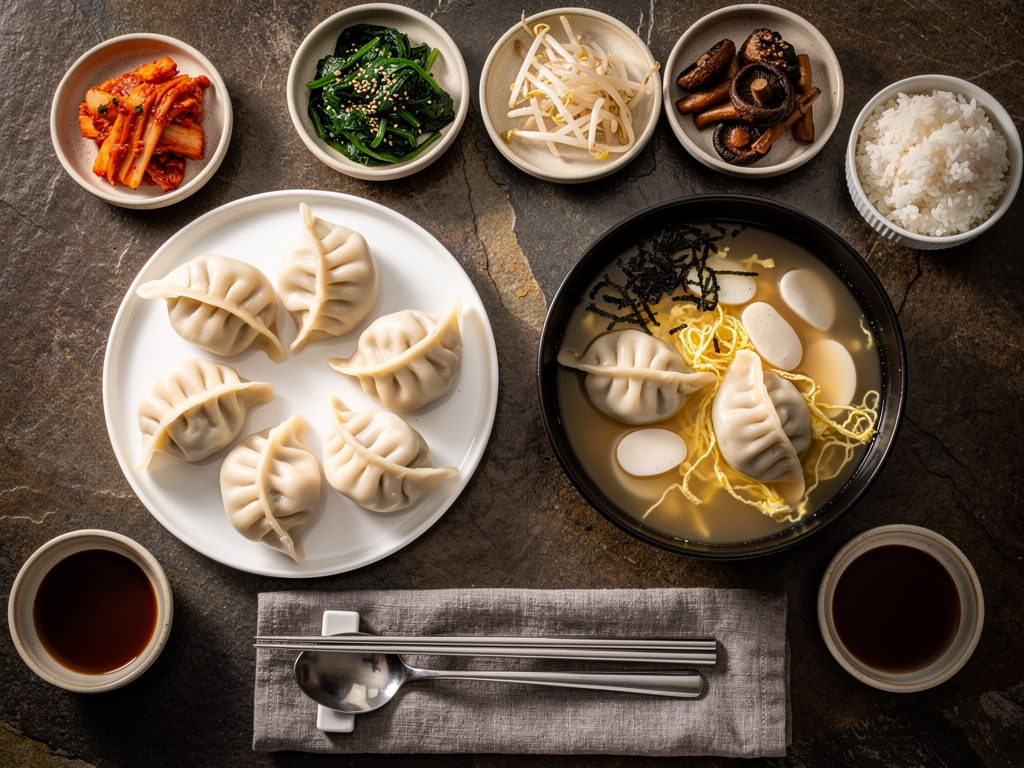
Tteokguk, rice cake soup, is what Koreans traditionally eat on Seollal, the lunar new year, and eating it is how you mark turning a year older. Tteok manduguk is the version with dumplings added, historically more common in the wheat-growing north of the peninsula.
Because it is a dish with an occasion attached, it tends to stay on a full-service Korean restaurant’s menu permanently rather than appearing seasonally — a plausible reason three separate Abu Dhabi kitchens publish it while almost none publish a plain plate.
Mandu vs gyoza vs jiaozi
All three descend from the same Chinese tradition. Jiaozi is the Chinese original. Gyoza is the Japanese adaptation — usually a thinner wrapper, a finer filling, more garlic, and almost always pan-fried flat-bottomed. Mandu tends toward a slightly thicker wrapper, a coarser filling, and a much wider accepted range of shapes and cooking methods, including service in soup, which gyoza rarely gets. Some UAE kitchens list gyoza rather than mandu, and noticing that naming choice saves you scanning a menu for something that is filed under another name.
Three tells for a plate of mandu
- If it is pan-fried, only one face should be properly crisp. A dumpling crisp all over was deep-fried — a different dish.
- The seam should be thin. A thick doughy ridge along the top is where a cheap wrapper shows itself.
- The filling should hold together when you bite. Collapsing into loose mince is what the tofu and pressed vegetables in the mix are there to prevent.
Where to find mandu across Abu Dhabi
Almost everything in this guide sits in the central grid. Abu Dhabi has no metro, so all of this is by car or taxi.
Al Danah holds both Mukbang Shows branches — Muroor Road at 547 Sultan Bin Zayed The First Street, and Electra Street behind Sun and Sand Sports — plus Korean Bowl on Hamdan Street. This is the only zone with a published dumpling plate.
Al Nahyan holds Manna Land on Al Muroor Road (East Road) near the Al Mamoura building, with the only dumpling hot pot in the city, and Hankook on Defence Road beside Centre Villa Hotel. It is the capital’s longest-established Korean corridor.
Al Sa’adah holds Madang at the Holiday Inn on 31st Dhafeer Street. Its second branch at Al Ghazal Golf Club, out toward the old airport, is a considerably longer drive.
Al Reem Island holds Seoul Street, which serves gyoza rather than mandu — worth knowing before you cross the bridge for it.
For how this compares with a city that has a real dumpling market, see our Dubai mandu guide. For the neighbouring snack categories, see the Abu Dhabi gimbap guide and our Abu Dhabi Korean street food guide.
Five things to sort out before you order
Decide plate or pot first. The plate at Mukbang puts the wrapper on display; the pot at Manna Land and the soups elsewhere submerge it and shift the focus to broth. These are genuinely different meals, not different sizes of the same one.
Ask the piece count. No venue in the city publishes it, and at AED 48 it decides whether the plate is a snack or a course.
Ask about the filling if halal matters. With mandu the filling is the only variable — there is no stock to check.
Ask about sourcing if you care. It is undisclosed everywhere and it is a perfectly normal question.
Phone ahead where no prices are published. Madang, Hankook, Seoul Street and Korean Bowl all fall into that category, and a two-minute call also confirms whether any mandu is currently on.
Work through those five and the best mandu in Abu Dhabi for your table sorts itself out — a AED 48 plate in Al Danah, or a AED 78 pot in Al Nahyan.
FAQ
Which restaurant has the best mandu in Abu Dhabi?
Mukbang Shows at AED 48, on the narrow basis that it is the only kitchen in the city publishing a standalone dumpling plate with a price, both cooking methods and five named fillings. For a group, Manna Land’s Mandu Jeongol at AED 78 is the more interesting order.
How many dumplings do you get for AED 48?
No Abu Dhabi menu publishes a piece count for mandu, at Mukbang Shows or anywhere else. Ask when you order.
Are Korean dumplings in Abu Dhabi made in-house?
No restaurant in the city discloses it, including Mukbang. Anyone claiming to know is guessing. Ask the kitchen directly.
Is mandu halal?
Not by default — the canonical filling is minced pork. But kimchi, vegetable, beef and chicken fillings are all traditional versions in their own right. Mukbang Shows is 100% halal with beef and chicken only; confirm directly with every other venue.
What is the difference between mandu and gyoza?
Both come from the same Chinese dumpling tradition. Gyoza is the Japanese version — thinner wrapper, finer filling, more garlic, almost always pan-fried. Mandu has a slightly thicker wrapper, a coarser filling, and a wider range of cooking methods including being served in soup.
Why do Abu Dhabi menus list dumpling soup more often than dumplings?
Two reasons. Tteok manduguk carries the Seollal new year tradition with it, so it stays on full-service menus permanently. And a dumpling in broth is judged far more forgivingly than one on a dry plate, where the wrapper is the entire experience.
Is mandu included in Mukbang’s all-you-can-eat?
No. It is a separate à la carte order at AED 48. The AYCE tiers are Gangnam AED 69, Daegu AED 89, Jeju AED 99 and Bukchon Hanok AED 129, minimum two people.
Related guides
More from our Korean food guides across the UAE: