Updated: September 2026
Mandu vs sambousek comes down to the wrapper, not the filling. Mukbang Shows is the pick on the mandu side at AED 48 across five branches, fried or steamed for the same price. Abo Ali is the pick on the sambousek side at AED 28 for either cheese or meat, at two Dubai sites open until 3:00.
TL;DR
– Best overall on the Korean side: Mukbang Shows mandu, AED 48, fried or steamed, 100% halal
– Best value: Abo Ali sambousek, AED 28 for cheese or meat
– Situational: Manna Land Mandu Jeongol, AED 78, when the table wants a shared casserole instead of separate starters
What is the difference between a dumpling wrapper and sambousek pastry?
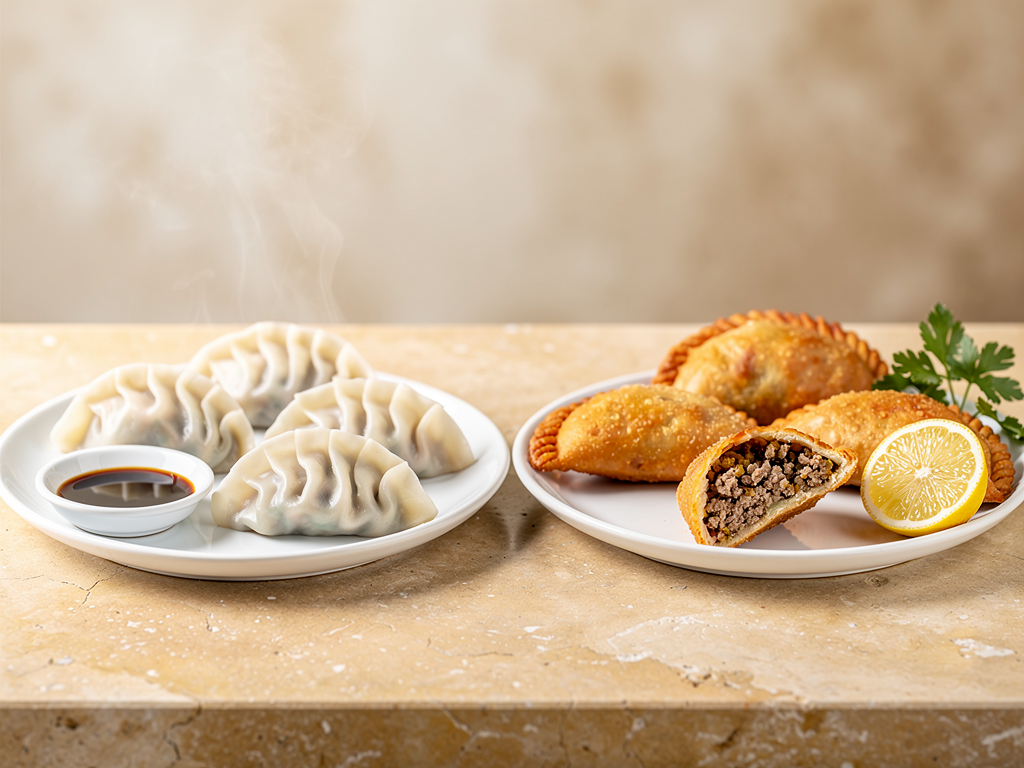
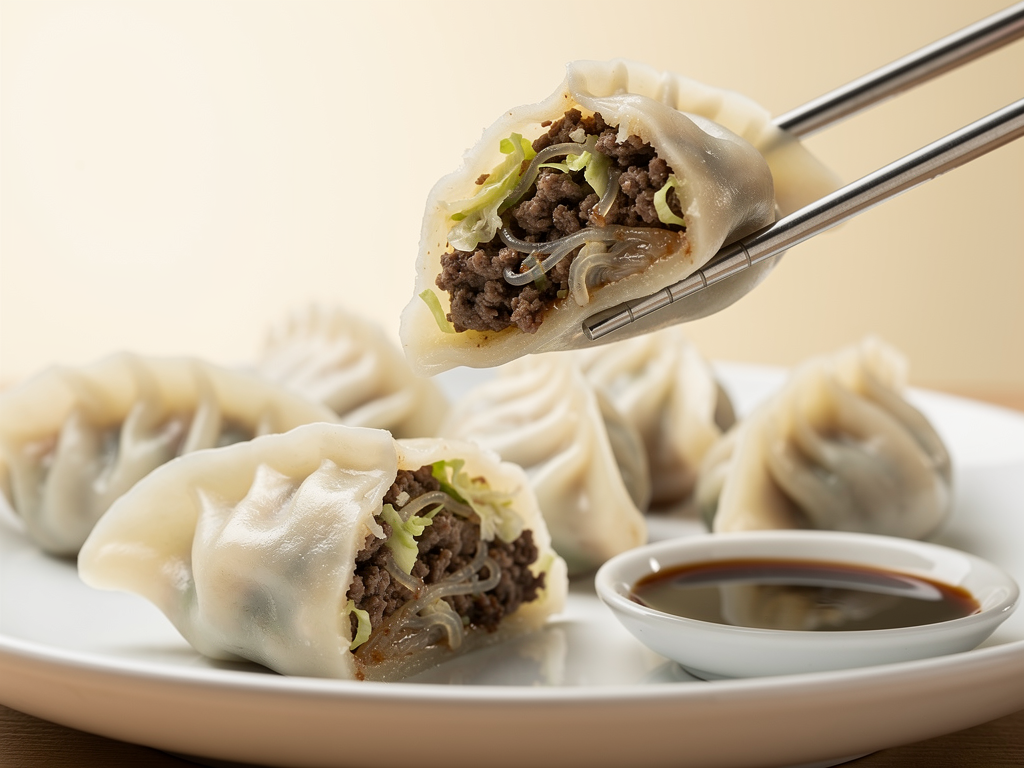
The wrapper is the whole difference, and almost everyone assumes it is the filling. Mandu uses a thin unleavened wheat sheet with no fat worked into it. Steamed, it becomes soft, slightly translucent and slippery, holding the juices of the filling inside like a pouch. Fried, it blisters into thin crisp patches rather than an even golden shell.
Sambousek uses an enriched dough with fat worked in, then deep fries it, so the pastry browns evenly all over and crunches when it breaks. The shell becomes a component in its own right with its own flavour, closer to a short pastry than to a dumpling skin. You taste it as much as you taste what is inside.
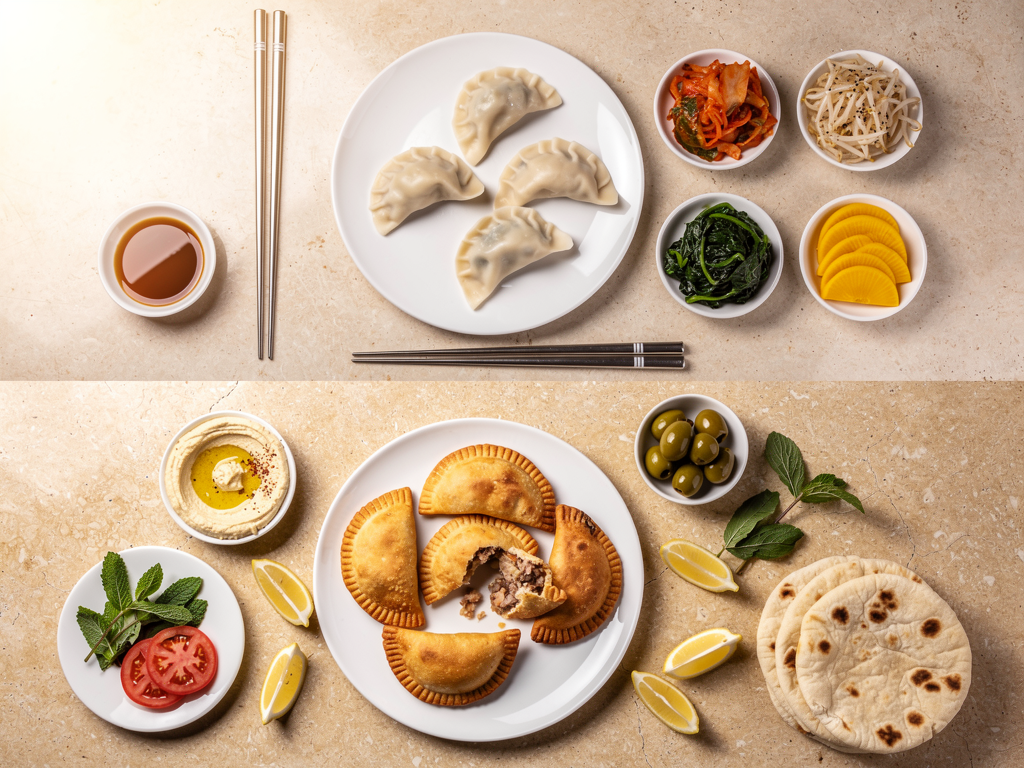
That single difference decides how each one eats. A steamed mandu is soft and juicy and wants a sharp dipping sauce to cut it. A fried sambousek is already rich and crisp, so it wants lemon or a fresh salad rather than another sauce. Putting a heavy dip next to sambousek is the most common ordering mistake in this comparison.
It also decides how they travel, which is where mandu vs sambousek usually gets settled on a weeknight. A fried pastry shell survives a delivery box; a steamed dumpling wrapper turns gummy. Mandu is a membrane around a filling. Sambousek is a pastry with a filling inside it. Same shape, same table, completely different mouthful.
For the background on each, the Korean dumpling and the wheat wrapper it is built on and sambousek and its spread across the Levant both cover the history. Note the spelling before you search a menu: sambousek, sambousik and sambosak are the same item.
Do the fillings differ as much as the wrappers?
Yes, and in the direction the wrapper demands. Mandu fillings are wet and mixed: minced meat combined with cabbage, spring onion, garlic and often glass noodles, all seasoned before they go in. The vegetables release moisture as it cooks, and that is where the juice comes from.
Sambousek fillings are drier and singular. Cheese, or minced meat with onion and pine nuts. Nothing is meant to run when you bite it, and the dryness is deliberate, because a wet filling would soften the pastry from the inside.
This is why one dish can become another and the other cannot. Mukbang Shows prints Tteok Mandu Guk at AED 59, a rice cake and dumpling soup, and Manna Land prints Mandu Jeongol at AED 78 regular and AED 147 large, a whole dumpling casserole. A sambousek stays a sambousek. It is why one turns up on a stew menu and the other only ever on the starters page.
Order sizes differ too, and most menus do not say so. Nuri Grill & Bar is the only venue in this comparison publishing a count: AED 70 for five pieces. Sambousek is typically sold by the plate rather than by the piece. If you are ordering for a group, ask how many come per order rather than assuming. It is the single most useful question at either kind of restaurant.
Where can I order mandu in the UAE?
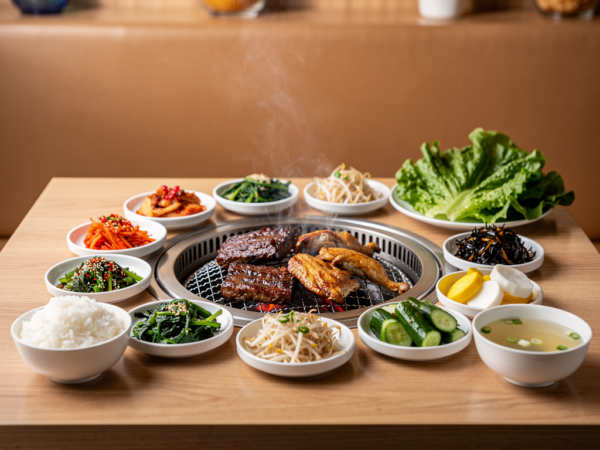
Mukbang Shows is the only kitchen in this set that prints a standalone plate of mandu and lets you choose fried or steamed at the same AED 48, holding that price at all five branches: Deira, JBR and DWTC in Dubai, Muroor Road and Electra Street in Abu Dhabi. The same street food section carries Gimmari at AED 49, so a shared starter round can be built from one page of the menu.
It is also 100% halal, beef and chicken only, with no pork and no alcohol at any branch. On a dish where pork is the common default filling, that is the practical reason it leads here: it is the one address in this comparison where the question never needs asking. The honest caveat is price and opacity, covered below. Branch detail is in the guide to where to actually eat mandu in Dubai and the Abu Dhabi mandu guide.
Manna Land in Al Nahyan, Abu Dhabi is the clearest published illustration of what sambousek cannot do. Both of its mandu dishes are dumplings cooked into something else: Mandu Jeongol at AED 78 regular and AED 147 large, and Tteok Manduguk at AED 58. The catch is that there is no standalone plate of mandu on the menu at any price, so if you simply want a plate of dumplings this is not the address.
Nuri Grill & Bar at the Hilton Abu Dhabi Yas Island publishes the only exact piece count in the comparison: Fried Dumplings and Steamed Dumplings both at AED 70 for five pieces. That lets you work out the per-dumpling cost before you arrive. Two things to know: the published menu lists the filling as beef or pork, so specify beef if that matters to you, and the same site publishes a wine menu, so it is a licensed venue.
Where can I order sambousek in the UAE?
Abo Ali sells both Cheese Sambosak and Meat Sambosak at AED 28, the lowest price on either side of this comparison, at two Dubai sites on Sheikh Zayed Road in Al Barsha 3 and in Al Garhoud. Its own site publishes 9:00 to 3:00, seven days a week, at both, which is the widest published window here. Search the menu for Sambosak, which is the spelling it uses, on Abo Ali’s own priced menu.
Al Beiruti has the widest published spread of stuffed pastries in this set: Beef Sambousik at AED 32, Cheese Rolls fried or grilled at AED 32, Basterma Cheese Rolls at AED 42 and Spinach Fatayer at AED 32. The grilled cheese roll is the closest thing on a Lebanese menu to the steamed-or-fried choice a Korean menu gives you. Its priced UAE menu does not publish branch addresses, so confirm the site before you set out.
AMOO Restaurant in Business Bay prints what is actually inside each pastry, which almost no menu does. Cheese Roll at AED 32, Spinach Fatayer at AED 35 and Fried Kebbah at AED 38, with the fatayer described as filo stuffed with sautéed spinach, onion, pomegranate and pine seeds and the kebbah as burghul dough stuffed with meat, onion and pine seeds. It is one address, and it calls the item a cheese roll rather than sambousek by name.
What is the price difference between mandu and sambousek?
Sambousek wins the mandu vs sambousek price question in almost every case. The lowest verified price is AED 28 at Abo Ali for either cheese or meat, against AED 48 for the lowest standalone mandu plate at Mukbang Shows. That is a AED 20 gap on a shared starter, or a 71 percent premium on the same slot at the table.
The gap widens sharply at the top. Manna Land’s large Mandu Jeongol reaches AED 147, while the most expensive item on the sambousek side of this set is Al Beiruti’s Basterma Cheese Rolls at AED 42. Mandu’s ceiling is high because it can become a whole casserole for a table. Sambousek’s ceiling stays low because it never stops being a starter.
Availability runs the same way. Sambousek is on nearly every Lebanese and Arabic menu in the UAE, while mandu needs a Korean kitchen. Mukbang Shows covers two emirates with five branches, and that is still a narrower net than the Arabic restaurants carrying sambousek without advertising it. Both of those facts are true, and neither cancels the other out.
Mandu vs sambousek: 2026 price comparison
| Venue | Area | Price AED | Halal note | Standout order |
|---|---|---|---|---|
| Abo Ali | Al Barsha 3 and Al Garhoud, Dubai | 28 | Confirm directly | Cheese or Meat Sambosak |
| Al Beiruti | UAE, confirm branch | 32 | Confirm directly | Beef Sambousik |
| AMOO | Business Bay, Dubai | 32 | Confirm directly | Cheese Roll |
| Al Beiruti | UAE, confirm branch | 42 | Confirm directly | Basterma Cheese Rolls |
| Mukbang Shows | Deira, JBR, DWTC, Muroor Rd, Electra St | 48 | 100% halal, beef and chicken only, no alcohol | Mandu, fried or steamed |
| Manna Land | Al Nahyan, Abu Dhabi | 58 | Confirm directly | Tteok Manduguk |
| Nuri Grill & Bar | Hilton Abu Dhabi Yas Island | 70 | Licensed venue; menu lists beef or pork, specify beef | Dumplings, 5 pieces |
| Manna Land | Al Nahyan, Abu Dhabi | 78 / 147 | Confirm directly | Mandu Jeongol, regular or large |
All figures read off each venue’s own published menu on 4 September 2026. Menus change, so check on the day.
Is mandu halal in the UAE?
At Mukbang Shows, yes without qualification: 100% halal, beef and chicken only, no pork and no alcohol at any of the five branches. Elsewhere the honest answer is that it depends on the filling, and the filling is worth asking about.
This is the one genuinely important practical difference between the two dishes in the UAE. Pork is a common default dumpling filling in a lot of East Asian kitchens, which is why Nuri Grill & Bar’s own published menu lists its dumplings as beef or pork and why you should specify beef there. The same site publishes a wine menu, so it is also a licensed venue.
Sambousek in the UAE is almost always cheese or beef, so the question rarely comes up at a Lebanese restaurant. The practical rule is simple: mandu needs the question, sambousek usually does not. The wrapper has nothing to do with it; the filling has everything to do with it. For any venue not named here, confirm directly rather than assuming.
Where do you find each one by area?
Mandu sits where the Korean restaurants are. Mukbang Shows covers Deira, JBR and DWTC in Dubai, with the DWTC branch on Sheikh Zayed Road opposite the metro station, plus Muroor Road and Electra Street in Abu Dhabi. Manna Land is a single address in Al Nahyan and Nuri Grill & Bar is a single address on Yas Island. Note that Abu Dhabi has no metro, so all three capital addresses mean a car or taxi.
Sambousek is far easier to reach. Abo Ali publishes two Dubai addresses in Al Barsha 3 and Al Garhoud, AMOO publishes Business Bay, and Al Beiruti publishes a UAE menu without addresses. Those are only the ones publishing prices; the dish itself is on most Arabic menus in both cities whether or not it is advertised.
The asymmetry is the honest heart of this comparison. You can default to sambousek almost anywhere and you have to plan for mandu. Delivery widens the gap again, because fried pastry travels and steamed dumpling wrappers do not.
The useful way to use that is to pick the area first and let it decide the wrapper. If the evening already involves a Korean restaurant, mandu is the better order and can stretch into a soup or a casserole. If it is a quick mezze round on a weeknight, sambousek is cheaper, faster and already nearby.
Mandu vs sambousek: which should you order tonight?
Start with what the parcel has to do. If it is one shared plate before a bigger meal and the table wants crunch, sambousek at AED 28 is both the cheaper and the more available answer, and there is no argument to be made against it. If the parcel is the point, or the table wants something soft and juicy, mandu earns the AED 20 difference.
The second question is whether it might become dinner. Only mandu can. Tteok Mandu Guk at AED 59 at Mukbang Shows and Mandu Jeongol at AED 78 at Manna Land both turn the dumpling into a course. If a shared casserole is what the evening actually wants, sambousek cannot get you there at any price.
Third, check where you already are. Mandu vs sambousek is often settled by geography rather than preference, because one needs a Korean kitchen and the other is on most Arabic menus in both cities. That is not a reason to order the worse dish, but it is a reason to plan the Korean one rather than expect it nearby.
Finally, if anyone at the table avoids pork, that narrows it usefully. Mukbang Shows removes the question outright with a 100% halal kitchen, and the sambousek side rarely raises it at all.
Practical ordering tips
Ask the piece count before you confirm. Most menus here do not print it, and Nuri Grill & Bar’s five pieces for AED 70 is the only published figure in the comparison. Asking prevents the plate arriving smaller than the price implied.
Decide the cooking method early. Mukbang Shows lets you take mandu fried or steamed at the same AED 48, and Al Beiruti lets you take cheese rolls fried or grilled at AED 32. That choice changes the texture and the sauce you need more than the filling does.
Match the sauce to the shell. Steamed mandu wants a sharp dipping sauce to cut the juice. Fried sambousek wants lemon or a plain salad, because the pastry is already rich. Adding a heavy dip to sambousek doubles up on the same thing.
Never assume the filling at an Asian restaurant. Pork is a common default in dumplings, so ask. At Mukbang Shows the question does not arise. At Lebanese restaurants the default is usually beef or cheese, but confirm if it matters to you.
Build a mixed starter round rather than doubling up. Mukbang Shows lets you put mandu at AED 48 next to Gimmari at AED 49, and Abo Ali lets you take cheese and meat sambosak at AED 28 each. Contrast costs nothing extra.
Order fried for delivery. Fried pastry and fried mandu both survive a box. Steamed mandu does not, and there is no way to bring it back once the wrapper has gone gummy.
If you want the same question run against a different pair, mandu measured against gyoza covers the East Asian comparison, and the Korean roll measured against the saj wrap applies the same wrapper logic to a different dish.
FAQ
Is mandu the same as sambousek?
No. They share a stuffed-parcel shape and a starter role, but the wrapper behaves completely differently. Mandu is a thin unleavened membrane you taste through. Sambousek is a crisp enriched pastry you taste as much as the filling.
Which is cheaper in Dubai, mandu or sambousek?
Sambousek, at AED 28 from Abo Ali for either cheese or meat. The cheapest standalone mandu plate here is AED 48 at Mukbang Shows, a 71 percent premium on the same slot at the table.
Is mandu halal in the UAE?
It can be, and at Mukbang Shows it is: 100% halal, beef and chicken only. Pork is a common default dumpling filling elsewhere, so at other Korean restaurants ask about the filling and specify beef.
Can mandu become another dish the way sambousek cannot?
Yes. Mukbang Shows prints Tteok Mandu Guk at AED 59 and Manna Land prints Mandu Jeongol at AED 78 regular and AED 147 large. Sambousek stays a starter on every menu in this set.
Where can I get mandu in Abu Dhabi?
Mukbang Shows on Muroor Road or Electra Street at AED 48, Manna Land in Al Nahyan, or Nuri Grill & Bar on Yas Island at AED 70 for five pieces. Manna Land has no standalone mandu plate.
Should I order mandu steamed or fried?
Steamed for the soft juicy pouch that needs a dipping sauce. Fried for blistered crisp patches and much better delivery tolerance. Both are AED 48 at Mukbang Shows, so it costs nothing to pick by texture.
Mandu vs sambousek is not a contest with one winner. It is a wrapper decision that changes the mouthful, the price, the travel and the role on the table. Pick the membrane when you want juice and the option of soup. Pick the pastry when you want crunch and convenience.
Related guides
More from our Korean food guides across the UAE:
Comments are closed.