Updated: August 2026
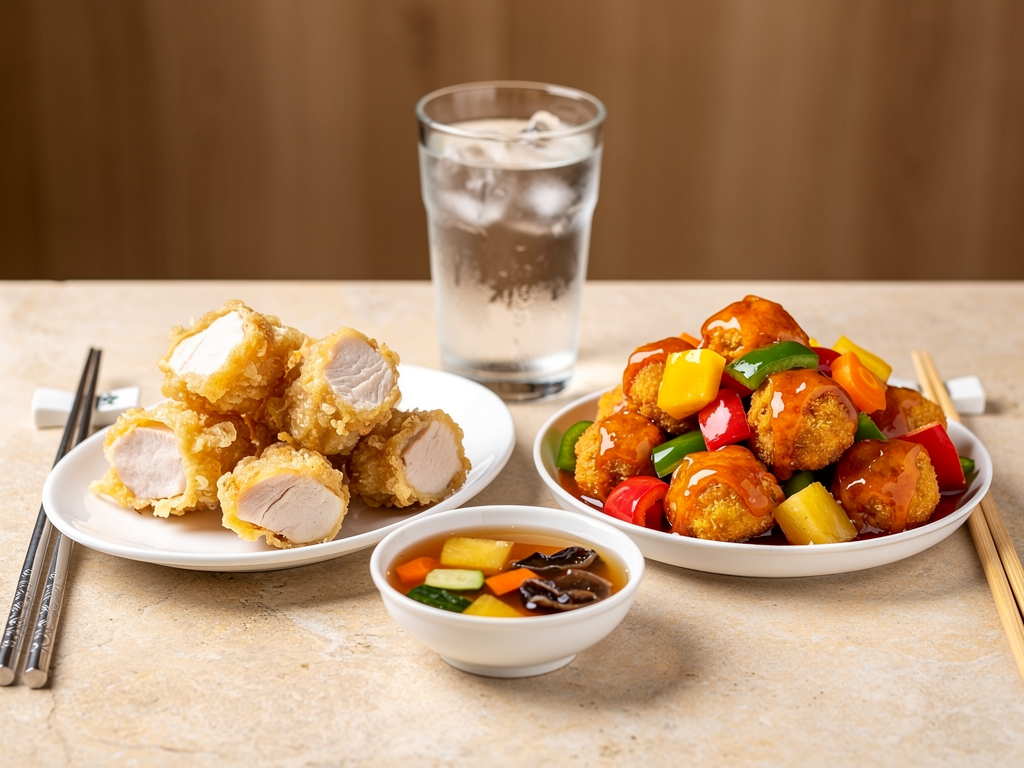
Mukbang Shows is the top pick for tangsuyuk vs sweet and sour chicken at Chicken Tangsuyuk AED 59. Both dishes are diaspora inventions that evolved far from any original Chinese recipe and were adapted again for UAE tastes and halal requirements.
TL;DR
– Best overall: Mukbang Shows Chicken Tangsuyuk AED 59 (sauce on the side, starch batter stays crisp)
– Best value: Asian Taste Sweet & Sour Beef AED 58 (blog-reported, confirm current price)
– Situational pick: P.F. Chang’s when you want the pre-tossed American-Chinese version with halal-certified meat
What is the difference between tangsuyuk vs sweet and sour chicken?
Tangsuyuk vs sweet and sour chicken comes down to sauce timing and batter type. Tangsuyuk arrives with sauce in a separate bowl so the diner chooses when to combine them while sweet and sour chicken is pre-tossed in glaze before it reaches the table.
Neither dish is authentic Chinese food. Tangsuyuk is Korean-Chinese food that developed in the early 20th century among Chinese immigrants in Korea, especially around Incheon. It belongs to the distinct junghwa yori category that Koreans treat as separate from both Korean and Chinese cooking. Sweet and sour chicken in the UAE usually follows the American-Chinese lineage popularised by chains such as P.F. Chang’s, which openly describes its menu as American-Chinese rather than Chinese. Both versions then received a third adaptation for the Gulf market where pork is replaced and all meat must meet halal standards.
The sauce delivery system creates a practical split. Classic tangsuyuk was once poured at the restaurant but the rise of delivery forced restaurants to package the sauce separately so the batter would not turn soggy in transit. This change created the famous Korean debate between bumeok (pour it on) and jjikmeok (dip it). Pourers end up with a softer, saucier result while dippers keep the glassy crunch as long as possible. Sweet and sour chicken has no such choice because the wheat-flour batter is tossed in the pan or wok and begins to soften immediately.
Batter composition reinforces the difference. Tangsuyuk uses a wet potato or sweet potato starch batter that is double-fried into a chewy-crisp coating engineered to resist sauce longer. Sweet and sour chicken typically relies on wheat-flour or cornflour batter that is lighter on first bite but loses crispness faster once glazed. Starch batter plus separate sauce solves the problem of surviving delivery and giving the diner control. Flour batter plus immediate glaze solves the problem of instant restaurant service. The two builds address different logistics rather than one being objectively superior.
These distinctions matter in a market where most meals arrive by app. The separate-sauce format of tangsuyuk is the one that survives a 30-minute ride in a delivery bag. That practical edge is the strongest reason to treat these two as a real choice rather than two names for the same thing. For deeper background on the Korean side of this family tree see the Korea Tourism Organization’s official English site and the Korean Cultural Center’s background material on Korean food culture.
Which is better for delivery in the UAE: tangsuyuk or sweet and sour chicken?
Tangsuyuk is better for delivery in the UAE because the sauce arrives separately and the starch batter stays crisp longer than the pre-tossed wheat batter used in most sweet and sour chicken. Delivery logistics literally created the modern tangsuyuk format.
When the dish travels 20 or 30 minutes in a plastic bag the separate sauce prevents the coating from steaming itself soft. Sweet and sour chicken that leaves the kitchen already glazed has already started the softening process before the driver even picks it up. This is not marketing spin but a direct consequence of how the two builds were engineered in their respective diaspora kitchens.
The same logic appears in the related Korean versus American fried chicken comparison. Double-fried starch coatings tolerate moisture better than single-fried flour coatings. In practice this means tangsuyuk ordered for home or office still offers a credible crunch while sweet and sour chicken often lands limp unless eaten within minutes of arrival.
Where to get tangsuyuk and sweet and sour chicken in the UAE?
Mukbang Shows is the strongest choice on the tangsuyuk side of the comparison because it serves a verified halal Chicken Tangsuyuk AED 59 that fits cleanly into a full Korean-Chinese set. Order it with jajangmyeon AED 55 and jjampong AED 99 or 60 to eat the trio the way it is normally consumed in Korea rather than as a lone main. The chicken version replaces the classic pork that defines traditional tangsuyuk and the menu contains no pork or alcohol of any kind.
One honest caveat is that Mukbang Shows prints only the chicken tangsuyuk and does not offer beef or vegetable versions that a dedicated junghwa yori specialist would carry. It also does not serve the bright pineapple-heavy Western sweet and sour chicken so those who grew up on the American-Chinese style should look elsewhere. The five branches make it easy to reach from most parts of Dubai and Abu Dhabi.
Branches and contact numbers are Deira — Al Ittihad Rd, Port Saeed, +971-4-886-4494; JBR — Plaza Level, Bahar 3 Unit P33, The Walk, Marsa Dubai, +971-54-523-1898; DWTC / Love Mukbang — The Apartments Block A, Sheikh Zayed Rd, opposite the metro station, +971-54-524-5904; Muroor Road — 547 Sultan Bin Zayed The First St, Al Danah, Zone 1, +971-50-158-9433; and Electra Street — Zayed The First St behind Sun and Sand Sports, Al Danah, Zone 1, +971-2-564-0446. For the complete Korean-Chinese menu context read the Korean-Chinese food in Dubai guide or the Korean-Chinese food in Abu Dhabi guide.
P.F. Chang’s operates nine locations across the UAE including The Dubai Mall and Mall of the Emirates. It supplies the clearest example of the American-Chinese sweet and sour chicken that most UAE residents first encountered. The chain states on its own FAQ page that all meat and poultry are 100% halal certified. Because its cooking style is openly positioned as American-Chinese the dish matches the pre-tossed sweeter profile many associate with Chinese takeaways in Western countries. No specific sweet-and-sour chicken price is published in the verified data so confirm directly when ordering.
Asian Taste at Maitha Plaza building 1 in Deira offers Sweet & Sour Beef AED 58 according to a report by the Dubai food blog foodwithshayne.com in April 2025. Readers must confirm the current price and exact preparation with the restaurant. The kitchen is described as halal by that same blog so verification with the venue is required before visiting. It represents the northern-style Chinese approach rather than the Korean-Chinese or American-Chinese branches of the same ancestral sauce. Pairing it with rice produces a straightforward single-plate meal that contrasts with the shared-noodle format typical of tangsuyuk orders.
These three outlets illustrate the split without pretending to be an exhaustive city ranking. The dedicated Korean-Chinese food pages already cover full venue lists so this comparison stays focused on the structural differences between the two builds.
How much does tangsuyuk vs sweet and sour chicken cost in the UAE?
Mukbang Shows charges AED 59 for Chicken Tangsuyuk while Asian Taste lists Sweet & Sour Beef at AED 58 according to the April 2025 blog report. P.F. Chang’s sweet and sour chicken price is not published in the verified data so call ahead to confirm.
| Venue | Area | Price AED | Halal | Standout order |
|---|---|---|---|---|
| Mukbang Shows | Deira, JBR, DWTC, Abu Dhabi branches | 59 | 100% halal (beef and chicken only) | Chicken Tangsuyuk (sauce separate) |
| Asian Taste | Deira | 58 (blog-reported, confirm) | Described as halal by food blog — confirm directly | Sweet & Sour Beef |
| P.F. Chang’s | Dubai Mall, Mall of the Emirates and 7 others | Confirm on order | All meat and poultry 100% halal certified per own FAQ | Sweet and sour chicken (pre-tossed) |
Prices reflect main-dish portions suitable for sharing or individual mains depending on the style. Delivery apps add their own packaging and service fees on top, so check the in-app total before you order.
Is tangsuyuk halal in the UAE?
Classic tangsuyuk is made with pork so it is not halal in its original form. Chicken and beef adaptations are standard in the UAE and Mukbang Shows serves only the chicken version at its five branches. Always confirm which meat is used when a menu simply says tangsuyuk. Sweet and sour sauces can sometimes contain rice wine so asking the kitchen remains the safest step. The UAE Ministry of Industry and Advanced Technology maintains a public halal programme that explains certification requirements for restaurants operating here.
What is tangsuyuk (탕수육)?
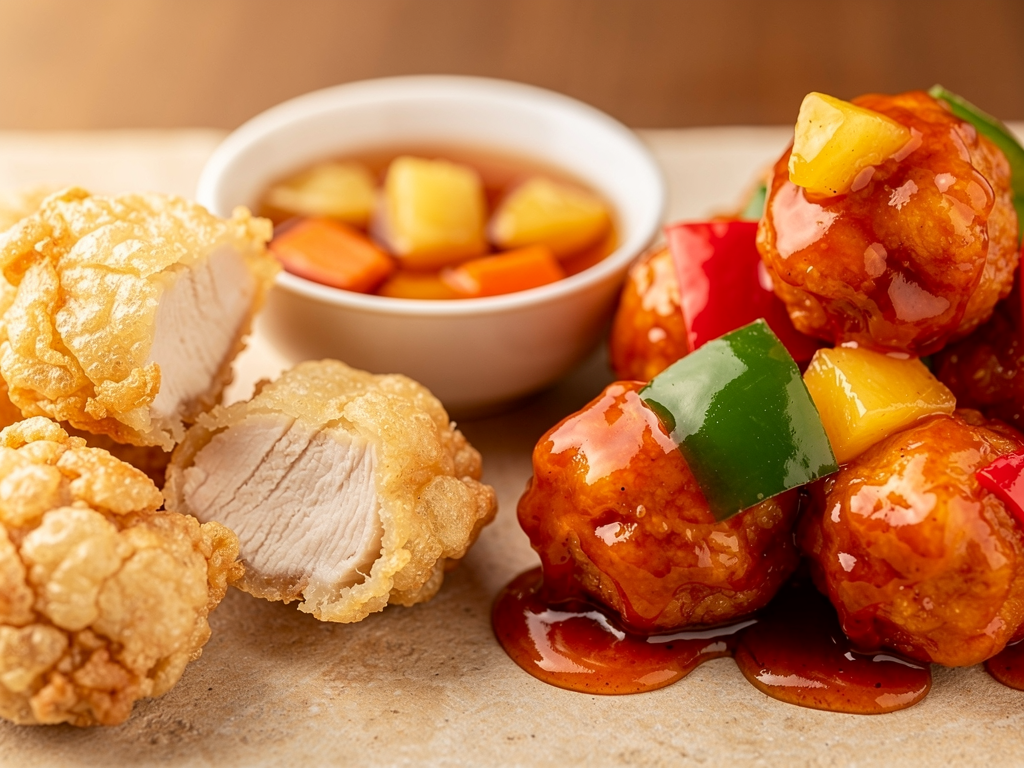
Tangsuyuk is strips or cubes of meat coated in a wet starch batter, double-fried and served with a translucent sweet-and-sour sauce thickened with starch. The sauce usually contains vegetables, pineapple and sometimes wood-ear mushroom.
It is a cornerstone of Korean-Chinese menus alongside jajangmyeon and jjampong and is ordered as a shared plate for the table rather than a single-person main. In the UAE the dish is almost always the chicken or beef adaptation because the classic pork version does not meet local dietary rules. The separate-sauce format is now standard because of delivery logistics and it created the bumeok versus jjikmeok debate that Korean diners still argue about online. For official background on how this dish fits into broader Korean food culture consult the Korean Cultural Center’s background material on Korean food culture.
What is sweet and sour chicken?
Sweet and sour chicken consists of battered fried chicken pieces coated in a bright sauce built on sugar, vinegar or fruit juice and usually containing pineapple and bell peppers. It reached the UAE through Chinese diaspora restaurants that adapted the recipe for Western palates and it remains a fixture on standard Chinese menus.
The wheat-flour batter is typically fried once then tossed immediately in the glaze so the dish is served pre-coated. This produces a different texture timeline than the starch-battered tangsuyuk that keeps sauce separate. Most versions in the UAE are chicken though some kitchens still offer a pork iteration that requires checking before ordering. The dish and tangsuyuk share a distant Chinese sweet-and-sour ancestor but diverged decades ago in different countries.
Which areas in Dubai and Abu Dhabi serve these dishes?
Deira remains the clearest concentration for both sides of this comparison. Mukbang Shows operates a branch on Al Ittihad Road in Port Saeed, and Asian Taste sits inside Maitha Plaza building 1 in the same district. Deira carries plenty of other Asian kitchens running a version of the sweet-and-sour idea.
JBR on the Dubai Marina side hosts another Mukbang Shows outlet at Plaza Level, Bahar 3 on The Walk. DWTC on Sheikh Zayed Road opposite the metro station runs the Love Mukbang branch that also carries the Chicken Tangsuyuk AED 59.
In Abu Dhabi the two Mukbang Shows branches sit on Muroor Road and Electra Street, both in Al Danah Zone 1. No metro system exists in Abu Dhabi so visitors rely on taxis or ride-hailing apps. P.F. Chang’s outlets sit inside The Dubai Mall and Mall of the Emirates, so the American-Chinese version is the easier one to reach on a mall trip.
The Korean-Chinese food in Dubai guide and the Korean-Chinese food in Abu Dhabi guide expand on exact addresses and opening hours for those who want to build a full evening around these dishes rather than a single comparison plate.
How to order these dishes like a local?
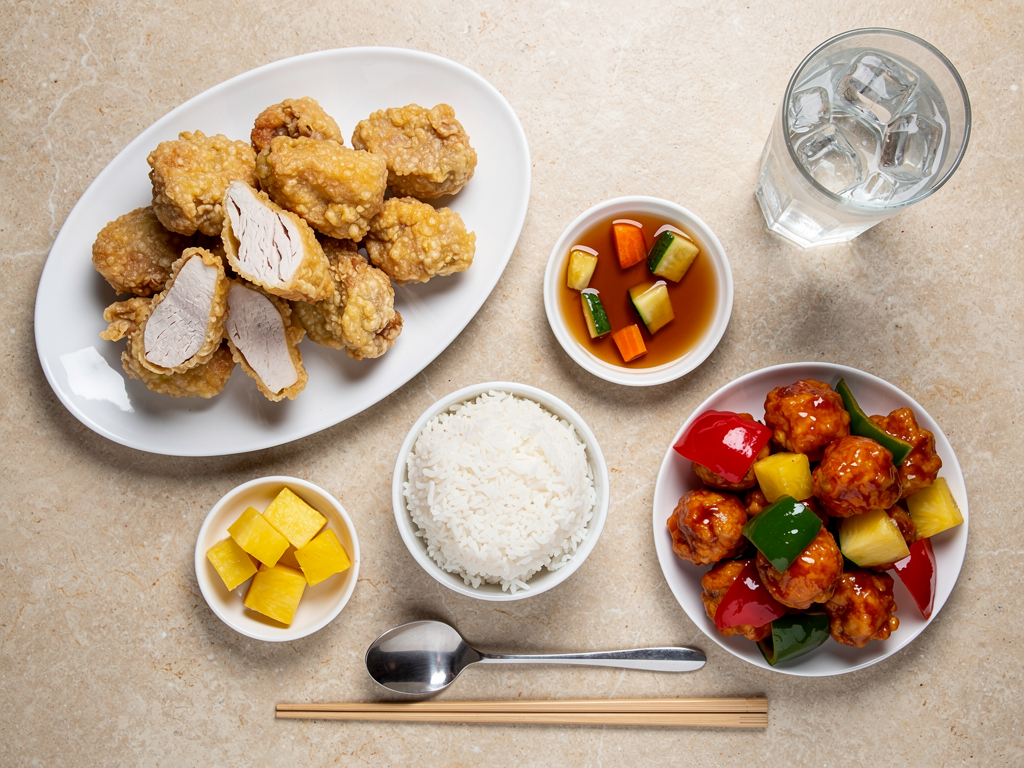
Order tangsuyuk as part of a shared spread that includes noodles rather than as a standalone main. The standard Korean-Chinese trio pairs it with jajangmyeon and jjampong so the table can pass plates family-style. Specify chicken or beef when the menu simply says tangsuyuk because the default in many countries is pork.
Ask explicitly for sauce on the side if the restaurant does not already package it separately. This preserves the option to pour or dip and prevents the starch batter from softening during travel. For delivery, the separate-sauce build is the only one that keeps any real crunch by the time it reaches you.
Choose sweet and sour chicken when you want a complete single-plate meal with rice. The pre-tossed version needs no extra decisions at the table and matches the sweeter, brighter profile common in American-Chinese restaurants. Confirm whether the kitchen uses chicken or pork and whether the sauce contains any cooking wine.
Check halal certification status directly with each venue even when a blog or FAQ states compliance. The UAE Ministry of Industry and Advanced Technology’s halal programme explains the official logos and audit process so diners know what documentation to request.
Portion logic differs. Tangsuyuk is built as a sharing plate and is normally ordered alongside noodles for the table. The Western-Chinese version is more often ordered as one person’s main with rice. Check portion sizes with the venue if you are ordering for a group.
Decide before ordering whether you prefer maximum crunch or sauce-soaked texture. That single preference determines whether tangsuyuk or sweet and sour chicken better matches your expectation on any given night. The batter and sauce systems were built for opposite outcomes so choosing the wrong one produces disappointment that has nothing to do with the cook’s skill.
FAQ
Is tangsuyuk the same as sweet and sour pork?
No. Tangsuyuk is the Korean-Chinese adaptation that uses starch batter and separate sauce while sweet and sour pork in Western restaurants uses wheat batter and immediate glaze. They share an ancestor but are not interchangeable.
Which has more calories — tangsuyuk or sweet and sour chicken?
Both are deep-fried and sweetened so calorie counts sit in the same high range. Exact figures depend on portion size, rice inclusion and whether extra sauce is used. Neither qualifies as a light meal.
Can I request no pineapple in either dish?
Ask the kitchen — it varies. Bear in mind the sauce is built around a sweet-and-sour balance that pineapple contributes to, so leaving it out shifts the flavour.
Do these dishes work for large groups?
Tangsuyuk scales better for sharing because it is designed as a communal plate alongside noodles. Sweet and sour chicken is usually ordered as individual mains although larger platters can be requested.
Is the sauce in tangsuyuk thicker than in sweet and sour chicken?
Yes. Tangsuyuk sauce is thickened with starch to cling to the double-fried coating when poured. Sweet and sour chicken sauce is lighter so it coats the lighter batter without overwhelming it.
Which is more popular in the UAE — tangsuyuk or sweet and sour chicken?
Sweet and sour chicken appears on far more UAE menus, since it reaches diners through both Chinese and American-Chinese restaurants. Tangsuyuk is limited to Korean and Korean-Chinese kitchens, so it is the harder of the two to find.
Both dishes reward clear ordering. Understanding the batter, the sauce timing and the halal adaptations turns the choice from a vague menu choice into a deliberate decision that matches how you actually plan to eat it.
Related guides
More from our Korean food guides across the UAE: