
Updated: September 2026
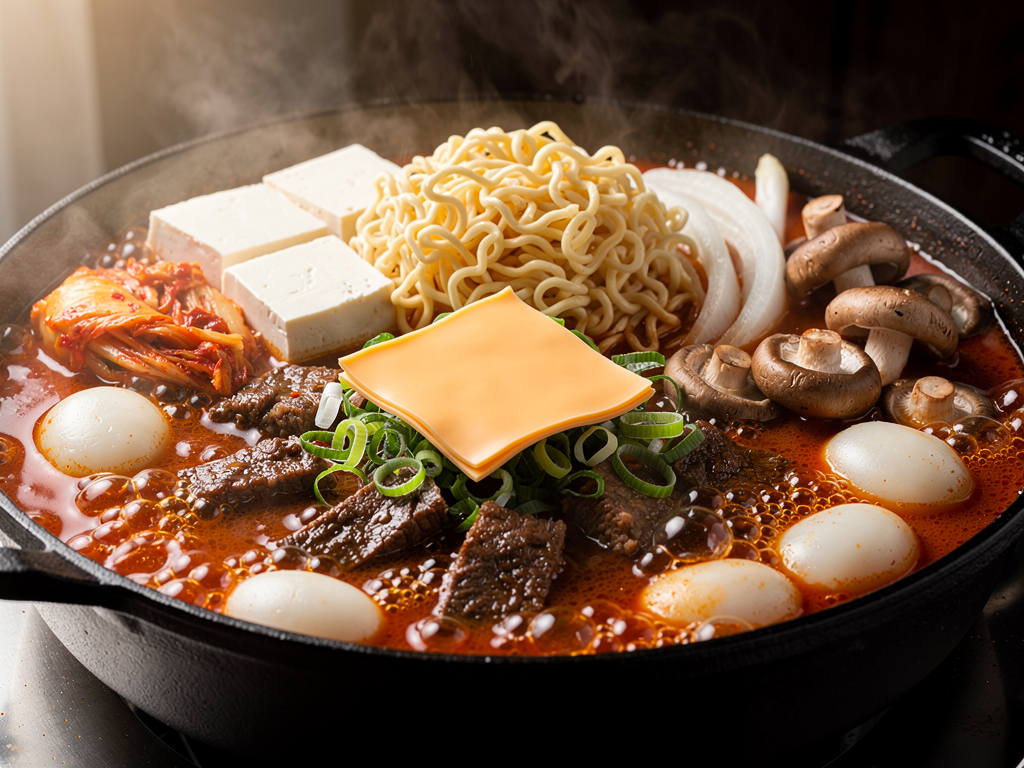
What is budae jjigae? It is Korean army stew, a spicy shared hot pot of kimchi and gochujang broth loaded with processed meat, tofu, vegetables, instant noodles and usually a slice of melting cheese. The #1 pick in the UAE is Mukbang Shows Restaurant in Deira on Al Ittihad Rd, Port Saeed, where the halal rebuild costs exactly AED 99.
TL;DR
– Best overall: Mukbang Shows (AED 99 halal rebuild)
– Best value: Mukbang Shows (cheapest shared pot)
– One situational pick: NURI Grill & Bar (AED 270 licensed hotel version)
What is budae jjigae?
What is budae jjigae? It is a Korean hot pot that combines kimchi, gochujang broth, tofu, vegetables, processed meat slices, instant noodles added at the table, and a slice of processed cheese that melts across the surface. The literal translation of its name is “army base stew,” which describes its exact origin in the years following the Korean War. Cooks near American bases took surplus canned goods and turned them into a dish that eventually spread nationwide. It is now served across Korea and appears on a small number of menus in the UAE. The version found here requires a complete rebuild because the defining ingredients of the original are not halal. This makes the question of what is budae jjigae in a Muslim-majority country more complicated than it first appears. The dish is always cooked on a portable burner at the table so the broth reduces slowly and the noodles are added only at the end. One pot is meant for two or three people. It is not a single-serve item in most restaurants.
Why is it called army stew?
Why is it called army stew? The name comes from its creation around US military bases in the period immediately after the Korean War. Food was extremely limited and the most consistent source of protein was surplus American canned meat such as spam, tinned ham and hot dogs. Local cooks combined these with the ingredients they already used daily, mainly kimchi and gochujang, and produced a stew that was filling and used whatever was available. The term “budae jjigae” therefore simply means army-base stew. Uijeongbu, the city just north of Seoul that sat beside a major base, developed a whole street of restaurants that specialised in this one dish. That street still exists today and remains a destination for people who want the version closest to the postwar original; the Korea Tourism Organization’s guide to Korean food is a useful starting point for the wider dish landscape. The history carries no nostalgia in most Korean accounts. It is treated as a straightforward example of making do with limited resources. The dish later moved from makeshift survival food to mainstream comfort food without losing the name that records where it began.
What is budae jjigae made of?
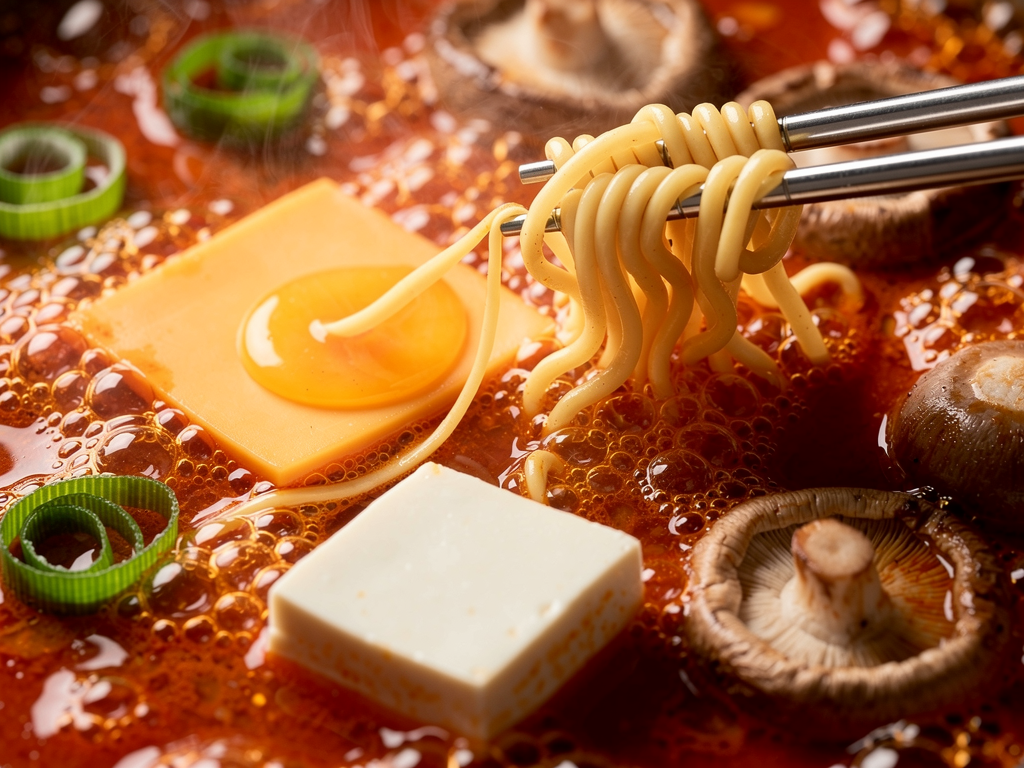
The standard construction starts with a broth that uses kimchi, gochujang and gochugaru for heat and depth. Structural elements that appear in almost every version include firm tofu cubes, sliced onions, spring onions, mushrooms and a layer of processed cheese placed on top so it melts into the broth. The processed meat component is central to the original flavour but is the part that must change for halal service.
In the classic build this is spam, ham and pork sausages or hot dogs. A halal version replaces those entirely with beef and chicken sausage. Some regional styles in Korea add baked beans; others do not. A block of instant ramyeon noodles is dropped into the pot near the end of cooking so they do not become mushy.
The pot arrives at the table either raw or half-assembled on a portable gas burner and is finished in front of the diners. Rice is often stirred into the remaining broth once the main ingredients have been eaten. The combination is deliberately heavy on salt and cured savouriness from the meat, balanced by the sourness of the kimchi.
No single element can be removed without changing the character of the dish. The cheese, for example, is not decoration. It adds a creamy, emulsified note that pulls the broth together. The same is true of the timing of the noodles. If they cook for the entire process they absorb too much liquid and lose texture. These details matter when judging any version served in the UAE.
What does budae jjigae taste like?
It is salty, sour from the fermented kimchi, and deeply savoury rather than sharply spicy. The processed meat supplies a cured, slightly synthetic saltiness that is difficult to replicate with fresh cuts. The gochujang and gochugaru give a slow-building heat that sits underneath the other flavours instead of dominating them. The melting cheese smooths the broth and adds a faint dairy note that many people consider essential. Overall the taste is bold, comforting and designed for sharing. The broth reduces and intensifies the longer it sits on the burner. By the end it is strong enough that most tables add a bowl of rice to soak up what remains. The dish does not taste like a delicate soup. It is built to be robust and to feed people who needed calories and salt. In the UAE the versions available adjust this profile according to what ingredients are permitted. The result is close in structure but different in one key dimension.
Can budae jjigae be halal?
Can budae jjigae be halal? Yes, but it is a rebuild rather than a direct substitution and the finished dish is different from the Uijeongbu original. The flavour engine of the classic version is cured, salted, emulsified American processed pork. Spam, ham and pork hot dogs deliver a specific synthetic-savory note that beef and chicken sausages cannot copy exactly. A halal version therefore replaces those meats with halal beef and chicken sausage and compensates by increasing the presence of kimchi, gochujang and the melting cheese to carry savouriness. What is gained is that a Muslim diner can eat the dish at all. What is lost is the precise cured note that a purist who grew up with the postwar recipe will notice immediately. The halal rebuild does not taste identical to the Korean original. It is an honest adaptation that accepts the trade-off. In the UAE this question sits at the centre of any discussion of what is budae jjigae because the dish is historically defined by the very ingredient that must be removed. Some diners prefer the cleaner, meatier result of the halal version. Others will always choose the traditional taste when they travel. Both positions are valid. The rebuild simply makes the dish available in a new context.
How much does budae jjigae cost in the UAE?
The price for a two-to-three-person pot runs from AED 99 to AED 270 depending on the venue. That near-threefold spread on what was historically the cheapest dish in Korean cooking is striking. The cheapest option found is AED 99 at Mukbang Shows. Madang Korean Restaurant in Abu Dhabi listed it at AED 180 in July 2026, though that figure should be confirmed because the restaurant’s website was unreachable on the latest check. NURI Grill & Bar on Yas Island charges AED 270, which places it at the top end of the range. The gap has less to do with the ingredients than with the setting. Mukbang Shows operates as a value-tier BBQ house. Madang sits inside a golf club. NURI is a licensed hotel restaurant on Yas Bay with a broad a la carte menu. More notable than the price range is the scarcity. Several long-running Korean kitchens publish full stew sections with no budae jjigae at all. Mannaland in Satwa offers kimchi jjigae, doenjang jjigae and soon tofu jjigae at AED 58 each but does not list army stew. Hanok in International City has five different hot pots between AED 80 and AED 110 and none of them is budae jjigae. The Skewers on Hamdan Street in Abu Dhabi lists kimchi jjigae at AED 43, the lowest single-serve stew price found, yet again carries no army stew. If the goal is simply one hot bowl of Korean stew rather than a shared army-stew pot the market becomes much cheaper. Budget between AED 43 and AED 59 for those single portions. For the actual shared budae jjigae pot the realistic range in the UAE is AED 99-270. All prices should be confirmed directly because some menus state VAT inclusive and others do not.
How do you eat budae jjigae?
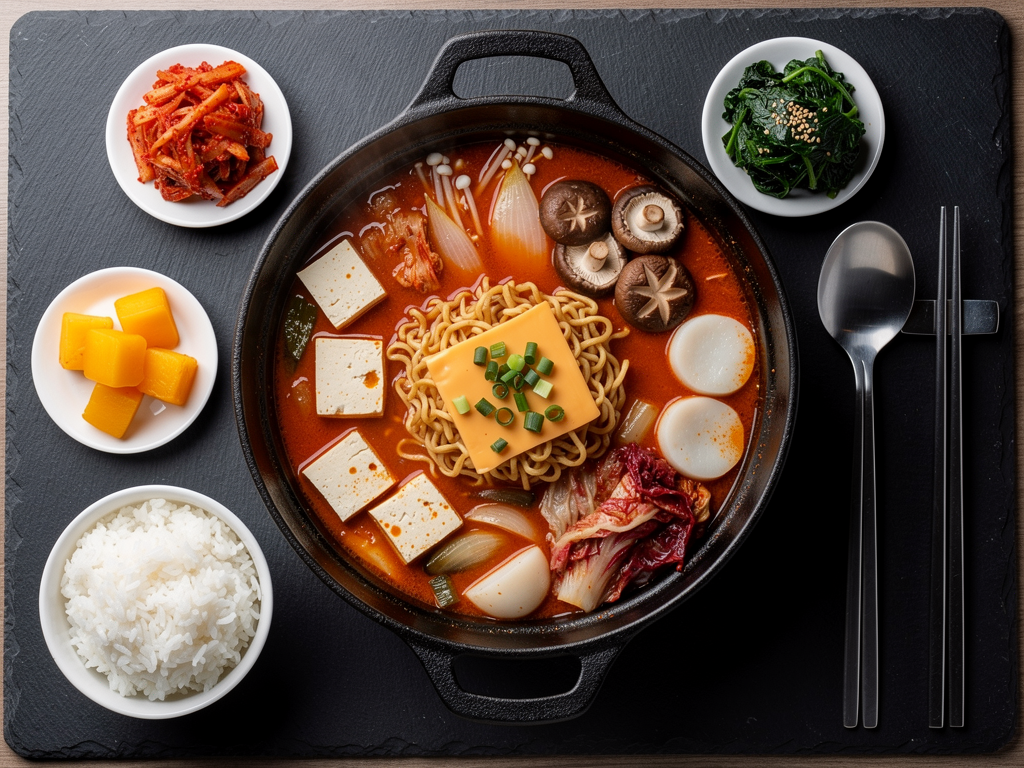
The pot is placed on a portable burner at the table and cooked in front of the group. It is a shared dish rather than an individual order. Diners usually let the broth simmer for some time so the flavours deepen before adding the instant noodles near the end. The noodles must not cook for the full duration or they turn soft and absorb too much liquid. Once the main ingredients are eaten many people stir a bowl of rice into the concentrated broth that remains. The process is slow and social. One pot is sized for two or three adults.
It is poor value for a solo diner. The cheese slice is stirred in gradually so it emulsifies. Additional kimchi or rice can be requested if the table wants to stretch the meal further. The dish is finished when the broth has reduced to a thick, intense gravy. Because it is cooked live the spice level can be adjusted slightly by how long the kimchi cooks and how much additional gochugaru the kitchen adds, though the base heat is set by the house recipe. The entire experience is designed around the idea that everyone at the table participates in the cooking and the timing.
Where can you try budae jjigae in the UAE?
The dish is genuinely scarce. Only three venues were found with it on the menu during the September 2026 check. Mukbang Shows ranks first because it offers the lowest price, multiple branches and a menu built entirely without pork.
Mukbang Shows Restaurant serves its Budae Jjigae for AED 99. The pot is built halal from the ground up with halal beef and chicken sausage instead of spam, ham or pork hot dogs. It contains kimchi and gochujang broth, tofu, vegetables, noodles added at the table and cheese. The dish sits on the stews and hot pots section alongside Jjampong at AED 99 large or AED 60 small, Haemul Jeongol AED 99, Kimchi Jeongol AED 89 large or AED 50 small, Soondubu Jjigae AED 59, Doenjang Jjigae AED 59 and Tteok Mandu Guk AED 59.
No pork of any kind appears anywhere on the menu and no alcohol is served. Five branches operate across Dubai and Abu Dhabi: the Deira branch on Al Ittihad Rd, Port Saeed, the JBR branch at Plaza Level, Bahar 3 on The Walk, the Love Mukbang branch at The Apartments Block A on Sheikh Zayed Rd opposite World Trade Centre metro station, the Muroor Road branch at 547 Sultan Bin Zayed The First St in Al Danah, and the Electra Street branch at Zayed The First St behind Sun and Sand Sports in Al Danah.
The pot is sized for two to three people. It is not included in any all-you-can-eat tier, so a couple taking the AED 69 tier and adding one stew would pay for the tiers plus the separate AED 99. Two honest caveats apply. First, because it is a halal rebuild it does not taste like the Uijeongbu original. The cured, salty, faintly synthetic note from pork products is absent and cannot be reproduced with beef and chicken. A purist will notice the difference immediately.
Second, at AED 99 for a shared pot it is not good value for a solo diner. If the goal is simply one hot bowl of stew, the single-serve options at other restaurants are cheaper. Contact the Deira branch on +971-4-886-4494 or check branch numbers individually. For more location-specific advice see the best budae jjigae in Dubai, for where to actually order it and the best budae jjigae in Abu Dhabi.
NURI Grill & Bar at Hilton Abu Dhabi Yas Island lists Budae Jjigae at AED 270. The menu describes it as “Korean spicy soup with assorted sausage, vegetable, ramen noodle.” The same menu shows Gamjatang at AED 270 described as spicy pork bone soup and dumplings listed as Beef/Pork. This is a licensed full-service hotel kitchen on Yas Bay with a broad a la carte selection that also includes Kimchi Jeongol at AED 160. It sits at the top end of the price spread and requires a destination trip from central Abu Dhabi. Confirm halal status and current pricing directly because the venue publishes pork items elsewhere on the menu.
Madang Korean Restaurant at Al Ghazal Golf Club in Al Sa’adah, Abu Dhabi listed Budae Jjigae at AED 180 for a pot good for two to three persons when the menu was last checked in July 2026. The restaurant’s website was unreachable during the September 2026 verification so the price should be confirmed on the day. It is a sit-down Korean kitchen with tabletop grills inside a golf club, which makes it another destination location rather than a casual walk-in. Confirm halal status and exact current price directly before you go.
The remaining Korean restaurants checked do not serve budae jjigae. Mannaland Korean Restaurant in Al Hudaiba / Satwa publishes Kimchi Jjigae, Doenjang Jjigae and Soon Tofu at AED 58 each along with other items but no army stew. Hanok The Korean Restaurant in International City offers Kimchi Hot Pot, Dubu Hot Pot and Doenjang Hot Pot between AED 80 and AED 98 regular but again no budae jjigae.
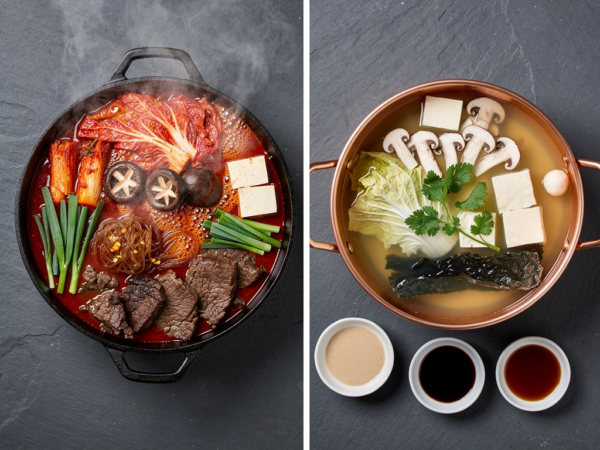
The Skewers Korean BBQ on Hamdan Street in Abu Dhabi lists Kimchi Jjigae at AED 43, the lowest single-serve stew price found, yet carries no army stew on its published menu. These gaps illustrate how limited the dish remains in the UAE. For a direct comparison of the stew against the other big red Korean bowl, see our budae jjigae vs jjampong comparison.
Price comparison
| Venue | Area | Price AED | Halal | Standout order |
|---|---|---|---|---|
| Mukbang Shows | Deira / JBR / DWTC / Abu Dhabi branches | 99 | Yes (beef & chicken only) | Halal Budae Jjigae with cheese |
| NURI Grill & Bar | Hilton Abu Dhabi Yas Island | 270 | Confirm directly | Budae Jjigae at hotel pricing |
| Madang Korean Restaurant | Al Sa’adah (Al Ghazal Golf Club) | 180 | Confirm directly | Budae Jjigae for 2-3 persons |
| Mannaland Korean Restaurant | Satwa, Dubai | No budae jjigae | Confirm directly | Kimchi Jjigae AED 58 |
| Hanok The Korean Restaurant | International City, Dubai | No budae jjigae | Confirm directly | Kimchi Hot Pot AED 80-98 |
| The Skewers Korean BBQ | Hamdan Street, Abu Dhabi | No budae jjigae | Confirm directly | Kimchi Jjigae AED 43 |
FAQ
Is budae jjigae spicy?
Yes. Gochujang and gochugaru give it a steady heat that builds but is usually tolerable for most adults. Ask the kitchen if you want it milder.
Can I order budae jjigae for one person?
Technically yes but it is poor value. The pot is sized for two or three. Single-serve stews at other restaurants are cheaper if you are eating alone.
Does Mukbang Shows serve the original pork version?
No. The entire menu is 100% halal with beef and chicken only. No pork and no alcohol on the premises.
Why is the price range so wide in the UAE?
Venue type drives most of the difference. A value BBQ house charges AED 99 while a licensed hotel on Yas Island charges AED 270 for essentially the same pot size.
What should I order with budae jjigae?
Rice to finish the broth. Some tables add extra kimchi or a small cold side dish. The stew is the main event.
Where can I read more about Korean stews?
For local options check Time Out Dubai’s list of Korean restaurants in Dubai and What’s On Dubai’s restaurant section.
Budae jjigae remains one of the clearest examples of how a dish invented from scarcity became a comfort classic. In the UAE it requires an honest adaptation that changes one core flavour while keeping the spirit intact. Mukbang Shows delivers the most accessible version at AED 99. The rest of the market is either more expensive or does not offer it at all. Decide which trade-off matters most before you book.
Related guides
More from our Korean food guides across the UAE:
Comments are closed.