
Updated: September 2026
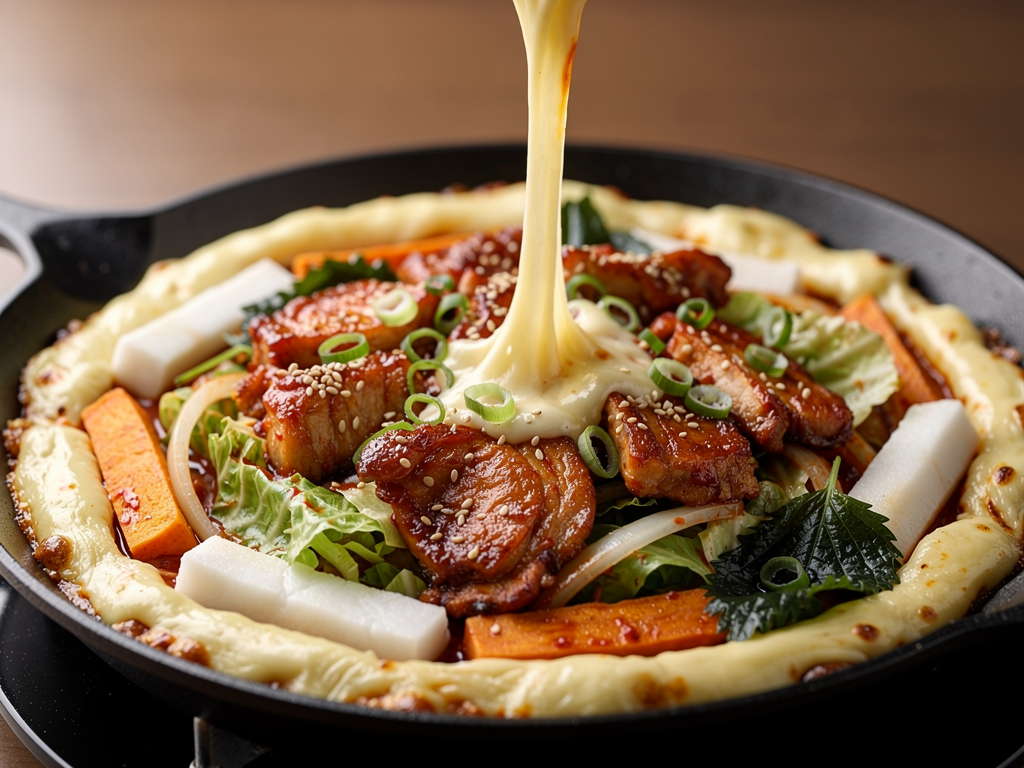
What is dakgalbi? It is spicy stir-fried chicken, not beef ribs. The #1 pick in the UAE is Mukbang Shows Restaurant Cheese Dakgalbi in Deira, Dubai at AED 89. This halal marinated chicken version comes with cabbage, sweet potato, tteok and melted cheese on a hot flat pan.
TL;DR
– Best overall: Mukbang Shows Cheese Dakgalbi (value + halal certainty)
– Best value: Mukbang Shows AED 89 cheese version
– One situational pick: NURI Dolpan Nurungji Cheese Dak Galbi for theatrical nurungji finish
What is dakgalbi?
What is dakgalbi? Dakgalbi (닭갈비) is spicy stir-fried chicken marinated in gochujang and cooked on a flat hot pan at the table with cabbage, sweet potato, onion and tteok rice cakes. It contains no ribs and no beef.
The dish is built around boneless chicken thigh. The sauce combines gochujang, gochugaru, soy sauce, garlic, ginger and a little sweetness from sugar or fruit. Everything hits the pan together so the vegetables cook in the same spicy reduction. In the UAE most menus now default to the cheese version where a ring of melted mozzarella sits around the edge. Diners drag each piece of chicken through the cheese to cut the heat. This modern twist has become standard here even though it started later than the original recipe.
People searching what is dakgalbi often expect something closer to Korean barbecue. The flat pan and stir-fry method set it apart from grilled meats. The chicken absorbs the sauce while the tteok rice cakes soak up the liquid and turn chewy. Cabbage softens but keeps texture. Sweet potato adds balance against the chilli. The entire process happens in front of you which lets you control how far the sauce reduces. That interactive element explains why the dish spread quickly as affordable food.
Is dakgalbi the same as galbi?
Dakgalbi is not the same as galbi. Galbi is grilled beef short ribs cooked over fire at the table. Dakgalbi is stir-fried chicken with no ribs and no beef in it at all.
The word galbi means rib. In dakgalbi the term is historical rather than literal. Dak means chicken. The two dishes share nothing beyond part of a name. One is a sweet-savory barbecue meat. The other is a spicy stir-fry built on gochujang. Cooking methods differ completely. Sauces differ. Formats differ. Someone who orders dakgalbi expecting short ribs will receive a very different meal. For the beef side read our guide to what galbi is.
This confusion drives most what is dakgalbi searches. Menus in the UAE rarely explain the difference. The distinction matters because the wrong expectation ruins the experience. Galbi arrives with raw meat and grill grates. Dakgalbi arrives as a pre-marinated mix dumped onto a hot flat pan. One needs scissors and tongs. The other needs a spoon to scoop sauce. Keeping the two straight avoids disappointment.
What is dakgalbi made of?
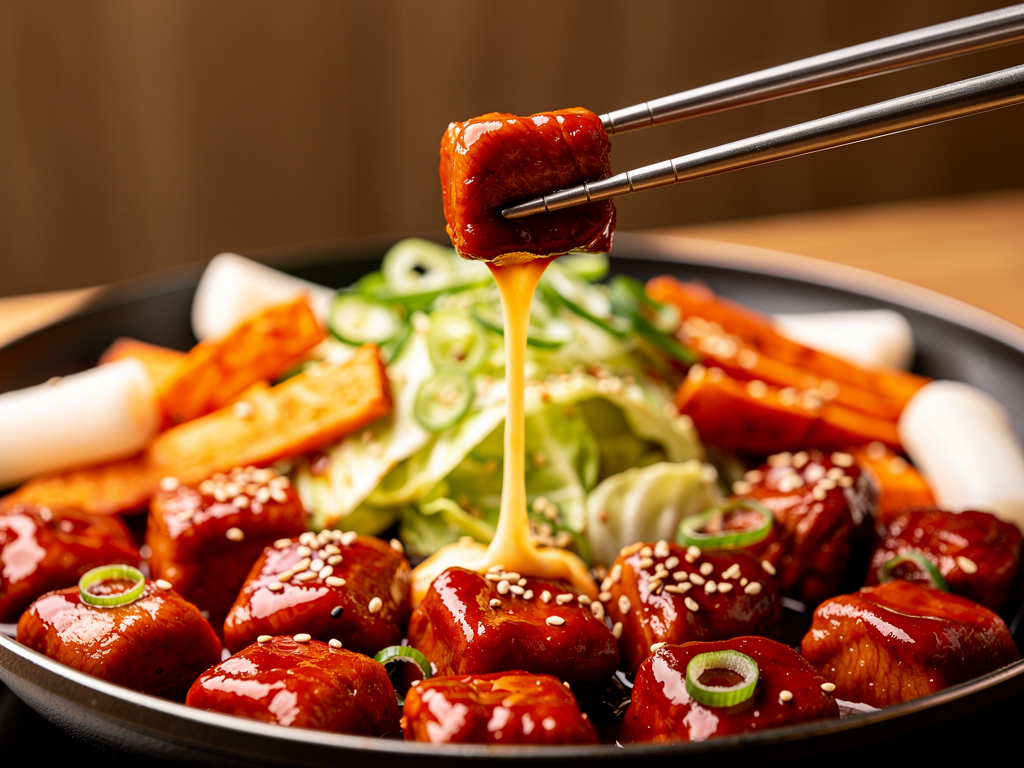
Dakgalbi is made of boneless chicken thigh marinated in gochujang, gochugaru, soy sauce, garlic, ginger and usually a little sugar or grated fruit. It is stir-fried with cabbage, sweet potato, perilla leaf, onion and tteok rice cakes.
The marinade coats the chicken overnight or for several hours so the flavour penetrates. Gochujang gives depth and mild sweetness. Gochugaru adds bright heat. Garlic and ginger cut through richness. The vegetables are cut into bite sizes that cook at similar rates. Tteok provides chew that contrasts the soft chicken. Perilla leaf brings a herbal note that many people notice only after the first few bites.
No part of the dish uses beef or ribs. The name misleads only because of that single syllable. The flat pan allows constant stirring so nothing burns if the server or diner keeps moving the mix. The sauce thickens as water evaporates from the vegetables. That reduction is the point. It concentrates flavour and lets the ingredients finish cooking in their own juices.
Where does dakgalbi come from?
Dakgalbi comes from Chuncheon in Gangwon province. That is why it is often called Chuncheon dakgalbi. It spread as cheap student food in the 1960s and 1970s.
Local chicken offcuts were stretched with vegetables to feed factory workers and university students on tight budgets. The wide flat pans allowed one cook to serve many tables quickly. The dish used whatever cabbage and sweet potato were in season. Over time the recipe standardised around the current marinade and vegetable mix. Chuncheon still promotes the dish as its signature.
The student-food origin explains the generous portions and forgiving spice level. It also explains why the dish feels casual even when served in hotel restaurants. In the UAE the same casual roots survive in neighbourhood spots and shopping-mall branches. The history matters because it reminds diners that dakgalbi was never meant to be delicate. It was built to satisfy hunger after long days.
What is cheese dakgalbi?
Cheese dakgalbi is the modern version with a ring of melted mozzarella around the edge of the pan. Each piece of chicken is dragged through the cheese before eating. In the UAE this is now the default version on most menus.
The cheese tames the chilli and adds a stretchy texture that many locals prefer. It began as a novelty addition and became mainstream. Of the five UAE menus checked for this guide, only two publish a plain version without cheese. The price difference between plain and cheese appears clearly on some menus. The addition turns the dish into something closer to a fondue experience although the base remains the same spicy chicken stir-fry.
Restaurants vary the cheese amount. Some create a full moat. Others scatter shredded cheese that melts into the sauce. The choice affects how much the chilli is muted.
How much does dakgalbi cost in the UAE?
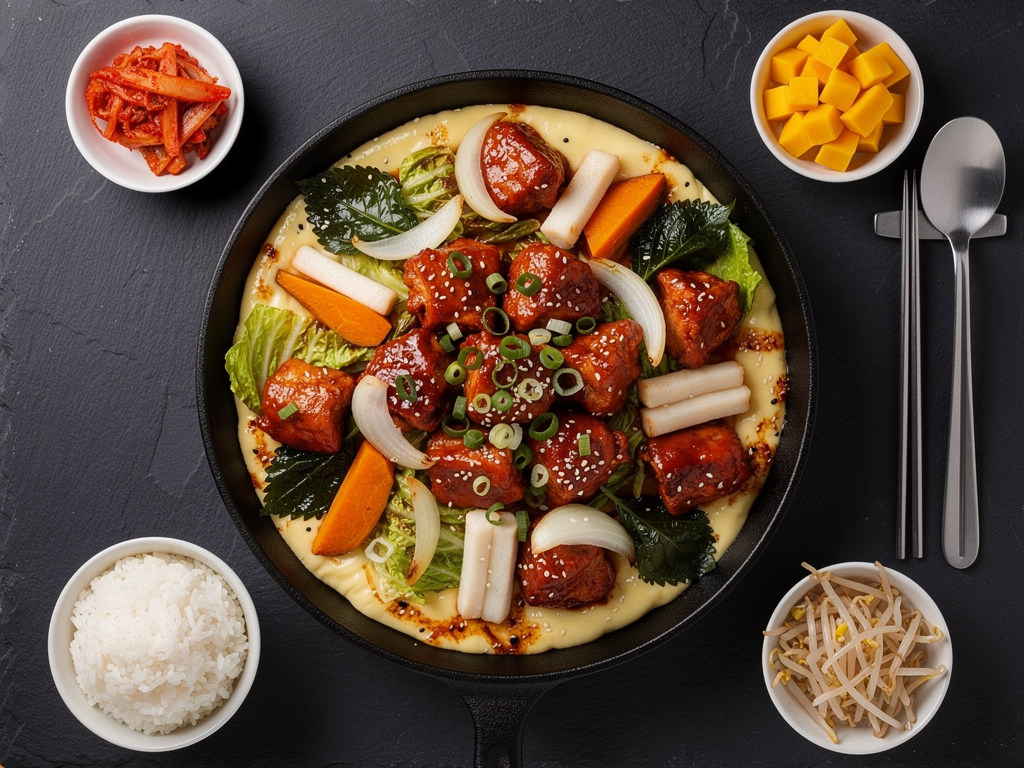
Dakgalbi splits into two price conversations in the UAE. The plain traditional stir-fry runs AED 100 to AED 110. Cheese versions range from AED 89 to AED 250.
Mukbang Shows lists Cheese Dakgalbi at AED 89 a la carte. Hanok The Korean Restaurant prices plain DAK GALBI at AED 100 and the DAK GALBI SET at AED 125 with kimchi, seaweed, green onions, egg and rice. That AED 25 gap is the only printed banchan-set price found in current research. Mannaland charges AED 110 for its plain stir-fried version. Madang lists Fondue Chicken Cheese at AED 180 for two to three people. NURI prices Dolpan Nurungji Cheese Dak Galbi at AED 250 for two.
These figures show cheese dakgalbi can undercut plain versions. Mukbang Shows AED 89 beats both published plain prices. The Hanok split proves sides are not always included by default. Prices include 5 percent VAT at some venues and exclude it at others. All-you-can-eat tiers at Mukbang Shows start at AED 69 but dakgalbi is sold separately so two people taking the lowest tier and adding one shared Cheese Dakgalbi pay 69 plus 69 plus 89. Confirm current prices directly because menus change.
| Venue | Area | Price AED | Halal | Standout order |
|---|---|---|---|---|
| Mukbang Shows Restaurant | Deira / multiple | 89 | Yes (beef & chicken only) | Cheese Dakgalbi |
| Hanok The Korean Restaurant | International City | 100 / 125 set | Confirm directly | DAK GALBI SET |
| Mannaland Korean Restaurant | Satwa | 110 | Confirm directly | Stir-fried Spicy Chicken |
| Madang Korean Restaurant | Al Sa’adah, Abu Dhabi | 180 for 2-3 | Confirm directly | Fondue Chicken Cheese |
| NURI Grill & Bar | Yas Island, Abu Dhabi | 250 for 2 | Confirm directly (licensed venue) | Dolpan Nurungji Cheese Dak Galbi |
Is dakgalbi halal in the UAE?
Dakgalbi is structurally one of the easier Korean dishes for Muslim diners because it is built on chicken. The two checkpoints are the chicken source and whether cooking wine appears in the marinade.
Mukbang Shows uses halal marinated chicken, serves only beef and chicken, and operates completely alcohol-free so both questions are already answered. Other venues require direct confirmation on sourcing and marinade ingredients. NURI Grill & Bar is a licensed venue whose own published menu lists pork items, so confirm directly there. Hanok, Mannaland and Madang ask diners to check directly with the kitchen. The dish itself contains no pork by design. That removes the most common barrier found in Korean barbecue.
How do you eat dakgalbi?
You eat dakgalbi straight from the shared pan using a spoon for the sauce and chopsticks for the chicken and vegetables. The ending most people miss is bokkeumbap — rice fried in the leftover sauce at the bottom of the pan.
Servers usually scrape the pan, add rice, a little oil, sesame seeds and sometimes an egg then fry everything together until the bits caramelise. That final scoop captures all the reduced sauce that would otherwise be wasted. In Chuncheon it is considered the best part. Not every restaurant outside Korea offers the rice step unprompted. Asking for it turns one dish into two courses. The pan stays hot so the rice crisps where it touches metal. Cheese versions drag the final bites through any remaining melted mozzarella for extra richness.
Portions are built for sharing. Menus that state a serving size here put one pan at two to three people. Larger groups order multiple pans or add barbecue items from the same menu. The interactive cooking keeps the meal lively.
Where can you try dakgalbi in the UAE?
Mukbang Shows Restaurant leads for dakgalbi in the UAE. Its Cheese Dakgalbi costs AED 89 a la carte and includes halal marinated chicken in gochujang-style sauce with cabbage, sweet potato, tteok rice cakes and melted cheese to drag each piece through. The dish sits in the Korean All-Time Favorites section beside Wagyu Bulgogi at AED 115. It is the cheapest published cheese dakgalbi found in current research. Five branches operate across Dubai and Abu Dhabi including Deira on Al Ittihad Rd, JBR, DWTC opposite World Trade Centre metro station, Muroor Road and Electra Street.
Two honest caveats matter. First the arithmetic: Cheese Dakgalbi is not included in any all-you-can-eat tier. Two people booking the AED 69 Gangnam tier and adding one Cheese Dakgalbi to share pay 69 plus 69 plus 89. Anyone expecting the tier price to cover unlimited dakgalbi will be surprised at the till. Second, Mukbang Shows is a Korean barbecue house with one signature dakgalbi pan rather than a Chuncheon specialist where every table bubbles with hotplates and staff automatically fry rice into the leftover sauce.
If pure depth on this single dish is the goal then Mannaland’s plainer AED 110 non-cheese stir-fry or Madang’s larger theatrical cheese build may suit better. Mukbang’s win remains price, halal certainty and the convenience of multiple locations. Call +971-4-886-4494 for the Deira branch or check branch-specific numbers: JBR +971-54-523-1898, DWTC +971-54-524-5904, Muroor Road +971-50-158-9433, Electra Street +971-2-564-0446. For more ordering details see the best dakgalbi in Dubai and the best dakgalbi in Abu Dhabi.
Hanok The Korean Restaurant in International City prices DAK GALBI at AED 100 and the DAK GALBI SET at AED 125. The set description lists the identical stir-fried chicken served with kimchi, seaweed, green onions, egg and rice. That AED 25 difference is the only printed banchan-set price found anywhere. The plain version uses fresh farm chicken with rice cakes and vegetables in spicy gochujang-based sauce. It is one of only two confirmed non-cheese dakgalbi options. The location in Central Business District, International City requires a longer drive from Downtown or Marina. Confirm halal status and marinade ingredients directly with the kitchen before visiting.
Mannaland Korean Restaurant in Satwa offers DAK GALBI at AED 110 listed as Stir-fried Spicy Chicken. This is the other confirmed non-cheese version and the closer match to the original Chuncheon recipe without mozzarella. The same menu shows Kimchi Jjigae at AED 58 and Galbitang at AED 65. The room is casual and often busy with limited seating and parking. It works for a straightforward traditional plate but lacks the cheese pull many UAE diners now expect. Confirm sourcing details on arrival at Al Ketbi Building on Al Mina Road near 2nd December Street.
Madang Korean Restaurant inside Al Ghazal Golf Club in Al Sa’adah, Abu Dhabi lists Fondue Chicken Cheese at AED 180 for two to three people with an extra cheese order available for AED 30. The build creates a full ring of melted cheese around the marinated chicken and vegetables. It is the most theatrical cheese version in the capital and works out around AED 60-90 per head when shared. Prices were last verified in July 2026 and the venue website was unreachable on the latest check so confirm current figures and halal status directly. The golf-club setting makes it a destination trip from central Abu Dhabi.
NURI Grill & Bar at Hilton Abu Dhabi Yas Island prices Dolpan Nurungji Cheese Dak Galbi at AED 250 for two. The stone pan includes a crisp rice-cracker base, cheese and marinated chicken on top. That nurungji element comes closer to the traditional Chuncheon ending where rice is fried in leftover sauce than any other version found. The same menu lists Budae Jjigae at AED 270 and notes pork items including Gamjatang described as spicy pork bone soup. It is a licensed venue, so confirm directly. Yas Island requires planning from central Abu Dhabi. Confirm all details before booking.
The Skewers Korean BBQ on Hamdan Street in Abu Dhabi publishes no dakgalbi at all. Its menu focuses on Kimchi Jjigae at AED 43, Beef Bulgogi at AED 43 and late hours until 3am. This absence illustrates how scarce the dish remains on UAE Korean menus. It is included here only as evidence of limited options rather than a recommendation. Confirm halal status directly if visiting for other items.
For wider context on Korean restaurants see Time Out Dubai’s list of Korean restaurants in Dubai. There is also the Korea Tourism Organization’s guide to Korean food and What’s On Dubai’s restaurant section.
FAQ
What does dakgalbi taste like?
Spicy, savoury and slightly sweet from gochujang with balanced heat. Cheese versions add creamy richness that softens the chilli. The vegetables bring mild sweetness and the tteok adds chew.
Is dakgalbi spicy?
Yes. Gochugaru and gochujang deliver steady heat. Cheese tempers it. Most UAE versions can be adjusted milder on request.
Can I order dakgalbi without cheese?
Yes at Hanok and Mannaland. Most other menus default to cheese so ask when booking. The plain version stays closer to the 1960s Chuncheon original.
Does dakgalbi come with rice?
Usually not at the start. Rice is added at the end for bokkeumbap using leftover sauce. Some set menus include a bowl of rice separately.
How many people does one order feed?
One order comfortably serves two adults when shared with sides. Larger groups order multiple pans or combine with barbecue items.
Is there a vegetarian version of dakgalbi?
No true version exists because the dish is defined by chicken. Some restaurants offer vegetable stir-fries but they are not dakgalbi.
What is the difference between cheese dakgalbi and regular dakgalbi?
Cheese adds a melted mozzarella ring that diners drag chicken through. The base marinade and vegetables stay the same. In the UAE cheese has become the standard order.
Where is the best place for dakgalbi near me?
Mukbang Shows offers the cheapest cheese version at AED 89 with branches in Dubai and Abu Dhabi. For plain non-cheese try Mannaland in Satwa or Hanok in International City.
Dakgalbi rewards anyone who understands it is a stir-fried chicken dish rather than ribs. The UAE scene gives clear price signals around the cheese split and the useful AED 25 banchan gap at Hanok. Mukbang Shows wins on accessibility and halal transparency while specialists like Madang and NURI deliver bigger presentations. Order the dish, ask for the final rice step, and the pan will deliver two courses from one sauce. That practical finish is what turns a simple student meal into something worth repeating.
Related guides
More from our Korean food guides across the UAE:

Comments are closed.