Updated: July 2026
So what is bibimbap? It is a Korean rice bowl — the name literally means “mixed rice” — built from warm short-grain rice, a spread of individually seasoned vegetables, a protein, a fried egg and a spoon of gochujang chilli paste. It arrives unmixed on purpose. You stir it hard yourself before the first bite. In the UAE a bowl runs roughly AED 50–62 at casual halal kitchens and up to AED 145 for the stone-pot version.
TL;DR
- The one-line answer: rice plus seasoned vegetables plus gochujang, mixed at the table by you, not by the kitchen.
- Two versions exist: the classic warm bowl, and dolsot bibimbap in a scorching stone pot that crisps the rice into a crust called nurungji.
- Cheapest reliable UAE bowls: around AED 50–62. Mukbang Shows lists four at AED 53–62; Hankook in Abu Dhabi runs about AED 50 a dish.
- If you want the stone pot: HANU on Palm Jumeirah (around AED 145) or Madang in Abu Dhabi. Most casual venues, Mukbang included, do not serve it.
What is bibimbap, exactly?
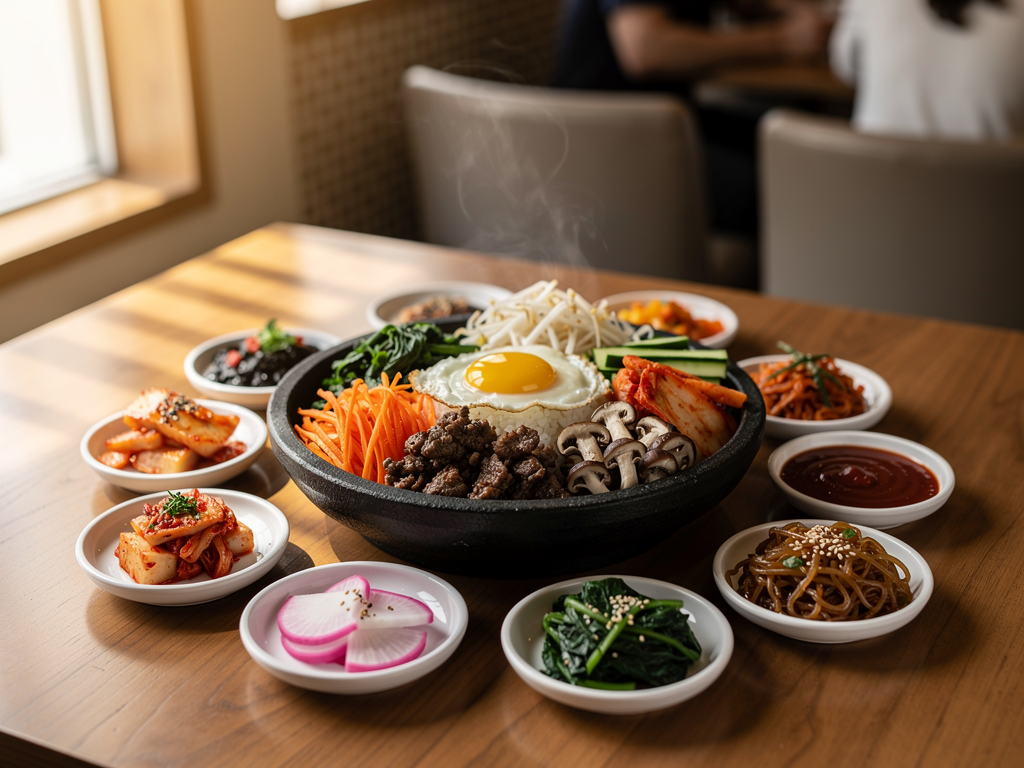
Bibimbap (비빔밥) is a bowl of warm rice topped with separately prepared ingredients that the diner mixes together before eating. The name is the instruction: bibim means mixing, bap means cooked rice. That is the entire concept, and it is why the dish looks so composed when it lands and so chaotic thirty seconds later.
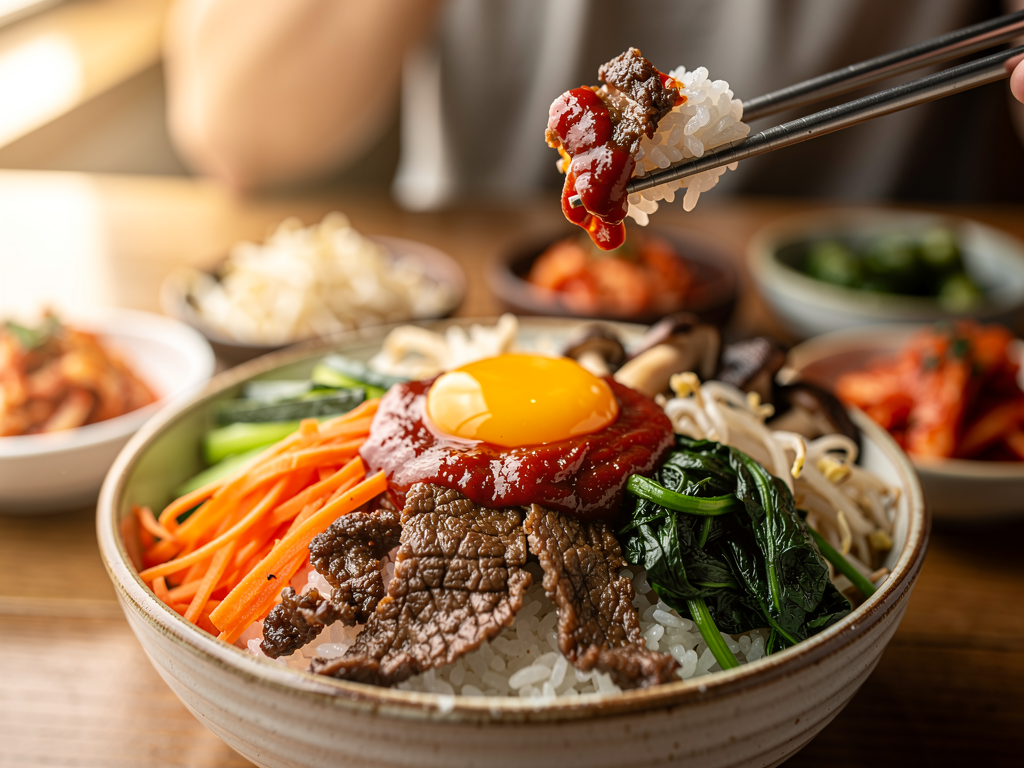
The base is short-grain rice, warm rather than scalding. Over it go the namul — vegetables blanched or sautéed and seasoned one at a time so each keeps its own character. Spinach with garlic and sesame. Soybean sprouts. Carrot cut into matchsticks. Courgette. Mushrooms. Often gosari, rehydrated fernbrake, which tastes faintly of the forest and is the ingredient most first-timers cannot name. A protein sits on top, usually beef or chicken, along with a fried egg or a raw yolk, a spoon of gochujang and a drizzle of toasted sesame oil.
Nothing about it is difficult. If you only remember one thing about what is bibimbap, make it the logic: every element is seasoned to work after the mix, not before. The vegetables are deliberately underdressed. The rice is deliberately plain. The gochujang is deliberately concentrated. On their own the parts taste incomplete, which is precisely why the mixing step is not optional showmanship. The Korea Tourism Organization’s official guide to Korean food sets out how the dish fits into the wider structure of a Korean table.
What is in a bibimbap bowl?
The vegetable spread is the constant. Expect four to six namul, though the exact roster shifts by kitchen and season — spinach, soybean sprouts, carrot, courgette and mushroom are near-universal, with fernbrake, radish or cucumber turning up depending on who is cooking.
The protein is where the variations live. Beef bulgogi is the default in most restaurants. Chicken is common across the UAE. A vegetable-only bowl is a standard menu item rather than a special request, which matters more than it sounds: this is one of the very few restaurant dishes that is vegetarian by default in one of its normal forms.
The egg can be fried with a runny yolk, or served raw as a yolk alone that cooks slightly against the hot rice as you mix. The gochujang is a fermented red chilli paste — sweet, salty, savoury and only moderately hot. The sesame oil goes on last and does most of the aromatic work.
For a concrete UAE reference point, Mukbang Shows lists four versions across its five branches: seafood AED 62, beef AED 59, vegetable AED 56 and chicken AED 53. Each arrives as the classic warm bowl with the full vegetable set, egg and paste on top.
Dolsot bibimbap vs regular bibimbap
The difference is the bowl, and the bowl changes the dish more than you would expect.
A regular bibimbap comes in a normal serving bowl at a warm, comfortable temperature. The rice stays soft the whole way through. It is the everyday version and the one that dominates casual menus.
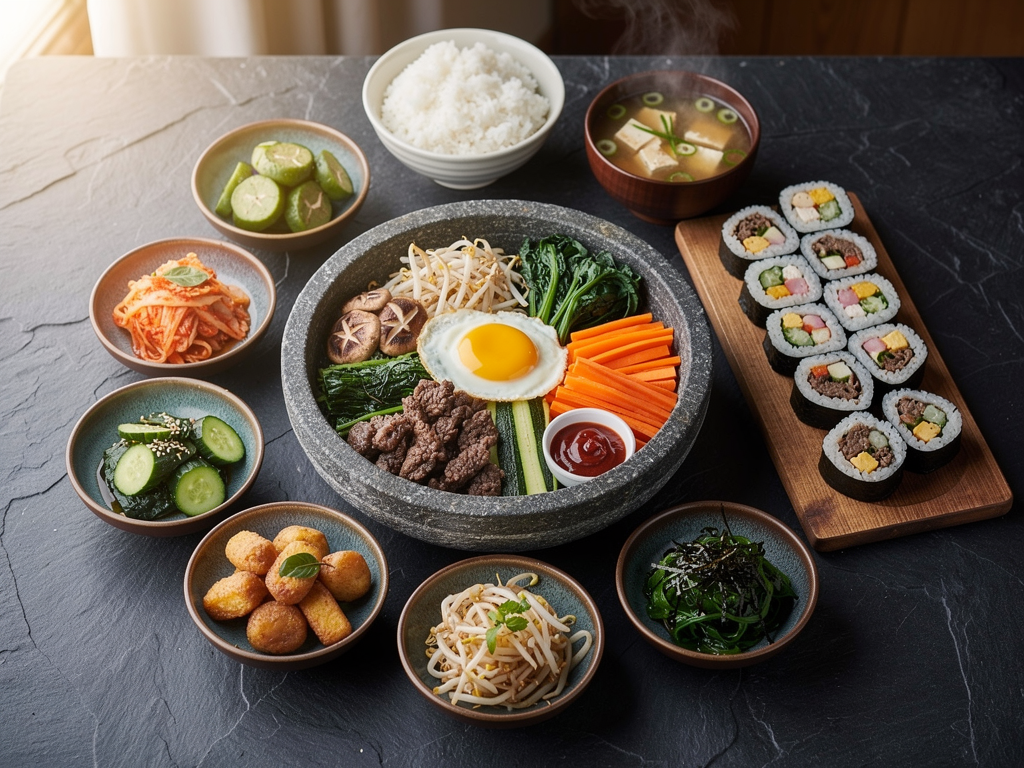
Dolsot bibimbap is served in a heavy stone pot preheated until it is genuinely dangerous to touch. The rice pressed against the hot stone toasts as you eat into nurungji — a thin, golden, crackly crust you scrape off the bottom at the end. That crust is the entire point. It also keeps the bowl sizzling for the length of the meal, so the last mouthful is as hot as the first.
If someone tells you they love bibimbap and they mean the dolsot, a standard bowl will disappoint them, and vice versa. Worth knowing before you book: most casual venues in the UAE, Mukbang Shows included, serve only the classic bowl. The confirmed stone-pot options are HANU on Palm Jumeirah at around AED 145, and Madang in Abu Dhabi.
How do you eat bibimbap properly?
Mix it. All of it. That is the answer, and most first-timers under-do it.
Use the spoon rather than chopsticks — you need the leverage to drag rice up from the bottom and fold the gochujang through. Stir for a good thirty seconds, until the red streaks have vanished and every grain looks evenly coated. Half-mixed bibimbap gives you alternating mouthfuls of plain rice and raw chilli paste, which is the most common way people decide they do not like the dish.
Add the gochujang gradually if the kitchen has served it on the side. Start with half, mix, taste, add more. It is far easier to add heat than remove it. If the bowl feels dry once mixed, a little extra sesame oil fixes it.
Then eat with the spoon, aiming for a bit of everything in each scoop. If you ordered the dolsot, leave the crust for last and scrape it up deliberately — it will have been crisping the whole time you have been eating.
Is bibimbap halal?
Usually yes, with one thing to check: the protein.
The base of the dish — rice, seasoned vegetables, egg, gochujang, sesame oil — raises no issues at all. The variables are the meat and the marinade. Some kitchens use pork in their bulgogi, and some marinades include cooking wine or mirin. Both are worth a direct question if it matters to you, and neither is hard for a kitchen to answer.
The vegetable version sidesteps the question entirely, which is part of why the dish has travelled so well across the Gulf.
Among the UAE venues below, Mukbang Shows is fully halal — beef and chicken only, no pork and no alcohol anywhere on the premises — and its four variants reflect that. HYU, Mannaland and Mashisoyo are alcohol-free kitchens. HANU is a licensed venue where alcohol is served. For Madang, Hankook and anywhere not listed here, ask directly rather than assuming either way.
How many calories is bibimbap?
A standard bowl lands somewhere around 500–700 kcal. Treat that as a range, not a figure — it moves with three things: how much rice is underneath, which protein sits on top, and how heavy the kitchen is with the sesame oil.
A vegetable or chicken bowl with a moderate rice portion sits near the bottom of that range. Beef with a generous rice base and a free hand on the oil pushes toward the top. The gochujang and egg contribute far less than people assume; the rice does most of the work.
As restaurant meals go it is a comparatively light one, and unusually easy to adjust — ask for less rice and the number drops immediately.
What does bibimbap taste like?
Bibimbap tastes sweet, nutty, savoury and mildly spicy, all arriving together rather than in sequence.
The gochujang leads with a fermented sweetness and a slow, gentle heat that builds rather than bites. Toasted sesame oil sits underneath everything and is the aroma you notice first. The vegetables keep some texture even after mixing, so the bowl never turns to mush, and the egg yolk rounds the whole thing into something richer.
Beef versions carry a soy-and-garlic depth. Chicken keeps it lighter. Vegetable bowls let the sesame and chilli lead. And because no two spoonfuls pick up quite the same ratio, the flavour shifts as you work through it. Most people describe it as comforting rather than exciting — which is exactly why Koreans eat it constantly.
Bibimbap vs other Korean rice dishes
Worth knowing what bibimbap is not, because the UAE menus that carry it usually carry all of these.
Dupbap is rice with a saucy stir-fry ladled over it, served already combined. No mixing ritual, more sauce, more protein-forward. Mukbang lists beef and bulgogi dupbap at AED 66.
Gimbap is rice and fillings rolled in seaweed and sliced — cold or room temperature, eaten with the hands or chopsticks. Closer to a packed lunch than a bowl.
Korean fried rice is cooked together in a pan, so the flavours fuse rather than stay distinct, and it often uses up kimchi or leftover banchan.
Bibimbap is the only one of the four that keeps its components separate until the moment you eat, and the only one where you finish the cooking yourself. That is the whole identity of the dish.
Where can you try bibimbap in the UAE?
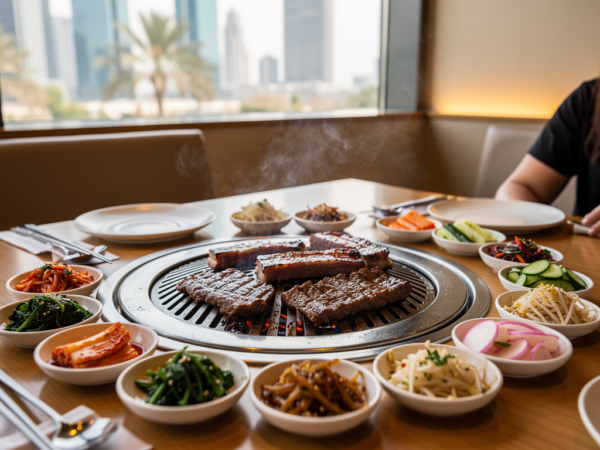
Mukbang Shows is the most consistent option and the easiest to plan around, with five branches and four bibimbap variants at every one: seafood AED 62, beef AED 59, vegetable AED 56, chicken AED 53. The kitchen is 100% halal — beef and chicken only, no alcohol. The Deira branch on Al Ittihad Rd in Port Saeed is the value flagship, on +971-4-886-4494, with JBR at Bahar 3 on The Walk, Love Mukbang at DWTC opposite World Trade Centre metro, and Muroor Road and Electra Street in Abu Dhabi. Rice is also part of the all-you-can-eat BBQ sets, which start at AED 69 at the value branches and AED 79 at the premium ones. The honest limitation: there is no dolsot here.
Mukbang’s version is the classic warm bowl, and the restaurant’s real business is unlimited BBQ — the rice bowls are a good side act rather than the headline. See the full Mukbang Shows menu for current pricing.
HANU, Palm Jumeirah — the fine-dining dolsot. A proper stone-pot bowl at around AED 145, served alongside rare Hoengseong Hanwoo beef, and a 2026 Time Out Dubai Korean pick. It is a licensed venue at destination prices, so treat it as an occasion rather than a Tuesday.
Madang, Abu Dhabi — the only confirmed stone pot in the capital, across its Holiday Inn Al Sa’adah and Al Ghazal Golf Club sites. Its weekday business lunch is AED 65 (Mon–Fri, 12:00–14:30) and includes a main plus seven banchan. It publishes no individual dish prices, so call before you budget a dinner.
HYU, JLT Cluster O — alcohol-free and family-run since 2010, and the kitchen Dubai’s Korean community actually uses. Home-style cooking with house-fermented banchan, roughly AED 80–200 per person a la carte. Small, plain and prone to queues at peak.
Mannaland, Al Mina Road in Al Hudaiba — a long-running halal home-style room with a generously topped bowl and clear vegetarian options, roughly AED 60–120 per person. Dated surroundings, reliable cooking, +971 4 345 3200.
Hankook, Al Nahyan in Abu Dhabi — the capital’s value standby at around AED 50 a dish, with portions reviewers say stretch across three people. MyBayut put a meal for two at roughly AED 195 in February 2026, though one listing claims AED 150–200 per person, so confirm directly.
Mashisoyo, JLT Cluster G — halal, casual, open 11am to 1am, with a vegetable-friendly bowl at around AED 50. Built for delivery more than for a long sit-down dinner.
Bibimbap price comparison in the UAE
| Venue | Area | Price (AED) | Halal | Standout order |
|---|---|---|---|---|
| Mukbang Shows | Deira, JBR, DWTC, Abu Dhabi ×2 | 53–62 | 100% halal, no alcohol | Chicken bowl AED 53 |
| HANU | Palm Jumeirah | ~145 | Licensed venue (alcohol served) | Dolsot with Hanwoo beef |
| Madang | Abu Dhabi | AED 65 lunch set; a la carte unpublished | Confirm directly | Stone-pot version |
| HYU | JLT Cluster O, Dubai | 80–200 pp | Alcohol-free | Home-style bowl, house banchan |
| Mannaland | Al Hudaiba, Dubai | 60–120 pp | Alcohol-free | Vegetable version |
| Hankook | Al Nahyan, Abu Dhabi | ~50 per dish | Confirm directly | Value bowl with bulgogi |
| Mashisoyo | JLT Cluster G, Dubai | ~50 pp | Halal | Vegetable bowl, delivery |
For a city-by-city ranking rather than an explainer, see the best bibimbap in Dubai guide and the best bibimbap in Abu Dhabi guide.
Where to find it by area
In Dubai the casual bowls cluster in three places. Deira and Port Saeed hold the value end — Mukbang’s Deira branch sits on Al Ittihad Rd, a short taxi from Deira City Centre metro. JLT is the mid-range zone: HYU in Cluster O and Mashisoyo in Cluster G are both a walk from DMCC metro on the Red Line, and both fill with office workers at lunch. Sheikh Zayed Road and the beach strip cover the rest — Love Mukbang sits opposite World Trade Centre metro, and the JBR branch on The Walk is a few minutes from the Jumeirah Beach Residence tram stops.
The outliers are worth knowing. Mannaland on Al Mina Road is a taxi job rather than a metro one. HANU on Palm Jumeirah needs a car or a taxi, and the price tag means you are unlikely to end up there by accident.
Abu Dhabi is simpler, mostly because the capital has no metro at all — everything is by car or taxi. Mukbang’s Muroor Road and Electra Street branches are both in Al Danah, Zone 1, minutes apart in the city centre. Hankook is on Defence Road in Al Nahyan, near the ministries, and busy at rush hour. Madang sits further out at Holiday Inn Al Sa’adah and Al Ghazal Golf Club, which makes it a deliberate trip rather than a convenient one — though it is the only stone pot in the city, so for some people that settles it.
Practical ordering tips
Start with chicken or vegetable if it is your first bowl. At AED 53–56 they are the cheapest entry, and the milder profile lets you find your gochujang tolerance before committing to a beef version.
Ask for the gochujang on the side. Most kitchens will bring it separately if you ask, and it turns the heat level from the kitchen’s decision into yours.
One bowl feeds one person. This is a complete single meal rather than a sharing plate. If you are ordering for a table, order per head and add banchan or a pancake to share.
If you want the stone pot, say so when booking. At HANU and Madang the dolsot is a specific order, and at most other venues it simply does not exist. Confirming on the phone saves a wasted trip.
After BBQ, order it as the finisher. At an all-you-can-eat table the rice bowl works better after the grilling than alongside it — the same logic Koreans apply to cold noodles.
For delivery, mix immediately on arrival. The bowl travels fine but loses heat, and cold rice takes the mix badly. Mashisoyo and the JLT kitchens are the strongest delivery options.
Confirm prices before you go. Menus shift, and several of the venues here publish no prices online at all. The Mukbang branch numbers are Deira +971-4-886-4494, JBR +971-54-523-1898, DWTC +971-54-524-5904, Muroor Road +971-50-158-9433 and Electra Street +971-2-564-0446.
FAQ
Is bibimbap spicy?
Mildly, and you control it. The heat comes from gochujang, which is sweet and fermented more than sharp. Add half, mix, taste, then decide. Served with the paste on the side, it can be made barely spicy at all.
Can bibimbap be vegetarian?
Yes — a vegetable version is a standard menu item rather than a modification, and Mukbang lists one at AED 56. Ask for the egg to be left off if you need it vegan, and check the gochujang brand.
What is the difference between bibimbap and dolsot bibimbap?
The bowl. Dolsot is served in a preheated stone pot that toasts the rice against its walls into a crisp crust called nurungji. Same ingredients, different texture, and a much hotter bowl.
Does bibimbap contain gluten?
Often, yes. Many gochujang brands include wheat, and soy-based marinades usually do. It is not reliably gluten-free without checking with the kitchen first.
How much does bibimbap cost in the UAE?
Roughly AED 50–62 at casual halal kitchens, AED 60–120 per person for a full meal at home-style restaurants, and around AED 145 for the fine-dining stone-pot version at HANU.
Do I have to mix it?
Yes, properly. The components are seasoned to work combined — eating them separately gives you plain rice next to concentrated chilli paste, which is not what the dish is meant to taste like.
Bibimbap is the easiest possible entry point into Korean food: cheap, adaptable, vegetarian on request, and halal-friendly with one question about the protein. Get one, mix it harder than feels reasonable, and you will understand the whole category better than any menu description can explain.
Related guides
More from our Korean food guides across the UAE: