Updated: August 2026
Bibimbap vs poke bowl looks like the same dish twice — rice in a bowl, toppings arranged on top, sauce. It is not. One is engineered to arrive cold, the other to arrive so hot it is still cooking. Both kitchens state it on their own menus, and once you know which you want, the price argument turns out to run the opposite way to the marketing.
TL;DR
– Cheapest bowl on this page: The Korean Restaurant bibimbap — AED 53
– Poke baseline: Poke & Co Ono bowl — AED 60, identical in Dubai and Abu Dhabi
– Widest choice: Mukbang Shows — four variants, AED 53–62
– The thing only bibimbap can do: nurungji, the crisp rice crust
What actually separates bibimbap vs poke bowl?
Temperature — and it is not a matter of opinion, because both sides print it.
Poke & Co’s own Deliveroo listing states that every build-your-own bowl is “Delivered with an ice pack to maintain freshness.” That is a cold chain, declared by the kitchen. Chilled rice, dressed protein, nothing allowed to warm up between counter and desk.
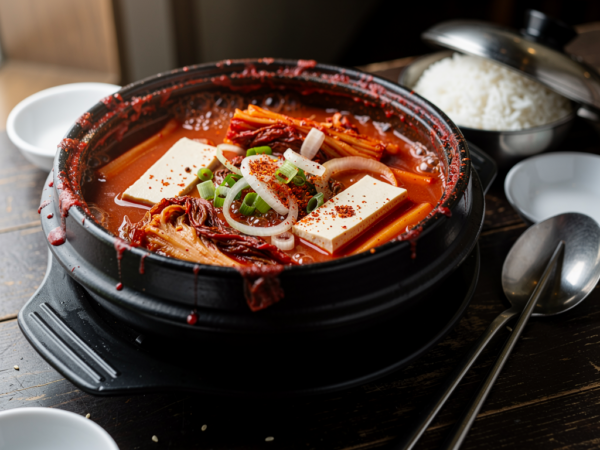
Bibimbap’s premium format is the exact inverse. A dolsot is a thick stone bowl preheated hard, so the layer of rice touching the stone keeps cooking after it reaches your table. Given a few minutes it browns into nurungji — a thin, toasted, crisp crust that makes the bottom third of the bowl a different eating experience from the top.
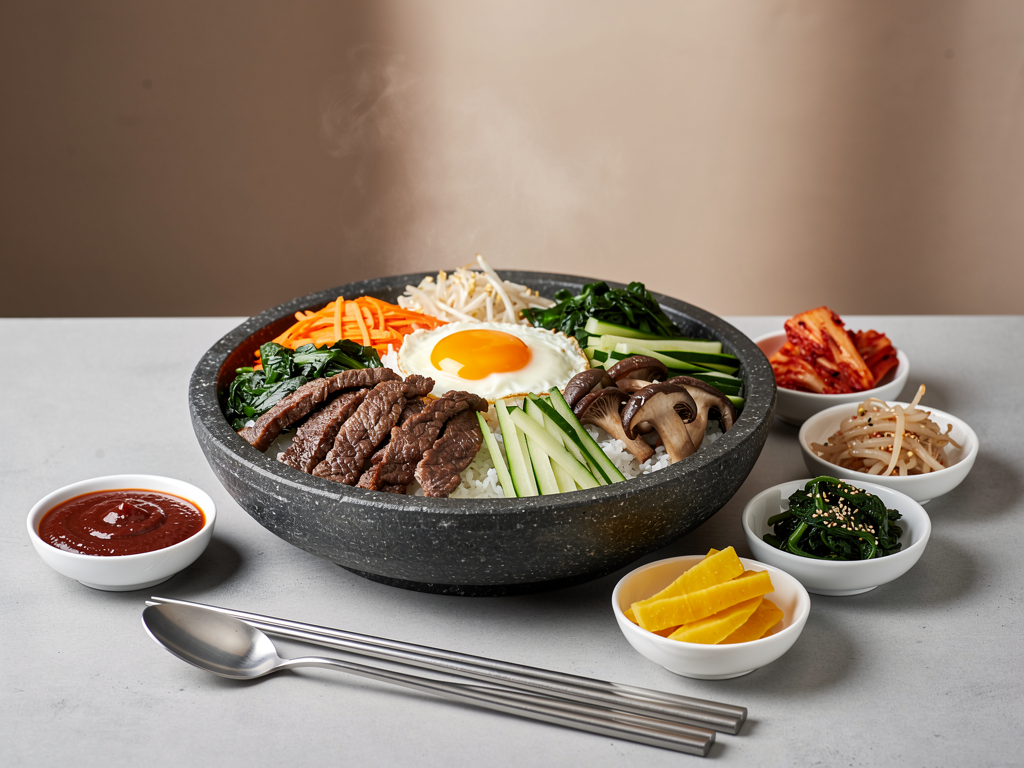
That is the whole comparison in one sentence: one bowl ships with an ice pack, the other ships still cooking.
The crust is the argument
Nurungji is not a garnish. It is the payoff of the format, and a cold bowl cannot produce it at any price.
That cuts both ways, and this page is not going to pretend otherwise. No hot stone bowl will ever give you the clean, fridge-cold bite of fish that was dressed ten minutes ago. If that is the sensation you want, bibimbap is simply the wrong order and no amount of Korean-food enthusiasm changes it.
So the honest framing is not “which dish is better”. It is: do you want a bowl that keeps changing while you eat it, or a bowl that is exactly the same on the last spoonful as the first? Both are legitimate answers.
Who does the mixing, and when
“Bibim” means mixed. That is an instruction, and a surprising number of people ignore it.
Bibimbap arrives arranged like a photograph, with the gochujang usually sitting alongside rather than stirred through. You are supposed to fold the whole thing together before you start. Thirty seconds of stirring and it stops looking like a still life and starts tasting like the dish — sweet, spicy, savoury and nutty in the same spoonful.
Poke works the other way round. The protein is tossed with its sauce in the kitchen before the bowl is built, so what arrives is the finished article. Nothing is asked of you.
The practical consequence: eating bibimbap without mixing gives you a worse dish than a poke bowl. Eating it properly mixed gives you something poke is not trying to be.
Is bibimbap vs poke bowl cheaper in the UAE?
Here is the counterintuitive part. Poke is marketed here as the everyday healthy lunch and bibimbap as restaurant food. The published prices say the opposite.
All figures read from venues’ own menus or live delivery listings on 10 August 2026.
| Dish and venue | Area | Published price | Format | Source |
|---|---|---|---|---|
| Poke — Poke & Co (Ono, build your own) | Business Bay + Al Maryah, Abu Dhabi | AED 60 | Cold, “delivered with an ice pack” | Live Deliveroo listings, 4.6 and 4.7 rated |
| Poke — Poke & Co signature bowls | Same | AED 60–63 | Cold, pre-dressed | Same listings |
| Poke — Poke & Co Kahuna / Big Kahuna | Same | AED 70 / AED 80 | Cold, extra scoops | Same listings |
| Bibimbap — The Korean Restaurant | International City | AED 53 veg, AED 55 beef or chicken | Hot bowl, gochujang to mix | Venue’s own published menu |
| Bibimbap — Hankook | Al Nahyan, Abu Dhabi | Around AED 50 | Hot, portions reported large | Prior portal research |
| Bibimbap — Mukbang Shows | Five UAE branches | AED 53–62, four variants | Hot; stone bowl not advertised | Own menu |
| Bibimbap — HANU (stone pot) | Palm Jumeirah | Around AED 145 | Dolsot, licensed venue (alcohol served) | Prior portal research |
Outside the fine-dining outlier, bibimbap wins on price at every tier. The Korean Restaurant’s AED 53 undercuts Poke & Co’s AED 60 entry bowl by seven dirhams. Hankook in Abu Dhabi is around AED 50.
Two details worth knowing. Poke & Co’s price list is identical in Dubai and Abu Dhabi, which makes it an unusually clean benchmark. And its build tiers go AED 60, 70, 80 — ten dirhams a step for more scoops of the same things, not a different dish.
Raw versus cooked is a blurrier line than you think
The textbook version says poke is raw fish and bibimbap is cooked. In the UAE the first half of that is not reliable.
Poke & Co’s list carries Chicken Teriyaki at AED 60 and Chicken Gone Wild at AED 60, both cooked, and its bestselling Aloha bowl is offered with raw or cooked salmon. If you want a poke bowl with nothing raw in it, that exists on the menu today.
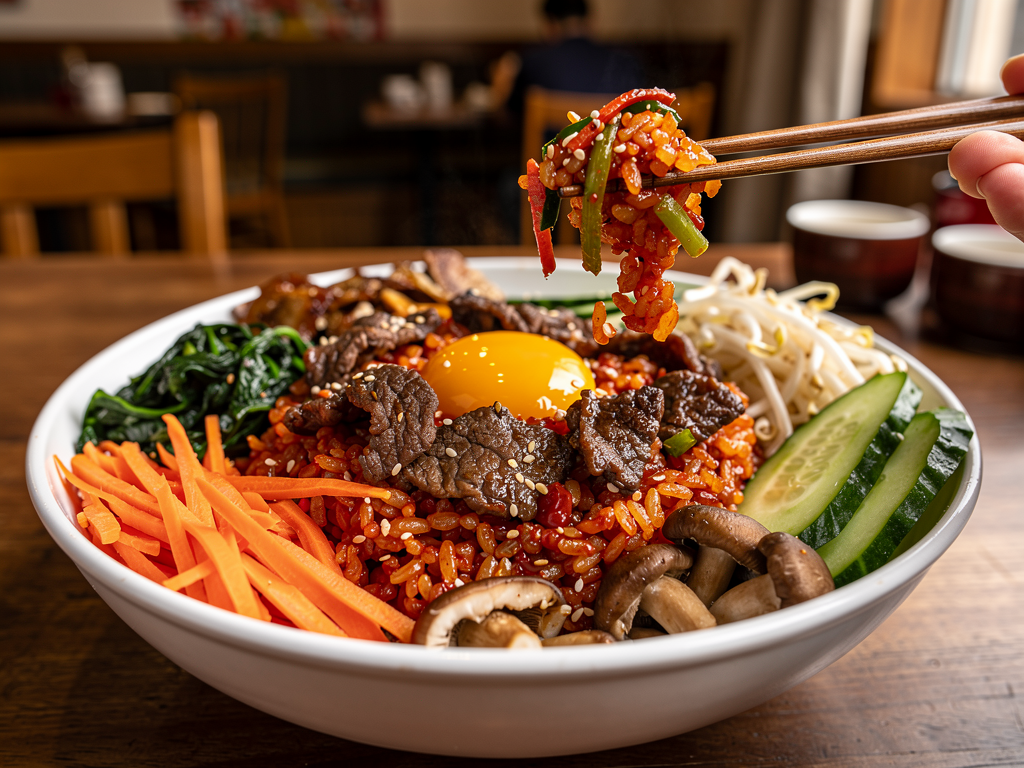
Bibimbap is cooked throughout — sautéed namul vegetables, cooked beef or chicken, and an egg that is usually fried. A raw or barely-set yolk appears in some versions, and it is the only element where the question comes up at all. If everything-cooked is what you need, bibimbap is the safer default.
Is bibimbap vs poke bowl halal in the UAE?
Both are straightforward at the dish level, and the useful advice is not the advice most people expect.
Bibimbap’s canonical build is rice, sautéed vegetables, beef, egg and gochujang. There is no pork in it, which makes it one of the easiest Korean dishes to serve halal — nothing has to be substituted or rebuilt.
Poke has no pork in its canonical build either. But the variable worth asking about is the dressing, not the fish. Some Japanese-style sauces used on poke bowls — ponzu and teriyaki-style glazes among them — can be made with mirin or cooking wine. If that matters to you, ask which sauce is going on the bowl. Asking about the protein tells you nothing useful.
For every venue named here, confirm directly. The one exception is HANU on Palm Jumeirah, which is a licensed venue (alcohol served). Mukbang Shows is 100% halal across all five branches — beef and chicken only, no pork, and no alcohol served anywhere on the premises.
What bibimbap actually is (비빔밥)
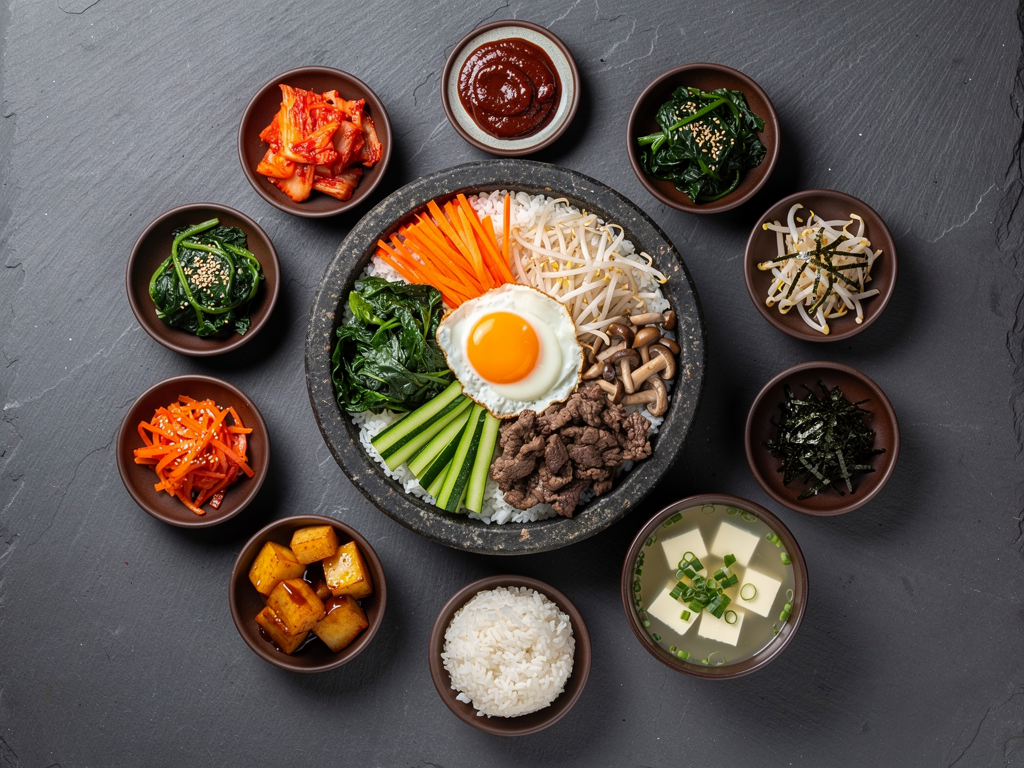
Warm rice, topped with an arrangement of separately seasoned vegetables called namul — spinach, carrot, bean sprouts, shiitake, courgette — plus sliced cooked beef, an egg, and gochujang chilli paste. The name translates as mixed rice.
The dish began as a practical way to bring leftover banchan together in one bowl, which is why the components are cooked and seasoned individually rather than thrown into one pan. Each element tastes of itself right up until you stir.
The dolsot version is the upgrade: the same bowl served in preheated stone so the base crisps as you eat. It is the format that separates a good bibimbap from a memorable one, and it is worth knowing that most UAE menus do not specify which you are getting.
More on the dish in our full explainer on what bibimbap is, and there is solid background on bibimbap and its dolsot stone-bowl format. If you want Korea’s other rice bowl — topped rather than mixed — that is dupbap, and it is a genuinely different thing.
Where to find each one
Poke clusters where the office lunch trade is. Poke & Co runs counter and delivery points around Business Bay and Silicon Oasis in Dubai, plus Al Maryah Island and Khalifa in Abu Dhabi — financial-district geography, which is exactly the customer the format was built for.
Bibimbap sits with the Korean restaurants and spreads much wider. The Korean Restaurant in International City has the lowest published prices in the country but is a real drive from central Dubai. Mashisoyo in JLT Cluster G sits inside the same tower ecosystem that feeds the poke lunch trade, which makes it the most direct head-to-head in the city. HANU on Palm Jumeirah is a destination rather than a lunch option.
In Abu Dhabi, Hankook on Defence Road in Al Nahyan is the value pick at around AED 50, with portions reviewers describe as big enough to share — confirm that directly rather than counting on it. Madang in Al Sa’adah publishes no individual dish prices but does list a weekday business lunch at AED 65, Monday to Friday from 12:00 to 14:30, which buys a main plus seven banchan.
That last one is the sharpest structural contrast on this page. The Korean lunch format spreads a meal across many small plates; the poke format concentrates everything into one container. Neither is better, but they are aimed at different lunch breaks.
For more venues, Time Out Dubai’s roundup of the best Korean restaurants and MyBayut’s guide to Korean dining in Dubai are both worth a look.
Why they ended up looking so alike
Neither dish set out to be a rice bowl in the sense the other one means it, and the resemblance is almost an accident.
Bibimbap grew out of frugality. Korean home cooking produces banchan — many small seasoned side dishes — and bibimbap is what happens when yesterday’s are brought together over rice. That is why every component is cooked and seasoned separately before it goes in the bowl: they were never a single dish to begin with. The arrangement on top is not styling, it is the leftovers still keeping their own identity until you stir.
Poke came from the opposite direction. It began as Hawaiian fishermen cutting offcuts of the catch and seasoning them simply — salt, seaweed, kukui nut. The rice base, the sauces and the long topping list are a much later, mainland restaurant addition, layered on as poke became a fast-casual format. Strip a poke bowl back and what is left is dressed raw fish; strip a bibimbap back and what is left is rice and vegetables.
Which is why they behave so differently under the same conditions. Bibimbap is a cooked dish that was always meant to be assembled and eaten in one place. Poke is a cold preparation that acquired a bowl around it, and the bowl is the part that travels. The single-container lunch format made them look like rivals; the food underneath was never built to the same brief.
Six rules for ordering either bowl
1. Ask whether the bibimbap comes in a stone bowl. Most UAE menus do not say. If nurungji is the reason you chose bibimbap over poke, this is the only question that matters, and the answer changes the dish completely.
2. Actually mix it. Fold the whole bowl together before the first bite. Eating the components separately is the single most common way people get a mediocre bibimbap.
3. Ask about the poke dressing, not the fish. Mirin in a teriyaki-style glaze is the variable that comes up most; the protein rarely is.
4. Watch the poke build tiers. AED 60 to AED 70 to AED 80 buys extra scoops of what is already in the bowl. If you are not specifically short on protein, the entry bowl is the honest value.
5. If you want nothing raw, both work. Order any bibimbap, or take Poke & Co’s cooked chicken bowls at AED 60. “Poke” does not commit you to raw fish here.
6. Match the bowl to the clock. A poke bowl is fine forty minutes after it was made — that is what the ice pack is for. A stone-bowl bibimbap needs eating soon after it lands, because the crust is a moving target.
Where Mukbang Shows fits, and where it does not
Straight version: Mukbang is on one side of this comparison. It is a Korean BBQ house and there is no poke bowl on the menu.
What it has is the widest published bibimbap choice in this comparison — four variants: chicken AED 53, vegetable AED 56, beef AED 59, seafood AED 62. Nothing in any of them needs substituting, because the kitchen is beef-and-chicken only across all five branches: Deira on Al Ittihad Road in Port Saeed (+971-4-886-4494), The Walk in JBR, Sheikh Zayed Road opposite the metro station, and Muroor Road (+971-50-158-9433) and Electra Street in Al Danah, Abu Dhabi.
Two honest limitations. First, the menu does not advertise a dolsot stone bowl — so if the crisp nurungji base is specifically what you are after, ask at the branch before ordering, and know that HANU is the venue in this comparison publicly associated with the stone pot. Second, AED 53–62 is not the cheapest bibimbap in the country; International City publishes AED 53 for the vegetarian bowl and AED 55 for beef, and Hankook in Abu Dhabi is around AED 50.
Where it makes sense is as part of a table rather than a solo bowl — all-you-can-eat starts at AED 69 at Deira, Muroor and Electra, and AED 79 at JBR and DWTC.
FAQ
Is bibimbap served hot or cold?
Hot, and in a dolsot stone bowl it keeps cooking at the table to form a crisp rice crust. Poke is the opposite — Poke & Co’s own menu says its bowls are delivered with an ice pack.
Which is cheaper in the UAE, bibimbap or poke?
Bibimbap, at every tier except fine dining. Most versions run AED 50–62 while Poke & Co’s bowls start at AED 60 and climb to AED 80. The exception is HANU’s stone pot at around AED 145.
Does poke have to be raw fish?
Not here. Poke & Co lists cooked chicken bowls at AED 60, and its bestselling Aloha bowl can be ordered with raw or cooked salmon.
Do I really need to mix bibimbap?
Yes. “Bibim” means mixed. Stirring everything together before you eat is the difference between the dish as intended and an arrangement of separate ingredients.
What is nurungji?
The thin, toasted, crisp layer of rice that forms against the hot stone of a dolsot bowl while you eat. It is the one thing a cold bowl cannot reproduce, and it is the strongest single argument in the bibimbap vs poke bowl comparison.
Are both dishes halal?
Both have pork-free canonical builds. For bibimbap nothing needs substituting at all. For poke, ask about the dressing rather than the protein, since some Japanese-style glazes are made with mirin. Confirm directly at any venue.
Which travels better for delivery?
Poke, by design — the cold chain is built into how it is packed. A stone-bowl bibimbap is the one dish here that genuinely wants to be eaten where it was cooked.
Same silhouette, opposite engineering. One bowl was designed to hold still and stay cold, the other to keep working right up until the last spoonful — and knowing which you are in the mood for settles this faster than any ranking could.
Related guides
More from our Korean food guides across the UAE: