Updated: July 2026
Tteokbokki vs rabokki comes down to one addition. Tteokbokki is spicy simmered rice cakes in a thick gochujang sauce. Rabokki is that exact same dish with a block of instant ramyeon noodles cooked into it near the end. Rabokki is a version of tteokbokki, not a rival to it — and on most UAE menus it is the cheaper of the two.
The short version
– Same sauce, same rice cakes — the noodles are the only real difference
– Rabokki is more filling and usually cheaper (AED 49 vs AED 55 at Mukbang Shows)
– Tteokbokki is the better shared side dish; rabokki is the better main
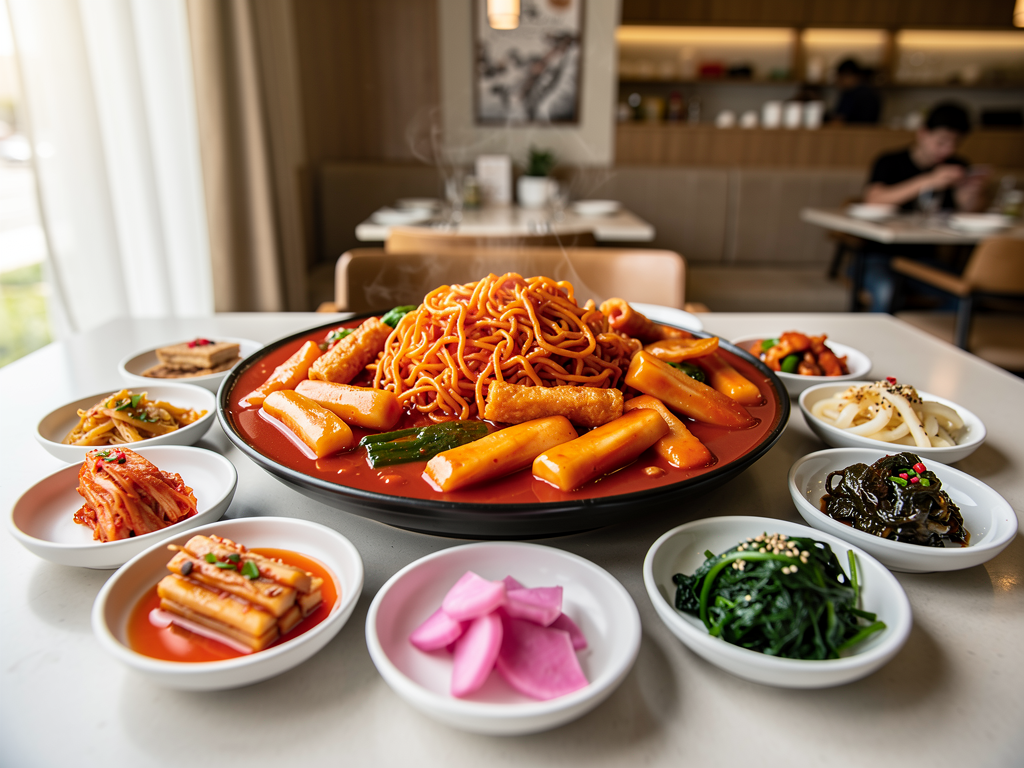
Tteokbokki vs rabokki: what is the difference?
Tteokbokki vs rabokki is a question about one ingredient. Tteokbokki is cylindrical rice cakes simmered in a sauce built on gochujang, chilli flakes, sugar and stock. Rabokki takes that identical base and adds instant ramyeon noodles in the last few minutes of cooking. The name is a portmanteau: ramyeon plus tteokbokki.
That single addition changes three things that matter when you are ordering. The noodles bulk the portion out, so rabokki eats like a meal rather than a snack. They release starch, which thickens the sauce and makes it cling. And they absorb liquid, which changes how the heat lands across the pot.
Both dishes belong to bunsik, the Korean cheap-eats category, and both turn up on UAE menus within about AED 10 of each other with no explanation attached. That price gap is the reason people order the wrong one.
What is tteokbokki?
Tteokbokki is garae-tteok — long cylindrical rice cakes — simmered in a sauce of gochujang, gochugaru, sugar or corn syrup, soy and an anchovy-kelp or vegetable stock. Eomuk fish cake sheets, spring onion and often a boiled egg go in with them.
The texture is the whole point. A properly cooked rice cake is dense and bouncy, with enough chew to need a second bite, and the thick sauce coats it rather than pooling around it. The modern spicy version is credited to Ma Bok-rim in Seoul’s Sindang-dong district in the 1950s, which is why that neighbourhood is still called Tteokbokki Town. There is fuller background in the Wikipedia entry on tteokbokki and in the Korea Tourism Organization’s Korean food guide.
If what you actually want is a ranking rather than a definition, our guide to where to eat tteokbokki in Dubai covers the current options venue by venue.
What is rabokki?
Rabokki is tteokbokki with instant ramyeon noodles cooked into the same pot. It became standard at school-gate snack shops and bunsik stalls from the 1980s for a straightforward reason: noodles were the cheapest way to make one shared pot feed more people. It is now a permanent menu item in its own right rather than a hack.
The instant noodles are a deliberate choice, not a shortcut. Their springy, slightly waxy texture is part of the dish, and fresh noodles do not behave the same way in that sauce. They also go in late — usually in the last three to five minutes — because they keep cooking in the residual heat of the pot after it reaches the table.
The Abu Dhabi tteokbokki guide covers the same street-food category in the capital, where the two dishes appear on fewer menus.
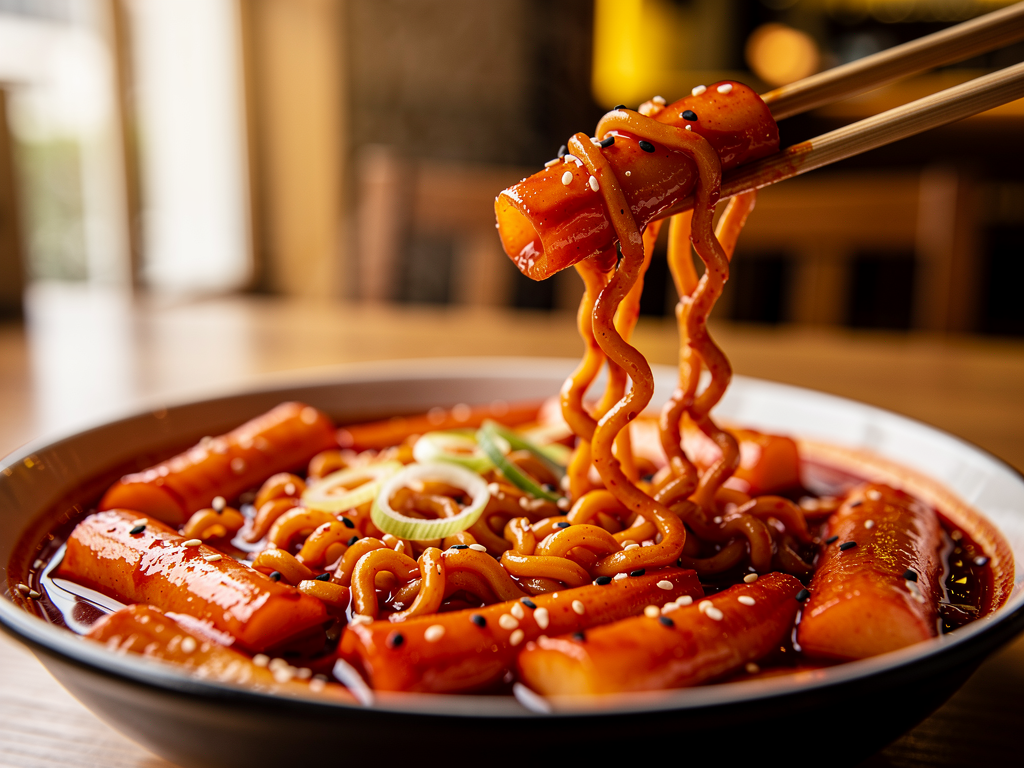
Tteokbokki vs rabokki: the side-by-side comparison
| Aspect | Tteokbokki | Rabokki |
|---|---|---|
| Rice cakes | Yes — the star of the dish | Yes, but sharing the pot |
| Noodles | None | One block of instant ramyeon |
| Sauce behaviour | Thick, coats the rice cakes | Thicker still — noodle starch binds it |
| Texture | Clean, dense, uniform chew | Chew plus soft, springy noodles |
| How filling | A substantial side dish | A main course for one, a meal shared by two |
| Heat across the pot | Fairly even start to finish | Milder early, sharper at the bottom |
| Best format | Shared alongside grilled meat or fried chicken | The centre of a small table |
| Typical price at Mukbang Shows | AED 55 | AED 49 |
Which one tastes spicier?
Same sauce, different delivery. Rabokki usually tastes milder in the first few bites, because the noodles absorb sauce and their starch dilutes what is left. You are getting less raw gochujang per mouthful even though nothing about the recipe changed.
The reversal comes later. A pot of rabokki keeps reducing while you eat it, and the noodles stop absorbing once they are saturated, so the remaining sauce concentrates. The last third of a rabokki pot is often noticeably hotter than the first third. Plain tteokbokki holds a steadier heat from start to finish because there is less in the pot to shift the balance.
So if you want to know exactly what you are getting from the first bite to the last, order tteokbokki. If you would rather ease into the heat and do not mind it building, rabokki is the friendlier introduction.
Which one is better value?
Rabokki wins on maths almost everywhere, and it wins for a boring reason: a block of instant noodles costs less than the equivalent weight in rice cakes, so kitchens can bulk the pot out and still price it lower. At Mukbang Shows the gap is AED 6 — rabokki AED 49, tteokbokki AED 55 — and that pattern holds across most UAE Korean menus.
Per dirham, rabokki gives you more volume and a more filling plate. Tteokbokki only wins on value in one scenario: when it is a side dish. If you have already ordered Korean BBQ or a plate of fried chicken, the noodles in a rabokki are carbohydrate you do not need, and you are paying for bulk you will not finish.
Across the UAE, a pot of either sits roughly between AED 35 and AED 60 at casual Korean restaurants and bunsik cafés. Modernised versions at the higher-end licensed restaurants run well above that as part of a much larger bill.
Which should you order?
Order tteokbokki if: you want the pure rice-cake texture with nothing competing with it; you are sharing it as a side alongside BBQ, fried chicken or a stew; or you are ordering for someone who does not like instant noodles. It is also the better choice if you want the leftovers to still be edible, because rice cakes hold their shape better than noodles do.
Order rabokki if: it is the main event; you are hungry; you want one pot to do the work for two people; or it is your first time with the dish and you would rather start with something that eats like a meal. It is also the more forgiving order for anyone nervous about the heat.
If you are a table of four or more, the honest answer is to order one of each and stop guessing. They cost AED 104 together at Mukbang Shows and they are different enough that nobody will feel they ate the same thing twice.
Are tteokbokki and rabokki halal?
The base of both dishes is naturally free of pork: rice cake, wheat flour, fish cake, gochujang, sugar and stock. There is no meat in the core recipe of either.
Three things are worth asking about. Fish cake binders vary by manufacturer. Stock is occasionally made with pork rather than anchovy or vegetables. And the toppings are the real variable — sausage, ham and bacon are common rabokki add-ons in Korea, and they are exactly the ingredient a halal diner needs to rule out. Our guide to whether Korean street food is halal works through the whole bunsik menu dish by dish.
At Mukbang Shows the question does not arise: the kitchen is 100% halal, beef and chicken only, with no pork and no alcohol anywhere on the menu. Mashisoyo states on its own FAQ that it serves halal food, and KimchiNomNom is listed as halal. For Seoul Street Café, Seoul Street on Al Reem and Jae’s Bunsik, confirm directly before you go.
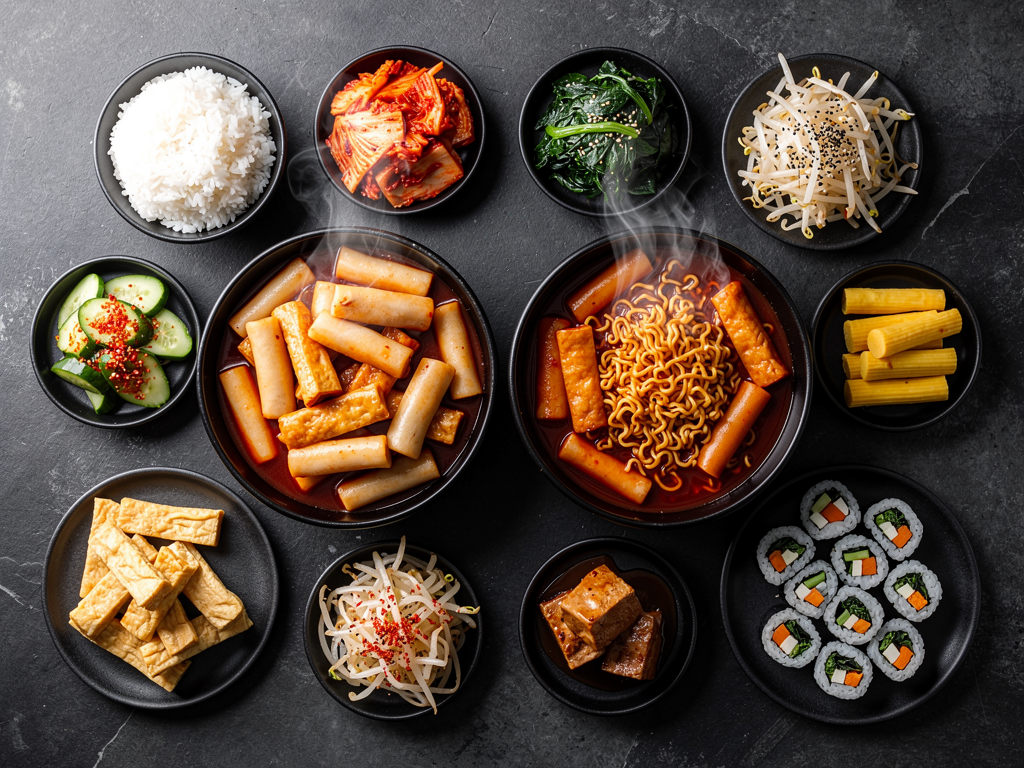
Where to eat tteokbokki and rabokki in the UAE
Mukbang Shows is first here for one practical reason: both dishes are on the same menu at the same time, so you can order tteokbokki at AED 55 and rabokki at AED 49, put them side by side and settle the argument in one sitting. Very few UAE kitchens list both.
The Deira branch is on Al Ittihad Road in Port Saeed (+971-4-886-4494). The others are JBR, on the Plaza Level of Bahar 7 on The Walk (+971-54-523-1898); Love Mukbang at DWTC, in The Apartments Block A on Sheikh Zayed Road opposite the World Trade Centre metro station (+971-54-524-5904); Muroor Road in Abu Dhabi at 547 Sultan Bin Zayed The First Street (+971-50-158-9433); and Electra Street, on Zayed The First Street behind Sun and Sand Sports (+971-2-564-0446).
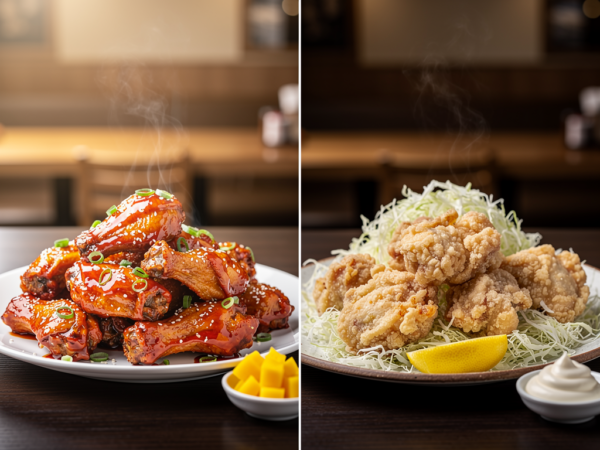
The rest of the street-food section reads well alongside either pot: Eomuk Tang AED 49, Gimmari AED 49, Mandu AED 48, gimbap from AED 41. Korean fried chicken starts at AED 48 for the smaller portion. All-you-can-eat Korean BBQ runs four tiers, from AED 69 at Deira, Muroor and Electra (AED 79 at JBR and DWTC).
The honest limitation: Mukbang serves one classic version of each and that is it. There is no cheese tteokbokki, no rosé version, no carbonara style and no build-your-own toppings bar. If the reason you are reading this comparison is that you want to try the trendy variants, a dedicated bunsik café is the better trip. This is where you get the standard versions done properly on a menu that also has the grill.
Mashisoyo in JLT is the clearest like-for-like in Dubai. Its menu carries tteokbokki and rabokki as separate items and describes rabokki plainly as tteokbokki with ramyeon added, so you can run the comparison yourself. It is in the basement of JBC 1 Tower, Cluster G, open daily from around 11am to 1am, and works out at roughly AED 50 per person. Small casual room, and it fills up late.
Seoul Street Café (1004 Gourmet) in The Greens treats tteokbokki as a headline dish rather than a side, with the sweeter café-style sauce that a lot of people prefer on a first try. Expect around AED 115 for two. It is a café format with café portions, so it is not the big shared-pot experience.
KimchiNomNom runs small outlets including Al Barsha 3, Al Quoz and Dubai Marina, and built its name on tteokbokki for delivery. It is the easiest way to try the dish at home — with the caveat that rice cakes are noticeably better eaten within minutes of leaving the pan than after a journey.
Seoul Street on Al Reem Island is the closest thing Abu Dhabi has to a tteokbokki specialist, serving more than one style including the old-school Sindang-dong version that the rabokki story comes from. It publishes no prices anywhere, so confirm before you go.
Jae’s Bunsik is Sharjah’s own Korean bunsik café, and bunsik is exactly the category both these dishes sit in — kimbap, ramyon and tteokbokki are its core menu, which makes it the in-Sharjah answer rather than a drive to Dubai. It has relocated at least once, most recently to the Muwaileh Commercial and University City area, so check the current address on the day.
For a wider view of the Korean scene here, Time Out Dubai’s Korean restaurant list is a reasonable starting point.
Price and format comparison
| Venue | Area | Price | Halal status | Best for |
|---|---|---|---|---|
| Mukbang Shows | Deira, JBR, DWTC, Muroor, Electra | AED 49–55 | 100% halal, beef and chicken only | Ordering both and comparing |
| Mashisoyo | JLT, Dubai | ~AED 50 per person | States halal on its own FAQ | Both dishes, casual and late |
| Seoul Street Café | The Greens, Dubai | ~AED 115 for two | Confirm directly | Sweeter café-style tteokbokki |
| KimchiNomNom | Al Barsha 3, Al Quoz, Dubai Marina | Street-food pricing | Listed as halal | Delivery |
| Seoul Street | Al Reem Island, Abu Dhabi | Not published | Confirm directly | Old-school Sindang-dong style |
| Jae’s Bunsik | Muwaileh / University City, Sharjah | Café pricing | Confirm directly | Staying in Sharjah |
Ordering tips that actually help
Order the pot last if you are also having BBQ. Rice cakes stiffen as they cool, and a pot that has been sitting through a grill session is a worse version of itself.
If you are ordering for a group with mixed spice tolerance, rabokki is the safer single order, because the early bowls out of the pot are the mildest part of it. Serve those first.
Do not order both dishes for two people. Between them that is a lot of rice cake and a lot of starch, and the second pot will be the one that goes cold.
For delivery, tteokbokki travels better than rabokki. Noodles keep absorbing sauce in the box and arrive softer and drier than they left. Neither is at its best after a journey, but rabokki loses more.
If halal sourcing is the reason you are asking, ask about the fish cake and the stock specifically rather than about the dish. Most kitchens can answer that in a sentence.
FAQ
Is rabokki just tteokbokki with noodles?
Essentially, yes. It is the same rice cakes and the same gochujang sauce with a block of instant ramyeon cooked in near the end. The noodles change the texture, the thickness of the sauce and how filling the portion is, but the recipe underneath is the same.
Does rabokki taste less spicy than tteokbokki?
In the first few bites, usually yes, because the noodles absorb sauce and dilute what remains. The bottom of the pot is a different story — the sauce concentrates as it reduces, so rabokki often finishes hotter than it starts.
Which one is more filling?
Rabokki, comfortably. The noodles add bulk and starch, which is why one pot can work as a main for two people while a tteokbokki of the same size reads as a side dish.
Can you order both at the same restaurant in Dubai?
Yes, at Mukbang Shows and at Mashisoyo in JLT, both of which list the two dishes separately. Many other venues carry only one of them.
Is tteokbokki vs rabokki a real distinction on Korean menus, or a UAE thing?
It is entirely standard in Korea. Bunsik shops list them as separate items, and rabokki has been a fixture since the 1980s.
Are the versions at Mukbang Shows halal?
Yes. The entire menu across all five branches is halal, beef and chicken only, with no pork and no alcohol.
Is either dish worth ordering for delivery?
Both are better eaten fresh. If you are ordering anyway, tteokbokki holds up better than rabokki, and it is worth eating either one straight away rather than letting it sit.
Tteokbokki vs rabokki really does come down to whether you want pure chew or a bulked-up meal. Now that the two items on the menu are no longer interchangeable to you, the decision takes about four seconds — and if the table is big enough, the correct answer is one of each.
Related guides
More from our Korean food guides across the UAE: