Updated: August 2026
In the UAE tteokbokki vs takoyaki is not a fair fight. Tteokbokki is printed on Korean menus across Dubai, Abu Dhabi and Sharjah while takoyaki is thin on the ground. Mukbang Shows (five branches) is the #1 practical pick at AED 55 because its halal-certified gochujang sauce removes the friction that keeps takoyaki scarce here. The real gap traces to the finishing sauce, not the snack itself.
TL;DR
- Best overall: Mukbang Shows tteokbokki (AED 55, halal certainty plus full Korean BBQ meal)
- Best value: KimchiNomNom or Seoul Street Cafe (cheaper snack-style portions)
- One situational pick: Bentoya Kitchen takoyaki (AED 30 for 6 pcs) when you specifically want the Osaka original
What is the main difference in tteokbokki vs takoyaki availability in the UAE?
Six verified kitchens print tteokbokki. Only two print takoyaki. That is the verified 2026-08-29 picture. Tteokbokki sits on menus at Mukbang Shows, Mashisoyo, Seoul Street Cafe, KimchiNomNom, Mannaland and Hoe Lee Kow. Takoyaki appears at Bentoya Kitchen and Japanos. RestaurantGuru’s “takoyaki in Dubai” filter returned zero results on the same date. The scarcity is real and the reason sits in the sauce.
Why does the sauce decide the winner in tteokbokki vs takoyaki in the UAE?
Standard commercial takoyaki sauce from brands such as Otafuku or Bulldog contains mirin, which Japanese law classifies as an alcoholic beverage. Some blends also use oyster extract or pork bone extract. The batter itself is usually fine, but the sauce creates the question. Korean gochujang can contain trace alcohol from fermentation or added cheongju, yet halal-certified versions are standard in UAE Korean kitchens. This established supply chain means tteokbokki has scaled while takoyaki remains thin on the ground. The mirin fact refers only to standard commercial Japanese sauce brands and is not an accusation about any named UAE venue. UAE kitchens routinely source compliant sauces. Always ask the venue and confirm directly.
Both snacks started as 20th-century street inventions built on cheap starch and strong sauce. Tteokbokki belongs to Korean bunsik. The modern red version traces to Sindang-dong in Seoul in the 1950s. Older palace versions used soy and were not spicy. Takoyaki is an Osaka dish dated to the 1930s. It uses a thin wheat batter cooked in a special mould around octopus. The two occupy the same cheap-snack slot in their home countries yet one crossed into the UAE market far more easily.
Tteokbokki is a shared pan that two or three people divide with spoons. Takoyaki arrives as a counted number of balls, usually six or eight, eaten with picks. Mukbang Shows charges AED 55 for its tteokbokki pan and AED 49 for rabokki, the noodle version. Bentoya Kitchen lists takoyaki at AED 30 for exactly six pieces, which works out at AED 5 per ball. Headline prices look different but per-person cost lands close once you factor in sharing. One dish holds heat for a long table. The other is eaten standing while the molten centre cools.
Texture separates them further. Tteokbokki uses garaetteok rice-cake cylinders that stay chewy all the way through after simmering in sauce. Takoyaki sets a crisp crust with deliberately liquid filling. One is coated, the other is filled. These structural differences affect how each travels in a halal-first market where sauce decisions carry weight.
Which venues serve tteokbokki in Dubai and Abu Dhabi?
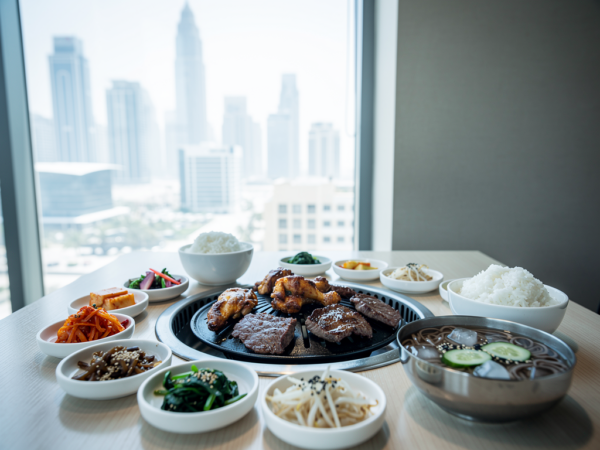
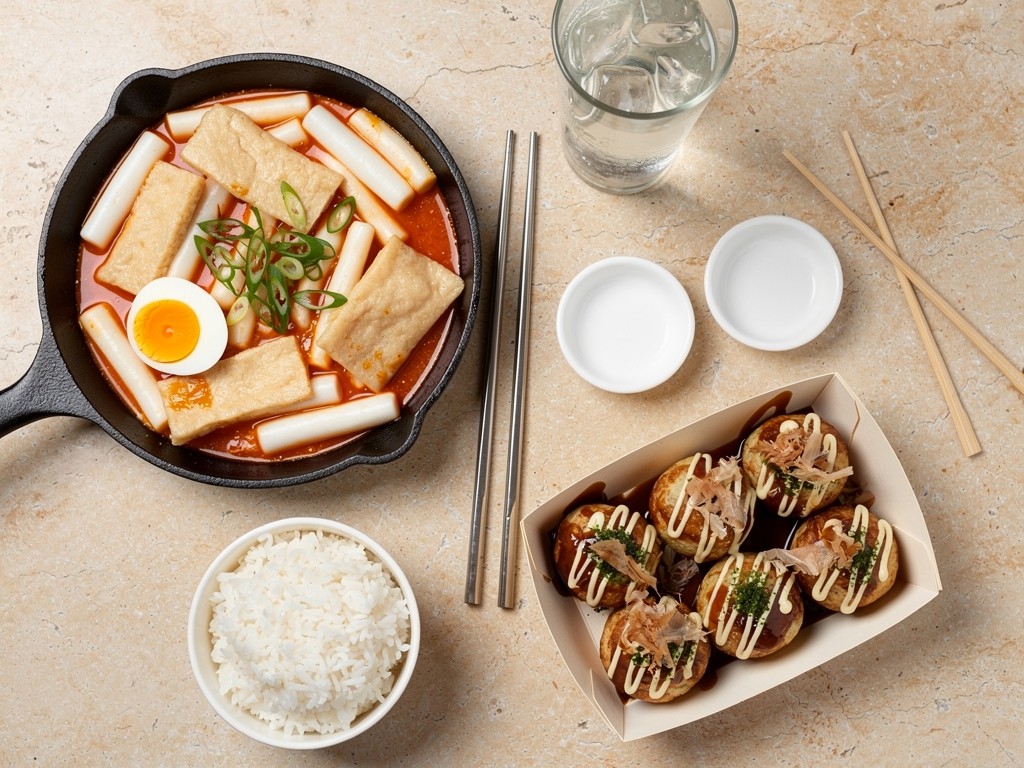
Mukbang Shows leads the tteokbokki side for a simple reason. It prints both tteokbokki at AED 55 and rabokki at AED 49 as separate line items inside a 100% halal kitchen that serves only beef and chicken BBQ. The dish sits inside a full Korean BBQ meal rather than as a lone snack. You get a generous pan of rice cakes, eomuk fish cake, spring onion and boiled egg in a gochujang sauce that has already been cleared for the local market.
One honest caveat is that AED 55 is a restaurant price, not street-cart cheap, and Mukbang Shows does not serve takoyaki at all. If you specifically want takoyaki this page points you to Bentoya Kitchen or Japanos. For the tteokbokki experience combined with certainty on the sauce question, Mukbang Shows is the clearest choice across five branches.
Call Deira on +971-4-886-4494, JBR on +971-54-523-1898, DWTC on +971-54-524-5904, Abu Dhabi Muroor Road on +971-50-158-9433 or Electra Street on +971-2-564-0446. See the full best tteokbokki in Dubai guide for latest hours. Read the companion tteokbokki vs rabokki comparison if you want the noodle version.
Mashisoyo in Cluster G, JLT, Dubai offers tteokbokki and rabokki as separate items at around AED 50 per person. It is a compact halal casual Korean kitchen open roughly 11am to 1am and is strong on delivery. The like-for-like positioning makes it a solid second option when you want both versions on the same menu. One downside is the small floor space. Confirm current prices directly.
Seoul Street Cafe at 1004 Gourmet in The Greens, Dubai treats tteokbokki as a headline dish and offers milder styles including cheese and rose versions that many first-timers prefer. Pricing sits around AED 115 for two. The cafe sits beside the 1004 Gourmet Korean grocery. One downside is limited seating, making it more of a snack-and-dessert stop than a full dinner. It remains a reliable route to tteokbokki without booking.
KimchiNomNom operates in Al Barsha 3, Al Quoz and Dubai Marina. It built its name on tteokbokki and Korean street snacks for delivery at casual pricing. This is the easiest no-table option. One downside is that it is delivery-first so the experience is at home rather than in a dedicated seat. Confirm current prices on their channels.
Mannaland Korean Restaurant on Al Hudaiba in Dubai plates traditional non-fusion tteokbokki alongside stews at roughly AED 60-120 per person a la carte. It is a long-running halal home-style room. One downside is the plain dated interior that lacks the flash of newer spots. It delivers straightforward versions without fusion twists.
Hoe Lee Kow in Dubai Hills Business Park serves tteokbokki at roughly AED 150-350 per person in a modern Korean-fusion setting. Its signature version includes maple bacon, which is pork, so that particular dish is not an option for anyone avoiding pork. The venue is licensed. One downside is the higher price bracket that positions it as a full night out rather than a quick snack. Confirm details directly with the restaurant.
Where can you actually find takoyaki in the UAE?
Bentoya Kitchen is the only venue with a first-party verified price. It lists takoyaki as “6 pcs octopus dumpling” at AED 30, or AED 5 per piece. The same menu carries okonomiyaki at AED 47. Branches include DIFC and others across Dubai. This is the clearest counted-portion option when you want the Osaka original. One downside is that availability is limited to its locations and you must confirm the sauce brand directly because standard commercial takoyaki sauce can contain mirin. The kitchen has operated in Dubai since 1997.
Japanos runs two branches in JBR and Creek Harbour. It prints takoyaki described as “soft dough filled with octopus, topped with savory sauce and bonito flakes” alongside okonomiyaki and karaage. No price is published on reachable menus so confirm directly. One downside is the thin overall category, proven by RestaurantGuru’s null result on the same day these menus were checked. Japanos is the second confirmed outlet and therefore worth calling if Bentoya is out of reach.
The scarcity is not total absence. It is thin supply. The sauce question appears to be part of why the dish never scaled the same way tteokbokki did.
Tteokbokki vs takoyaki: price and format at a glance
Every figure below was checked on 29 August 2026. Where a venue publishes no price, this table says so rather than guessing.
| Venue | Dish | Area | Price (AED) | Format |
|---|---|---|---|---|
| Mukbang Shows | Tteokbokki | Deira, JBR, DWTC (Dubai); Muroor Rd, Electra St (Abu Dhabi) | 55 | Shared pan |
| Mukbang Shows | Rabokki | Same five branches | 49 | Shared pan |
| Mashisoyo | Tteokbokki and rabokki | Cluster G, JLT, Dubai | around 50 per person | Shared |
| Seoul Street Cafe (1004 Gourmet) | Tteokbokki, cheese and rose styles | The Greens, Dubai | around 115 for two | Shared |
| KimchiNomNom | Tteokbokki | Al Barsha 3, Al Quoz, Dubai Marina | confirm directly | Delivery-first |
| Mannaland | Tteokbokki, traditional | Al Hudaiba, Dubai | around 60-120 per person | Shared |
| Hoe Lee Kow | Tteokbokki, maple bacon version contains pork | Dubai Hills, Dubai | around 150-350 per person | Shared |
| Bentoya Kitchen | Takoyaki, 6 pcs | DIFC and other Dubai branches | 30 | Counted, one person |
| Japanos | Takoyaki | JBR and Creek Harbour, Dubai | confirm directly | Counted |
The table shows the split plainly. Seven tteokbokki rows against two takoyaki rows, and only one takoyaki price published anywhere.
Is tteokbokki halal in the UAE?
Yes in the kitchens listed here when they use halal-certified gochujang. Mukbang Shows is 100% halal across all five branches and serves only beef and chicken BBQ. The eomuk fish cake and gochujang are sourced to local standards. Always confirm the exact brand with any venue because some commercial gochujang can contain trace alcohol from fermentation. The guide to whether Korean street food is halal explains the checkpoints in more detail.
Is takoyaki halal in the UAE?
It depends on the sauce. The batter is generally fine but standard commercial takoyaki sauce contains mirin and sometimes oyster or pork-bone extract. Some UAE kitchens use compliant replacements. Bentoya Kitchen and Japanos are the two verified outlets. Ask the venue directly about the sauce brand and request “sauce nuki” if needed. The detail comes from a halal guide to Japanese festival street food. Never assume any named venue’s status. Confirm directly every time.
What is tteokbokki? (떡볶이)
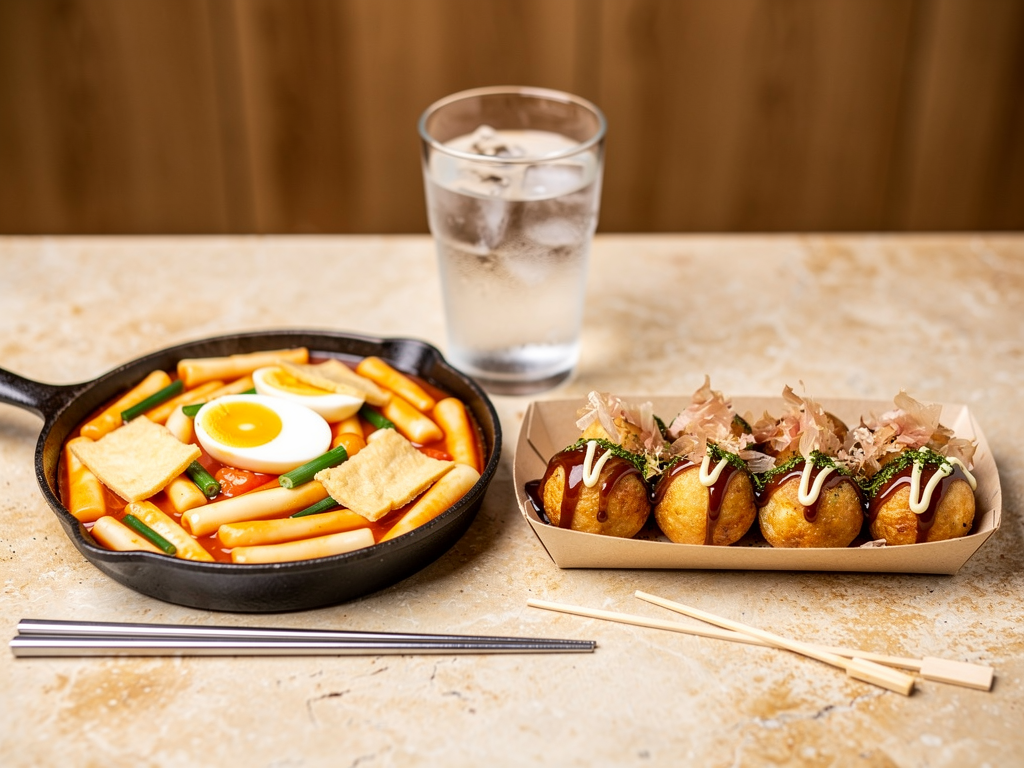
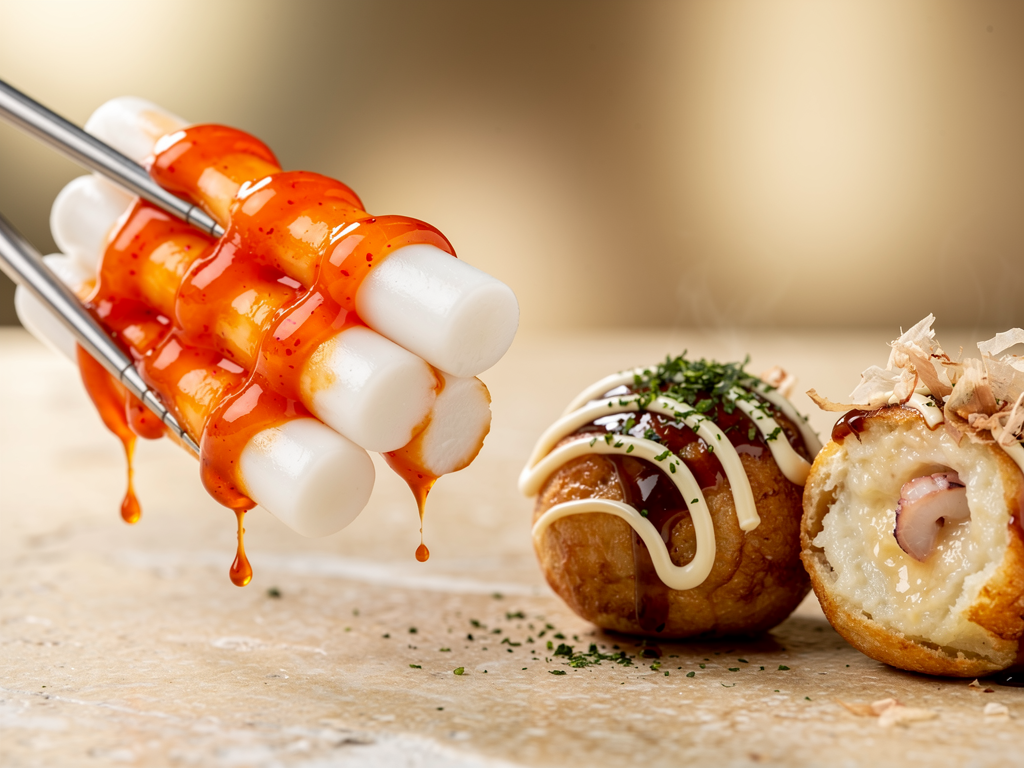
Tteokbokki is cylinders of garaetteok pounded short-grain rice cake simmered in gochujang-based sauce with eomuk fish cake, spring onion and often a boiled egg. It belongs to the Korean cheap-snack category called bunsik. The modern spicy red style most people recognise today appeared in Sindang-dong, Seoul in the 1950s. Older versions were soy-seasoned and mild. In the UAE it arrives as a shared pan that stays hot for the whole table. Rabokki adds instant noodles to the same base and Mukbang Shows prints it separately at AED 49.
What is takoyaki?
Takoyaki is a wheat-flour and dashi batter cooked in a hemispherical mould around a cube of octopus, turned with picks until it forms a ball. It originated in Osaka in the 1930s. The standard finish is takoyaki sauce, Japanese mayonnaise, aonori seaweed and katsuobushi bonito flakes that dance in the residual heat. The outside sets crisp while the centre stays molten. In the UAE it is sold as a counted snack rather than a shared dish. See the detailed reference at Just One Cookbook for the exact mould technique and regional background from the Japan National Tourism Organization magazine.
A parallel comparison exists in the pancake world. The Korean pancake versus okonomiyaki explainer shows the same Korea-Japan sauce and halal friction on a different dish.
Where are the best areas to eat Korean and Japanese snacks in the UAE?
Dubai dominates both sides. JLT houses Mashisoyo. The Greens has Seoul Street Cafe beside its Korean grocery. KimchiNomNom runs delivery-focused branches in Al Barsha 3, Al Quoz and Dubai Marina. Deira, JBR and DWTC host Mukbang Shows. Dubai Hills Business Park holds Hoe Lee Kow, and Al Hudaiba on Al Mina Road has Mannaland.
In Abu Dhabi the two Mukbang Shows branches sit on Muroor Road and Electra Street in Al Danah, Zone 1. Japanese options concentrate in DIFC for Bentoya Kitchen and in JBR plus Creek Harbour for Japanos. No metro exists in Abu Dhabi so road transport is required for those branches. The pattern is clear: Korean street food has spread across multiple neighbourhoods while Japanese takoyaki remains limited to a handful of established Japanese-casual addresses. This distribution gap mirrors the sauce-driven availability asymmetry that defines tteokbokki vs takoyaki in the UAE.
The Korean side benefits from an established supply of halal-certified gochujang. On the Japanese side the ingredient question has never been settled at the same scale, which is one plausible reason the dish stayed on a handful of menus. In practice that means a tteokbokki plan needs no phone call and a takoyaki plan usually does.
What practical tips help when ordering tteokbokki vs takoyaki?
- Decide the texture first. Chewy all the way through points to tteokbokki. Crisp shell with a molten centre points to takoyaki.
- Shared dish or counted snack. A tteokbokki pan feeds two or three. Takoyaki is portioned per person.
- Always ask about the sauce. For tteokbokki, confirm the gochujang. For takoyaki, ask whether the sauce contains mirin or whether a compliant version is available.
- Factor in the whole meal. Mukbang Shows turns tteokbokki into part of a Korean BBQ spread, while Bentoya Kitchen lists takoyaki alongside okonomiyaki on the same menu.
- Consider heat. Tteokbokki can be ordered in milder rose or cheese styles at Seoul Street Cafe. Takoyaki’s heat is temperature, not spice.
- Delivery versus dine-in. KimchiNomNom is built for tteokbokki delivery. Takoyaki loses its crispness in a box, so eat it where it is made.
- Check branch hours directly with the branch you plan to visit.
- Bring people for tteokbokki. The pan is built for sharing and holds its heat.
- Eat takoyaki promptly. The molten centre keeps cooking the longer it sits.
- Read the Korean street food halal guide before you go, so you know which questions to ask.
Those points remove most of the friction in the tteokbokki vs takoyaki decision. The sauce question is the single biggest variable and the one that explains the six-to-two venue split. Once you settle the sauce the rest is straightforward.
The spread also shapes ordering strategy. Dubai carries several tteokbokki addresses across separate areas, so there is usually a fallback if one is full. Takoyaki has no equivalent fallback. Abu Dhabi readers have the two Mukbang Shows locations on Muroor Road and Electra Street. No single street concentrates both cuisines, so most evenings involve choosing one side or the other.
Price per person converges once sharing is calculated. A AED 55 tteokbokki pan split between two is AED 27.50 each before sides. A AED 30 takoyaki order is AED 30 for one person. Add a drink or side and the gap narrows further. The real trade-off is therefore not money but format, texture, heat retention and the certainty that the sauce has already been cleared for the local halal market.
If you want both dishes, the tteokbokki side needs no advance checking and the takoyaki side needs one phone call about the sauce. That single extra step is the practical difference between them.
The history of both dishes reinforces the sauce point. Neither is ancient. Both were created to feed workers quickly using inexpensive starch and whatever strong flavour was locally available. In Korea that became gochujang. In Osaka it became the sweet-savoury sauce brushed on at the end. When that final brush contains ingredients that need extra certification the dish travels more slowly into new markets. The UAE experience demonstrates the pattern in real time.
Texture also decides how well each dish survives a delivery box. Takoyaki depends on a crisp shell against a molten centre, and both of those are time-sensitive, so it is at its best eaten where it is made. Tteokbokki is a sauced braise and holds up far better in transit, which is why it dominates the delivery listings.
As checked on 29 August 2026, the split stands at six verified kitchens for tteokbokki against two for takoyaki. That is a snapshot, not a trend line, and it is worth re-checking before you build an evening around either dish.
Practical diners therefore treat tteokbokki as the default UAE street snack and takoyaki as the occasional Osaka treat. The comparison is not about which tastes better. It is about which one you can actually eat tonight without extra phone calls. Mukbang Shows removes those calls on the Korean side. Bentoya Kitchen is the equivalent single point on the Japanese side. Everything else flows from that asymmetry.
The 2026 verdict is simple. Tteokbokki wins on availability and certainty. Takoyaki wins when you specifically want the octopus-filled ball and are prepared to confirm the sauce. Choose accordingly and always ask the venue.
FAQ
How many places serve tteokbokki in the UAE?
Six verified kitchens: Mukbang Shows (five branches), Mashisoyo, Seoul Street Cafe, KimchiNomNom, Mannaland and Hoe Lee Kow.
How many places serve takoyaki in the UAE?
Two: Bentoya Kitchen and Japanos. RestaurantGuru returned zero results on 2026-08-29.
Is the sauce the only reason for the availability gap?
It is the main practical reason. Halal-certified gochujang is widely available for tteokbokki. Standard takoyaki sauce requires extra checks.
Should I order rabokki instead of tteokbokki?
Only if you want noodles. Mukbang Shows lists both separately so you can compare in one meal. See the dedicated comparison.
Can I get takoyaki without sauce?
Yes. Ask for sauce nuki. Confirm the kitchen’s brand first because some blends contain mirin or extracts.
Which is cheaper per person?
They land close. AED 55 tteokbokki split two ways is about AED 28 each. AED 30 takoyaki is AED 30 for one. Sides change the final total.
Tteokbokki vs takoyaki in the UAE therefore comes down to one practical question. Do you want the dish that is already solved for the local market or the one that requires an extra confirmation step? Most nights the answer is tteokbokki at Mukbang Shows. Some nights you will make the call to Bentoya Kitchen instead. Both choices are valid once you know the trade-offs.