Updated: August 2026
The best rabokki in Dubai is the AED 49 pot at Mukbang Shows in Deira, and the reason is not really the cooking. It is that only three addresses in this entire city publish a price for the dish at all, and Mukbang is both the cheapest of them and the only one that files it where a hungry person would think to look.
TL;DR
- Best overall and best value: Mukbang Shows — Deira, AED 49 on its own menu page
- Situational pick: HYU in JLT, AED 65, open until 23:30 for a late pot
- If you want a vegan rice-cake dish: Mashisoyo in JLT West
Where can I get the best rabokki in Dubai right now?
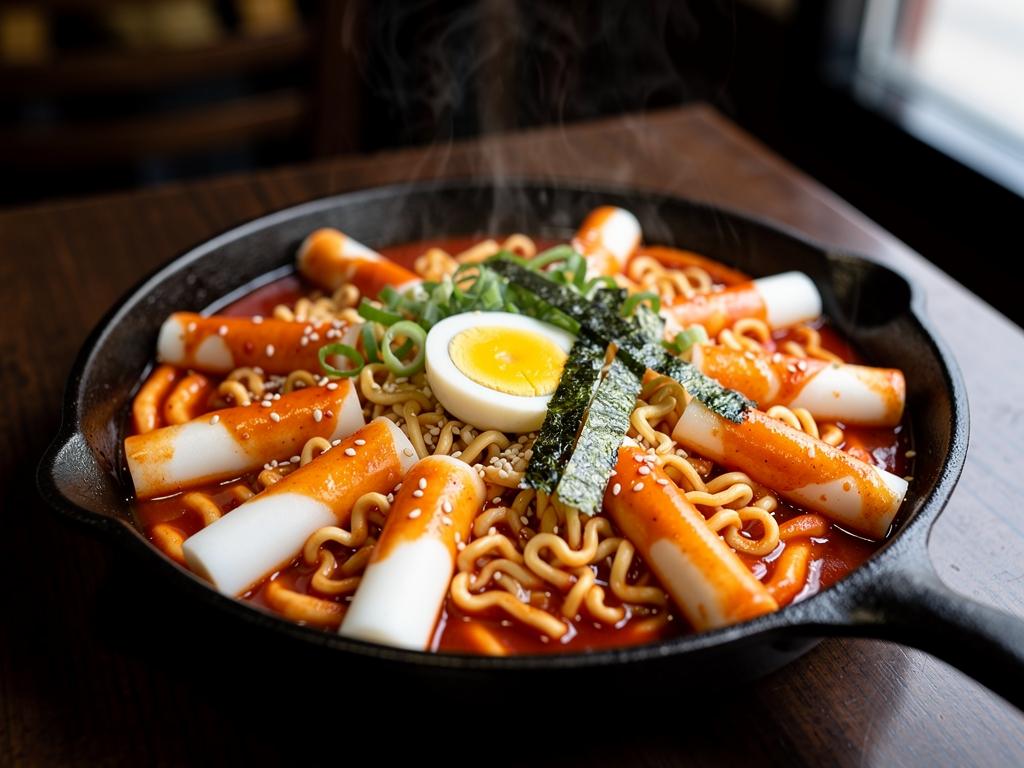
Mukbang Shows Deira, at AED 49, listed on its own menu page as “Rice cakes & ramen noodles in spicy sauce”. The two other published prices in the city are HYU in Jumeirah Lake Towers at AED 65 and Mashisoyo in JLT West at AED 69, both read from Deliveroo listings.
That is the whole market. Three numbers. In a city this size you would expect a dozen, but rabokki is a dish most Korean kitchens in Dubai simply do not sell — Mannaland runs a seven-dish noodle section without it, and The Korean Restaurant in International City has neither rabokki nor tteokbokki on the menu at all.
So the practical advice is unusual for a Dubai food guide: you are not shopping a market, you are choosing between three addresses and a handful of phone calls.
Why is rabokki so hard to find on a menu?
Because every venue that sells it files it somewhere different, and none of them file it under noodles.
Mukbang lists rabokki under Street Food, next to the tteokbokki it is built from. HYU lists it under Appetizer — despite the fact that the defining ingredient of rabokki is ramyeon noodles, and despite HYU printing a separate ten-dish section headed “Noodle” that does not contain it. Mashisoyo lists it under Main Menu, while its own printed “Noodles / Ramen” section holds exactly two dishes, neither of them this one.
Three venues, three headings, and not one of them is the heading a reader would check first. If you have ever scrolled a Korean menu looking for rabokki and concluded the restaurant did not have it, this is probably why.
Mukbang Shows Deira: AED 49, and the noodles make it cheaper
Mukbang Shows on Al Ittihad Rd in Port Saeed is the cheapest published rabokki in Dubai and the only address in the city printing both a rabokki price and a tteokbokki price on the same menu. Rabokki is AED 49. Tteokbokki — the same rice cakes, same gochujang sauce, no noodles — is AED 55.
Read that again, because it inverts what most people assume. Adding a packet of instant ramyeon to the pot takes AED 6 off the price rather than adding to it. That is the correct logic for the dish, since instant noodles cost less per gram than rice cakes and bulk the pot out, but Mukbang is the only Dubai menu where you can actually watch the logic happen on a single page.
The wider street-food section is the real argument for going. Eomuk tang (fish cake soup) AED 49, gimmari (fried seaweed rolls) AED 49, mandu AED 48, and gimbap from AED 41 to AED 48 all sit on the same list. That is the pojangmacha spread rather than a single pot, and no other venue in this guide puts the whole bunsik table in one place.
It is 100% halal throughout — beef and chicken only, no pork, no alcohol on the premises. Phone +971-4-886-4494. The same street-food menu runs at the JBR branch on The Walk (+971-54-523-1898) and the Sheikh Zayed Road branch opposite the metro station (+971-54-524-5904).
The honest caveat: Mukbang sells exactly one rabokki, and it is the plain one. No cheese version, no rose or cream version, no seafood version, no add-on list. If the thing you actually want is a cheese-loaded pot, this is the wrong address entirely. Rabokki is also strictly à la carte — it is not included in any of the all-you-can-eat barbecue tiers (Gangnam AED 69, Daegu AED 89, Jeju AED 99, Bukchon Hanok AED 129 at Deira), so booking a tier and adding rabokki means paying for both.
HYU in JLT: AED 65, and the strangest filing decision in the city
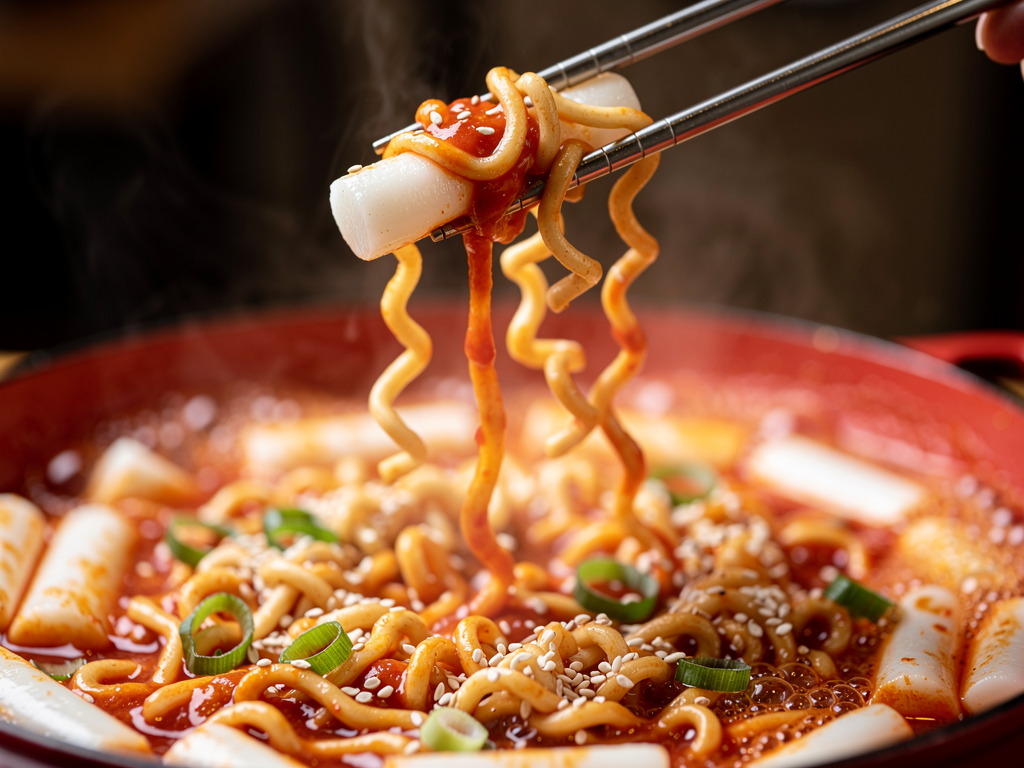
HYU Korean Restaurant lists rabokki at AED 65 on its Deliveroo menu, described as spicy stir-fried ramyun noodles with rice cake, cabbage and onion. That is AED 16 above Mukbang for materially the same dish.
What you get for the extra money is the deepest ramyeon list in Dubai. Egg Ramyun AED 60, Cheese Ramyun AED 65 and Seafood Ramyun AED 75 sit in its noodle section — three ramyeon variants on one menu, more than any other Korean kitchen in the city publishes. If your craving is really about noodles rather than rice cakes, HYU has the most to offer. It also closes at 23:30, later than anywhere else here, which makes it the realistic late option.
It is rated 4.7 on Deliveroo from over 500 ratings and carries the platform’s “Authentic food” flag.
The honest caveat: it prints a condition worth reading before you order — side dishes come with appetisers only if you order over AED 100 of appetisers. And AED 65 is a lot for rice cakes and instant noodles. Confirm halal status and ingredients directly with the kitchen.
Mashisoyo in JLT West: AED 69, and the only real vegan option
Mashisoyo prices rabokki at AED 69 on its Deliveroo listing, the highest published figure in the city. Its own website states plainly that it serves halal Korean food, and lists its address as Jumeirah Business Centre 1, Cluster G, JLT.
Here is where it earns its place: it is the only venue in this guide with a genuine plant-based branch of the rice-cake family. Vegan Tteok-bokki AED 76, Vegan Japchae AED 69.75, Yachae Kimbap AED 51.25 and Vegan Kimchi AED 38.50 all appear on the same list, with several other items marked vegetarian. Nowhere else in this comparison offers a plant-based diner anything at all.
One number needs care. Mashisoyo prints Tteok-bokki at AED 50 on its own website, while the AED 69 rabokki figure comes from its Deliveroo listing. Those are different sales channels, so a meaningful part of that AED 19 gap is delivery-app markup rather than a noodle upcharge. Do not read it the way you can read Mukbang’s 55-against-49, which is a single menu.
The honest caveat: AED 69 is the top of the market for this dish, and its own site gives opening hours of 11:00 to 22:30, so it is not a late option. Confirm current pricing directly.
Where else can you get Korean rice cakes in Dubai?
Four more addresses matter, though none of them will sell you a confirmed rabokki.
Seoul Street & 1004 Gourmet, The Greens. The nearest thing Dubai has to a rice-cake specialist, running styles Mukbang does not: a creamy cheese tteokbokki and a milder rose version. Roughly AED 30-80 per person, no rabokki price published and no rabokki confirmed on the menu. The attached Korean grocery carries a full instant-ramyeon aisle, which matters more than it sounds — rabokki is the one Korean restaurant dish you can genuinely rebuild at home for a few dirhams, and this is where you buy the noodles. Cafe-sized with limited seating. Confirm halal status directly.
Mannaland, Al Hudaiba. The highest-rated Korean kitchen in this guide at 4.8 on Deliveroo from over 500 ratings, and included here precisely because it does not sell rabokki. Its seven-dish noodle section runs Kalguksu AED 60, Bibim Naengmyun AED 60, Japchae AED 70, Jjajangmyun AED 70, Mul Naengmyun AED 70, Haemul Ramyun AED 70 and Jjambbong AED 80 — no rabokki anywhere in it. A long-running halal home-style room that plates a comforting traditional tteokbokki. Roughly AED 60-120 per person, closes at 22:00, and the room is plain and dated. Phone +971 4 345 3200.
The Korean Restaurant (Hanok), International City. No rabokki and no tteokbokki, but the cheapest Korean noodles in Dubai: Haemul Ramyun AED 42, Jjajangmyeon from AED 45, Mul Naengmyun AED 50, Japchae AED 50, and a Japchae Lunch Box at AED 38. Its own menu states all prices include 5% VAT — the only venue here that prints that. If the real craving is a cheap noodle bowl rather than rice cakes, this is the honest answer. Phone 04-5588962 or 052-5097505.
Hoe Lee Kow, Dubai Hills. The top of the market at roughly AED 150-350 per person, and a modern fusion room rather than a bunsik kitchen. Its signature rice-cake dish is described on its own menu as topped with maple bacon and manchego. It is a licensed venue where alcohol is served. Anyone who needs a pork-free and alcohol-free room should choose elsewhere or confirm directly. No rabokki published.
Best rabokki in Dubai: the price comparison
| Venue | Area | Rabokki AED | Halal | Standout order |
|---|---|---|---|---|
| Mukbang Shows — Deira | Port Saeed, Deira | 49 | 100% — beef & chicken only | Rabokki, filed under Street Food |
| HYU Korean Restaurant | JLT | 65 | Confirm directly | Deepest ramyeon list in Dubai |
| Mashisoyo | JLT West, Cluster G | 69 | States halal on own site | Vegan Tteok-bokki AED 76 |
| Seoul Street & 1004 Gourmet | The Greens | Not published | Confirm directly | Creamy and rose tteokbokki |
| Mannaland | Al Hudaiba | Not on menu | Halal home-style room | Kalguksu AED 60 |
| The Korean Restaurant (Hanok) | International City | Not on menu | Confirm directly | Haemul Ramyun AED 42 |
| Hoe Lee Kow | Dubai Hills | Not published | Licensed venue — confirm directly | Rice cakes with maple bacon |
Mukbang’s prices are exclusive of 5% VAT. The HYU and Mashisoyo figures are Deliveroo prices and carry platform markup. Verify before you order.
Is rabokki halal in Dubai?
It depends entirely on the kitchen, because the risk points in this dish are not obvious ones. The rice cakes and the gochujang are almost always fine. The things to ask about are fish-cake binders, whether the stock is pork-based, and the toppings — sausage, ham and bacon are common rabokki additions in Korea, and cheese versions vary.
Mukbang Shows is 100% halal: beef and chicken only, no pork, no alcohol anywhere on the premises. Mashisoyo states on its own website that it serves halal Korean food, which is a first-party claim. For HYU, Seoul Street, Mannaland, The Korean Restaurant and every other venue here, halal status is not independently verified in any source we could reach — confirm directly with the kitchen. Hoe Lee Kow is a licensed venue and its signature rice-cake dish is described on its own menu as containing maple bacon; both are published facts, and diners who need a pork-free room should look elsewhere.
For wider context on the city’s dining scene, Time Out Dubai’s restaurant coverage and MyBayut’s guide to Korean restaurants in Dubai are both useful starting points.
What is rabokki? (라볶이)
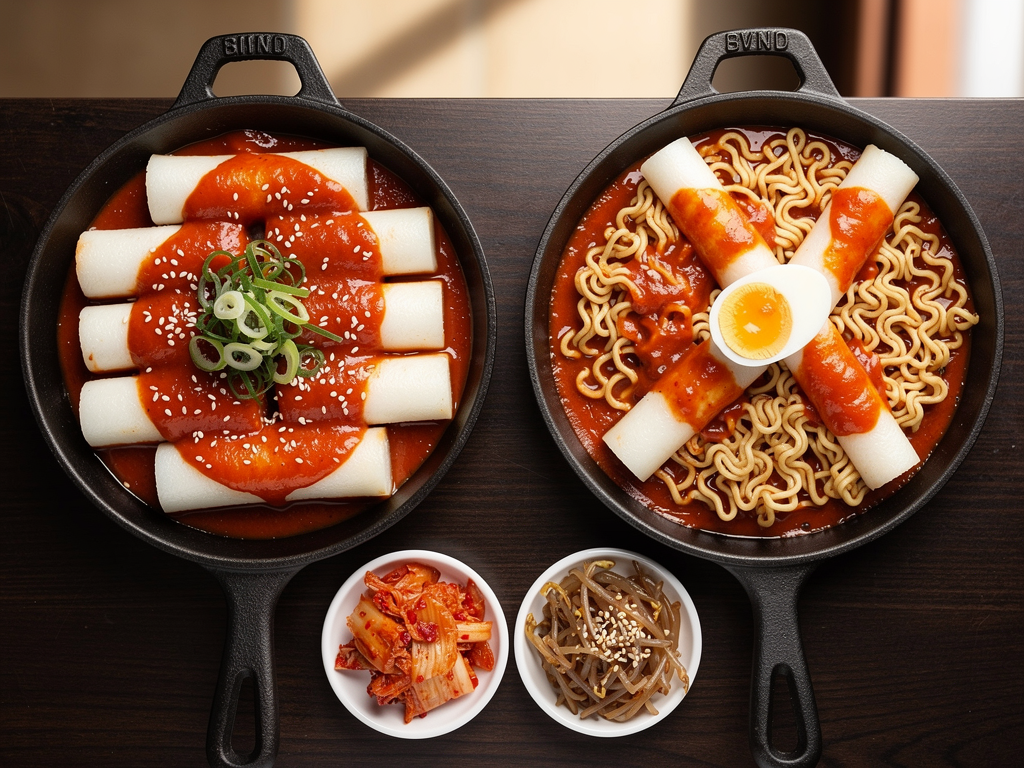
Rabokki is tteokbokki with instant ramyeon noodles cooked into it. The name is a portmanteau of ramyeon plus tteokbokki, and the dish is a subset of tteokbokki rather than a rival to it — same gochujang sauce base, same cylindrical garaetteok rice cakes, plus noodles.
It comes out of 1980s bunsik shops, associated with Seoul’s Sindang-dong district and with the snack stalls outside school gates, where a cheap packet of instant noodles stretched one pot far enough to feed two kids instead of one.
The part almost nobody writes down: rabokki usually tastes milder per bite than the tteokbokki it is built from. The noodles and the starch they shed dilute and absorb the gochujang, so the sauce thins even though nothing was done to reduce the heat. The heat then concentrates at the bottom of the pot as it cooks down, which is why the last few spoonfuls hit harder than the first.
If you are still deciding between the two, our full breakdown of tteokbokki vs rabokki goes through it properly. For the plain rice cakes without noodles, see the best tteokbokki in Dubai.
Which areas of Dubai actually sell it?
Two, effectively.
Deira holds the cheapest published price, at Mukbang Shows on Al Ittihad Rd in Port Saeed, along with the widest street-food menu around it.
Jumeirah Lake Towers holds the other two. HYU and Mashisoyo both sit in the JLT cluster, which is served by the DMCC and Sobha Realty metro stations, and they are close enough together that comparing them on one trip is realistic.
Everything else is an outlier. The Greens has the rice-cake specialist and the grocery. Al Hudaiba has Mannaland. International City, where The Korean Restaurant sits, has no metro station serving it, so that one is a car or a delivery order. Dubai Hills is the same.
If you want the best rabokki in Dubai without crossing the city, the honest answer is that you are going to Deira or to JLT.
How to order rabokki so it does not turn gluey
Check the menu heading, not the noodle section. Street Food at Mukbang, Appetizer at HYU, Main Menu at Mashisoyo. Searching “noodles” will miss it at all three.
Compare the right prices. AED 49 is Mukbang’s own-menu price. The AED 65 and AED 69 figures are Deliveroo prices with platform markup baked in. Call the restaurant or open its own site before deciding one is dearer than another.
Eat it in the first ten minutes. Rice cakes shed starch continuously. A pot that arrives looking soupy will be exactly right after about five minutes and gluey by twenty. This is the single biggest thing people get wrong.
Never order it last. For the same reason, rabokki is a bad final dish after a long barbecue. Order it early or mid-meal, as a shared pot.
Pair it with something dry. Mandu or gimbap balances a pot that is all soft texture and one sauce. At Mukbang the whole bunsik list is on the same page, which makes this easy.
Ask about the stock and the toppings. Do not assume. The binders and the stock are where the halal questions actually live, not the rice cakes.
If the noodles are the real craving rather than the rice cakes, the best Korean ramen in Dubai and our guide to Korean noodles in Dubai cover the wider family properly.
FAQ
How much does rabokki cost in Dubai in 2026?
Three published prices: AED 49 at Mukbang Shows Deira on its own menu, AED 65 at HYU and AED 69 at Mashisoyo, both on Deliveroo. That is a 41% spread on the same core dish.
Why is rabokki cheaper than tteokbokki at Mukbang?
Instant ramyeon costs less per gram than rice cakes and bulks the pot out, so the noodle version comes in AED 6 below the plain one — AED 49 against AED 55. Mukbang is the only Dubai menu publishing both.
Is rabokki included in the all-you-can-eat tiers?
No. It is à la carte only at AED 49. The barbecue tiers start at AED 69 at Deira and do not include street-food items, so you would be paying for both.
Can I get vegan rabokki in Dubai?
No venue here publishes one. Mashisoyo is the closest, with Vegan Tteok-bokki at AED 76 and a wider vegan list, but that is tteokbokki rather than rabokki. Confirm preparation directly.
Does rabokki taste spicier than tteokbokki?
Usually the opposite. The noodles absorb and dilute the sauce, so it reads milder per bite — though the heat concentrates at the bottom of the pot as it reduces.
Which Mukbang branch should I go to for it?
All branches run the same à la carte street-food menu. Deira has the lowest barbecue tier pricing if you plan to add an all-you-can-eat booking on top.
Rabokki is a AED 49 dish being sold for as much as AED 69 in this city, and the gap is mostly about which menu section it landed in and which app you ordered from. Check the restaurant’s own menu first, eat it fast, and it is one of the best-value Korean dishes in Dubai.
Related guides
More from our Korean food guides across the UAE: