Updated: July 2026
So what is naengmyeon? It is a Korean cold noodle dish — the name literally means “cold noodles” — built from chewy buckwheat-and-starch noodles served ice-cold, either in a chilled beef-and-radish broth (mul) or tossed dry in gochujang sauce (bibim). It is the standard chaser after Korean BBQ, and in a UAE July it is arguably the most useful dish on any Korean menu. A bowl runs roughly AED 48–70 here.
TL;DR
– Best overall: Mukbang Shows Deira — reliable mul style after AYCE BBQ
– Best value: Mukbang Shows Muroor Road, Abu Dhabi at AED 55
– One situational pick: Sura Dining Lounge when you specifically want both mul and bibim choices
What is naengmyeon?
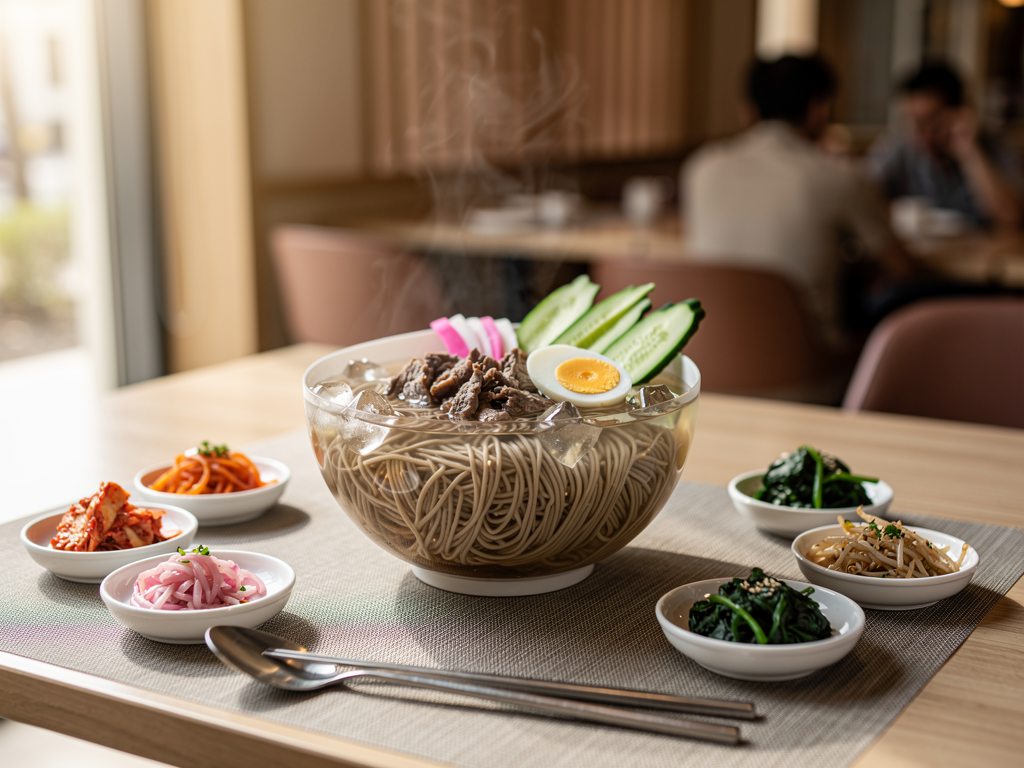
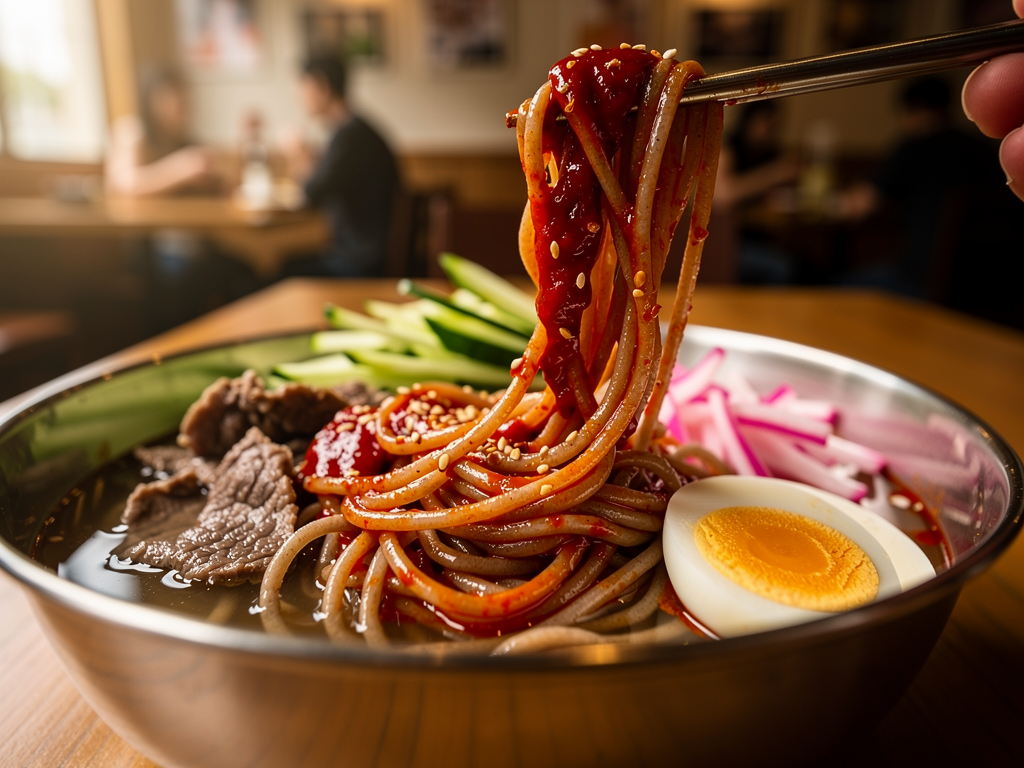
Naengmyeon (냉면) is a Korean cold noodle dish whose name literally means “cold noodles”. Long thin grey-brown strands made from buckwheat flour mixed with sweet potato or potato starch are served ice-cold. The starch creates an unusual chewy and slippery texture that resists biting, so servers cut the noodles with scissors at the table. Traditional garnishes include thin slices of Korean pear or apple, cucumber matchsticks, half a boiled egg and a few strips of meat. The dish originated in North Korea with Pyongyang known for the broth version and Hamhung for the spicy tossed style. In South Korea it flipped from a winter food eaten in heated rooms to the definitive summer refresher.
In the UAE the timing matches perfectly with Gulf summers when anything hot feels impossible. The broth or sauce is deliberately under-seasoned so diners adjust it themselves with vinegar and mustard. A standard bowl sits in the 450-550 kcal range depending on exact toppings and broth depth. This makes it a practical light meal or palate reset rather than a heavy sit-down feast.
Naengmyeon is also a functional ritual rather than just a dish. Koreans often order it immediately after fatty barbecue because the cold sour liquid slices through grease and leaves the mouth clean for the next round or for the drive home. In Dubai and Abu Dhabi restaurants this sequence appears on tables every evening once the temperature finally drops after 9pm. It never went mainstream here the way bibimbap or ramyeon did, but it is the dish anyone who has lived through a Seoul August mentions first when the weather turns brutal.
Mul naengmyeon vs bibim naengmyeon
The two styles are the first thing to get straight about what is naengmyeon, and the split comes down to liquid versus dry. Mul naengmyeon arrives floating in a chilled beef broth often lightened with dongchimi radish water kimchi. Ice cubes or even slushy ice crystals keep the temperature near freezing. The broth tastes clean and gently sour with almost no heat. Bibim naengmyeon contains zero broth. Instead the same noodles get tossed in a sweet-hot gochujang sauce that coats every strand in red. Both versions use identical buckwheat-starch noodles yet deliver completely different experiences.
Mul feels like drinking a cold soup with chewy solids. Bibim feels closer to a spicy cold pasta salad. Most UAE menus list mul because it photographs better in the heat and pairs cleanly after barbecue.
Bibim demands more precise spice balancing and appears less often. In restaurants the choice usually comes down to what the kitchen has prepped that day.
What are naengmyeon noodles made of?
The answer to what is naengmyeon made of: the noodles blend buckwheat flour with sweet potato starch or potato starch in varying ratios. The starch percentage is what delivers the signature elastic chew and slippery surface that feels almost rubbery compared with wheat noodles. Pure buckwheat would turn brittle and break; the starch gives stretch. That same stretch is why you cannot bite through a full strand cleanly, which explains the scissors that always arrive with the bowl. Cooks boil the noodles briefly then shock them in ice water to lock the texture before plating.
The grey-brown colour comes naturally from the buckwheat. No egg or colouring is added. The texture degrades quickly once the noodles sit in liquid too long, so speed matters when the server brings the bowl.
Why is naengmyeon served with vinegar and mustard?
The broth or sauce base is intentionally mild so each diner can season to personal preference. Small pitchers of clear vinegar and a tiny tube or dish of yeongyeoja — a sharp hot mustard paste — sit beside the bowl. Most people add a splash of vinegar first for acidity then squeeze a pea-sized dot of mustard and stir. The mustard cuts through richness and wakes up the sinuses without adding chili heat. Too much mustard ruins the balance; the first bite is always a cautious experiment. Koreans treat this step as personal chemistry. Some add pickled radish or more pear slices.
The ritual forces you to slow down and taste rather than inhale. Servers rarely explain the step unless asked, which leaves first-timers staring at the little tube wondering whether it is chilli paste.
How do you eat naengmyeon properly?
You eat naengmyeon in a set order. Season the broth first with vinegar and mustard, taste, then decide if more is needed. Use the scissors to cut the long strands into bite-size lengths roughly three or four times across the bowl. Mix everything together so the pear and cucumber distribute evenly.
Slurp the noodles loudly — the sound is part of the etiquette and helps cool the mouth. Finish by drinking the remaining broth straight from the bowl. The liquid is meant to be consumed; leaving it behind is considered a waste. In group settings everyone adjusts their own bowl rather than sharing from a central pot. Chopsticks and a spoon come together. The spoon lifts broth while chopsticks handle the slippery noodles after they have been cut.
Expect the first attempt to be messy. By the second visit the rhythm feels natural. This sequence explains why the dish works so well after barbecue: the cold sour liquid genuinely resets the palate before another round of grilled beef or chicken.
Why do Koreans eat naengmyeon after Korean BBQ?
This is the part of what is naengmyeon that most UAE diners have never been told. Fatty grilled meat coats the mouth with richness that quickly becomes heavy in 40C heat. A cold sour bowl of naengmyeon cuts straight through that coating. The acidity and temperature contrast act like a reset button between meat courses or at the end of the meal. The ritual is so common in Seoul that many barbecue restaurants automatically bring the naengmyeon menu when they clear the grill. In the UAE the same pattern appears at every Korean table once the barbecue order reaches a certain size.
Diners who have never visited Korea often discover the combination by accident and then repeat it every visit. The contrast between hot smoky meat and icy clean noodles is the genuine reason the dish survived centuries rather than any Instagram appeal. This practical pairing is exactly why the dish deserves attention during UAE summers when heavy food feels punishing.
Is naengmyeon halal?
The broth base decides the answer. Traditional mul naengmyeon uses beef brisket stock, which is halal when the animal is slaughtered correctly. Many kitchens blend that stock with dongchimi radish water that contains no animal products. The risk comes from any hidden pork elements or cross-contamination in non-specialised kitchens. Bibim naengmyeon sauce is usually free of meat stock but can contain fish sauce or other seasonings. Always ask what the broth is made from. Mukbang Shows is 100% halal using only beef and chicken with no pork or alcohol anywhere on site. Other venues require direct confirmation. Sonamu is a licensed venue where alcohol is served — confirm directly before you go.
How many calories is naengmyeon?
A standard bowl of naengmyeon lands roughly between 450 and 550 kcal. The range depends on broth depth, amount of egg, meat slices and whether extra sugar hides in the sauce for bibim versions. The noodles themselves are relatively light because they are mostly starch and water. The pear and cucumber add almost nothing. A mul version with clear broth usually sits at the lower end. A heavily sauced bibim version pushes closer to 550. Compared with a cheeseburger or fried chicken meal it remains a moderate choice that leaves room for barbecue earlier in the evening. Track your own additions because extra sesame oil or sugar packets can shift the number quickly.
Naengmyeon vs other cold noodles
Naengmyeon differs from bibimguksu in that the latter uses soft wheat somyeon noodles and a thicker sauce. Japanese soba relies on buckwheat but lacks the added starch chew and is rarely served with vinegar-mustard seasoning or ice broth.
Makguksu from Gangwon province uses similar buckwheat but is thicker and often mixed with spicy gochujang and raw vegetables without the signature icy broth. Naengmyeon’s extreme length, grey colour and mandatory scissor cut set it apart. In the UAE most menus list naengmyeon and bibimguksu side by side as two different cold-noodle experiences. The first delivers temperature shock and sourness while the second delivers heat and chew without the soup. Both have roles after barbecue but they are not interchangeable.
Where can you try naengmyeon in the UAE?
Mukbang Shows Deira branch ranks first for consistent quality and price. The mulnaengmyun costs AED 55 on the live noodle menu and arrives in a clear chilled beef broth with pear slices, cucumber, half an egg and thin beef. Order it after the all-you-can-eat Korean BBQ that starts at AED 69 for value branches or AED 79 at premium ones. The sequence mirrors exactly how it is eaten in Korea. Five branches operate across Dubai and Abu Dhabi including JBR, DWTC Love Mukbang, Muroor Road and Electra Street. The obvious move is to finish the grill then cool down with the noodles. One honest caveat is that the menu lists only the mul cold-broth style.
True bibim naengmyeon tossed in gochujang without broth is not named on the menu although the AED 48 bibimguksu using wheat somyeon noodles scratches a similar spicy itch. This is not a dedicated naengmyeon house so the dish remains a supporting act rather than the star. Still the price, halal compliance and multiple locations make it the default choice for most people. Call +971-4-886-4494 or check the full Mukbang Shows menu before heading out. See also their guide to the best naengmyeon in Dubai.
Sura Dining Lounge in Al Garhoud is the only confirmed venue publishing both mul and bibim naengmyeon at AED 70 a la carte. If you specifically want the dry fiery tossed version this is the address. The contemporary lounge setting pushes the price above casual spots and the menu also offers full Korean barbecue. Confirm halal status directly because it is not marketed as a dedicated halal kitchen. The location near Garhoud bridge makes it convenient for Deira and Airport Road traffic.
Seoul Garden in Al Karama remains one of Dubai’s longest-running Korean restaurants. Cold noodles are repeatedly listed as a must-order after the tabletop grill. Private rooms and built-in grills suit larger groups. Exact naengmyeon price is not published online so expect roughly AED 170 for two people including sides. The room feels dated and parking can be tight on 27th Street. Call ahead to confirm the cold noodle preparation that day.
Mannaland Korean Restaurant in Al Hudaiba-Satwa operates as a homey halal kitchen. Naengmyeon appears as a summer cool-down next to bibimbap and galbi with meals running roughly AED 60-120 per person. The plain room lacks atmosphere but the portions are generous and the flavours stay close to home-style cooking. Availability can be seasonal so phone +971 4 345 3200 first. Satwa location means easy taxi access but limited metro options.
Sonamu inside Asiana Hotel in Deira offers an all-you-can-eat Korean BBQ buffet around AED 89 per person. A cold-noodle soup sits on the buffet line alongside haemul pajeon and soft tofu stew. This delivers the cheapest entry point to the style without committing to a single bowl. The caveat is that it is a licensed venue where alcohol is served, so confirm directly if that matters to you. The buffet line version also cannot match a made-to-order bowl for texture. Still for volume eaters it works.
The Korean Restaurant known locally as Hanok sits in International City. It focuses on authentic Korean and Korean-Chinese dishes popular with the resident Korean community. Naengmyeon availability is unconfirmed and meals for two run around AED 150. The location inside Indigo Spectrum 1 is awkward without a car and far from any metro station. Call before making the trip specifically for cold noodles.
Hankook Korean Restaurant in Al Nahyan Abu Dhabi is a long-running value kitchen specialising in home-style noodles and stews. Reviewers note portions that stretch across three people with typical dishes priced around AED 50. A meal for two sits near AED 195 according to updated 2026 listings. Naengmyeon itself is not confirmed on published menus so direct confirmation is required. The Defence Road area sees heavy traffic during rush hours.
Price comparison
| Venue | Area | Price AED | Halal | Standout order |
|---|---|---|---|---|
| Mukbang Shows | Deira / multiple | 55 | Yes (beef & chicken) | Mulnaengmyun after AYCE BBQ |
| Sura Dining Lounge | Al Garhoud | 70 | Confirm directly | Both mul and bibim styles |
| Seoul Garden | Al Karama | ~85 (part of 170 for 2) | Confirm directly | Cold noodles after grill |
| Mannaland | Al Hudaiba / Satwa | 60-120 pp | Yes (halal kitchen) | Summer naengmyeon set |
| Sonamu (Asiana) | Deira | 89 buffet | Licensed venue (alcohol served) | Buffet cold-noodle soup |
| Hanok | International City | ~75 (part of 150 for 2) | Confirm directly | Galbi + possible naengmyeon |
| Hankook | Al Nahyan, Abu Dhabi | ~50 per dish | Confirm directly | Noodle set for sharing |
Where to find it by area
Deira remains the easiest entry point. Mukbang Shows on Al Ittihad Road is a short taxi from Deira City Centre metro and carries the full noodle menu. The JBR branch on The Walk is a few minutes from the Jumeirah Beach Residence tram stops and attracts beach crowds who want something cold after a day in the sun. Love Mukbang at DWTC opposite World Trade Centre metro works for anyone already near Sheikh Zayed Road. In Abu Dhabi the Muroor Road and Electra Street branches sit in busy Al Danah, Zone 1, with street parking — the capital has no metro at all, so everything there is a car or taxi trip.
Al Karama and Satwa form the older Korean corridor. Seoul Garden and Mannaland both operate within five minutes of each other by taxi. Karama sees heavy evening traffic; Al Mina Road in Al Hudaiba feels more neighbourhood than tourist and sits at the lower end on price.
International City and Al Nahyan require planning. International City lacks metro coverage so most diners arrive by car or Careem. Al Nahyan sits on Defence Road near the ministries and clogs at rush hour, but the room is quiet once you are in.
Staying in Downtown or the Marina, the JBR branch is the short hop. Based in Abu Dhabi, default to Muroor Road or Electra Street.
Read more about Korean ramen and noodle soups in Dubai if you want to expand your cold-noodle research beyond naengmyeon.
Practical ordering tips
Always order naengmyeon after the barbecue rather than before. The temperature contrast works only when your mouth is coated in meat fat.
Tell the server you want the noodles cut at the table. Some kitchens wait for you to ask and the strands are too long to manage otherwise.
Start with half the vinegar and a tiny dot of mustard. Stir, taste, then add more. You cannot remove either once they are in the bowl.
Ask whether extra pear or cucumber is available if you want more crunch — some kitchens will add it, some will not.
At Mukbang Shows combine the AED 55 mulnaengmyun with the AED 69 AYCE barbecue minimum for two people. Note the AED 60 leftover charge on the unlimited sets, so order in rounds rather than all at once.
Call ahead during July and August. Many smaller kitchens rotate naengmyeon off the menu when demand drops or when chefs take summer leave.
If you cannot eat beef ask whether the kitchen offers a vegetarian dongchimi-only broth. Some locations can accommodate with notice.
Confirm the price by phone before a special trip. Delivery apps and aggregator listings often carry outdated menus.
These steps remove most surprises and help first-timers look like regulars within one visit.
For the latest prices and photos see the official best naengmyeon in Dubai guide on the Mukbang site or consult Time Out Dubai’s best Korean restaurants list, MyBayut’s guide to Korean restaurants in Dubai, and the Korea Tourism Organization’s official guide to Korean food.
FAQ
Is naengmyeon spicy?
Mul naengmyeon is not spicy at all. Bibim naengmyeon carries moderate gochujang heat that you can adjust. The mustard adds sinus heat but not chili burn.
Can I get naengmyeon delivered in Dubai?
Yes through most major apps but the ice melts quickly. Eat within 30 minutes of arrival or the texture suffers.
Does naengmyeon contain gluten?
Buckwheat is naturally gluten-free yet many factories mix in small amounts of wheat starch. Strict coeliacs should confirm with the specific kitchen.
What is the difference between naengmyeon and bibimguksu at Mukbang?
Naengmyeon uses buckwheat-starch noodles in cold broth. Bibimguksu uses soft wheat somyeon noodles tossed in sauce. They are different dishes.
Is it worth travelling to Abu Dhabi for naengmyeon?
Only if you are already in the capital. The two Mukbang value branches offer identical AED 55 bowls to Dubai locations with easier parking.
Can vegetarians eat naengmyeon?
Mul versions usually contain beef stock. Ask whether a dongchimi-only broth is possible, or choose a bibim style if the sauce is meat-free. Either way it needs a direct question.
Naengmyeon solves a very specific UAE problem: how to enjoy Korean food when the temperature outside makes hot soup feel ridiculous. The combination of science, tradition and practical palate reset explains why the dish refuses to disappear even though it never quite becomes mainstream. Next time the mercury hits 45C book a barbecue table at Mukbang Shows, finish with the AED 55 mulnaengmyun, and taste exactly why Koreans have kept this ritual alive for generations. The scissors, the vinegar, the icy broth and the loud slurp all make sense once you try it the right way.
Related guides
More from our Korean food guides across the UAE: