Updated: August 2026
Korean lunch box vs bento comes down to one thing: mixable versus separated. In Dubai the entry Korean lunch box is AED 38 at The Korean Restaurant (Hanok) in International City, and the cheapest Japanese bento is AED 61 from the same operator in the same unit. But the gap closes fast — Korean sets and Japanese bentos overlap almost exactly from AED 61 upward.
TL;DR
- Cheapest complete meal: Hanok’s Japchae Lunch Box or Kimbap Lunch Box, AED 38, rice and sides included.
- Best value once you want real protein: Koreana Al Barsha’s dosirak range, AED 49–64, every box printed “With Sides, Rice And Soup”.
- Best for a long delivery ride: a Japanese bento — it is built to be eaten at room temperature, which a Korean box is not.
- Situational pick: Mukbang Shows’ Gangnam all-you-can-eat tier at AED 69–79 if you want the same one-price, nothing-to-decide meal sitting down instead of in a container.
What is the real difference between a Korean lunch box and a bento?
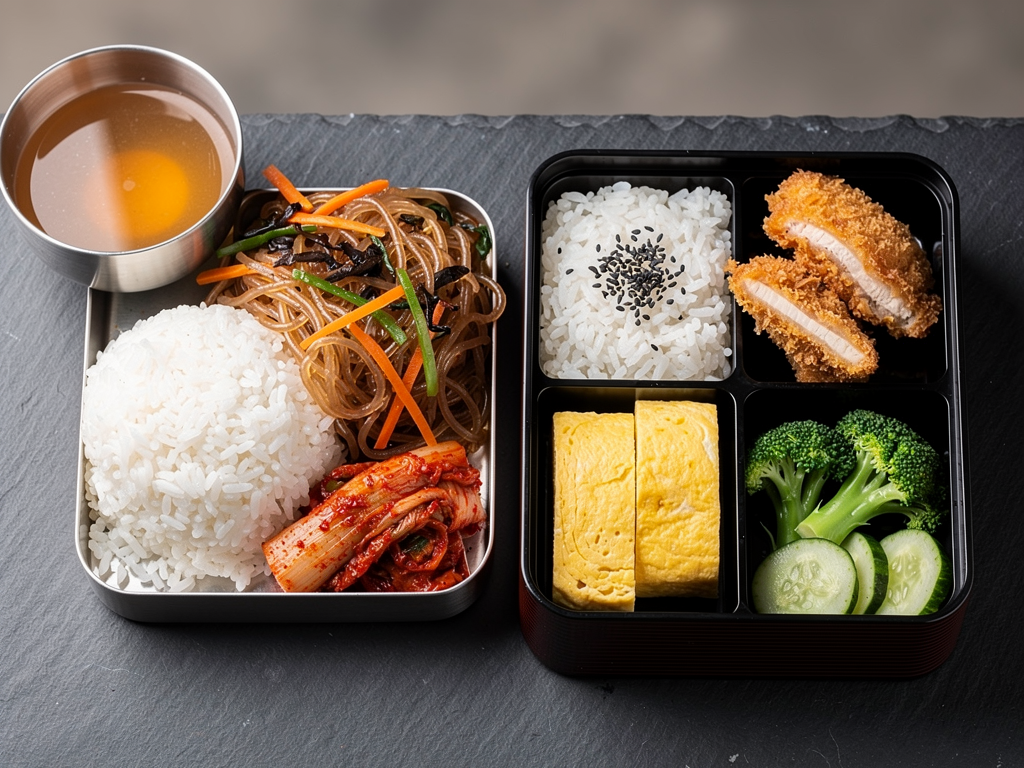
A Korean lunch box is designed to be combined; a bento is designed to stay apart. Everything else about the two formats follows from that single decision.
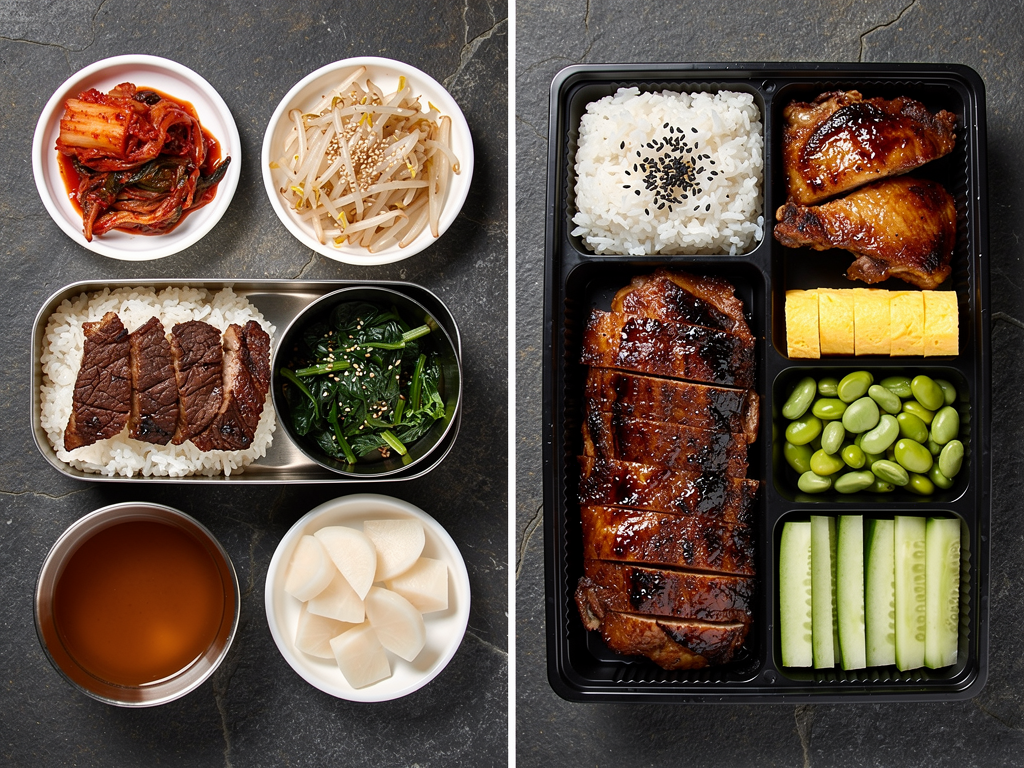
The Korean box, or dosirak, holds rice, one main and a few banchan in a single open container where the components touch. Plenty of Koreans eat it by putting the lid on and shaking the whole thing so the rice, egg, kimchi and seaweed turn into one mixed bite. The bento does the opposite. It uses moulded compartments with physical walls so each element keeps its own seasoning and none of them bleed into the rice.
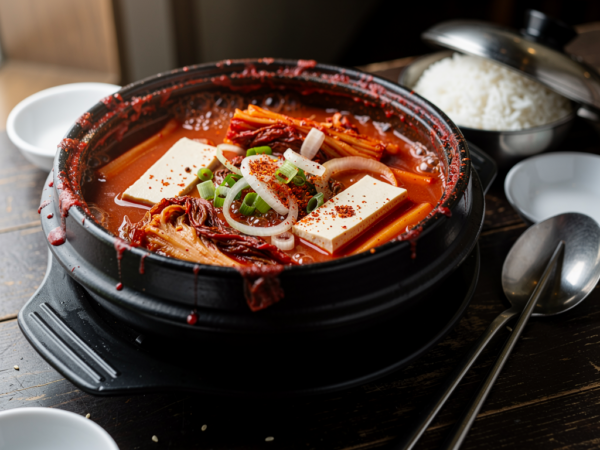
There is a second difference that nobody advertises and it is the most useful one for anybody ordering delivery: soup. Every Korean lunch box in this research arrives with a hot soup beside it. Not one bento does. A soup makes no sense in a tray engineered to travel and be eaten at ambient temperature, and its presence tells you the Korean box expects to reach you hot.
How much does a Korean lunch box cost in the UAE?
Korean lunch boxes start at AED 38. The Korean Restaurant (Hanok) in International City lists both a Japchae Lunch Box and a Kimbap Lunch Box at AED 38, inclusive of 5% VAT, which is the cheapest structured Korean lunch found anywhere in this research.
Koreana Restaurant in Al Barsha 1 runs the deepest list in the city under a heading printed literally as “Allday Koreana Combo Box
Above that, prices climb because the protein starts leading. Shogun in Al Sufouh charges AED 75 for its Dosirak Arirang, and its own description lists six separate components — steamed rice, glass noodle japchae, fried chicken, beef bulgogi, shrimp jeon and tofu kimchi. Mannaland in Jafiliya skips boxes entirely and sells sets instead, from a Chicken Set at AED 60 up to a Galbi Gui Set at AED 90.
The honest limitation of the cheap end is that it is carbohydrate-led. Hanok’s AED 38 box is japchae; Koreana’s AED 49 floor is japchae too. There is no protein centrepiece to pay for, which is exactly why they are cheap.
How much does a Japanese bento cost in the UAE?
Japanese bentos start around AED 55 and cluster between AED 61 and AED 92. Sushi Ya, which shares its International City unit and operator with Hanok, runs an eleven-item Bento Box section from a Tori Karage Set at AED 61 up to a Bento Futatsu at AED 105, with most of the middle — Tori Teriyaki, Katsu, Yaki Niku and Beef Itame — sitting at AED 68.
Sumo Sushi & Bento, the national chain, lists fourteen bentos. Its Veggie Supreme Bento at AED 55 is the only item under AED 60. The Classic Bento line — Teriyaki Chicken and Chicken Katsu at AED 63, BBQ at AED 66, Garlic Prawn at AED 68 — is the true entry band, and the Supreme boxes run from AED 68 to a Salmon Lovers Bento at AED 92.
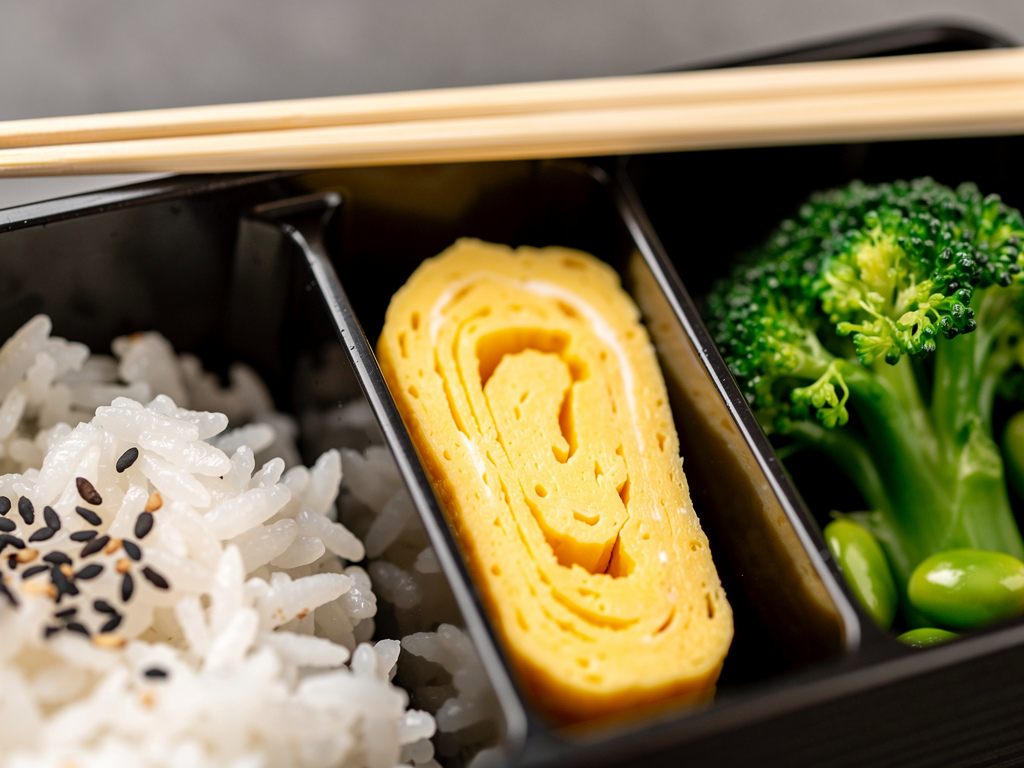
Kimura-ya in Business Bay publishes a section headed “Japanese Bento” starting at AED 68 for a Salmon Teriyaki Bento and reaching AED 165 for its A5 Kurohana Wagyu boxes. Its listings are also the clearest published proof of what compartmentalisation means in practice: the A4 Wagyu Yakiniku Bento is described as wagyu beef yakiniku, egg omelette, tataki kyuri, kimchi, potato salad and Japanese rice. Six components, six places to put them.
What does one operator selling both formats prove?
This is the part that makes the comparison honest rather than a guess, because it removes every other variable. The Korean Restaurant (Hanok) and Sushi Ya trade from the same Central Business District unit in International City under a single operator. Hanok’s own website organises its menu into three sections — Korean cuisine, Korean-Chinese cuisine, and “Sushi Ya – Japanese cuisine” — and both brands publish the same phone numbers, 04-5588962 and 052-5097505. Both state that prices include 5% VAT.
At that one address a Korean lunch box is AED 38 and the cheapest Japanese bento is AED 61. Same kitchen block, same operator, same VAT treatment, same week: a 61% premium for the Japanese format at entry level.
Then the same menu undercuts the easy conclusion. Hanok’s own Special Korean Sets start at AED 61 — Bulgogi Chicken Set and Mackerel Fish Set both — which is precisely where the bento range next door begins. So the Korean lunch box vs bento question is not “cheap Korean versus expensive Japanese”. It is a cheap Korean box versus a Korean set and a Japanese bento that cost the same as each other.
When do Korean sets and Japanese bentos cost the same?
From AED 61 upward they are effectively the same purchase. Hanok’s Bulgogi Chicken Set and Mackerel Fish Set are AED 61; Sushi Ya’s Tori Karage Set is AED 61. The match is exact.
It holds further up too. Hanok’s Bulgogi Beef Set and Ojingeo Bokkum Set are AED 63 against Sumo’s Classic Bentos at AED 63. Hanok’s Saeu Bulgogi Set is AED 66, Sumo’s BBQ Bento is AED 66. Hanok’s Galbi-jjim Set is AED 68, and Sushi Ya’s Tori Teriyaki, Katsu, Yaki Niku and Beef Itame bentos are all AED 68. Shogun’s AED 75 Dosirak Arirang lands mid-bento.
This convergence is the part most write-ups miss, and it changes the advice. Below AED 50 the Korean box wins on price and it is not close. Above AED 60 price stops being the deciding factor and you are choosing on format, temperature and what you actually want to eat.
Korean lunch box vs bento: the numbers side by side
| Format | Venue | Area | Price AED | What’s included | Note |
|---|---|---|---|---|---|
| Korean lunch box | The Korean Restaurant (Hanok) | International City | 38 | Japchae or kimbap box with Korean side dishes | Cheapest structured Korean lunch found; incl. 5% VAT |
| Korean lunch box | Koreana Restaurant | Al Barsha 1 | 49–64 | Thirteen dosirak, all “With Sides, Rice And Soup” | Deepest list in Dubai; combo for 3 at AED 132.30 |
| Korean lunch box | Shogun | Al Sufouh | 75 | Six listed components incl. japchae, chicken, bulgogi | Most fully specified Korean box |
| Korean set | Mannaland | Jafiliya | 60–90 | “Special Korean Menu Full Set” | Sets only — no dosirak on the menu |
| Korean set | The Korean Restaurant (Hanok) | International City | 61–76 | Seven Special Korean Sets | Starts exactly where bentos start |
| Japanese bento | Sushi Ya | International City | 61–105 | Eleven bentos; mid-range all at 68 | Same unit and operator as Hanok |
| Japanese bento | Sumo Sushi & Bento | UAE-wide chain | 55–92 | Classic Bento and Supreme Bento Box lines | Only one item under AED 60 |
| Japanese bento | Kimura-ya | Business Bay | 68–165 | Up to six named components per box | Hotel venue — confirm details directly |
| Korean AYCE (dine-in) | Mukbang Shows | 5 UAE branches | 69–129 | 7 BBQ kinds, 8 banchan, 2 gimbap, soup, rice | 100% halal; no box format sold |
All prices read from each venue’s own website or its live Deliveroo listing on 23 August 2026.
What does the word “bento” actually mean on UAE menus?
It does two completely different jobs, and one chain’s own naming proves it. Sumo Sushi & Bento splits its list into “Classic Bento” — rice, one protein, a vegetable — and “Supreme Bento Box”, which are sushi and sashimi assortments served with a garden salad. A Salmon Lovers Bento at AED 92 is salmon sashimi, salmon nigiri and spicy salmon rolls. There is no rice-and-main structure in it at all.
Sushi Ya does the same thing at the top of its range. The Bento Hitotsu at AED 100 and Futatsu at AED 105 are described as assorted sashimi and nigiri with salad, chirashi rice and edamame — an assortment, not a hot compartment tray.
So if you picture a warm partitioned lunch when you read “bento”, read the description before you order, because a good share of the UAE list is a sushi platter wearing the word.
What is a dosirak (도시락)?
Dosirak (도시락) is simply the Korean packed meal — rice, a main and banchan in one container. It started as a school and work lunch, and the shaken version, where you close the lid and shake until everything mixes, is still how a lot of people eat it. The design intent is combination, which is why the components sit together rather than behind walls.
Bento (弁当) is the Japanese equivalent built on the opposite instinct. Compartments keep each element separate, and each is seasoned to be eaten on its own and to taste right without reheating. That is why bento fillings skew towards things that hold — omelette, pickles, potato salad, katsu, cold rice.
Neither is more authentic than the other. They are two solutions to the same problem, and they diverge because one culture assumed the lunch would be eaten warm and the other assumed it would not.
Which format travels better for delivery?
The bento, clearly — and this is the single most practical point in the comparison. It is engineered to be eaten at ambient temperature, so a 30 to 40 minute delivery does not damage it. Nothing about a room-temperature bento is a compromise; that is the design.
A Korean lunch box is a worse product cold. Rice stiffens, japchae firms up as the sesame oil cools, and the hot soup that comes with it is the first thing to go. If you are ordering a dosirak, order it when you can eat it soon after it lands, or plan to reheat the rice and main.
Is a Korean lunch box or bento halal in the UAE?
Both can be, and the questions you ask are different for each. For a Korean box, ask about the protein and about cooking wine in the marinade. Worth knowing: on every Dubai menu checked here the classically pork-based items are built with beef instead — Koreana prints its Jeyuk Dosirak as “(Spicy Beef)” on its own menu. The halal build is the local default rather than a special request.
For a bento the questions are the protein, mirin in the glaze, and dashi. Teriyaki and katsu sauces conventionally contain mirin, a sweet cooking wine, and many kitchens use an alcohol-free version while others do not. That is a question about how the sauce is normally made, not an accusation about any restaurant, and it cannot be read off a menu — ask the venue directly.
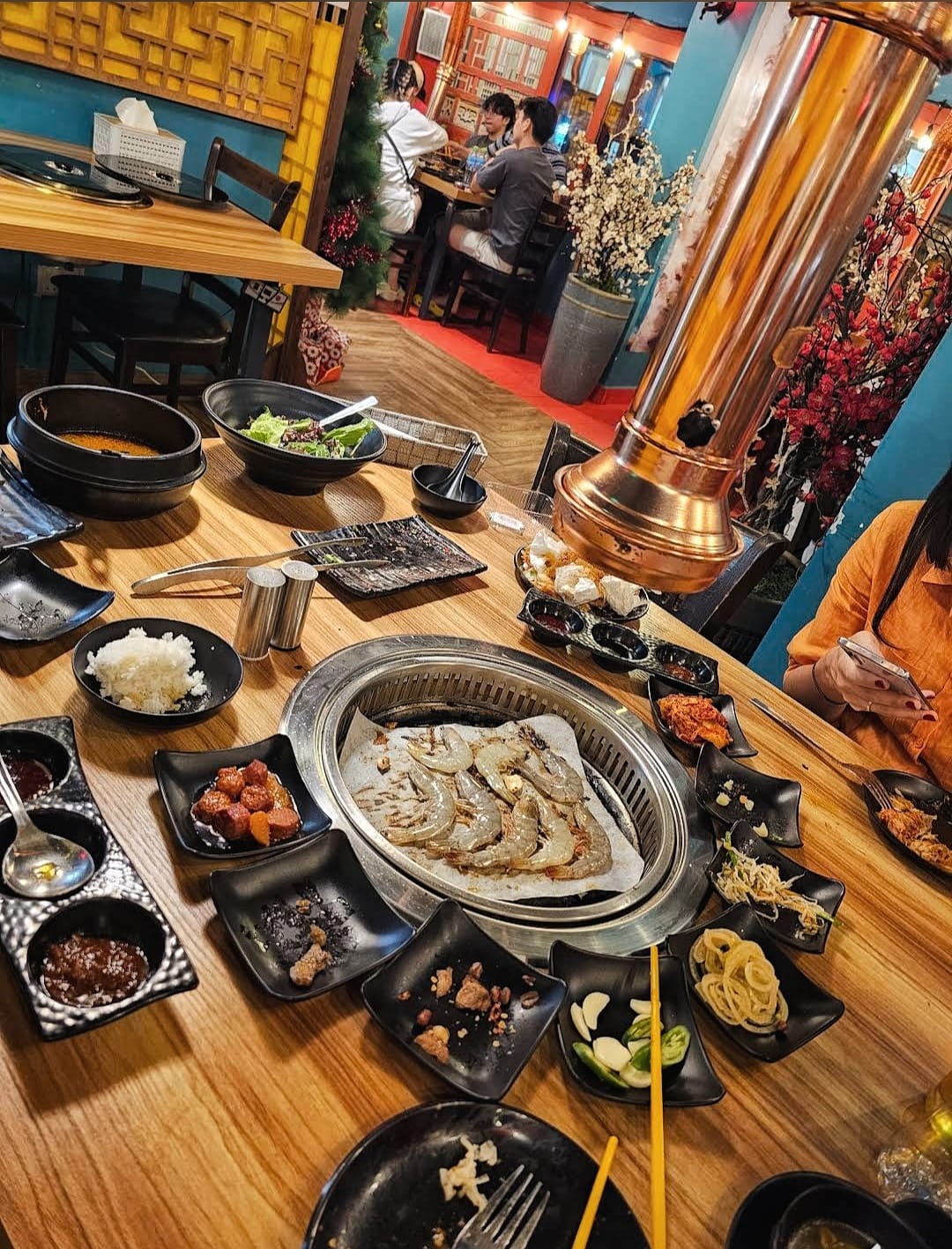
Mukbang Shows is 100% halal across all five branches: beef and chicken only, no pork, no alcohol served. For the same two cuisines compared at the same International City address, see our gimbap vs sushi comparison.
Where does Mukbang Shows fit into this?
It does not sell either format, and this guide should say that plainly rather than dress it up. Mukbang Shows publishes no dosirak and no bento in either emirate, so if a packed box is what you want, it is not your answer — Hanok at AED 38 or Koreana at AED 49 is.
Where it does belong is as the sit-down version of the promise both boxes make: one fixed price, a complete meal, nothing to assemble. The all-you-can-eat tiers run Gangnam at AED 69 in Deira, Muroor Road and Electra Street and AED 79 at JBR and DWTC, Daegu at AED 89 and 99, Jeju at AED 99 and 109, and Bukchon Hanok at a flat AED 129 everywhere. Every tier includes 7 kinds of beef and chicken BBQ, 8 banchan, 2 gimbap, soup and rice.
The conditions are real and worth stating: a two-person minimum, an AED 60 charge for excessive leftovers, and it is dine-in only. At AED 69 it also costs more than every Korean box here except Shogun’s, so for one person wanting a cheap weekday lunch it is the wrong tool. If you want to build your own packed lunch from the à la carte menu instead, gimbap runs AED 41–48, japchae AED 55 and bibimbap AED 53–62, all excluding 5% VAT.
Where can you buy each format in Dubai and Abu Dhabi?
International City is the only place in the country where you can compare both at one address, because Hanok and Sushi Ya share a unit — an AED 38 Korean box and an AED 61 Japanese bento, same door.
Al Barsha 1 has Koreana and its thirteen dosirak from AED 49. Jafiliya has Mannaland with Korean sets from AED 60. Al Sufouh has Shogun and its AED 75 Dosirak Arirang. Business Bay has Kimura-ya’s bento range from AED 68, and Sumo Sushi & Bento operates as a chain across the UAE. Most of these are listed on the delivery apps, which is why the temperature question above matters as much as the price one.
Abu Dhabi is thinner for packed Korean boxes. Mukbang Shows has its Muroor Road and Electra Street branches for the dine-in route, and the capital’s own dosirak options are covered in Korean lunch boxes in Abu Dhabi.
For the full Dubai venue list with every box priced, see our guide to Korean lunch boxes in Dubai, and if you are ordering for a group, Korean group set menus in Dubai covers the larger formats. Wider UAE dining coverage is worth cross-checking at Time Out Dubai’s restaurant coverage, MyBayut’s guide to Korean restaurants in Dubai and Khaleej Times food coverage.
Practical tips before you order
Read the heading, not the word. “Lunch box”, “dosirak”, “set” and “bento” are used loosely here. Koreana’s heading says combo box, Mannaland’s says full set, Sumo’s says both — check what is actually listed underneath.
Ask what is inside if the description looks copied. Hanok prints the same line, “Japchae with Korean Side Dishes”, under both its Japchae and its Kimbap Lunch Box. That is a menu slip rather than a description of the kimbap box, so confirm on 04-5588962 or 052-5097505.
Match the format to the journey. Short trip or eating immediately: Korean box. Long delivery, or a lunch you will open two hours later at a desk: bento.
Check the glaze, not just the meat. The protein is the obvious question; mirin in teriyaki and katsu sauce is the one people forget.
Do the combo maths if you are ordering for more than one. Koreana’s combo box deal is AED 132.30 for three boxes and AED 166.60 for four, against AED 147 and AED 196 bought singly.
Remember the Korean box includes soup. When you compare an AED 49 dosirak against an AED 55 bento, the dosirak is carrying a soup the bento is not.
FAQ
Is a Korean lunch box cheaper than a bento in the UAE?
Only at entry level. The cheapest Korean box is AED 38 against AED 55–61 for a bento. But Korean sets run AED 60–90, which is the same band as bentos, so the saving disappears once protein leads.
Which one travels better for delivery?
The bento. It is designed to be eaten at room temperature. A Korean lunch box is meant to arrive hot, and its rice and japchae stiffen as they cool.
Does Mukbang Shows sell a Korean lunch box or a bento?
No. It sells all-you-can-eat Korean BBQ from AED 69 dine-in, with a two-person minimum. For a packed box, Hanok at AED 38 or Koreana at AED 49 are the answers.
Why do some UAE bentos contain no rice?
Because “bento” is used for two formats. Sumo’s Classic Bento is rice and protein; its Supreme Bento Box line is a sushi and sashimi assortment with salad. Read the description first.
What is the cheapest complete Korean meal in a box?
Hanok’s Japchae or Kimbap Lunch Box at AED 38, inclusive of VAT. Koreana’s Japchae Dosirak at AED 49 is next, and includes sides, rice and soup.
Is a Korean lunch box meant to be mixed?
Yes. Dosirak is built to be combined, and shaking the closed box is a normal way to eat it. A bento is the opposite — the compartments exist to keep each element separate.
Korean lunch box vs bento is a choice about how you want to eat, not really about what you want to spend. Under AED 50 the Korean box is the better buy and nothing comes close to it; over AED 60 the two formats cost the same and the decision is mixable-and-hot against separated-and-portable. Work out when you will actually open the container, and the answer picks itself.
Related guides
More from our Korean food guides across the UAE: