
Updated: September 2026
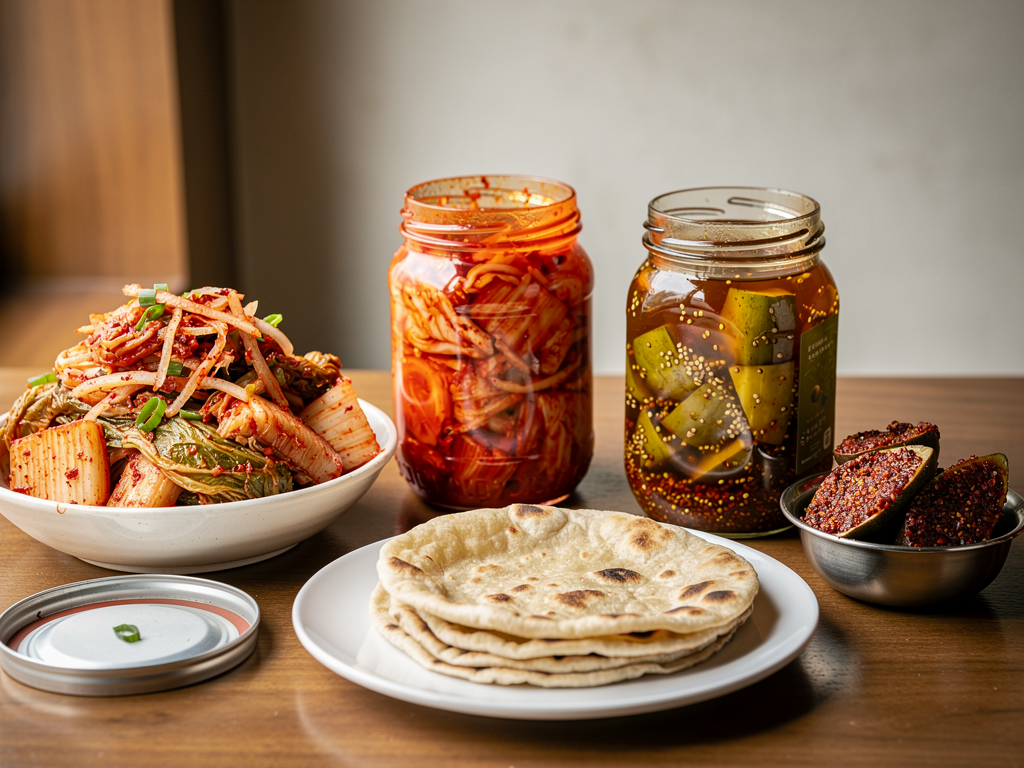
Kimchi vs achar is the difference between a vegetable and a relish. Kimchi (김치) is a wet, lacto-fermented vegetable eaten by the plateful; achar is an oil-and-spice preserve eaten by the fingertip. UAE menus price them that way: Mukbang Shows sells house kimchi at AED 78 a kilo, while Brick Lane prints “Lime Pickle AED 3” and many Indian kitchens put the achar on the plate for free.
TL;DR
– Kimchi: salted napa cabbage or radish with chilli flakes, garlic, ginger and usually salted seafood, fermented in its own brine; sour, crunchy, eaten as a side vegetable; sold by the portion or the kilo (AED 5–78).
– Achar: mango, lime, garlic or mixed vegetables in mustard or sesame oil with salt, chilli, mustard seed and fenugreek, often sun-cured; intense, oily, eaten a spoonful at a time; free with the plate or AED 3 a pot.
What is the difference between kimchi and achar?
Kimchi is preserved by brine and bacteria; achar is preserved by oil, salt, spice and sun. Both are pickles in the broad sense, but they end up at opposite ends of the plate.
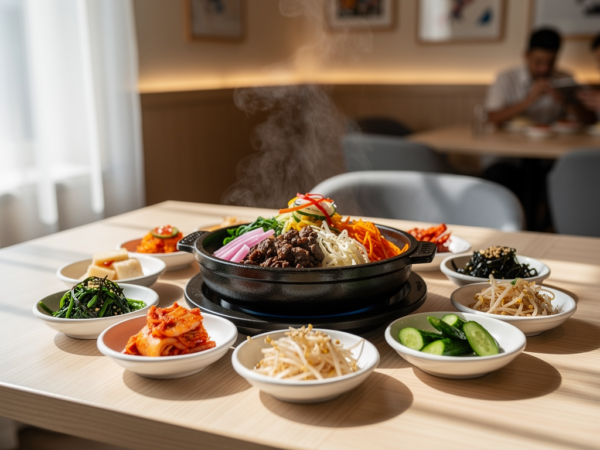
The encyclopaedia entry on kimchi describes “salted and fermented vegetables, most often napa cabbage or Korean radish”, seasoned with gochugaru chilli powder, spring onion, garlic, ginger and jeotgal, a salted seafood. Lactic acid bacteria do the fermenting. There are hundreds of varieties, and kimchi turns up as banchan — a side dish — at almost every Korean meal. Chilli only reached Korea in the early seventeenth century, and red chilli kimchi became common in the nineteenth.
The encyclopaedia entry on South Asian pickle — achar — describes “highly spiced condiments made from a variety of vegetables and fruits preserved in brine, vinegar, edible oils, and South Asian spices”, usually in sesame or mustard oil. Homemade batches are often matured in sunlight for up to two weeks. Regional names include khatai, pacchadi, loncha, oorugai and avakaai. Lactic acid bacteria play a part in many achars too, so the honest line is not “one ferments and one doesn’t” — it is that kimchi’s main preservative is the ferment, and achar’s is the oil and spice.
Why compare a Korean side dish with an Indian pickle?
Because they do the same job on two tables. Each is the salty, spicy, sour thing that sits beside rice or bread at nearly every meal, and each is kept for weeks or months. Our Korean food vs Indian food guide already calls kimchi and achar the same instinct, which makes kimchi vs achar the obvious condiment spoke of that hub.
It sits beside the other Indian spoke, our Korean fried chicken vs Chicken 65 comparison, and beside our kimchi vs sauerkraut comparison, which runs kimchi against the German ferment instead.
How is each one made?
Kimchi is cold and wet; achar is oily and sunned. For kimchi, cabbage or radish is salted to draw out water, then rubbed with a paste of chilli flakes, garlic, ginger, spring onion and usually salted anchovy or shrimp, packed tight and left to ferment in its own liquid. Traditionally it was stored in earthenware jars in the ground; today many use a dedicated kimchi refrigerator.
For achar, the fruit or vegetable is cut, salted and mixed with spice and oil. Gulf News’ homemade mango achar recipe uses raw mango, cold-pressed mustard oil, turmeric, asafoetida, roasted fenugreek and fennel seeds, and Kashmiri chilli, and sets the jar in the sun for four to five days, stirred at least once a day, before it goes into the fridge.
The result is two different textures. Kimchi stays crunchy and juicy, a vegetable you can eat a bowl of. Achar turns soft and glossy with oil, and its flavour is concentrated enough that a teaspoon covers a whole paratha.
Where does the heat and the sour come from?
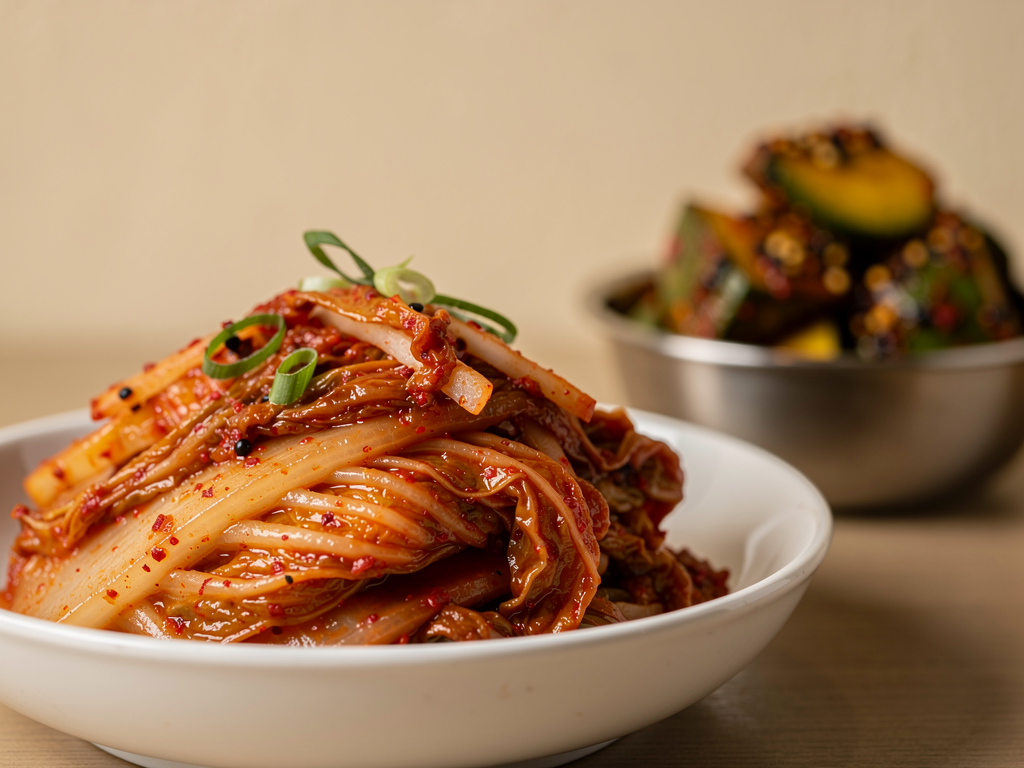
In kimchi, the sour is fermentation and the heat is gochugaru — Korean chilli flakes that are warm and slightly sweet rather than fierce. The garlic and seafood add depth, and the flavour keeps changing: young kimchi is fresh and salty; older kimchi turns sour enough to cook with.
In achar, the sour is the fruit itself — green mango, lime — plus salt, and sometimes vinegar. The heat is red chilli powder in hot oil, and the character comes from the spices: bitter-nutty fenugreek, pungent mustard seed, fennel and asafoetida. Achar tastes hotter and saltier per bite, which is exactly why you eat so little of it.
How is each one priced in the UAE?
Kimchi is sold as a dish; achar is handed over as a condiment. Every figure below was read on 23 September 2026 from a venue’s own menu or its delivery listing.
On the Korean side, Mukbang Shows prints Kimchi — “House-made, spicy fermented. 1kg or half kg.” — at AED 78 a kilo and AED 43 for half, to take home. Kimchi Nom Nom in Dubai lists its Signature Busan Kimchi at AED 37 a portion and AED 52 for half a kilo on Deliveroo, a radish kimchi (kkakdugi) at 30 / 45, and a separate vegan kimchi at 52. Korean Kitchen in Al Danah, Abu Dhabi, charges AED 5 for a small “Extra Kimchi”.
On the Indian side, the pickle is rarely a line of its own. Brick Lane in Al Barsha has a menu section literally called “Papadoms and Pickles”: Lime Pickle AED 3, Mango Chutney AED 3, and a Chutney Tray with lime pickle at AED 12. Poppadom in Jumeirah Village Circle sells individual chutney pots at AED 3 and a five-pot tray including mixed pickle at AED 13.50.
More often the achar is free. Daal Chawal in TECOM prints its AED 16.75 Daal Chawal as “Served with pickle”. In Abu Dhabi, Punjab Highway’s AED 14 Aloo Parantha comes with raita, mint chutney and pickle, and Nanu’s Dilli Ka Andaz serves its AED 8.50 Aloo Parantha “with curd and pickle”. All are delivery-listing prices.
What does a kilo cost on the supermarket shelf?
Kimchi costs three to four times as much per kilo. On Carrefour UAE’s site on 23 September, a 410g glass jar of Wang Kimchi was AED 32.29 — about AED 79 a kilo by our arithmetic, almost exactly Mukbang’s house kimchi at AED 78. On the same site, Shan Mixed Pickle was AED 6.49 for 320g (AED 20.28 a kilo), Priya Cut Mango Pickle AED 6.69 for 300g, Mother’s Recipe Vadu Mango Pickle AED 7.99 for 300g and Priya Garlic Pickle AED 8.59 for 300g — AED 20–29 a kilo.
The shelf tells the same story as the menus. The pickle aisle carries far more achar jars than kimchi jars, while most of the “kimchi” results are kimchi-flavoured noodles and dumplings; Carrefour now lists one real kimchi jar. Our sauerkraut comparison, checked in August, found none — a sign the kimchi shelf is still arriving.
What do you eat each one with?
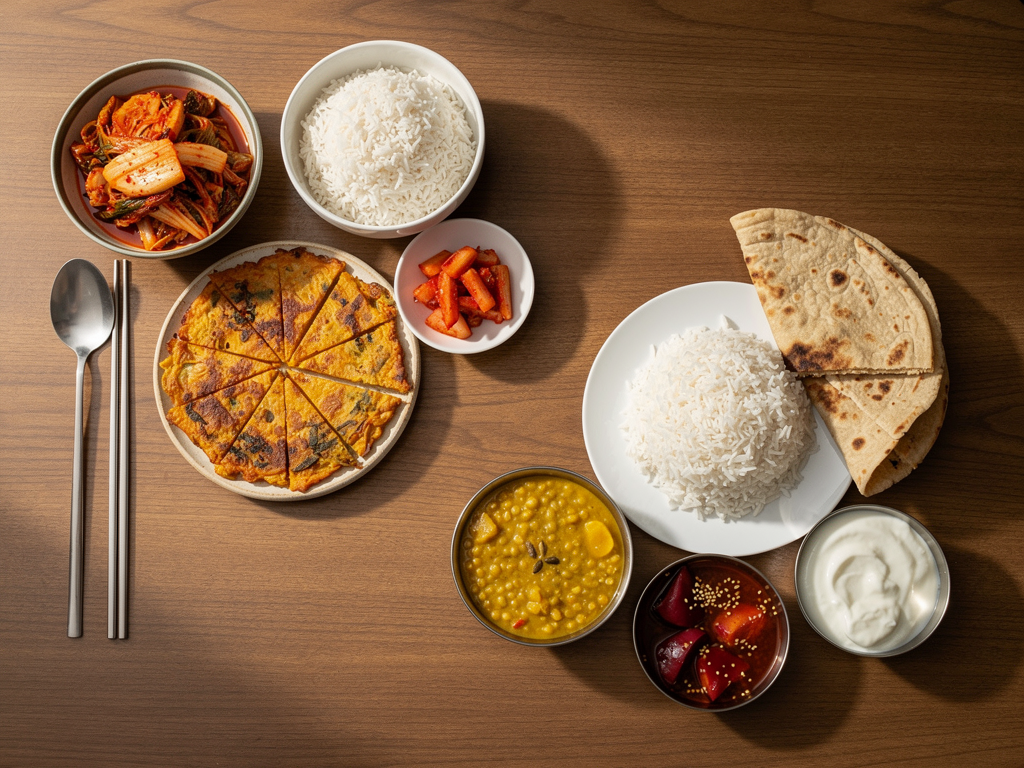
Kimchi goes with rice and grilled meat; achar goes with rice, daal and bread. At a Korean table kimchi is one of several banchan, eaten between bites of grilled beef or chicken, folded into a lettuce wrap, or laid over a spoonful of rice. It cuts the richness of the grill the way a salad would, and because it is cold and crunchy it balances a hot stew.
At an Indian or Pakistani table achar is a flavour booster for plain food. A spoonful of mango or lime pickle turns a bowl of daal chawal or a buttered paratha into a full meal, which is why the Daal Chawal and paratha plates above print the pickle in the description. It also sits beside biryani and curd rice. Put simply, kimchi vs achar at the table is a side you eat against a side you season with.
Kimchi vs achar: the comparison table
| Venue | What it sells | Area | Verified price (AED) | Unit | Licence / halal |
|---|---|---|---|---|---|
| Mukbang Shows | House-made Kimchi | Deira, JBR, DWTC; Muroor Road, Electra Street | 78 / 43 | 1kg / half kg | 100% halal — beef and chicken only, no alcohol |
| Kimchi Nom Nom | Busan Kimchi · Radish Kimchi · Vegan Kimchi | Dubai (delivery) | 37 portion / 52 half kg · 30 / 45 · 52 | Portion or half kilo | Confirm directly |
| Korean Kitchen | Extra Kimchi | Al Danah, Abu Dhabi (delivery) | 5 | Small portion | Confirm directly |
| Carrefour UAE | Wang Kimchi jar | Online | 32.29 | 410g | — |
| Brick Lane | Lime Pickle · Chutney Tray | Al Barsha 1, Dubai (delivery) | 3 · 12 | Pot · tray | Confirm directly |
| Poppadom | Chutney Tray with mixed pickle | Jumeirah Village Circle (delivery) | 13.50 · pots 3 | Tray · pot | Confirm directly |
| Daal Chawal | Daal Chawal, served with pickle | TECOM, Dubai (delivery) | 16.75 | Plate, pickle free | Confirm directly |
| Nanu’s Dilli Ka Andaz | Aloo Parantha with curd and pickle | Al Danah, Abu Dhabi (delivery) | 8.50 | Plate, pickle free | Confirm directly |
| Carrefour UAE | Shan, Priya, Mother’s Recipe achar | Online | 6.49–8.59 | 300–320g | — |
The pattern is clear. Every Korean line is a priced unit of kimchi — a portion, a half kilo, a kilo. Every Indian line is either a AED 3 pot, a tray, or a plate with the pickle already on it.
What does each one turn into?
Both become ingredients, and this is where the two traditions look most alike. Kimchi cooks into a whole family of dishes. At Mukbang: Kimchi Fried Rice AED 45, Kimchi Jeon (a kimchi pancake) AED 53, Kimchi Jeongol hot pot AED 50 solo / 89 big, and Soondubu Jjigae, a silken tofu and kimchi stew, AED 59. The Korean Restaurant (Hanok) in International City prints Kimchi Jjigae at 48 / 56, Kimchi Mandu at 35 and a Kimchi Hot Pot at 80 / 98.
Achar cooks into “achari” dishes — curries and marinades built on pickle spice or on the pickle itself. Brick Lane’s Achari is “cooked with lime pickle” at AED 46; Poppadom’s is “made with a mixed pickle (mango and lime)” at AED 43. Pak Punjab in Al Barsha prints Chicken Achari at AED 35, Al Taj on the Deira Corniche prints Chicken Achari Karahi at AED 20, and Gazebo prints Murgh Achari Tikka, “marinated in pickle flavoured yoghurt”, at AED 43.
So kimchi vs achar is also kimchi jjigae vs chicken achari: in both cuisines the pickle jar is a seasoning cupboard, not just a side.
Is kimchi halal, and what about achar?
At Mukbang Shows, the whole menu is 100% halal — beef and chicken only, no pork, no alcohol served. For kimchi as a dish, the real question is seafood, not pork: traditional kimchi often contains jeotgal (salted anchovy or shrimp) or fish sauce. Kimchi Nom Nom’s listing flags its kimchi “(Fish, crustacean)” and sells a separate vegan version. Mukbang does not publish its kimchi recipe, so vegetarians and anyone avoiding seafood should ask the branch. Our page on whether kimchi is halal has the full answer.
Achar as a dish is normally fruit or vegetables, oil, salt and spice. Nothing on this page is a halal ruling about any venue other than Mukbang; for every other restaurant named, confirm directly.
Mukbang Shows: the Korean side, with one honest limit
Mukbang Shows makes its kimchi in-house and sells it to take home at AED 78 a kilo or AED 43 for half, the same at all five branches: Deira (+971-4-886-4494), JBR (+971-54-523-1898), DWTC (+971-54-524-5904), Muroor Road (+971-50-158-9433) and Electra Street (+971-2-564-0446). Every unlimited Korean BBQ tier — from AED 69 a head — includes eight banchan, soup of the day and steamed rice, refilled until you are done, so kimchi comes to the table without a separate line. Our guide to banchan explains the side-dish system.
The honest limits: Mukbang serves no achar and no Indian food — no mango or lime pickle, no mustard-oil relish, no paratha or daal to put it on. It is not the cheap way to get a pickle either. A Brick Lane lime pickle is AED 3, and Daal Chawal, Punjab Highway and Nanu’s put the pickle on the plate for nothing; anyone who wants a sharp, oily relish beside an AED 8.50 paratha should go to an Indian or Pakistani kitchen.
What Mukbang wins is kimchi made in the kitchen and sold by the kilo at the price of an imported jar, kimchi cooked into four more dishes, eight banchan refilled free inside the unlimited tiers in both Dubai and Abu Dhabi, and halal certainty across the whole menu.
Kimchi vs achar: how to choose
Choose by how much you want to eat. If you want a side you can eat a bowl of — crunchy, sour, cold, and good with grilled meat — you want kimchi. If you want a few drops of something intense to wake up rice, daal or a paratha, you want achar.
Kimchi vs achar is not a contest; most UAE fridges have room for both. One is a vegetable that happens to keep for months; the other is a seasoning that happens to be made of fruit. Buy kimchi by the kilo and achar by the jar, and you will use them at about the same speed.
FAQ
Is achar fermented like kimchi?
Sometimes, a little. Wikipedia notes that lactic acid bacteria play a role in many achars, but achar relies mainly on oil, salt, spice and sun. Kimchi relies mainly on fermentation in its own brine.
Which is spicier, kimchi or achar?
Achar, spoon for spoon. Its chilli sits in hot oil with mustard and fenugreek, and it is eaten in small amounts. Kimchi’s gochugaru is milder and slightly sweet, which is why it is eaten by the plateful.
Does Mukbang Shows serve achar?
No. Mukbang serves Korean food only. It sells house-made kimchi at AED 78 a kilo or AED 43 for half, and eight banchan come refilled with every unlimited BBQ tier.
Why is kimchi more expensive than achar in the UAE?
Because it is sold as a vegetable, not a condiment. On Carrefour UAE a kimchi jar works out at about AED 79 a kilo against AED 20–29 for achar, and restaurants print kimchi as a portion or a kilo while achar is often free.
Is kimchi vegetarian?
Not always. Traditional kimchi often contains salted seafood or fish sauce. Vegan kimchi exists — Kimchi Nom Nom sells one — so ask the kitchen.
What is an achari curry?
A curry cooked with pickle or pickle spices. Brick Lane’s Achari is cooked with lime pickle; Poppadom’s uses a mango and lime mixed pickle.
Is kimchi halal?
At Mukbang Shows the whole menu is halal. For kimchi elsewhere the usual question is seafood rather than pork, so confirm directly with the kitchen.
Related guides
More from our Korean food guides across the UAE:

Comments are closed.