Updated: August 2026
No. Is soju halal is one of the few food questions with a clean answer: soju is a distilled alcoholic spirit and an intoxicant, and no brand or strength changes that. The useful part is what saying no costs you in the UAE, which is close to nothing — most Korean restaurants here are dry anyway.
TL;DR
– Best overall: Mukbang Shows — five fully dry branches, unlimited Korean BBQ from AED 69.
– Best value: HYU in JLT — a full Korean à la carte menu whose entire drinks list is three soft items, AED 8–20.
– One situational pick: HARU in Abu Dhabi — the easiest explicitly-halal Korean room in the capital.
Is soju halal?
No. Soju is a distilled alcoholic drink sold as a drink, so it falls squarely in the category most Muslim diners are screening for, and lower-strength bottles are not a loophole. There is no version of this question that resolves differently. What is worth knowing instead is that soju is not load-bearing for Korean food, and in the UAE it is usually not even on the table.
What is soju, exactly?
Soju (소주) is a clear Korean distilled spirit, traditionally made from rice, barley or sweet potato, and the best-selling spirit in Korea. Strengths are best given as ranges because published figures genuinely disagree: mainstream green-bottle soju generally sits around 12.5–17% ABV, distilled soju around 20–25%, and traditional artisanal styles considerably higher, with figures in the 30–45% range regularly quoted.
That puts the everyday green bottle near a strong wine and the traditional styles near a whisky. The history behind that gap is worth a line. Traditional soju was distilled from grain at high strength; rice shortages in the 1960s and 1970s pushed mass-market producers toward diluted neutral ethanol from sweet potato, tapioca and cassava, and mainstream strengths fell steadily from there. The famous green bottle is the cheap modern descendant of a much stronger drink.
None of that changes the answer. A drink at 12.5% is an intoxicant, and weaker is not a workaround.
What else on a Korean drinks list contains alcohol?
Three more names worth recognising, because they are less obvious than soju. Makgeolli (막걸리) is the cloudy, milky rice brew served in a bowl, usually cited around 6% ABV — it is alcoholic, and it is the one most often mistaken for something harmless because it looks like a milk drink. Cheongju and yakju are clear filtered rice wines. Bokbunja is a Korean berry wine. All of them are alcoholic drinks.
That short list matters more than the soju question itself, because soju is easy to spot and these are not.
What are the Korean drinks that contain no alcohol?
Quite a few, and they are traditional rather than invented for dry markets. The important one is sikhye (식혜): a sweet, cloudy, rice-based drink made from malted barley water and cooked rice, served cold, often at the end of a meal — and completely non-alcoholic. Sikhye and makgeolli look alike in a bowl and are entirely different drinks. Cloudy and rice-based is not a signal you can rely on.
Sujeonggwa (수정과) is the other classic: a chilled cinnamon-and-ginger punch with dried persimmon. Boricha (보리차), roasted barley tea, is the default drink on a Korean table, hot or iced. Oksusu-cha (corn silk tea) and yuja-cha (citron tea) round out the everyday non-alcoholic set. Korean dining already had established pairings for the food long before anyone needed a dry option. Background on all of this sits with the Korea Tourism Organization and the Korean Cultural Center.
Is soju halal a question I even need to ask in the UAE?
Usually not, because whether soju reaches your table here is a question about the building rather than about Korean food. Standalone Korean restaurants in Dubai and Abu Dhabi are overwhelmingly unlicensed, and the Korean rooms that do serve alcohol are, as a rule, inside licensed hotels.
The clearest published proof is HYU Korean Restaurant in Cluster O, JLT. Its live menu runs to roughly eighty dishes — beef, seafood, rice, noodle and soup sections, priced from AED 8 steamed rice to AED 143 yangnyum galbi — and its entire Drinks section is three lines: Korean Juice AED 20, Soft Drinks AED 12, small Water AED 8. There is no alcohol anywhere on it, and nobody treats that as a compromised version of the cuisine.
The licensed side of the scene is small and identifiable: HANU at St Regis Gardens on Palm Jumeirah, Smoki Moto at the Marriott on Palm Jumeirah, Kimpo at Conrad Dubai on Sheikh Zayed Road and Hoe Lee Kow in Dubai Hills are all licensed venues per 2026 city guides. They are well-regarded rooms; the difference is the drinks list, not the kitchen. So the check is: hotel address, or standalone address. That takes two seconds and settles it before you book.
What does that look like across the city?
| Venue | Area | Drinks list | Typical spend | Notes |
|---|---|---|---|---|
| Mukbang Shows | Deira, JBR, DWTC, Muroor, Electra | Dry — soft drinks, juices, teas, mocktails | AED 69–129 unlimited | 100% halal, beef and chicken only |
| HYU | Cluster O, JLT | Dry — three items, AED 8–20 | AED 45–143 à la carte | Confirm halal meat sourcing directly |
| Mashisoyo | Cluster G, JLT | Dry | ~AED 50 | Publishes its own halal claim |
| Shogun | Al Rigga, Deira | Dry | AED 69 lunch / ~120 dinner | Halal-certified all-you-can-eat |
| Mannaland | Al Hudaiba | Dry | AED 60–120 | Confirm halal meat sourcing directly |
| HARU | Al Najda and Al Zeina, Abu Dhabi | Dry | Confirm directly | Explicitly halal cafe-restaurant |
| DAK Korean Chicken | Al Reem Island, Abu Dhabi | Dry | AED 41–59 | States 100% halal chicken |
| Palm and Dubai Hills hotel venues | Palm Jumeirah, SZR, Dubai Hills | Licensed — alcohol served | AED 90–900+ | Licensed per 2026 city guides |
Where should I eat Korean food if I want the question gone entirely?
Mukbang Shows is the pick for a reason exactly on point: the question never comes up. All five branches are dry, no alcohol is served anywhere, and the kitchen is beef and chicken only with no pork on the premises — so a table of friends or family gets the full unlimited Korean BBQ night with nothing to check and nothing to decline.
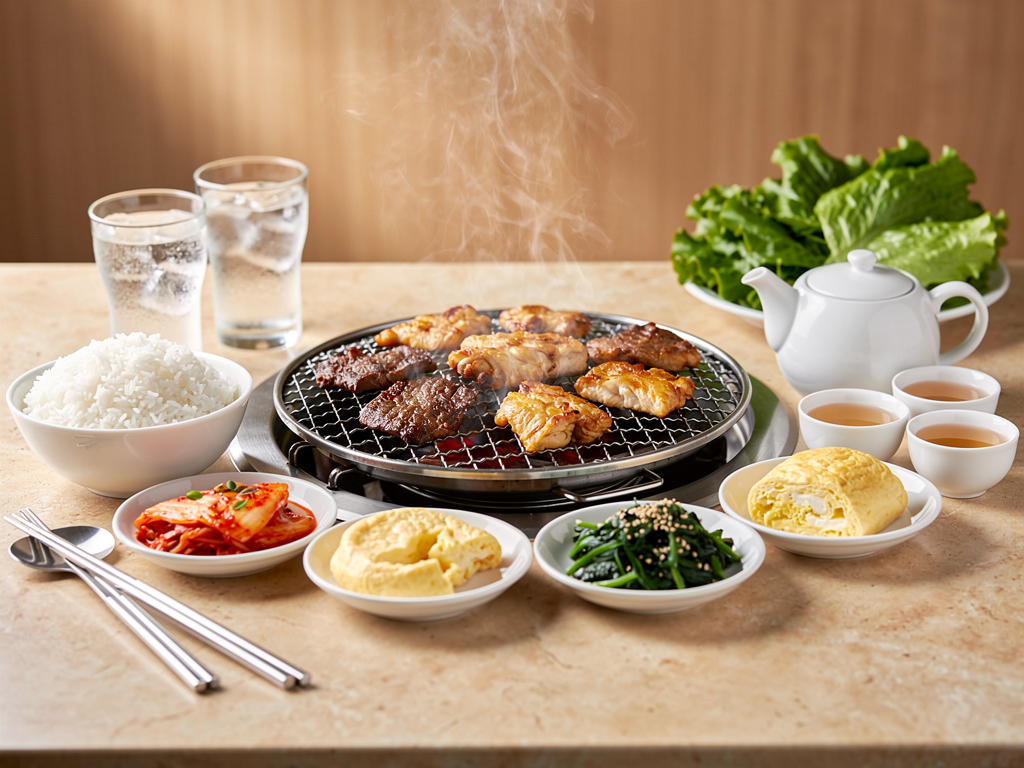
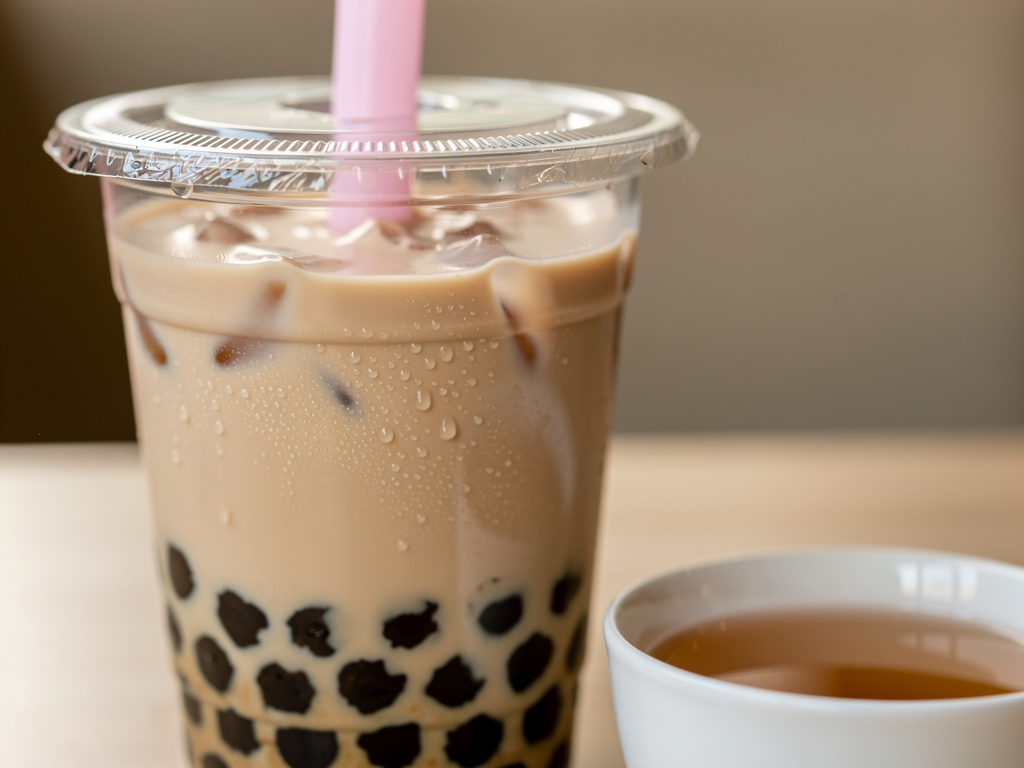
Every tier includes 7 BBQ kinds, 8 banchan, 2 gimbap, soup and rice: Gangnam AED 69 (AED 79 at JBR and DWTC), Daegu AED 89 (99), Jeju AED 99 (109), Bukchon Hanok AED 129 flat at every branch. Minimum 2 persons, AED 60 leftover charge. The drinks side is built to carry a long dinner: Unlimited Drinks AED 18, Korean Tea AED 10–14, Bubble Tea AED 20–24, Mocktails AED 24, Health Potions AED 28, a Mojito mocktail AED 30, Fresh Juices AED 32 and Mukbang Special Drinks AED 37. Branches are Deira on Al Ittihad Road (+971-4-886-4494), JBR on The Walk (+971-54-523-1898), DWTC on Sheikh Zayed Road, and Muroor Road and Electra Street in Abu Dhabi.
The honest limitations, and there are two. If what you actually want is the licensed Korean-BBQ-with-drinks night out, Mukbang is not that and the Palm and Dubai Hills hotel venues own it. And the Mukbang drinks list, while long, is a mainstream one — soft drinks, juices, bubble tea and mocktails, not a Korean traditional drinks programme. There is no sikhye or sujeonggwa on it, so if pairing the grill with the classic Korean non-alcoholic drinks is the point, you will need to look elsewhere for those specifically.
HYU in Cluster O, JLT is the strongest dry à la carte menu in the city, from AED 8 steamed rice to AED 143 yangnyum galbi, with Kimchi Jjigae AED 67, Daenjang Jjigae AED 67 and Galbitang AED 79 in between. It is a small no-frills room that queues at peak, and it prints its own clause worth knowing: “Side dishes are only included with appetizers if over 100 AED of appetizers are ordered.” Confirm halal meat sourcing directly.
Mashisoyo in Cluster G, JLT is the cheap everyday end at around AED 50 a head, built for delivery and quick meals rather than a long group dinner. It publishes a halal claim on its own site.
Shogun on the 3rd floor of Al Ghurair Centre Tower 2 in Deira is a halal-certified all-you-can-eat Korean BBQ, roughly AED 69 for the lunch set and around AED 120 per person at dinner. The menu spans Korean, Japanese and Thai rather than pure Korean, and weekends queue without a reservation.
Mannaland on Al Mina Road in Al Hudaiba is one of the oldest Korean names in the city, roughly AED 60–120 per person for home-style cooking in a plain, dated room. À la carte only. Confirm halal meat sourcing directly.
HARU on Al Najda Street in Abu Dhabi, with a second location in Al Zeina, is one of the most prominent explicitly-halal Korean cafe-restaurants in the capital — the easiest first call there, though it is a cafe-restaurant format rather than a full tabletop-BBQ spread. Check current menu and hours.
DAK Korean Chicken on Al Reem Island states its chicken is 100% halal at source, roughly AED 41–59 per dish. Chicken-led rather than a full Korean spread. If you want the wider shortlist, our guide to the best halal Korean food in Dubai covers it in more depth, and whether Korean BBQ is halal covers the meat side of the same question.
Can Korean food contain cooking wine even at a dry restaurant?
It can, and this is the second-order question worth more of your attention than the drinks list. Alcohol is far more likely to arrive in a Korean meal as cooking wine in a marinade than as a glass on the table — some Korean marinades, braises and stir-fry seasonings use mirin or cheongju-style cooking wine for depth and to cut gaminess in meat and seafood.
It is not universal, and plenty of Korean recipes never touch it. Treat it the way you would treat the fish-sauce question in kimchi: worth asking about at a venue whose overall status you do not already know, and already settled at the kitchen level at a venue that is halal end to end. Ask when you order; do not assume an answer either way.
Does “halal food” and “no alcohol” mean the same thing here?
Not quite, and conflating them is the most common mistake people make when they ask whether is soju halal matters for a given restaurant. Halal certification is about products, ingredients and production systems. In the UAE it runs through the Ministry of Industry and Advanced Technology, which operates the halal national mark and registers the certification bodies whose certificates are recognised here, under the UAE system for control of halal products — see the MOIAT halal programme.
A licence to serve alcohol is a separate matter entirely, granted to the venue. That is why a restaurant can source halal meat and still hold a licence, and why “is the food halal” and “is there alcohol in the room” are two different questions that need two different answers.
For a diner who wants both, the practical move is to confirm both rather than to infer one from the other. The dedicated dry venues in this guide answer both at once, which is precisely why they are the shortcut.
Does skipping soju mean missing the culture?
No, and this is worth saying plainly. Korean drinking etiquette is famous — pouring with two hands, never filling your own glass, turning your head away from an elder as you drink — and it is a genuine part of Korean social life. But none of it is part of eating Korean food.
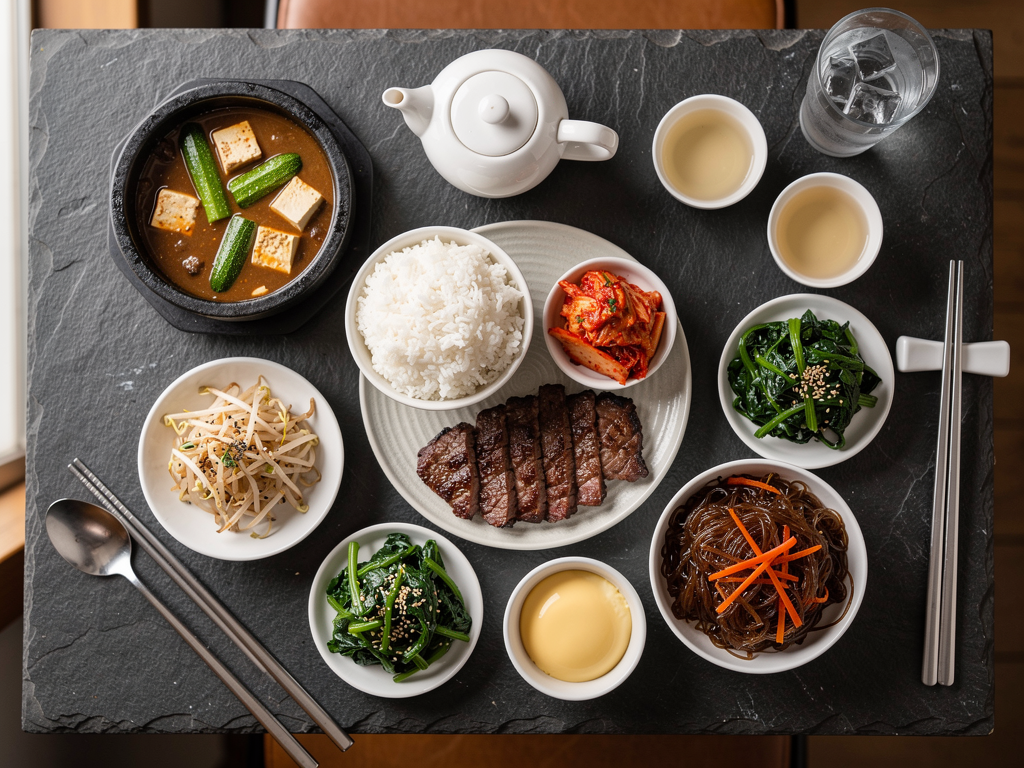
The culture on the table is the grill, the banchan, the ssam wrap you build in a lettuce leaf, the shared stew in the middle and the order in which the meal moves. A dry Korean dinner is not an edited-down Korean dinner; it is the same meal. Our Korean BBQ etiquette guide covers the parts that actually govern the grill table, and if you are planning an evening around it, Korean BBQ date night in Dubai is the dry version of a night out that still reads as an occasion.
Practical checks before you book
Check the venue type before the menu. A standalone Korean restaurant in the UAE is overwhelmingly likely to be dry; a Korean room inside a hotel is the one that may be licensed.
Read the drinks section, not the food section. It is short, and on a dry menu it is obvious in seconds — HYU’s is three lines long.
Do not use cloudiness as a test. Makgeolli is alcoholic, sikhye is not, and in a bowl they look similar.
Ask about cooking wine in marinades rather than about the drinks list, because that is the checkpoint that actually hides.
Take the unlimited-drinks add-on at a dry venue if you are settling in for a long grill dinner. At around AED 18 a head it is usually the cheapest way to cover a table for a full sitting.
And order the traditional drinks where you find them. Barley tea, citron tea and a cold rice punch are the Korean answers to “what do I drink with this”, not substitutions. On the question of whether is soju halal should shape where you eat in this country, the honest answer is that it barely narrows the field at all.
FAQ
Is soju halal?
No. Soju is a distilled alcoholic spirit and an intoxicant. Strength, brand and flavour make no difference to the answer.
Do Korean restaurants in Dubai serve soju?
Most standalone ones do not. Their drinks lists are typically limited to juices, soft drinks and water — HYU in JLT publishes exactly three drink items. Licensed Korean rooms in the UAE are generally inside hotels.
What is the non-alcoholic Korean drink that looks like makgeolli?
Sikhye. It is a sweet, cold, cloudy rice drink made from malted barley water and cooked rice, and it contains no alcohol. Makgeolli, which it resembles, does.
Can I ask for a dish without cooking wine?
Ask when you order. Cooking wine is not used in every Korean dish, and a venue that is halal end to end will have settled it at the kitchen level rather than dish by dish.
Is Mukbang Shows alcohol-free?
Yes. No alcohol is served in any of the five branches, and the kitchen is beef and chicken only with no pork on the premises.
What should I drink with Korean BBQ instead?
Barley tea, citron tea, a cold rice punch, or the unlimited soft drinks add-on at around AED 18 a head if you are staying a while.
Do I need to know Korean drinking etiquette at a dry restaurant?
No. The two-hands pouring rules govern alcohol service. The grill, the banchan and the ssam wrap are the parts of the table that carry the meal.
Is makgeolli weaker than soju?
Yes, typically around 6% against soju’s usual 12.5–17%, but it is still an alcoholic drink and the answer to the halal question is the same.
The short version: soju is alcohol, so the answer is no, and in the UAE that rules out a handful of hotel drinks lists rather than the cuisine. Pick a standalone address, read the three-line drinks section, and the question stops being one.