
Updated: September 2026
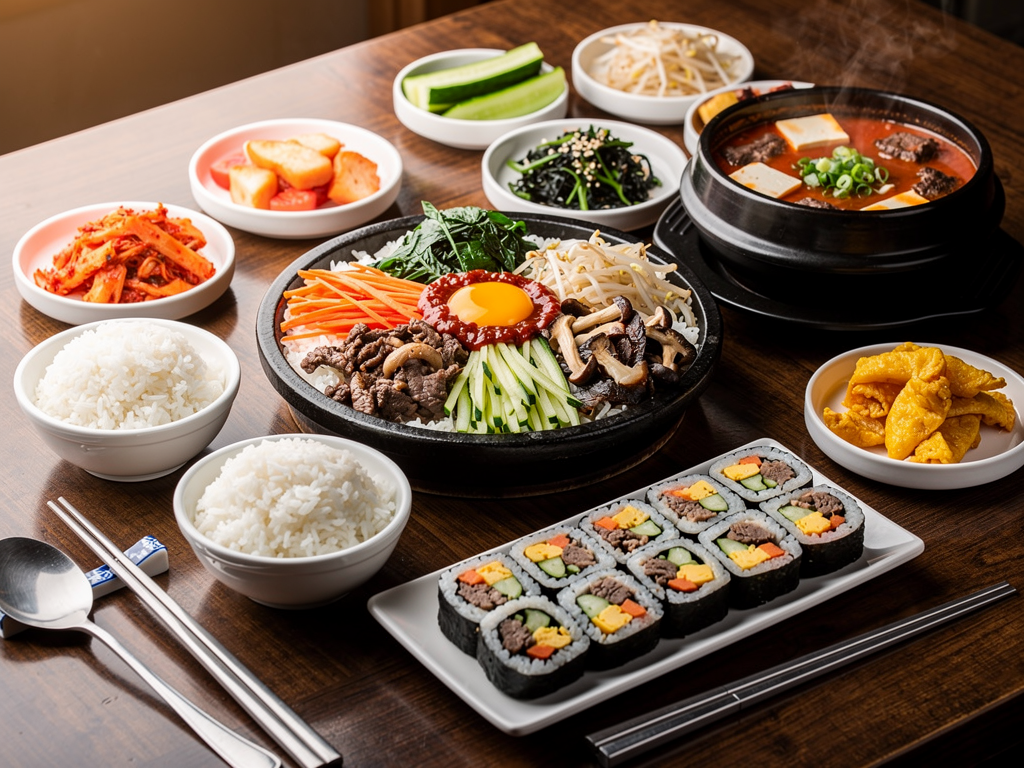
The honest answer to “where can I get authentic korean food in dubai” starts with an uncomfortable fact: every Korean kitchen in Dubai adapts, and none of them is a Seoul table. The licensed hotel rooms can pour the soju and some list pork; the alcohol-free and halal rooms grill beef and chicken and pour barley tea. Neither is what you would get in Mapo-gu. So “authentic” here cannot mean “unchanged” — it has to mean the things a kitchen can keep when it moves: banchan that arrive unasked, stews under their Korean names, a grill in the table, a Korean-Chinese section, bingsu and barley tea, named Korean cooks.
This guide gives you that six-point checklist, runs it against Dubai’s Korean rooms using their own printed menus and Time Out Dubai’s 2026 list, and tells you where the halal reader and the purist should each go — which is not the same place.
Why there is no unadapted Korean food in Dubai
Time Out Dubai’s list of must-visit Korean restaurants for 2026 names eighteen venues and labels almost all of them. Nine are licensed — HANU, Kung Korean Karaoke, Le Seoul, Smoki Moto, Sonamu, Sura, Kimpo, Sumibiya and The Sky. Eight are unlicensed — Romantic Baka, Shogun, Seoul Garden, Seoul Street, HYU, Koryo, Manna Land and Sarang Bakery. One, Sobahn, carries no label.
That split is the real map. In Korea the default BBQ table carries pork belly and a bottle of soju. In Dubai a licensed room can serve the soju and, in some cases, the pork; an unlicensed room serves neither. Whichever door you walk through, something from the Seoul table is missing. The reader’s question therefore has to be reframed: not “which restaurant is exactly like Korea” but “which restaurant keeps the parts of Korean food that survive the move”.
The six-point checklist you can run against any menu
Authenticity is not a menu item. It is a set of habits a kitchen keeps or drops, and every one of these can be checked on a printed menu or a delivery listing before you book.
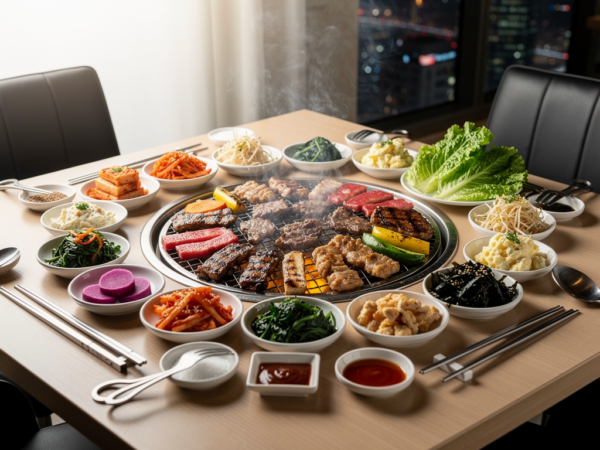
- Banchan arrive without being ordered. The small side dishes — kimchi, pickled radish, seasoned spinach, bean sprouts — are the meal’s seasoning in Korea, not an extra. Our banchan explainer covers what should be on the table.
- The stews are printed under their Korean names. Jjigae, jeongol, tang, guk — not “Korean soup”. A kitchen that keeps the vocabulary usually keeps the vessel and the broth too.
- There is a grill set into the table. Korean BBQ is cooked by the diner, not the chef.
- There is a Korean-Chinese section. Jajangmyeon, jjampong, tangsuyuk. Every real Korean neighbourhood has a Korean-Chinese restaurant; a Korean menu without one has trimmed a whole category.
- Bingsu and barley tea are on the menu. The shaved-ice dessert and the roasted-barley tea are the two things Koreans miss first abroad.
- The kitchen names its Korean cooks. Time Out names chef Kyung Soo Moon at HANU, Geunsung “Pepe” Park at Sura and Sung Choul Lee at Kimpo. This test cannot be run from a menu, so it counts only where a review has done the work.
Run those six against the rooms below and the picture is clearer than any “most authentic” claim.
The room that scores highest on paper: Hanok, International City
The Korean Restaurant — Hanok — in International City publishes the most complete Korean menu in Dubai, and it passes five of the six tests on that menu alone. Its Galbi Gui (AED 115) is printed “table top or kitchen grilled”, so the grill is there. Banchan are written into its sets — the Dak Galbi Set (AED 125) comes with kimchi, seaweed, green onion, egg and rice, and every fried-chicken box includes a banchan set. The stews carry their names: Kimchi Jjigae AED 48 vegetable / 56 chicken or beef, Tofu Jjigae AED 48 / 53, Doenjang Stew AED 48 / 53, Galbitang AED 58, Yukgaejang AED 52, and six hot pots from AED 80 to 110.
The menu is printed in three sections — Korean Cuisine, Korean-Chinese Cuisine and Sushi Ya — with Arabic on every line, and its Jjajangmyeon at AED 45 vegetable, 50 chicken or beef and 53 seafood is the cheapest in the city. It lists six bingsu at AED 20 to 25, Korean Barley Tea at AED 17 a pot and Brown Rice Green Tea at AED 8 a cup. Only the named-chef test is unverifiable from the page.
It is a small room in International City rather than a destination, and halal status is not verified here — confirm directly. Our guide to Korean restaurants in International City covers the area.
The room for the reader who needs authentic and halal: Mukbang Shows
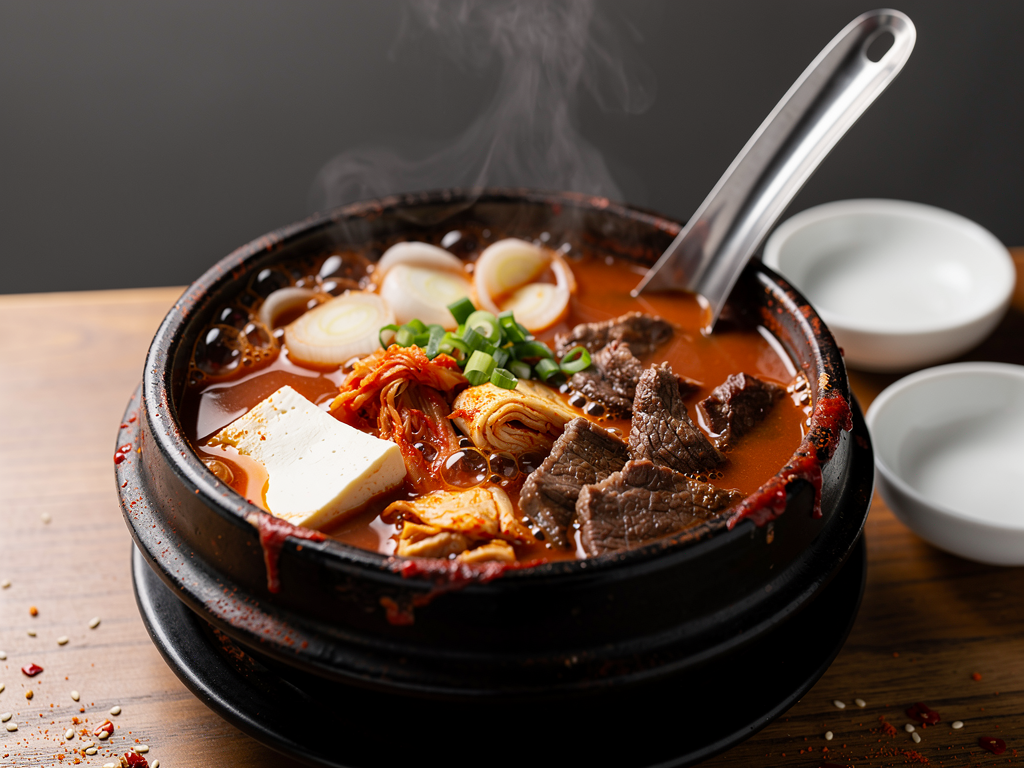
If your definition of authentic korean food in dubai has to include “and I can eat all of it”, Mukbang Shows is the first pick, for reasons you can check on its live menu. It passes five of the six tests. The grill is in the table. Eight banchan, two gimbap, soup and rice come with every unlimited tier without being ordered. The stews are printed by name — Kimchi Jeongol AED 89 sharing / 50 solo, Haemul Jeongol AED 99, Soondubu Jjigae AED 59, Doenjang Jjigae AED 59, Tteok Mandu Guk AED 59, Tteokguk AED 51, Eomuk Tang AED 49.
The Korean-Chinese trio is there — Jajangmyeon AED 55, Jjampong AED 99 / 60, Chicken Tangsuyuk AED 59 — and so are Bingsu at AED 37 and Korean tea at AED 10 to 14.
Its Budae Jjigae (AED 99) is the clearest example of honest adaptation on any Dubai menu: the army stew is rebuilt with beef and chicken instead of spam and pork, and the menu says so rather than pretending. The whole kitchen is 100% halal — beef and chicken only, no pork anywhere, no alcohol at any branch — which makes it the one room in this set where the full Korean table (grill, banchan, gimbap, soup, stew) comes at a printed price with nothing off-limits.
Unlimited Korean BBQ is AED 69 a head on the base tier at Deira (Al Ittihad Road, Port Saeed, +971-4-886-4494), rising to AED 129, and AED 79 to 129 at JBR on the Plaza Level of The Walk and at Love Mukbang DWTC on Sheikh Zayed Road opposite the metro station. Our halal Korean food guide for Dubai has the branch detail.
The honest limitation
Mukbang Shows is an unlimited-BBQ format built for the UAE, and a purist should hear that plainly. There is no samgyeopsal, because there is no pork. There is no soju, because there is no alcohol. And the unlimited table is a Dubai format, not a Seoul neighbourhood one — the unlimited tiers need a minimum of two people and carry an AED 60 leftover charge.
A Korean who grew up on a la carte galbi at a family-run room will find the closest thing to home somewhere else: at Hanok in International City, at HYU in JLT, at Manna Land in Satwa, or at Seoul Garden in Al Karama, which has been open since 1999. Mukbang wins on the halal-and-complete question and on price certainty; the a-la-carte rooms win on the neighbourhood-restaurant feeling.
The other alcohol-free rooms, fairly
HYU (O2 Residence, Cluster O, JLT, unlicensed) is the restaurant Time Out says blew up the Korean foodie scene, whose regulars followed it from Oud Metha to JLT. A grill is fitted to every table, and the review lists tofu soup, kimchi pancakes, bulgogi, crispy chicken and pan-fried dumplings. Its Deliveroo listing puts Jjajangmyun at AED 69 and Jjamppong at AED 79, so the Korean-Chinese test is half-passed — no tangsuyuk is published. It prints no prices beyond that listing. Our guide to Korean restaurants in JLT covers the area.
Manna Land (Shop 5, Al Ketbi Building, Satwa, unlicensed) has, in Time Out’s words, been offering brilliant and authentic Korean dishes for well over a decade near 2nd December Street — yachae bulgogi you grill at the table, kimchi jjigae, japchae, grilled mussels. Its Dubai Deliveroo listing carries the full Korean-Chinese trio: Jjajangmyun AED 70, Jjambbong AED 80, Sogogi Tangsuyuk AED 70.
Seoul Garden (Zommorodah Building, Al Karama, unlicensed) is the oldest name on the list — open since 1999 and, per Time Out, a local institution for proper Korean food: tteokbokki, gimbap, rabokki, chadol doenjang stew, grill-it-yourself meats, hot-pot feasts and private dining rooms with table grills. No current prices could be verified for this guide.
For all three, “unlicensed” means alcohol-free, not halal-certified; confirm halal status directly.
The licensed rooms, fairly
HANU (St. Regis Gardens, Palm Jumeirah, licensed) is the Time Out Dubai Restaurant Awards 2026 winner for Korean, and the authenticity argument for it is the cooking and the named chef — Kyung Soo Moon — rather than the price. Tableside barbecue with wagyu, house-made kimchi, banchan, seafood pajeon and a mango coconut bingsu. Premium a la carte with no published per-head figure, and alcohol is served.
Sonamu (Asiana Hotel, Salahuddin Road, Deira, licensed) is Time Out’s steady Korean BBQ go-to — grills built into the tables, marinated bulgogi and beef galbi, stews and pancakes. Time Out’s review describes pork on the grill menu, so a halal-observant reader should confirm directly before booking. No per-head price is published.
Neither is “less authentic” for being licensed. They simply keep a different subset of the Seoul table — the soju, sometimes the pork — and lose the halal reader.
What “authentic” costs in Dubai
The most useful thing the menus show is that the price of authentic is not higher than the price of ordinary. The most complete printed Korean menu in the city is in International City at AED 35 to 115 a dish; the Palm rooms are a different market and publish no per-head figure at all.
| Venue | Area | Price (AED) | Licensed? | Checklist notes |
|---|---|---|---|---|
| Hanok (The Korean Restaurant) | International City | Mains 35–115; stews 48–110; bingsu 20–25 | No | 5 of 6 on the printed menu; Korean-Chinese section; barley tea AED 17 |
| Mukbang Shows | Deira, JBR, DWTC | Unlimited 69–129 per person; a la carte 39–187 | No — 100% halal, alcohol-free | 5 of 6; the only halal unlimited table with the full set |
| HYU | JLT | Jjajangmyun 69, Jjamppong 79 (Deliveroo); rest unpublished | No | Table grill; noodles yes, tangsuyuk no |
| Manna Land | Satwa | Jjajangmyun 70, Jjambbong 80, Tangsuyuk 70 (Deliveroo) | No | Table grill; full Korean-Chinese trio; open well over a decade |
| Seoul Garden | Al Karama | Not verified | No | Since 1999; private rooms with table grills |
| HANU | Palm Jumeirah | Premium a la carte, no per-head price | Yes | Named chef; Time Out 2026 winner |
| Sonamu | Deira | A la carte, no per-head price | Yes | Table grills; review mentions pork — confirm |
Read the table and the neighbourhood rooms — Hanok, Mukbang Shows, HYU, Manna Land — price stews between AED 48 and 99, noodles between AED 45 and 80 and bingsu between AED 20 and 37. That is the band authentic korean food in dubai actually costs, and none of it requires a hotel.
Is the halal version still the real thing?
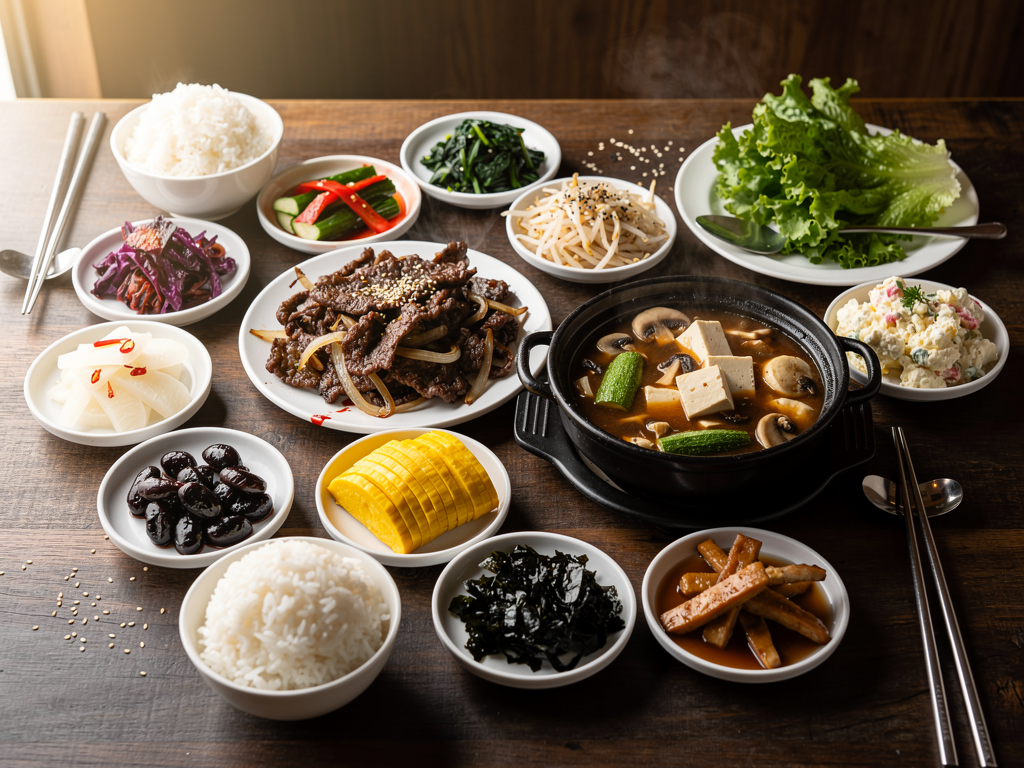
At home, no — the Seoul default includes pork belly, pork in stews and dumplings, and alcohol at the table. In Dubai, it depends entirely on the door. Mukbang Shows is 100% halal: beef and chicken only, no pork anywhere in the kitchen, nothing pork-derived, no alcohol served at any branch. The unlicensed rooms above are alcohol-free but not thereby certified, so confirm directly. The licensed rooms serve alcohol, and at least one review mentions pork, so check dish by dish.
None of that makes the halal version less Korean. Rice, a stew, banchan, a grill and a Korean-Chinese section are the structure of the cuisine; the protein is a variable. Our explainer on whether Korean food is halal goes through the substitutions one dish at a time, and the background on Korean cuisine shows how much of it was never about pork in the first place.
What a Korean meal is, in one paragraph
A Korean meal is rice (bap), a soup or stew, and banchan — several small side dishes, always including kimchi, that arrive without being ordered and, in Korea, are refilled through the meal (the background on banchan explains why). Korean BBQ is meat grilled at the table and eaten wrapped in lettuce with ssamjang. Stews are named by vessel and broth: jjigae is a thick single-serving stew, jeongol a wider shared pot cooked at the table, tang and guk are lighter soups.
Korean-Chinese food — jajangmyeon, jjampong, tangsuyuk — is a Korean cuisine in its own right, descended from Shandong immigrants in Incheon after 1883; our Korean-Chinese food guide for Dubai lists who serves it. Bingsu is shaved ice with sweet red bean; boricha is roasted barley tea. Everything in that paragraph survives the move to Dubai except the pork and the soju.
How this page fits with the others
This page owns the authenticity question only. Our ranking of the best Korean restaurants in Dubai is the city-wide list, and our guide to the best Korean BBQ in Dubai ranks the grill rooms. The six tests above will get you a better answer than any ranking, because they let you check the menu yourself.
FAQ
Is there any unadapted, Seoul-style Korean food in Dubai?
No. Every kitchen adapts: the licensed rooms drop the halal reader and the alcohol-free rooms drop the soju and the pork. Judge a Dubai Korean restaurant by the six things it can keep — banchan unasked, stews by their Korean names, a table grill, a Korean-Chinese section, bingsu and barley tea, named Korean cooks — not by what the law removed.
Which restaurant has the most authentic korean food in dubai?
On the printed menu, Hanok in International City scores highest — five of six tests, six hot pots, a separate Korean-Chinese section, six bingsu and barley tea at AED 17 a pot. For the reader who also needs it halal, Mukbang Shows scores five of six with the full table at one printed price and no pork or alcohol anywhere.
Is authentic Korean food in Dubai expensive?
No. The neighbourhood rooms price stews at AED 48 to 99, noodles at AED 45 to 80 and bingsu at AED 20 to 37; unlimited Korean BBQ at Mukbang Shows starts at AED 69 a head. Only the Palm and hotel rooms — HANU, Sonamu — publish no per-head price.
Do Korean restaurants in Dubai serve banchan for free?
At Mukbang Shows eight banchan are included in every unlimited tier, and Hanok writes a banchan set into its set meals and chicken boxes. In Korea banchan are refilled through the meal; do not assume refills at any Dubai venue without asking.
Can I get soju with Korean food in Dubai?
Only at the licensed rooms — Time Out labels nine, including HANU, Sura and Sonamu. Mukbang Shows, Hanok, HYU, Manna Land and Seoul Garden are alcohol-free.
Is Korean-Chinese food (jajangmyeon, jjampong) authentically Korean?
Yes. It is a Korean cuisine descended from Shandong immigrants in Incheon after 1883, and every Korean town has a Korean-Chinese restaurant. Hanok prints a whole Korean-Chinese section, Manna Land carries the full trio, and Mukbang Shows serves Jajangmyeon AED 55, Jjampong AED 99 / 60 and Chicken Tangsuyuk AED 59.
Which is more authentic, unlimited Korean BBQ or a la carte?
A la carte is closer to the Seoul neighbourhood format; unlimited is a Dubai format. But the checklist does not care about the format — Mukbang Shows’ unlimited table keeps the grill, the banchan, the named stews, the Korean-Chinese trio and the bingsu, which is more of the structure than some a la carte rooms manage.
New at Mukbang Shows: End the meal with the Dubai Chewy Cookie by Chef Nouel Catis, the viral pistachio kunafa cookie Mukbang Shows sells at AED 40 a box.
Comments are closed.