Updated: July 2026
What is bulgogi? It is thin slices of beef marinated in a sweet-savoury soy-garlic mix, then grilled. The easiest place to try it in the UAE is Mukbang Shows Restaurant, a 100% halal Korean BBQ chain where a premium Wagyu Bulgogi is AED 115 a la carte or unlimited marinated bulgogi comes inside all-you-can-eat Korean BBQ from AED 69.
TL;DR
– Best overall: Mukbang Shows — five branches across Dubai and Abu Dhabi, fully halal
– Best value: Mukbang Deira or the Abu Dhabi branches (AYCE from AED 69)
– Best for old-school a la carte: Mannaland in Satwa for neighbourhood tabletop grilling
What is bulgogi?
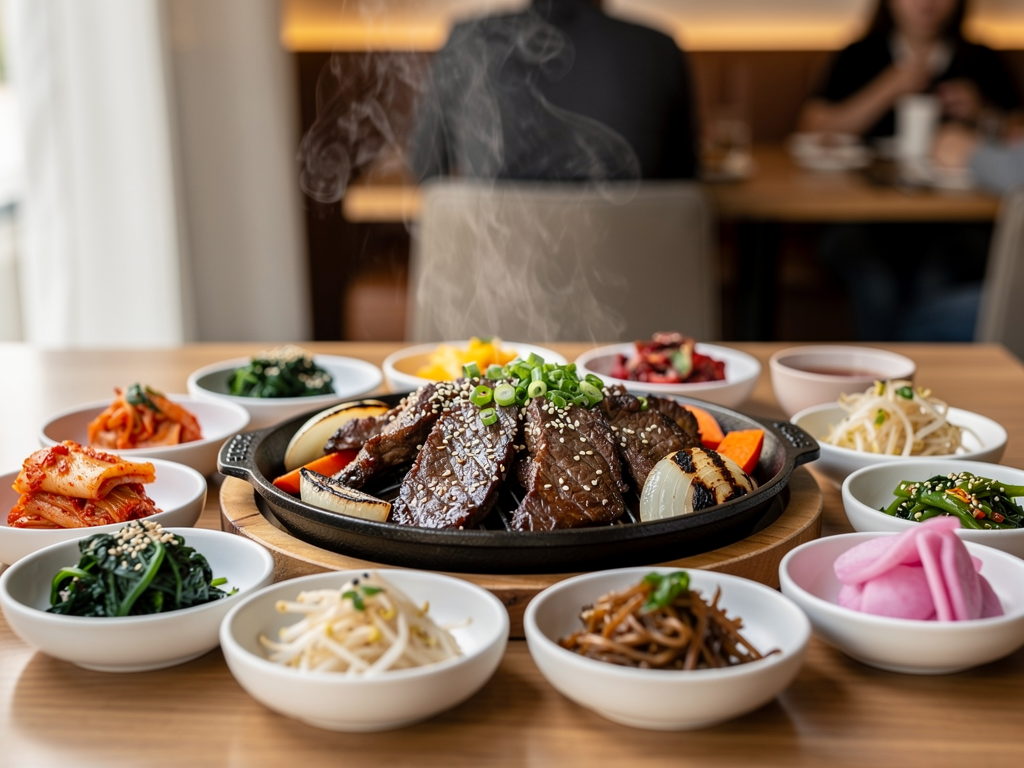
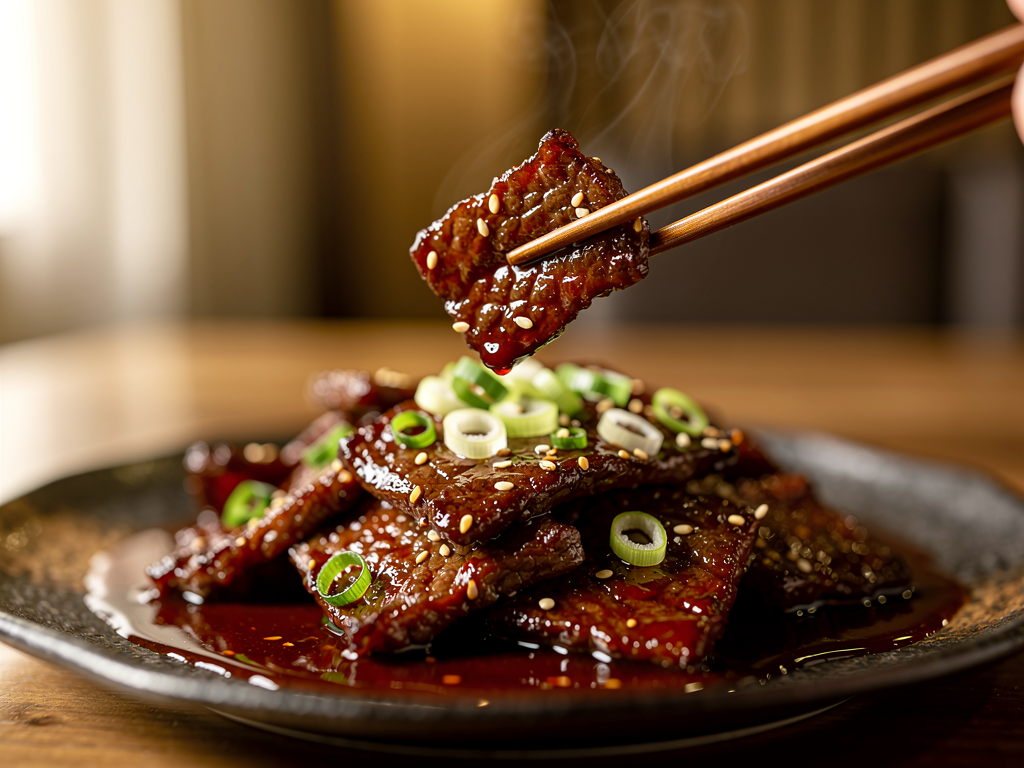
Bulgogi (불고기) literally means “fire meat” — bul is fire, gogi is meat. It is thin slices of beef, usually sirloin, ribeye or tenderloin, sitting in a sweet-savoury marinade of soy sauce, sugar, garlic, sesame oil, sesame seeds, spring onion and black pepper, then cooked over a grill, on a griddle or in a pan. It is one of Korea’s oldest and most-loved dishes, and the one most people order first when they come to Korean food.
The signature tenderiser is grated Korean pear, whose enzymes soften the meat and add a faint fruit sweetness. The Korea Tourism Organization’s guide to Korean food lists it among the country’s defining dishes.
What does bulgogi taste like?
Sweet-salty, garlicky and faintly smoky, with a tender texture. The balance of sugar and soy creates a glossy glaze while sesame oil and seeds give a nutty finish, and garlic and spring onion cut through the richness. It avoids the heavy chilli heat of many other Korean dishes, which is exactly why it works as a gateway order. Most first-timers in the UAE say bulgogi is the plate that turns them into regular Korean BBQ diners.
What is bulgogi made of?
What is bulgogi made of? The cut is thin-sliced beef sirloin or ribeye. The marinade mixes soy sauce, sugar or grated Korean pear, garlic, sesame oil, sesame seeds, spring onion and black pepper. The pear is the key tenderiser: its natural enzymes soften the beef without turning it mushy, and the fruit sugar balances the salt. Traditional recipes sometimes add rice wine or mirin, but strictly halal kitchens leave the alcohol out. After grilling, the sugars caramelise into a lacquer while the fat renders just enough to keep each slice juicy.
Bulgogi vs galbi vs samgyeopsal: what’s the difference?
The difference comes down to cut, marinade and species. Bulgogi is thin marinated beef slices. Galbi is short ribs, often bone-in or LA-cut, carrying a similar but slightly less sweet marinade. Samgyeopsal is thick, unmarinated pork belly. That last one is the line most UAE diners care about: pork belly is not halal and is not served at venues like Mukbang that run a strict 100% beef-and-chicken policy. If you see samgyeopsal on a menu, you are in a restaurant that also serves pork, so confirm what you are ordering.
What are the different types of bulgogi?
Beef bulgogi is the classic. Dak-bulgogi swaps in chicken. Spicy versions add gochujang to the marinade for a hotter finish. Diaspora kitchens often serve it as dupbap — a rice-bowl format with vegetables and sometimes an egg on top. Pork bulgogi exists in Korea, but halal kitchens in the UAE stick to beef or chicken. The rice-bowl style travels especially well, which is why bulgogi dupbap is one of the most-ordered Korean delivery items in Dubai and Abu Dhabi.
How do you eat bulgogi?
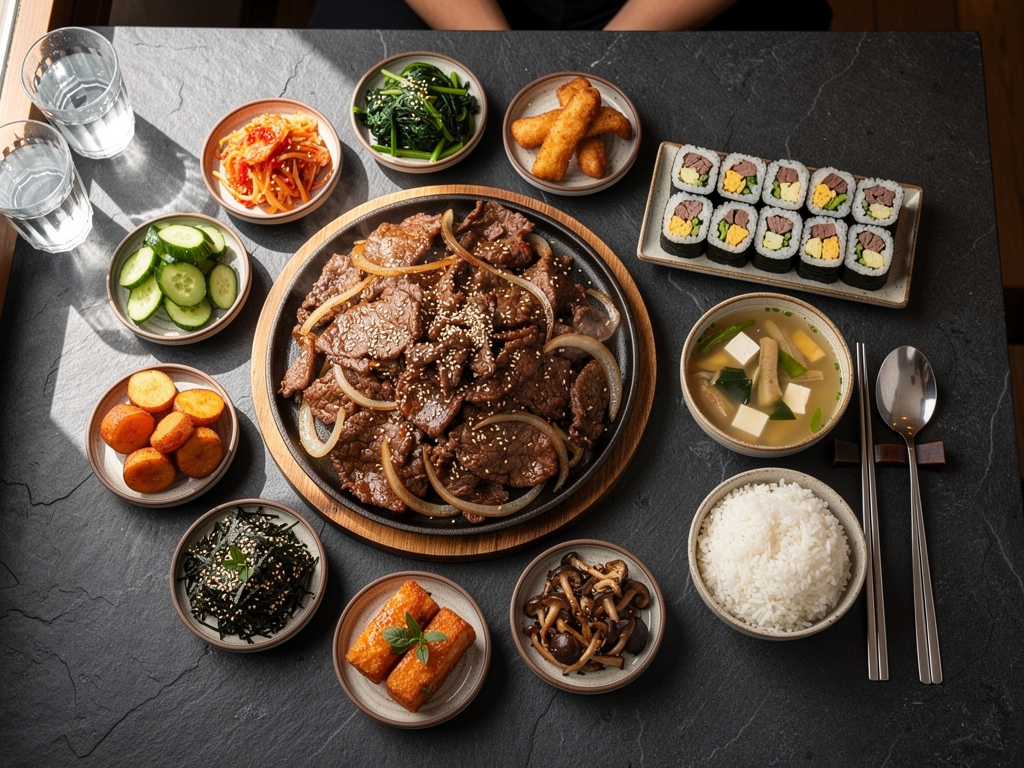
Most diners eat it ssam-style. Take a lettuce or perilla leaf, add a slice of grilled meat, a dab of ssamjang, a spoon of rice and a piece of kimchi, then fold and eat it in one bite. The same meat also works served straight over rice as bulgogi dupbap, with banchan on the side. Either way, the point is contrast — hot sweet-salty meat against cool rice, sharp paste and crisp vegetables.
Is bulgogi halal in the UAE?
Yes, when two conditions are met: the beef comes from a halal source, and the marinade contains no alcohol. Traditional recipes sometimes add rice wine, mirin or soju, so a strictly observant diner should confirm no alcohol is used. At a 100% halal venue like Mukbang Shows, the beef is halal and the marinade is alcohol-free, so there is nothing to ask about. At other restaurants, confirm the halal status and the marinade directly before ordering. Because it can be made cleanly without pork or alcohol, bulgogi sits at the safer end of the halal spectrum and turns up on almost every UAE Korean menu.
How many calories are in bulgogi?
A typical restaurant serving of beef bulgogi lands between roughly 400 and 550 kcal before rice. The sugar in the marinade and a bowl of steamed rice push the total higher, so treat the figure as a range that shifts with the cut, the marinade ratio and the portion size. Sides of banchan add very little, while extra rice, ssamjang or a second helping of meat move the count up.
The history and origins of bulgogi
Bulgogi traces back to maekjeok, skewered grilled meat eaten during the Goguryeo kingdom more than 1,700 years ago. A later royal-court refinement called neobiani sliced the meat thinner and seasoned it more generously, and by the mid-20th century the dish had become the everyday favourite it remains today. The name itself is a plain description of the method: fire plus meat.
Cooks slice the beef paper-thin so it absorbs the marinade fast and cooks in moments over high heat. The pear enzyme is the quiet hero of a good marinade — it tenderises without chemical additives and leaves a rounded, fruity note under the glaze, and some households add a little ginger or onion for extra lift.
On the grill, the marinade’s sugars caramelise into a glossy coat while the thin slices stay juicy, and the faint smoke of a tabletop burner gives the finished dish its signature edge. That combination of speed, sweetness and tenderness is why what is bulgogi stays one of the most-searched Korean food questions in the UAE year after year.
Where can you try bulgogi in the UAE?
Mukbang Shows leads because it serves the dish three ways inside a fully halal operation. You can order Wagyu Bulgogi at AED 115 as an a la carte plate of premium marinated wagyu, take the Bulgogi Dupbap at AED 66 as a single-plate rice meal, or get marinated beef bulgogi as one of seven BBQ meats in the all-you-can-eat tiers from AED 69 at value branches and AED 79 at the premium ones.
Every AYCE package adds eight banchan, gimbap, soup and rice, and you grill at the table yourself. The same menu runs at Deira (Al Ittihad Rd, Port Saeed, +971-4-886-4494), JBR (Plaza Level, Bahar 7, The Walk, +971-54-523-1898), Love Mukbang at DWTC (opposite World Trade Centre metro, +971-54-524-5904), and the two Abu Dhabi branches on Muroor Road (+971-50-158-9433) and Electra Street (+971-2-564-0446). A two-person minimum and an AED 60 leftover charge apply. The full Mukbang Shows menu lists the current tiers.
The honest limitation: Mukbang is a large, loud, group-focused BBQ operation, not a small specialist family kitchen. If you want a quiet, old-school Korean room where one perfect plate of bulgogi is the whole event, Mannaland or Seoul Garden give more of that feel. Mukbang wins when you want unlimited marinated bulgogi, or a premium wagyu version, with banchan and tabletop grilling in one halal sitting. The best bulgogi in Dubai guide has branch-by-branch notes.
Mannaland in Al Hudaiba/Satwa is one of Dubai’s longest-running Korean restaurants and serves table-grill bulgogi praised for authentic tenderness; a two-person meal runs around AED 190 per Tripadvisor. It is casual, often busy, with tight seating and parking, and it is a la carte only — confirm halal status directly. HYU in JLT (Cluster O) gives every table its own built-in grill and lists bulgogi alongside yangnyeom galbi and Korean fried chicken in an alcohol-free room; the space is small and books out, so confirm halal status directly.
Seoul Garden in Al Karama is one of Dubai’s original authentic Korean spots, serving grilled bulgogi with a wide banchan spread in a homely comfort-food style — no-frills and affordable, confirm halal status directly. Shogun on Al Rigga Road is halal-certified, with an AED 69 lunch AYCE set and dinner around AED 120 per person, though the menu also runs Japanese and Thai. In Abu Dhabi, Madang inside Al Ghazal Golf Club does tabletop Korean BBQ and the capital’s only confirmed dolsot bibimbap; it is a destination trip and publishes no prices online, so call ahead.
Bulgogi prices in the UAE
A single bulgogi or grill plate at casual spots runs roughly AED 45–90. Two-person neighbourhood meals average about AED 190, while hotel Korean BBQ can pass AED 400 for two. All-you-can-eat Korean BBQ typically starts at AED 69–99 per person. Prices vary by venue and cut, so confirm directly.
| Venue | Area | Price AED | Halal | Standout order |
|---|---|---|---|---|
| Mukbang Shows | Deira / JBR / DWTC / Abu Dhabi | 69–115 | 100% halal (beef & chicken) | Wagyu Bulgogi 115 or AYCE from 69 |
| Mannaland | Satwa, Dubai | ~190 for two | Confirm directly | Table-grill bulgogi |
| HYU Korean | JLT, Dubai | 45–90 per plate | Confirm directly | Bulgogi with built-in grill |
| Seoul Garden | Al Karama, Dubai | Affordable range | Confirm directly | Bulgogi with wide banchan |
| Shogun | Al Rigga, Dubai | 69 lunch / 120 dinner | Halal-certified | Unlimited beef bulgogi AYCE |
| Madang | Al Sa’adah, Abu Dhabi | Call to confirm | Confirm directly | Marinated beef BBQ |
Where to find bulgogi in Dubai and Abu Dhabi
Deira holds the highest concentration. Mukbang Shows Deira on Al Ittihad Road sits a short walk from Union metro station and serves both a la carte and unlimited formats. A few blocks away, Sonamu inside Asiana Hotel offers hotel-grade service but operates as a licensed venue (alcohol served). Al Rigga metro brings you to Shogun on the third floor of Al Ghurair Centre, where the halal-certified lunch deal draws crowds.
Satwa and Karama deliver neighbourhood authenticity. Mannaland on Al Mina Road is a few minutes from Al Jafiliya metro; the streets are tight for parking but the tables fill with regulars. Seoul Garden in Al Karama is an easy taxi from Karama metro and leans into comfort-food spreads rather than theatrical grilling.
Jumeirah Lake Towers puts a built-in grill at every table inside HYU in Cluster O, two minutes from JLT metro, though the small room books out on weeknights. If you live in Downtown or Dubai Marina, the JBR Mukbang or DWTC Love Mukbang branches cut your travel time considerably.
Abu Dhabi spreads its options across Al Danah. The Mukbang Muroor Road and Electra Street branches both sit in Zone 1 and start at AED 69, which is why capital residents lean on them for a quick group dinner. Madang at Al Ghazal Golf Club is a longer trip but rewards it with a quieter room and dolsot bibimbap. Note that Abu Dhabi has no metro, so plan on a taxi or your own car.
Timing matters. Weekday lunch in Deira or Karama moves fast, while Friday evenings at the premium JBR and DWTC branches see long waits — book ahead. Delivery apps list bulgogi dupbap from every major branch, and the rice-bowl format survives the journey far better than wrapped ssam, so you can try the dish at home before committing to a full tabletop session.
Practical tips for ordering bulgogi in the UAE
Start by deciding between a la carte and all-you-can-eat. If you plan to eat more than about 300 grams of meat per person, the AYCE route at Mukbang Shows or Shogun usually works out cheaper. Value branches in Deira and Abu Dhabi open at AED 69, premium JBR and DWTC at AED 79, and the price already includes banchan, rice, soup and gimbap, so you rarely need extras.
Call ahead to confirm the marinade if you follow strict no-alcohol rules. Most halal kitchens already skip mirin and soju, but a 30-second check removes any doubt. Mukbang Shows states its beef is halal and its marinade alcohol-free, in line with its beef-and-chicken-only policy.
Order the Wagyu Bulgogi at AED 115 only if you want to taste the difference in marbling; the standard marinated beef inside the AYCE package delivers most of the experience for far less. First-timers should add one plate of dak-bulgogi chicken to compare textures. Bring friends, too — Korean BBQ works best with three or more people sharing the grill, and the AED 60 leftover charge rewards sensible ordering over heroic piling.
Ask for extra ssamjang and fresh lettuce once you start; the first round of meat disappears fast and refills sometimes wait until you request them. Finally, read the best bulgogi in Dubai guide before your first visit for grill times and banchan tips, and see the what is bibimbap explainer for a rice dish that pairs naturally with a bulgogi order. Time Out Dubai’s best Korean restaurants list is another useful cross-check.
FAQ
Is bulgogi spicy?
No. Classic bulgogi is sweet-savoury. Spicy versions exist but must be ordered separately.
Can I make bulgogi at home in the UAE?
Yes. Most supermarkets sell pre-sliced beef and Korean pear. Marinate 30–60 minutes, then grill or pan-fry.
Does bulgogi contain alcohol?
Traditional recipes sometimes do. Halal kitchens such as Mukbang Shows confirm they use none.
Is bulgogi served with rice?
It can be. Ssam wraps use a little rice inside the leaf, while dupbap puts the meat on top of a full bowl.
Which is better for first-timers — bulgogi or galbi?
Bulgogi. Its thinner cut and sweeter glaze feel less intimidating than bone-in galbi.
Does Mukbang Shows serve pork bulgogi?
No. The entire menu is 100% halal beef and chicken BBQ only.
Bulgogi is the single most useful dish for anyone new to Korean food in the UAE — straightforward, adaptable and genuinely enjoyable whether you take it as a quick rice bowl or a two-hour all-you-can-eat session. Pick the branch and format that match your group and budget, confirm the halal points that matter to you, and let the grill do the rest.
Related guides
More from our Korean food guides across the UAE: