Updated: September 2026
The whole bulgogi vs shawarma question resolves on one reversal: bulgogi is sliced paper-thin before it is cooked, while shawarma is cooked on the spit and shaved after. That single difference explains the price gap, the wait and the setting. On the Korean side, Mukbang Shows prints Bulgogi Dupbap at AED 66; on the other, a chicken shawarma starts near AED 9 at Al Mallah in Satwa.
TL;DR
- Best for bulgogi: Mukbang Shows — Bulgogi Dupbap AED 66, Wagyu Bulgogi AED 115, plus bulgogi inside the AYCE tiers from AED 69.
- Best value overall: Al Mallah chicken shawarma in Satwa, from around AED 9.
- Situational pick: Zaatar W Zeit’s shredded-beef Shawarma Steak when you need something late.
What is the difference between bulgogi and shawarma?
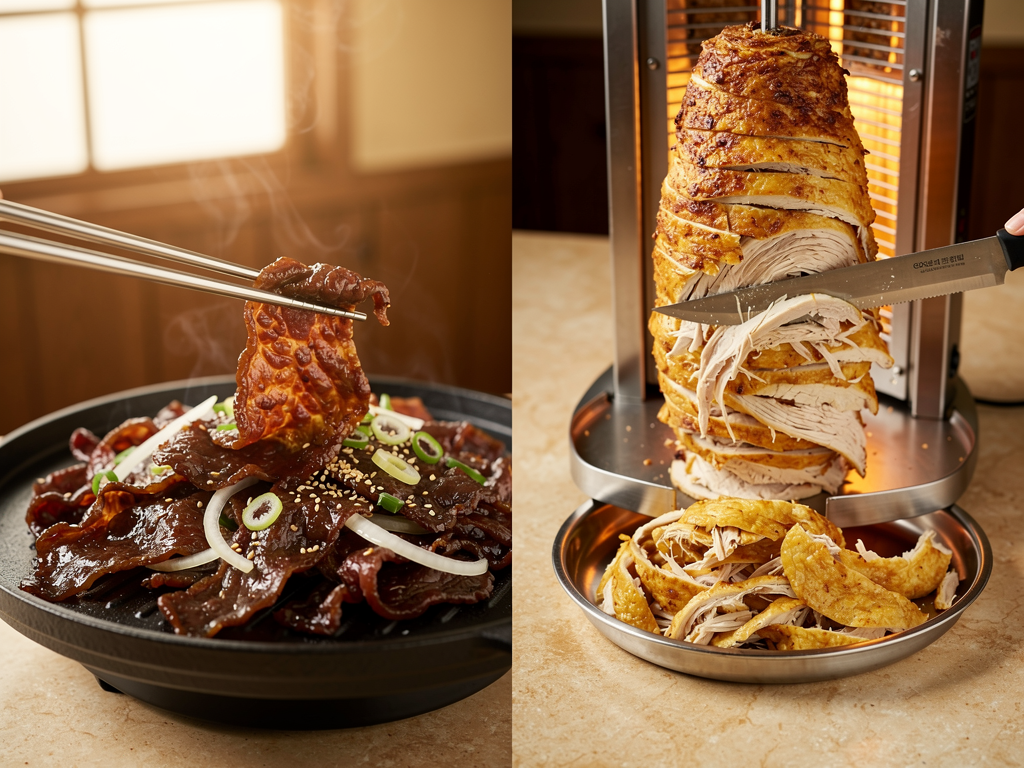
Bulgogi is sliced then cooked. Shawarma is cooked then sliced. Everything else follows from that.
Bulgogi is cut paper-thin first, marinated in that sliced state, then cooked in seconds on a hot grill or pan. It cannot be made in advance, so it is cooked to order in front of you — which is why it belongs to a sit-down meal.
Shawarma is marinated in larger pieces, stacked into a cone on a vertical spit, roasted slowly for hours, then shaved off the outside once it has cooked. It is a standing stack of inventory that has been cooking all day, which is why it can be handed to you in ninety seconds.
The difference in speed and price is not about ambition or quality. It is about when the knife comes out.
Bulgogi vs shawarma: the comparison table
| Bulgogi | Shawarma | |
|---|---|---|
| Cut and thickness | Paper-thin slices, cut before cooking | Larger marinated pieces stacked on a cone, shaved thin after cooking |
| Marinade base | Sweet-savoury: soy, sugar or honey, sesame oil, garlic, spring onion, black pepper, classically grated Korean pear | Sour-spiced: vinegar or lemon, baharat, cumin, paprika, cinnamon-family notes, often yoghurt on chicken |
| How it is cooked | Seconds on a hot grill or pan, to order | Hours on a slow vertical spit, roasting all day |
| Wrapped in | A lettuce or perilla leaf, eaten as ssam | Bread — khubz, saj, markouk or pita-style flatbread |
| Typical price | AED 66 dupbap, AED 115 wagyu plate, AED 69–79 inside AYCE tiers | AED 9–10 at cafeterias, AED 25–50 at fast-casual chains |
| Time to serve | An hour at a table | Ninety seconds at a counter |
| Best for | A planned sit-down meal with control over doneness | Fast, cheap, handheld food you eat walking |
How do the prices really compare?
A shawarma is roughly three to seven times cheaper than a plate of bulgogi, and that will never change. A shawarma is one person eating standing up in five minutes. Bulgogi is a table sitting down for an hour. They are not competing for the same money — they are competing for different evenings.
On the shawarma side, chicken shawarma in Dubai starts at around AED 9 at Al Mallah in Satwa according to What’s On. Budget cafeterias like Ashwaq in Al Fahidi have been listed around AED 10. Fast-casual and chain formats run higher: roughly AED 25 at Operation: Falafel, around AED 30 at Allo Beirut, and AED 30–50 at Zaatar W Zeit depending on format.
Different listings quote different figures even for the same venue, so treat every one of those as a range and check the board when you get there. What’s On’s guide to shawarma in Dubai is the fullest view of that side of the field.
On the bulgogi side, Mukbang Shows lists Bulgogi Dupbap at AED 66 and Wagyu Bulgogi at AED 115. Bulgogi-style beef also sits inside the all-you-can-eat tiers, which start at AED 69 at the Abu Dhabi and Deira branches and AED 79 at JBR and DWTC.
Do not go looking for per-gram maths here — the formats are too different for it to mean anything. Shawarma wins on cost and speed every single time. Bulgogi wins on watching it cook and controlling the doneness yourself.
Is bulgogi halal in the UAE?
Yes, and this is one of the few Korean-versus-anything comparisons where halal is simply not the deciding factor. Both sides are straightforwardly available halal here.
Shawarma is a native halal street food across the UAE, and it is not a dish with a pork question attached. Bulgogi is beef by definition — the name means fire meat and the classic dish is thin beef. Of all the Korean BBQ dishes it carries the least halal friction, because the Korean grill’s pork problem lives in samgyeopsal, not in bulgogi. Mukbang Shows is 100% halal, beef and chicken only, and serves no samgyeopsal and no pork.
So halal is not the wedge in bulgogi vs shawarma. Price, speed and setting are.
What does bulgogi taste like compared to shawarma?
The two do not taste alike, despite both being marinated beef or chicken. The flavour axes run in opposite directions: one marinade is built on sugar, the other on acid.
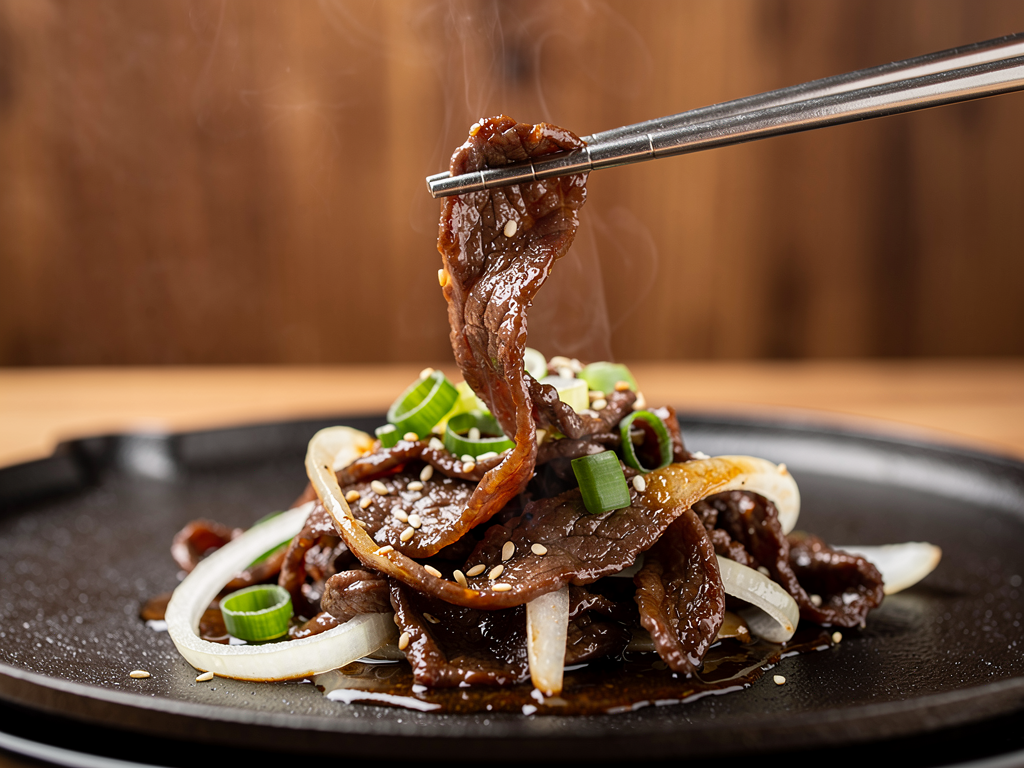
Bulgogi tastes sweet-savoury, with clear caramelised edges where the sugar and soy hit the grill. The grated pear tenderises and adds a subtle fruit note behind the garlic and sesame. Standard bulgogi is not spicy. The texture is thin and slightly chewy, with crisp bits where the marinade has reduced.
Shawarma tastes sour-spiced, the lemon or vinegar cutting through warm ground spice, with cumin, paprika and baharat leading. Chicken versions often carry a yoghurt tang; beef leans earthier. The shaved outer edges are crisp from the spit while the inside stays moist from the slow roast.
If you order one expecting the other, you will be disappointed — that is the single most common mistake people make with these two dishes. Sweet grilled meat with sesame points you to bulgogi. Tangy spiced shaved meat with garlic sauce points you to shawarma.
What is bulgogi? (불고기)
Bulgogi is thin-sliced beef, marinated and then grilled fast. The name translates literally as fire meat. Because it is sliced paper-thin before cooking, the marinade reaches every surface and the cook time is measured in seconds, which is what produces caramelised edges while the centre stays tender.
The classic marinade leans on soy, sugar, sesame oil, garlic and grated Korean pear, whose enzymes tenderise the meat without turning it mushy. In Korea it is eaten as ssam — a lettuce or perilla leaf holding meat, a little rice and ssamjang, folded and eaten in one bite. Same gesture as a wrap, but the wrapper is a leaf.
That leaf matters practically, but it comes with an honest caveat: it does not make bulgogi gluten-free. Standard soy sauce is brewed with wheat, so a soy-based bulgogi marinade normally contains gluten unless the kitchen uses a wheat-free soy. Bread-free is real; gluten-free is not automatic.
Bulgogi is also not galbi, which uses short rib, and not samgyeopsal, which is pork belly — those have their own marinades and cooking styles. The explainer on what bulgogi actually is goes deeper on the dish, and the Korea Tourism Organization’s official English site covers regional variations.
Where to eat bulgogi vs shawarma in the UAE
Mukbang Shows is the clear pick on the bulgogi side, mostly because it prints the dish three ways instead of one. The AED 66 Bulgogi Dupbap is one person eating lunch. The AED 115 Wagyu Bulgogi is one dish for a table to share. The all-you-can-eat tier is the version where bulgogi is one of seven things you grill yourself. There is also Wagyu Yangnyeom Bokkeum at AED 115 if you want the spicy stir-fried version instead of the sweet one.
Branches: Deira on Al Ittihad Road in Port Saeed (+971-4-886-4494); JBR at Plaza Level, Bahar 7 Unit P33 on The Walk (+971-54-523-1898); DWTC in The Apartments Block A on Sheikh Zayed Road (+971-54-524-5904); Muroor Road Abu Dhabi at 547 Sultan Bin Zayed The First Street in Al Danah (+971-50-158-9433); and Electra Street Abu Dhabi on Zayed The First Street behind Sun and Sand Sports (+971-2-564-0446).
The honest limitation is blunt. You cannot get bulgogi at two in the morning for ten dirhams from a hatch on the pavement. Mukbang does not do a wrap, a drive-through, or anything you can eat with one hand while walking, and the all-you-can-eat tiers need a minimum of two people — which rules them out entirely for the solo late dinner that shawarma exists to serve. If what you want is fast, cheap and handheld, shawarma wins outright and it is not close.
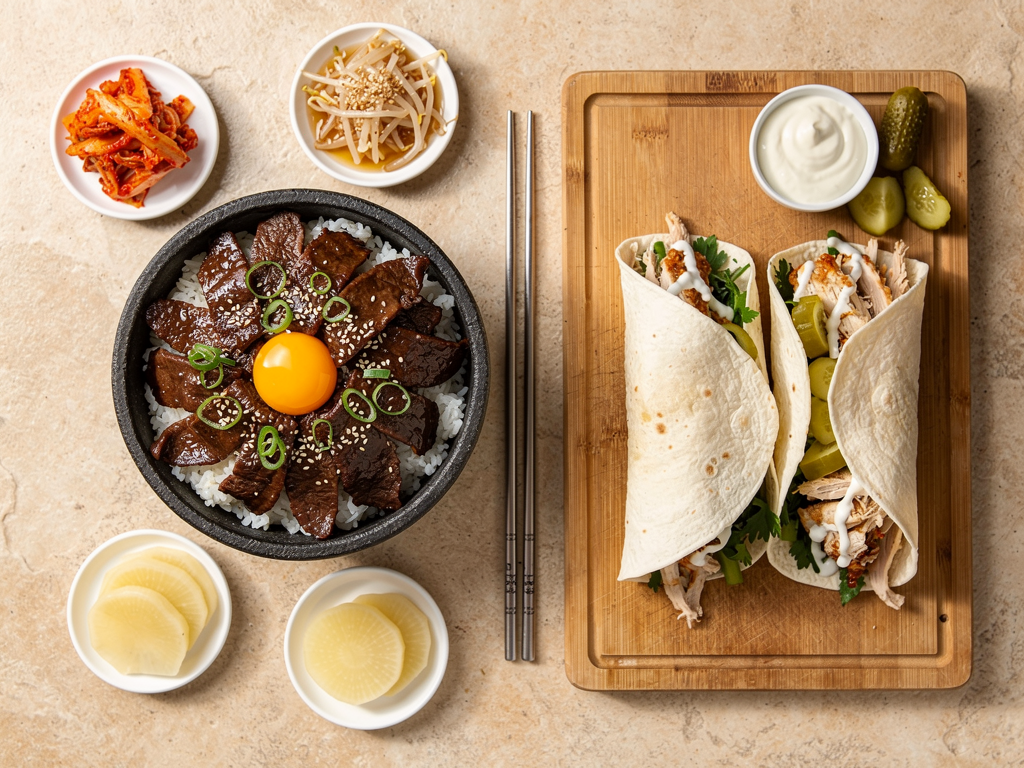
On the shawarma side, Al Mallah on Al Dhiyafah Road in Satwa is the default when speed and price matter, with further branches at Mamzar and Al Qusais. It is a pavement cafeteria open extremely late, known for a traditional chicken shawarma heavy on garlic toum, eaten at pavement tables, and What’s On has described it as part of every Dubai kid’s memory after nearly forty years of trading. Prices vary between sources and branches, so treat any figure as indicative and confirm hours directly.
Al Safadi is the closest thing on the shawarma side to a proper restaurant meal — a full Lebanese sit-down doing chicken shawarma with garlic sauce, chips and trimmings in soft Arabic flatbread, with five locations listed across the UAE. No price was verifiable at source for this piece, so none is quoted here; check the menu. Khaleej Times’ round-up of where to find a shawarma in Dubai carries more of the field.
Zaatar W Zeit is the late-night Lebanese chain, with multiple Dubai locations and a shredded-beef Shawarma Steak with tahini that is the item most often singled out. Allo Beirut sits in the fast-casual slot, doing both beef and chicken shawarma as a wrap or plated as a platter — which makes it the easiest direct side-by-side with a Korean rice-bowl format, since you are then comparing a plate to a plate rather than a wrap to a rice bowl.
Operation: Falafel is the modern fast-casual take on Levantine street food, and the format most likely to sit in the same mall or office district as a Korean restaurant, which is the situation where people actually make this choice. Ashwaq Cafeteria in Al Fahidi is the honest floor of the range at around AED 10 — the far end of the spectrum from a AED 115 wagyu bulgogi plate. All four of these price from third-party listings only, so confirm on the menu before you commit.
For where to eat the dish specifically, see the guide to bulgogi in Dubai and the guide to bulgogi in Abu Dhabi. If it is the sweet-marinade angle you are chasing, the bulgogi versus teriyaki comparison answers the other question people ask.
Practical ordering tips
Decide the occasion before you decide the dish. Under ten minutes and eating while walking means shawarma. An hour and a table means bulgogi. The timing difference is baked into the cooking method and cannot be shortcut, no matter how quiet the restaurant is when you arrive.
Set your marinade expectations in advance. Bulgogi will taste sweet-savoury and caramelised; shawarma will taste tangy and spiced. The sugar-versus-acid split is the second biggest practical difference after the slicing order.
Sort the wrapper question. If you need bread, shawarma is the only option. If lettuce leaves are fine, bulgogi works — but ask the kitchen about a wheat-free soy if gluten matters to you, because the default marinade contains it.
Factor group size. The all-you-can-eat tiers need a minimum of two people, so solo diners should take the AED 66 Bulgogi Dupbap or a shawarma. Larger groups tend to get more out of the AED 69–79 tier than out of separate à la carte plates.
Check the board for current pricing, because third-party listings genuinely disagree — Al Mallah’s chicken shawarma has been quoted anywhere from AED 9 to AED 25 depending on source and branch. Confirm on site or by phone before you travel.
Think about the clock. Zaatar W Zeit and Al Mallah both trade late, which makes them the default after 11pm. Mukbang’s branches do not offer handheld or drive-through formats at any hour. If your schedule is past midnight, the bulgogi vs shawarma decision has already been made for you.
Finally, know the dietary limits on both sides. Both dishes centre on beef or chicken, so vegetarians lose either way. Gluten-sensitive diners can take shawarma without the bread but should still ask about the spit, and bulgogi diners have the soy-wheat issue unless the kitchen says otherwise. Those questions are more useful here than broad halal ones, since both sides clear that bar in the UAE.
FAQ
Is bulgogi like shawarma?
No. Bulgogi is sliced then cooked on a grill; shawarma is cooked on a spit then sliced. That reversal creates completely different speed, price and setting.
Which is cheaper, bulgogi or shawarma?
Shawarma, by a wide margin. It starts at AED 9–10 while bulgogi at Mukbang Shows starts at AED 66 — roughly three to seven times the price, and structurally so.
Is bulgogi halal in Dubai?
Yes. Bulgogi is beef by definition, and Mukbang Shows is 100% halal with beef and chicken only. Halal is not a deciding factor in this comparison.
Is bulgogi beef or chicken?
Classically beef. The name means fire meat and the standard dish uses thin-sliced beef.
Can you eat bulgogi without bread or rice?
Yes — wrapped in lettuce leaves as ssam. It is bread-free by default, though not automatically gluten-free, because soy sauce is normally brewed with wheat.
Where can I try bulgogi in Dubai and Abu Dhabi?
Mukbang Shows branches in Deira, JBR, DWTC, Muroor Road and Electra Street. Phone numbers for each are listed above.
Three facts carry the whole comparison: slice-then-cook versus cook-then-slice, a sugar axis versus an acid axis, and a leaf wrapper versus a bread one. Accept those and the rest of the decision falls into place quickly.
Bulgogi vs shawarma is not a contest with one winner. It is a choice between two ways of eating marinated meat: one gives you speed and low cost, the other gives you control and a longer meal. They occupy different slots in the week rather than competing for the same one. Pick whichever matches the night in front of you.
Related guides
More from our Korean food guides across the UAE: