Updated: July 2026
Looking for halal korean food sharjah has a trap in it: Sharjah is the UAE’s only completely dry emirate, and people assume that settles the halal question. It does not. The alcohol ban covers the drinks list. Pork, cooking wine in marinades, shared fryers and meat sourcing are kitchen questions the law never touches — and those are where Korean food actually gets complicated.
TL;DR
– Sharjah being dry removes one halal concern out of four — the other three are unaffected
– The question nobody asks: is there mirin or cooking wine in the marinade? A dry emirate does not prohibit it
– Inside Sharjah: Jae’s Bunsik and Asak Bunsik are the closest Korean kitchens — halal status not independently verified, ask directly
– Verified 100% halal, no pork on premises: Mukbang Shows Deira, 10-15 minutes away in Dubai
Is Korean food in Sharjah halal because Sharjah is dry?
No — and this is the single most useful thing to understand before ordering.
Sharjah is the only emirate in the UAE where alcohol is completely prohibited. No licences are issued to any venue, including hotels, and possession is illegal. Every other emirate — Dubai, Abu Dhabi, Ras Al Khaimah, Fujairah, Umm Al Quwain and Ajman — permits alcohol at licensed venues. Sharjah’s position is genuinely distinctive, and the emirate’s cultural standing reflects it: the UAE government’s official profile of Sharjah records that the Organisation of Islamic Countries named it Capital of Islamic Culture for 2014, and UNESCO named it Cultural Capital of the Arab World in 1998.
So one concern really is resolved by law. In other emirates, soju and beer sometimes appear on Korean tables, and the venue may be licensed. In Sharjah that cannot happen anywhere, in any restaurant, at any price point.
But a dry emirate is not a halal-certified emirate. The alcohol prohibition governs what a venue may serve you to drink. It has nothing to say about whether the beef was halal-slaughtered, whether pork is on the menu, whether mirin went into the marinade, or whether the fryer is shared. Those are ingredient and process questions, and they follow the kitchen, not the emirate.
That gap is the whole reason this page exists.
The four things that decide whether halal korean food sharjah is really halal
1. Pork in specific dishes
Pork is genuinely central to several Korean staples, and this is the largest single issue. Samgyeopsal is pork belly and is the default Korean BBQ cut in Korea. Sundae is a pork-based blood sausage. Many mandu dumplings use a pork-and-vegetable filling. Budae jjigae canonically contains spam, ham and hot dogs. Tonkatsu, common on Korean-Japanese menus, is pork.
None of these are borderline cases — they are pork by definition. The useful move is to ask what a specific kitchen’s version contains rather than to assume from the dish name.
Sharjah’s alcohol law does nothing here. This is purely a menu question.
2. Cooking alcohol in marinades and sauces
This is the one most people miss, and in a dry emirate it is the one that matters most.
Korean marinades frequently use mirin (sweet rice wine) or cheongju (clear rice wine) to tenderise meat and cut gaminess. Both are alcoholic ingredients, even though the finished dish is not a drink. Gochujang is also sometimes produced using alcohol as a processing aid.
Kitchens cooking for a halal-observant clientele generally substitute — pear juice, apple juice, vinegar or plain water all do the tenderising work perfectly well. But that substitution is a deliberate choice a kitchen makes. It is not a default, and it is not something anyone will volunteer.
Here is the point: a restaurant in Sharjah cannot serve you a glass of soju, but it can still have mirin in the bulgogi marinade. The emirate’s law regulates beverages sold to customers, not cooking ingredients arriving in a supplier’s sauce bottle. “Sharjah is dry, so it must be halal” is exactly the reasoning that gets this wrong.
3. Shared equipment
In a kitchen that serves both pork and non-pork items, the same fryer oil, the same grill surface and the same tongs may touch both. For anyone who observes strictly, cross-contact matters as much as the ingredient list.
The question to ask is not only “is this dish pork-free” but “is anything pork cooked in the same oil, or on the same grill”. This is most relevant at multi-cuisine kitchens and at buffet formats where equipment is shared by design.
Again, unaffected by the alcohol law.
4. Meat sourcing and slaughter
Halal status depends on how the animal was slaughtered, not only on the species. Beef and chicken are permitted species — but only halal-slaughtered beef and chicken are halal.
In the UAE, halal certification sits with the Ministry of Industry and Advanced Technology, which operates the National Halal Mark, described as the only approved halal mark in the country, and registers the bodies permitted to issue certificates. The governing standard is UAE.S 2055 — part 1 covers general requirements for halal food, part 2 covers requirements for certification bodies. The MOIAT halal programme sets it out officially.
One practical caveat worth stating plainly: restaurant-level certification is not universal in the UAE, and its absence is not a red flag. Most restaurants here serve halal meat because their suppliers are halal, without holding a certificate of their own. That is normal. It does mean that asking about sourcing is a more useful question than looking for a certificate on the wall.
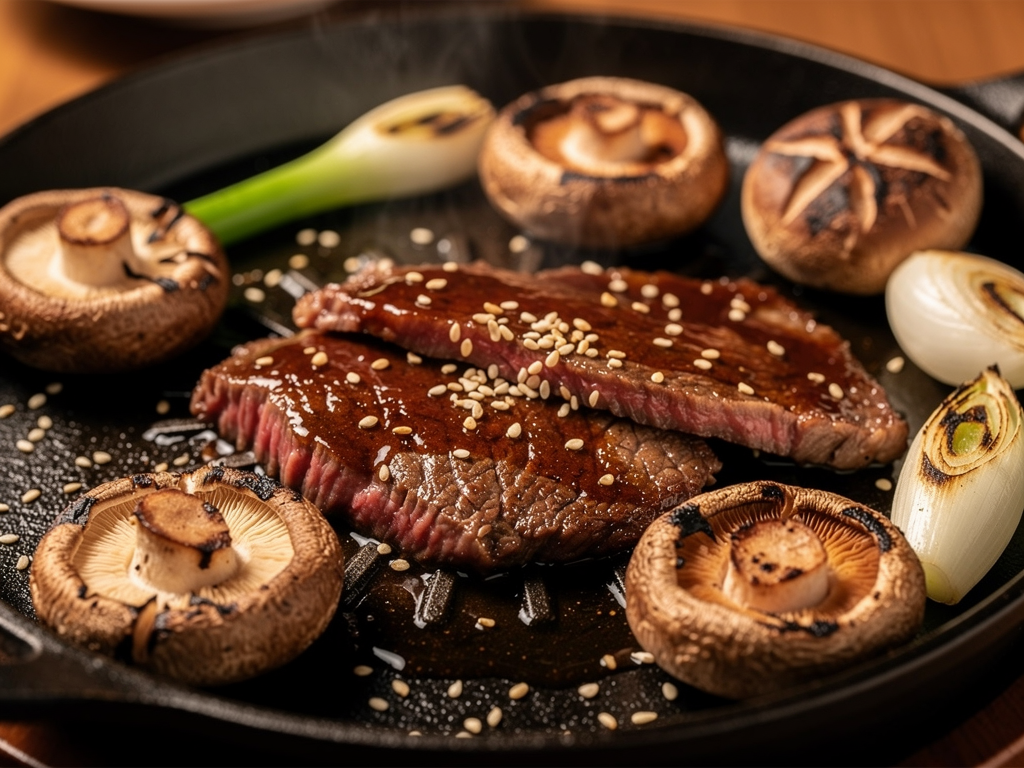
The checklist, in the order worth asking
- “Is there mirin or cooking wine in the marinade?” Ask this first. It is the question almost nobody asks and the one a dry emirate cannot answer for you.
- “Is there any pork on the menu at all?” A kitchen with no pork anywhere eliminates the cross-contact question in one step.
- Scan for the tells. If the menu lists samgyeopsal, sundae, tonkatsu or a spam-based budae jjigae, pork is in that kitchen. That is not a judgement — it is a fact to factor into your own decision.
- “Is the fryer shared?” Relevant if you are ordering Korean fried chicken, gimmari or anything else deep-fried.
- “Where does the meat come from?” More productive than asking for a certificate.
- Do not let the alcohol ban stand in for any of the above.
Six questions, most of which can be answered in a single phone call before you leave the house. Anyone searching for halal korean food sharjah is really searching for the answers to these six, whether they know it or not.
Which Korean dishes are usually straightforward
Generally lower-risk, with the specific thing to check in brackets:
- Bibimbap (beef sourcing; gochujang brand)
- Tteokbokki (check for added sausage or ham in modern versions)
- Gimbap (check for ham strips — a very common filling)
- Japchae (usually beef or vegetable)
- Jjampong (seafood-based)
- Soondubu jjigae and doenjang jjigae (check the stock)
- Haemul pajeon (seafood pancake)
- Korean fried chicken (fryer sharing; chicken sourcing)
- Naengmyeon (check the broth)
- Bingsu (dessert — check the gelatin in any jelly topping)
Our broader explainers go deeper on both fronts: whether Korean food is halal as a cuisine, and whether Korean BBQ specifically is halal, which covers the grill and marinade questions in most detail.
Where to get halal korean food sharjah residents can actually reach
None of the Sharjah venues below had its halal status independently verified for this guide. That is stated plainly rather than glossed over — and it is not an accusation about any of them. It means the honest instruction is the same in every case: ask the kitchen directly.
Jae’s Bunsik — Tiraz 6, Aljada retail complex, near Muwaileh and University City. Sharjah’s genuine Korean bunsik café: ttukbokki, kimbap, OG ramyun, kimchi fried rice, Korean fried chicken, plus a specialty-coffee list. Co-founded by Emirati Arwa Alblooshi and South Korean SungJae Moon. No pork items appear in the published coverage of its menu, but that is not the same as confirmation. Reported hours are Tuesday to Sunday, 3PM to 11PM during its soft-opening phase, and no prices are published anywhere we could verify. Ask about: marinades, meat sourcing.
Asak Bunsik — Sheikh Khalifa Bin Zayed Al Nahyan Road, Muwaileh Industrial Area. Korean-Japanese street food: tteokbokki, ramyeon, udon hot pot, several Samgak gimbap flavours, ASAK Korean fried chicken. On Talabat, covering University City. PropertyFinder’s guide lists roughly AED 100 for two. Because it runs a Japanese side, tonkatsu-style items are worth asking about specifically. Ask about: pork on the menu, the fryer, marinades.
iCook — Al Safa Tower, Al Nahda. A multi-cuisine kitchen spanning Korean, Japanese, Filipino and Chinese, with beef bulgogi and bibimbap; catering available. PropertyFinder’s guide lists roughly AED 150 for two. A kitchen covering four cuisines is exactly the case where the pork-on-premises and shared-equipment questions are most worth asking. Ask about: pork anywhere on the menu, the fryer.
Happy Grassland Shining Restaurant — Buhaira Corniche Street, Al Majaz 3. A hotpot buffet that also runs Korean-style grill items — the closest thing in Sharjah to cook-at-your-table. PropertyFinder’s guide lists roughly AED 120 for two. In a buffet format, shared broth and shared grill surfaces are the specific things to raise. Ask about: shared broth, shared grill, what goes into the pork section if there is one.
Nomani — The Chedi Al Bait, Heart of Sharjah. Korean-Japanese fusion in a luxury hotel: Korean seafood pancake, beef bibimbap, sushi, ramen. Because Sharjah issues no alcohol licences, this is a hotel restaurant with no bar — genuinely unusual in the UAE, where hotel dining and alcohol service normally go together. PropertyFinder’s guide lists roughly AED 120 for two. Ask about: marinades, sourcing.
A note on two names that circulate in listicles: “Arirang” and “Kimchi Restaurant” appear in some Sharjah Korean roundups. Neither could be confirmed as an operating Sharjah business from any primary source, so neither is listed here.
Mukbang Shows Deira — the verified option, and its honest limitation
Mukbang Shows Restaurant on Al Ittihad Rd, Port Saeed, Deira is the nearest kitchen we can state as fully verified: 100% halal, beef and chicken only, no pork anywhere on the premises, no alcohol served.
That no-pork policy has a specific consequence worth spelling out. Because there is no pork in the building at all, the shared-fryer and shared-grill question — issue three on the list above — simply does not arise. There is no samgyeopsal, no pork mandu, no sundae, no tonkatsu, and the budae jjigae is a beef-and-chicken rebuild rather than the canonical spam version, which is a real difference in the dish and stated openly rather than hidden.
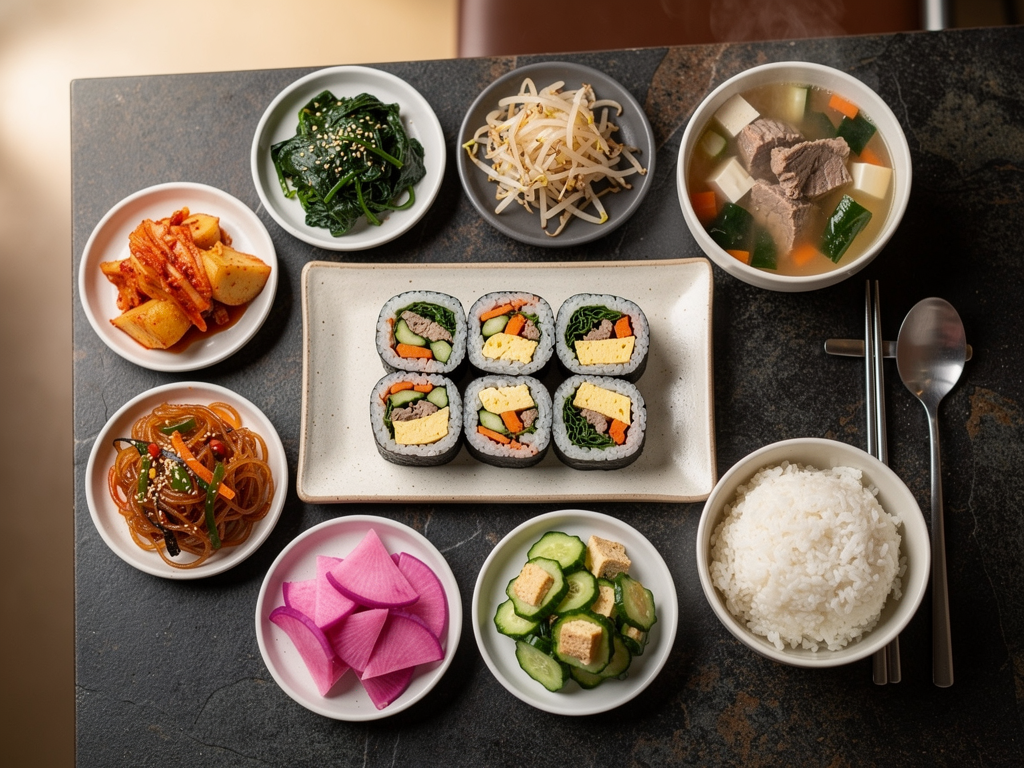
All-you-can-eat tiers run Gangnam AED 69, Daegu AED 89, Jeju AED 99 and Bukchon Hanok AED 129 per person. Every tier includes seven kinds of BBQ, eight banchan, two kinds of gimbap, soup and rice. Minimum two persons, and an AED 60 charge for excessive leftovers. Phone +971-4-886-4494 or see the full Mukbang Shows menu.
The honest limitations are two. First, it is not in Sharjah — it is 10-15 minutes away via Al Ittihad Road in free-flowing traffic, 20-30 at peak, and for a Sharjah resident who simply wants dinner tonight, phoning a local café with the six questions above is the more sensible move. Second, and worth being precise about: Mukbang is in Dubai, where alcohol is legal. Its alcohol-free room is a house policy, not the law. In Sharjah, an alcohol-free room is guaranteed by the emirate. That distinction cuts against us and it belongs in an honest guide.
Comparison
| Venue | Area | Indicative price | Halal status | What to ask |
|---|---|---|---|---|
| Mukbang Shows Deira (Dubai) | Al Ittihad Rd, Port Saeed | AED 69–129 per person | Verified 100% halal — beef and chicken only, no pork on premises, no alcohol | Nothing outstanding — no pork in the kitchen |
| Jae’s Bunsik | Tiraz 6, Aljada / Al Zahiya | Not published | Not independently verified — confirm directly | Marinades, meat sourcing |
| Asak Bunsik | Muwaileh Industrial Area | ~AED 100 for two | Not independently verified — confirm directly | Pork on menu, fryer, marinades |
| iCook | Al Safa Tower, Al Nahda | ~AED 150 for two | Not independently verified — confirm directly | Pork on premises, shared fryer |
| Happy Grassland Shining | Buhaira Corniche, Al Majaz 3 | ~AED 120 for two | Not independently verified — confirm directly | Shared broth, shared grill |
| Nomani | The Chedi Al Bait, Heart of Sharjah | ~AED 120 for two | Not independently verified — confirm directly | Marinades, sourcing |
Figures marked “~” are indicative cost-for-two estimates from PropertyFinder’s guide to Korean restaurants in Sharjah, not published menu prices. Mukbang’s are published rates. “Not independently verified” means exactly that — not a claim that a venue is not halal.
Where the Korean kitchens are
The cluster is Muwaileh, Aljada and University City, where Jae’s Bunsik and Asak Bunsik both sit, built on student demand from the universities rather than tourism.
Al Nahda, on the Dubai border, has iCook. Al Majaz 3, on Buhaira Corniche Street, has Happy Grassland Shining Restaurant. Heart of Sharjah has Nomani inside The Chedi Al Bait.
Sharjah has no metro, and the Dubai Metro does not extend into the emirate, so every trip here is by car, taxi or bus — including the run to Deira, which follows Al Ittihad Road. There is more on the wider scene in our guide to Korean food in Sharjah.
One thing that is true everywhere on this list: no venue in Sharjah serves alcohol, whatever the cuisine, whatever the hotel. That part you do not have to check.
FAQ
Is all Korean food in Sharjah halal because the emirate is dry?
No. The alcohol prohibition removes only the beverage concern. Pork on the menu, cooking wine in marinades, shared equipment and meat sourcing all still require direct confirmation from each kitchen.
Can a restaurant in Sharjah use mirin if alcohol is banned?
The emirate’s prohibition governs alcohol served to customers as a drink. Cooking ingredients arriving in a supplier’s sauce or marinade are a separate matter, which is why asking the kitchen directly is necessary rather than optional.
Which Korean dishes contain pork by default?
Samgyeopsal is pork belly. Sundae is a pork blood sausage. Many mandu use pork fillings, canonical budae jjigae contains spam and ham, and tonkatsu is pork. Ask what a specific kitchen’s version uses.
Is there a fully halal Korean BBQ restaurant inside Sharjah?
There is no all-you-can-eat Korean BBQ in Sharjah at all. The nearest venue verified as 100% halal with no pork on the premises is Mukbang Shows in Deira, 10-15 minutes away via Al Ittihad Road when traffic is flowing.
Do Korean restaurants in the UAE need a halal certificate?
Restaurant-level certification is not universal, and its absence is not a warning sign. Most UAE restaurants source halal meat from halal suppliers without holding their own certificate. Asking about sourcing is more informative than looking for a certificate.
Is Korean fried chicken halal?
It can be, and often is. Confirm three things: that the chicken is halal-sourced, that the glaze contains no cooking wine, and that the fryer is not shared with pork items.
Is bingsu halal?
Usually. The base is shaved ice, milk and toppings. The one thing worth checking is the gelatin source in any jelly topping.
What is the official halal standard in the UAE?
UAE.S 2055, administered under the Ministry of Industry and Advanced Technology, which also runs the National Halal Mark and registers approved certification bodies.
Searching for halal korean food sharjah gets you a short list of kitchens and one very common piece of bad reasoning. The emirate’s alcohol ban is real and it settles one question completely. The other three — pork, cooking wine, shared equipment — are answered by the kitchen, in a phone call that takes a minute. Ask them, and Sharjah serves you well.