Updated: July 2026
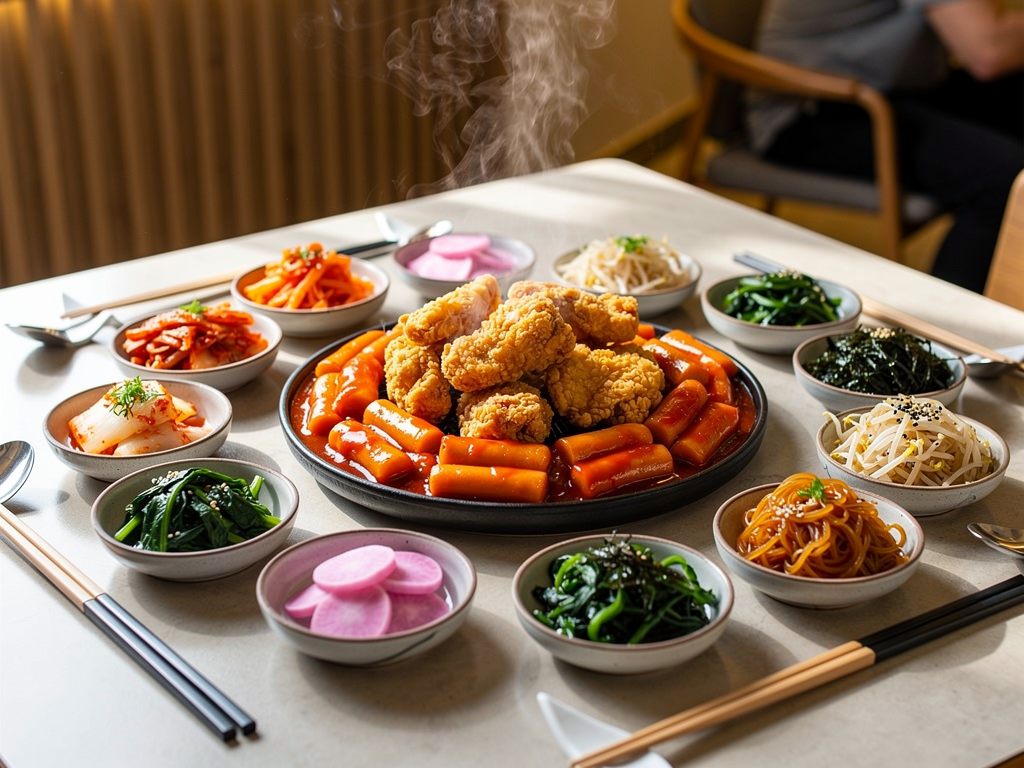
Is Korean street food halal? Mostly yes, dish by dish. Bunsik is built on rice cakes, fish cake, seaweed, batter and sugar rather than meat, so the problems are few and specific: blood sausage, default pork fillings, shared fryers and the drinking tents. In the UAE most of it is cooked in kitchens that can answer you directly.
TL;DR
– Best overall: Mukbang Shows — full bunsik menu, pork-free kitchen, dishes AED 39–55
– Best value: KimchiNomNom — explicitly halal, delivery-first, Al Barsha and Marina
– Best for the real café feel: Jae’s Bunsik, Sharjah
Is Korean street food halal?
Mostly, yes — and more reliably than Korean BBQ or Korean stews. The bunsik canon (분식) is rice, flour, fish cake, seaweed, vegetables and sugar. There is no meat in most of it to worry about in the first place.
The exceptions are real but short, and they are all nameable: one blood sausage, a few default pork fillings, the fryer the sausage skewers go into, and the soju that traditionally comes with the tent. Learn those five things and you can order confidently anywhere.
The UAE makes it easier still. Here, Korean street food arrives from cafés, delivery kitchens and restaurants rather than night-market carts, which means someone can actually tell you what is in the pan. For the wider cuisine, see the guide to whether Korean food is halal; for the grill, whether Korean BBQ is halal.
Which Korean street foods are usually halal?
Most of the famous ones. The savoury side:
- Tteokbokki and rabokki — rice cakes in gochujang with sugar and fish cake
- Eomuk / odeng — fish cake skewers in anchovy-kelp broth
- Gimmari — glass noodles rolled in seaweed and deep-fried
- Twigim — battered sweet potato, vegetables, squid and prawn
- Kimchi jeon and haemul pajeon — kimchi and seafood pancakes
- Dakkochi — chicken skewers, assuming halal chicken
- Gimbap with tuna, vegetable, beef or tempura shrimp fillings
- Korean corn cheese — sweetcorn, mayo, mozzarella
And the entire sweet side is fine: hotteok, bungeoppang, gyeranppang, dalgona and bingsu are flour, sugar and eggs.
The sauces are fine too. Gochujang is fermented chilli, rice and soy. Yangnyeom sauce is gochujang, soy, garlic and sugar. Ssamjang is soybean paste and chilli paste. None of them require alcohol, though a specific kitchen can add cooking wine — which is the one non-obvious thing worth asking.
Which Korean street foods are not halal or need checking?
Five things, and they cover almost every case.
Sundae. The blood sausage sold from the same stalls as tteokbokki is the clearest no on the list.
Mandu. Korean dumplings are pork-filled by default. Beef, chicken, kimchi and vegetable mandu all exist — but the default is the thing to check.
Classic gimbap. The traditional roll contains a strip of ham, and that ham is usually pork. The tuna, vegetable, bulgogi and tempura versions sidestep it entirely.
Sausage skewers and the deep-fried hot dogs. These are typically pork sausage. Jokbal and bossam stalls are pork outright.
The drinks. The classic setting for street food in Korea is the pojangmacha, the orange-tented night stall, where soju and makgeolli are the default pairing. That association is a big part of why people assume the food itself is off-limits.
Everything else is either fine or a single question away from being fine.
Is tteokbokki halal?
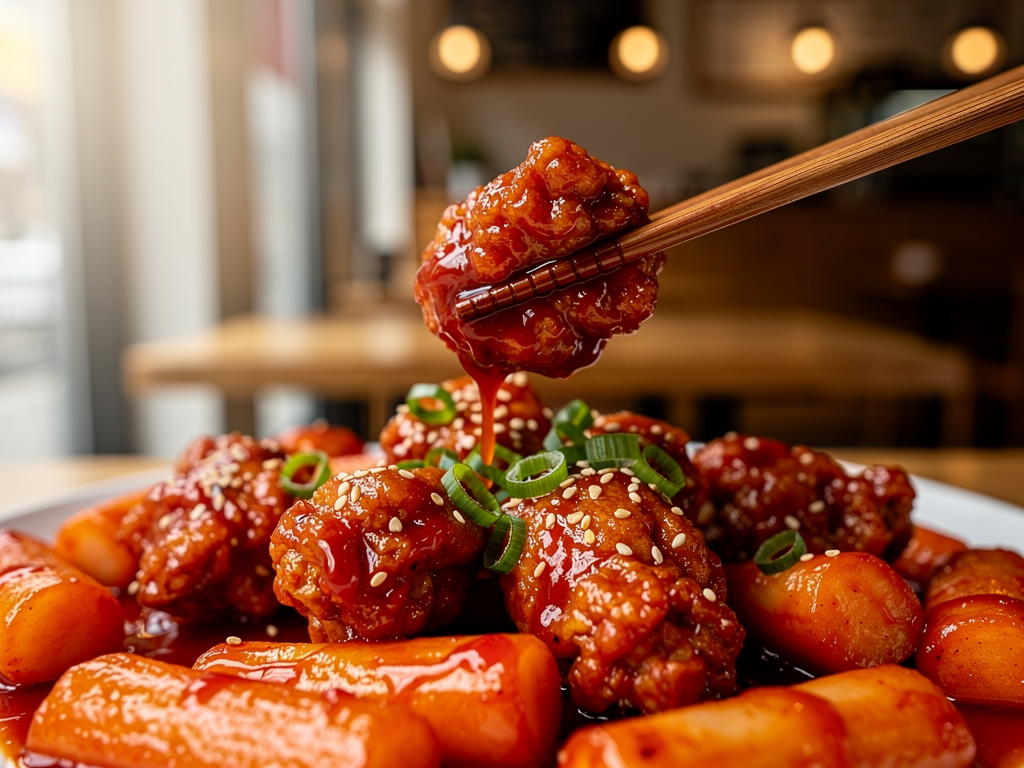
Usually, yes. Rice cakes, gochujang, sugar and fish cake, simmered in a broth built from dried anchovy and kelp — nothing there breaks halal rules.
Two things to check. Some versions add sliced sausage, which is often pork; the rabokki and “army-style” variants are the ones to watch. And a small number of kitchens finish the sauce with cooking wine.
At a kitchen that has committed to halal, both are already handled. Tteokbokki is the dish that pulled most people into Korean food in the first place, thanks to a decade of K-dramas, so it is also the dish UAE kitchens have had the most practice answering questions about. There is a full Dubai tteokbokki rundown if you want to compare versions.
Is gimbap halal?
It depends entirely on the filling, and that is the whole answer.
A classic gimbap roll is rice, seaweed, pickled radish, carrot, spinach, egg — and ham. The ham is usually pork. Everything else in the roll is fine.
So order by filling rather than by name: tuna, vegetable, bulgogi beef or tempura shrimp. At a halal kitchen those are the defaults anyway and the question never comes up. At a mixed kitchen, one sentence settles it.
Is Korean fried chicken from a street stall halal?
The sauce is not the issue. Yangnyeom is gochujang, soy, garlic and sugar; soy-garlic is exactly what it sounds like; honey butter is honey and butter.
The two questions are the chicken source and the fryer. Halal-sourced chicken is straightforward to confirm and several UAE operators state it outright. The fryer is the subtler one, which is the next section.
Does the shared fryer matter?
To many diners, yes — and it is worth being honest rather than dismissive about it.
A stall that fries sausage skewers is putting them into the same oil as the twigim, the gimmari and the chicken. Nothing about the chicken changed, but the oil is shared, and for anyone observing strictly that is a genuine issue rather than a technicality.
There are two ways it goes away. A kitchen with a dedicated fryer for non-pork items, or a kitchen with no pork on the premises at all. The second removes the question completely rather than managing it, which is why pork-free kitchens are the straightforward answer for strict diners. If it matters to you, ask which of the two you are dealing with — do not assume.
How do you order Korean street food halal-safely?
Six questions, and you will only need them once per kitchen.
- Is the chicken and beef halal-sourced? The baseline question.
- Is there pork anywhere in the kitchen? A “no” answers four other questions at once.
- Is the fryer shared with sausage items? Only relevant if the answer above was yes.
- What is in the gimbap? Ask for the filling by name.
- Is there sausage in the tteokbokki, and any cooking wine in the sauce?
- Is there a minimum order? Street food dishes are usually à la carte; two-person minimums normally apply only to all-you-can-eat BBQ.
Delivery apps shortcut most of this — menu descriptions list fillings, and halal claims are usually stated on the venue page. Time Out Dubai’s Korean restaurant list is a decent place to start on addresses and hours.
Where can you eat halal Korean street food in the UAE?
Seven options across Dubai, Sharjah and Abu Dhabi, each with an honest downside.
1. Mukbang Shows — Deira, JBR, DWTC, Muroor Road, Electra Street
The widest halal bunsik menu under one roof, and a kitchen with no pork in the building — so no fryer question, no ham in the gimbap, no sausage in the tteokbokki, no cooking wine in the sauce.
The street food section is à la carte with no ordering minimum: Tteokbokki AED 55, Rabokki AED 49, Eomuk Tang AED 49, Gimmari AED 49, Mandu AED 48, and Gimbap in three fillings — shrimp tempura AED 48, spicy tuna AED 45, beef bulgogi AED 41.
Around it: Haemul Pajeon AED 53, Kimchi Jeon AED 53, Saeu Twigim AED 51, Ojing-eo Twigim AED 51, Korean Corn Cheese AED 39, Gyeran Jjim AED 39 and Bingsu AED 37.
The honest limitation: this is a sit-down Korean BBQ restaurant that cooks street food properly, not a street food stall. AED 55 tteokbokki is restaurant pricing for something that costs a few dirhams from a Seoul cart, and the rooms are loud and group-oriented at peak. For a quick cheap fix, KimchiNomNom or a small café is closer in spirit.
Deira: Al Ittihad Rd, Port Saeed, +971-4-886-4494. JBR: Bahar 7, The Walk, +971-54-523-1898. Love Mukbang DWTC: opposite the World Trade Centre metro station, +971-54-524-5904. Muroor Road: +971-50-158-9433. Electra Street: +971-2-564-0446. The full menu is online.
2. KimchiNomNom — Al Barsha 3, Al Quoz, Dubai Marina
An explicitly halal Korean street food kitchen run by a Syrian chef, operating from host locations: Karam Alsham in Al Barsha 3, Al Faris Mall in Al Quoz, and Food Nation at Dubai Marina View Tower B. The menu leans Korean-fusion — beef bulgogi tacos, kimchi fried rice burritos, loaded fries with Korean chicken and cheese — with vegan and vegetarian options built in. The National covered it when it launched. Downside: it is a delivery-and-counter operation, not a dining room, and traditionalists will notice the fusion angle.
3. Mashisoyo — Cluster G, JLT
Halal-certified, open late, and strongest exactly at the street food end: tteokbokki, mandu, gimbap and Korean fried chicken, around AED 50 per person. Heavily used on Talabat and Deliveroo. Downside: a compact unit built for delivery and a fast meal rather than a long sit-down.
4. Seoul Street Café (1004 Gourmet) — The Greens
Tucked behind Dubai’s best-known Korean supermarket on P2 of The Onyx Tower 1. Cheese tteokbokki and rose tteokbokki, mushroom bibimbap, gochujang chicken rice, and a proper Korean dessert and coffee list including a Tiramisu Bingsoo at AED 42. Around AED 115 for two, open 9am to 9:30pm. Downside: it is a supermarket café — limited seating, short menu — and halal sourcing is worth confirming directly.
5. Jae’s Bunsik — Al Jada / Muwaileh Commercial, Sharjah
Sharjah’s dedicated bunsik café, co-founded by Emirati Arwa Alblooshi and South Korean SungJae Moon, at Tiraz 6 and open noon to midnight. Tteokbokki, chicken katsu kimbap, kimchi fried rice, OG ramyun, truffle chapagetti and Korean fried chicken, plus specialty coffee. It is the closest thing in the UAE to the café-bunsik format as Koreans actually eat it. Downside: café portions, café pricing, it is in Sharjah, and sourcing is worth confirming directly.
6. DAK Korean Chicken — Al Reem Island, Abu Dhabi
States its chicken is 100% halal at source, which makes it the capital’s easy answer for the street food dish people ask about first. Dishes run roughly AED 41–59. Downside: chicken-focused, so there is no tteokbokki-and-gimbap spread to go with it.
7. Seoul Street — Al Reem Island, Abu Dhabi
Abu Dhabi’s tteokbokki specialist, serving more than one style including the old-school sindang-dong version that essentially nobody else in the capital attempts. Downside: it publishes no prices on any of its own channels, the menu is narrow by design, and sourcing is worth confirming directly.
Halal Korean street food in the UAE compared
| Venue | Area | Price (AED) | Halal status | Standout order |
|---|---|---|---|---|
| Mukbang Shows | Deira, JBR, DWTC, Abu Dhabi ×2 | 39–55 per dish | 100% halal, no pork on site | Tteokbokki 55, gimbap 41–48 |
| KimchiNomNom | Al Barsha 3, Al Quoz, Marina | Casual; confirm | Explicitly halal | Bulgogi tacos, loaded fries |
| Mashisoyo | Cluster G, JLT | ~50 per person | Halal-certified | Tteokbokki and mandu |
| Seoul Street Café | The Greens | ~115 for two | Confirm directly | Rose tteokbokki, bingsoo 42 |
| Jae’s Bunsik | Al Jada, Sharjah | Café pricing | Confirm directly | Chicken katsu kimbap |
| DAK Korean Chicken | Al Reem, Abu Dhabi | 41–59 per dish | Halal chicken at source | Korean fried chicken |
| Seoul Street | Al Reem, Abu Dhabi | Not published | Confirm directly | Sindang-dong tteokbokki |
What does halal Korean street food cost in the UAE?
Less than any other way into the cuisine, but nothing like Seoul.
Delivery-first and café kitchens run roughly AED 25–50 a plate, and DAK’s fried chicken sits around AED 41–59. Sit-down restaurants charge restaurant prices for the same dishes: tteokbokki AED 55, rabokki AED 49, gimbap AED 41–48, mandu AED 48.
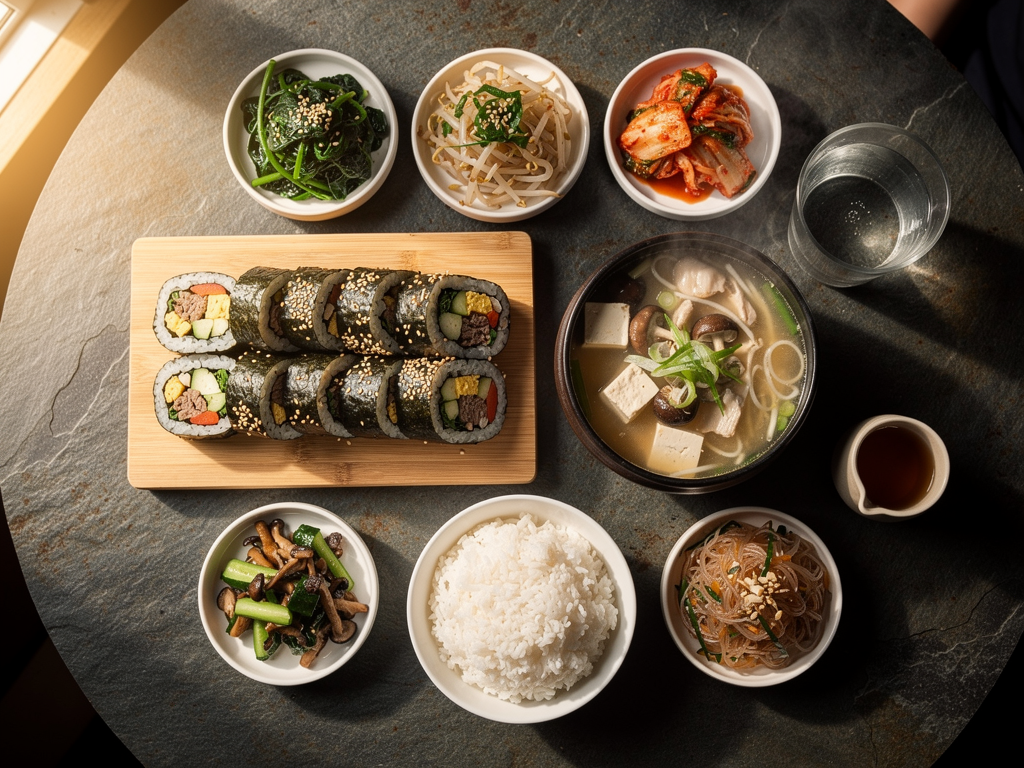
Nobody here is selling bunsik at cart prices, and it is worth being clear-eyed about why: rent, staff and a kitchen that can actually tell you what is in the pan. The trade you are making is a few dirhams for a straight answer.
Where to find it by area
In Dubai, Deira is the value end — Mukbang Shows sits on Al Ittihad Road in Port Saeed, a short hop from Deira City Centre or Union stations. Love Mukbang DWTC is directly opposite the World Trade Centre metro station on Sheikh Zayed Road, which makes it the easiest to reach without a car.
The Greens and JLT cover the café and casual end, with Seoul Street Café inside 1004 Gourmet and Mashisoyo in Cluster G, both close to the DMCC station. KimchiNomNom spans Al Barsha 3, Al Quoz and Dubai Marina, and delivery is how most people use it.
Sharjah has one genuine bunsik café in Jae’s Bunsik at Al Jada — roughly a 25-minute drive from Deira, and worth treating as a dedicated trip rather than a detour.
Abu Dhabi has no metro, so plan around taxis. Al Reem Island holds both DAK and Seoul Street, while the Mukbang branches on Muroor Road and Electra Street sit in Al Danah near Al Wahda Mall.
What is Korean street food? (분식)
Bunsik literally refers to flour-based food, and in practice it means Korea’s quick, cheap, snackable cooking: spicy rice cakes, seaweed rolls, battered fritters, savoury pancakes, skewers and sweet pastries.
What separates it from the rest of Korean cooking is that protein is secondary. The flavour comes from gochujang, soy, sesame and fermentation rather than from meat — which is exactly why it earns the friendliest halal verdict of any Korean food category. The Korea Tourism Organization’s food guide is a good primer on the dishes themselves.
FAQ
Is Korean street food halal if it contains no meat?
Usually, but not automatically. A meat-free dish can still come out of a fryer shared with sausage items, or carry a sauce finished with cooking wine. Ask about both.
Is tteokbokki halal?
Usually. Rice cakes, gochujang, sugar and fish cake in anchovy-kelp broth are all fine. Check for sliced sausage in some versions and for cooking wine in the sauce.
Does gimbap contain pork?
Classic gimbap contains ham, which is usually pork. Tuna, vegetable, beef bulgogi and tempura shrimp fillings do not. Order by filling.
Is mandu halal?
Depends on the filling. Pork is the traditional default in Korea, but beef, chicken, kimchi and vegetable mandu are all standard. Ask which one you are getting.
Are the sweet Korean street snacks halal?
Hotteok, bungeoppang, gyeranppang, dalgona and bingsu are flour, sugar, eggs and syrup, so yes in a halal kitchen. Shared equipment is the only thing worth checking.
What is sundae, and is it halal?
Sundae is a Korean blood sausage sold at the same stalls as tteokbokki. It is not halal, and it is the one item on a bunsik menu to rule out immediately.
The short version: Korean street food is the easiest part of the cuisine to eat halal, because most of it never contained meat. Rule out the blood sausage, ask about the fillings and the fryer, and the rest of the menu is open.
Related guides
More from our Korean food guides across the UAE: