
Updated: September 2026
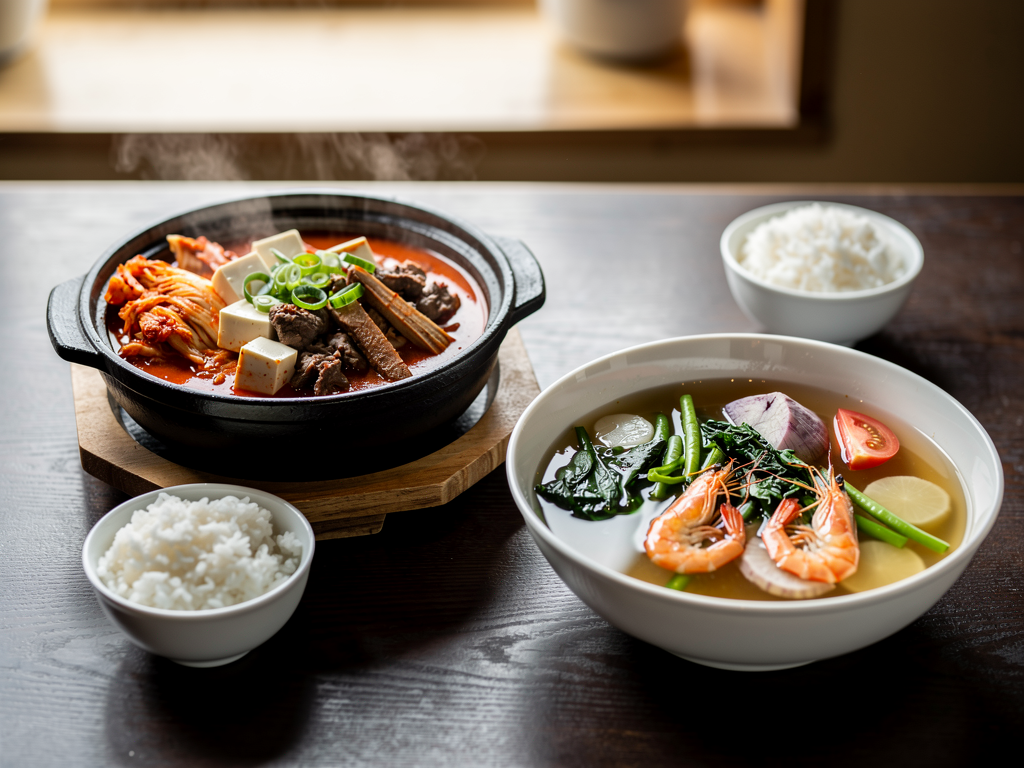
The kimchi jjigae vs sinigang debate comes down to two everyday sour soups eaten with rice across the UAE. One builds its tang from weeks-old fermented kimchi cooked in from the start. The other adds fresh tamarind straight to the broth. In practice Mukbang Shows delivers the Korean side with beef-only Kimchi Jeongol at AED 89 for the big pot while Filipino spots price shrimp, fish or beef versions between AED 27 and 55 per bowl.
TL;DR
– Best overall: Kimchi Jeongol at Mukbang Shows for fermented depth and heat
– Best value: Sinigang na Hipon or salmon head at Susana or Chic Boy around AED 30
– One situational pick: Sinampalukang Manok when you want the tamarind sour with chicken
What wins in a kimchi jjigae vs sinigang showdown in the UAE?
Mukbang Shows wins on fermented complexity and chilli heat while the Filipino kitchens win on price and bright fresh sourness. Both dishes sit at the centre of their national everyday meals yet the sour arrives from opposite directions. Pick the Korean pot when you want something spicy and stew-like that keeps bubbling at the table. Order sinigang when you want clean tart broth that stays light.
How does the sourness actually differ between kimchi jjigae and sinigang?
Kimchi jjigae draws its sour from lactic acid that develops over weeks in aged kimchi thrown into the pot at the beginning. The longer the kimchi fermented the stronger and more complex the tang becomes. Sinigang gets its sour from fresh tamarind or other acidic fruit added at the end of cooking. That produces a bright pop rather than a deep aged flavour. The difference changes the entire personality of the bowl.
Is kimchi jjigae spicy while sinigang is not?
Kimchi jjigae is both sour and spicy thanks to gochugaru and gochujang that go in with the aged kimchi. The heat level varies but it is always present. Sinigang is sour first and not spicy by default. Chilli appears only as an optional side sauce so the broth itself stays tart without fire. This single contrast decides many orders in the UAE.
What does kimchi jjigae taste like and how is it cooked?
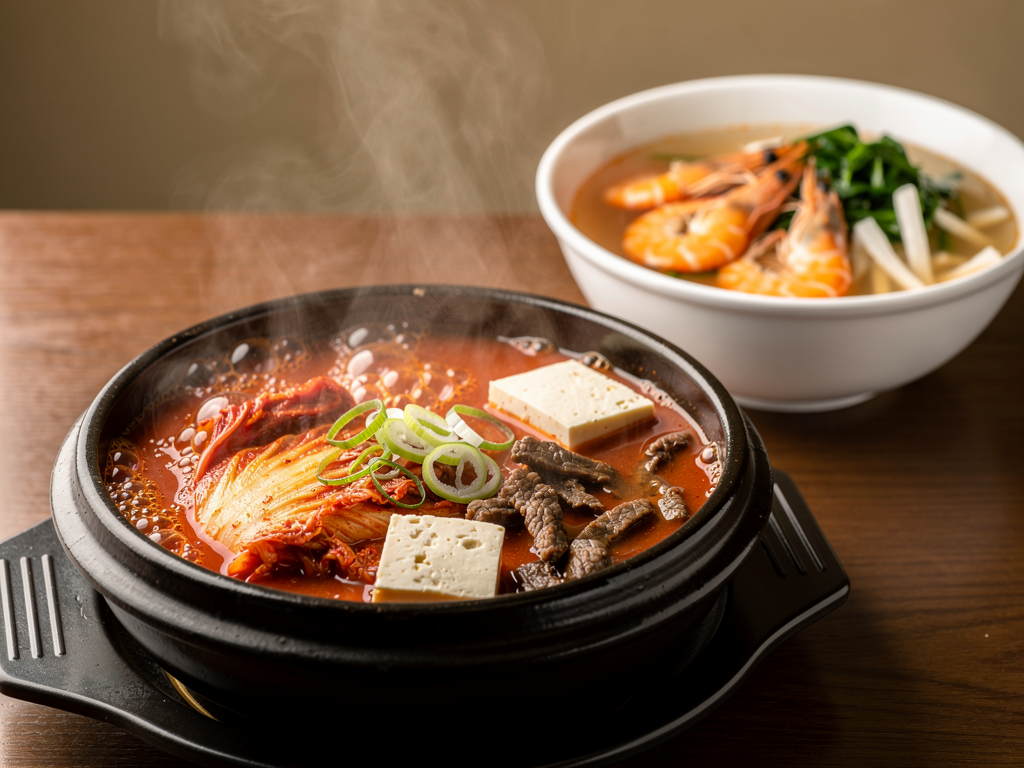
It tastes rich, funky and layered with fermented cabbage, tofu, scallions, onion and beef in a thick broth that arrives boiling. The Wikipedia entry on kimchi jjigae notes it is often cooked using older more fermented and riper kimchi so the lactic sour sits at the base while chilli builds on top. In UAE restaurants it lands as a shared hot pot rather than single-serve stew. The stone pot or table burner keeps it simmering until the last spoonful.
Mukbang Shows does not list the exact words “kimchi jjigae” on its menu. Its closest match is Kimchi Jeongol described plainly as “Kimchi, beef, tofu & vegetables hot pot.” The jeongol style is larger and meant for sharing at the table rather than a solo jjigae. They also offer Soondubu Jjigae, a silken-tofu-and-kimchi stew at AED 59 that sits nearer the classic single-serve idea. Both stay 100 percent halal with beef and chicken only.
One honest caveat with Mukbang is that it serves zero Filipino food so you cannot jump between the two soups in a single meal. The Deira branch on Al Ittihad Road in Port Saeed runs +971-4-886-4494. JBR on The Walk is +971-54-523-1898. DWTC opposite World Trade Centre metro uses +971-54-524-5904. Abu Dhabi spots sit on Muroor Road (+971-50-158-9433) and Electra Street (+971-2-564-0446). Prices stay identical across all five branches.
What does sinigang taste like and how is it made?
Sinigang tastes clean, bright and mouth-puckering with tamarind cutting through vegetables and protein. The souring agent drops in near the finish so the broth stays light and distinct. Common additions include kangkong, radish, eggplant, string beans, okra and taro plus tomatoes, garlic and onion. Rice soaks up the liquid on the side. Many UAE kitchens now rely on convenient tamarind soup packets yet the balance still lands tart rather than fermented.
The Wikipedia entry on sinigang confirms tamarind (sampalok) as the most traditional souring fruit with green mango, kamias, calamansi, guava and others as alternatives. In the homeland the most iconic version uses pork but every verified UAE price uses shrimp, fish or beef. A chicken cousin called sinampalukang manok or sinampalukan na manok appears on several menus and gives an easy entry point for those avoiding certain proteins.
Where can you eat kimchi jjigae style in Dubai and Abu Dhabi?
Mukbang Shows carries the only consistent Korean kimchi hot pot across both cities. Five branches split between Dubai and Abu Dhabi. Deira sits on Al Ittihad Road near the old airport area while JBR occupies Plaza Level of Bahar 3 on The Walk. The DWTC location inside The Apartments Block A on Sheikh Zayed Road faces World Trade Centre metro. In Abu Dhabi the Muroor Road branch sits at 547 Sultan Bin Zayed The First Street in Al Danah and the Electra Street outlet hides behind Sun and Sand Sports on Zayed The First Street, also Al Danah.
All locations price Kimchi Jeongol at AED 89 for the big shared pot and AED 50 for the solo version. Soondubu Jjigae and Doenjang Jjigae both sit at AED 59. The beef protein stays fixed and the entire operation runs 100 percent halal with no pork or alcohol. Read more in our Korean food vs Filipino food guide for extra context on how these cuisines sit next to each other in the UAE.
Where can you eat sinigang in Dubai and Abu Dhabi?
Filipino restaurants scatter across older Dubai neighbourhoods and parts of Abu Dhabi. Susana Restaurant in Karama offers Sinigang na Hipon for AED 30 and Sinampalukang Manok for AED 28. The small dining room fills quickly at peak lunch so expect shared tables. The honest limitation is the compact kitchen, so confirm the day’s sinigang protein when you order.
Chic Boy Inasal inside Al Ghurair Centre in Deira sells the cheapest verified bowl at AED 27.37 for Sinigang na Salmon Head. The inasal chicken side business keeps the place busy and the soup arrives fast. Downside is the mall location means parking fills early on weekends.
Boracay Cafe in Al Badaa prices Sinigang na Hipon at AED 31 and Sinampalukang Manok at AED 29.10. The casual setup works for quick lunches. The honest limitation is that it is a small café, so call ahead to confirm the sinigang of the day.
Lapaz Batchoy Restaurant in Al Danah, Abu Dhabi lists four sinigang options: shrimp AED 42, beef ribs AED 43, kingfish AED 44 and milkfish AED 45. The broader menu makes it easy to build a full Filipino meal. Downside is the Abu Dhabi location can feel far if you live in Dubai.
Lasa Filipino Bistro in Internet City 2 Dubai offers Sinigang Salmon Head at AED 44, generic Sinigang Fish at AED 55 and Sinampalukan Manok at AED 39. The plating is more polished than the neighbourhood spots. The honest limitation is the higher price, which reflects the business-district address rather than a bigger bowl.
All these venues confirm protein and preparation directly with staff because recipes can shift day to day. The wider tradition of Filipino cooking receives good treatment in the encyclopaedia entry on Filipino cuisine.
How do prices compare in the UAE for kimchi jjigae vs sinigang?
Filipino sinigang stays cheaper because it prices by single protein portion. Korean kimchi hot pot prices by the pot size and feeds more people. Here is the verified ladder.
| Dish/where | Sour source | Spicy? | Typical UAE price | What swims in it |
|---|---|---|---|---|
| Kimchi Jeongol, Mukbang | Fermented kimchi | Yes | AED 89 big / 50 solo | Beef, tofu, vegetables |
| Soondubu Jjigae, Mukbang | Fermented kimchi | Yes | AED 59 | Silken tofu, kimchi |
| Sinigang na Salmon Head, Chic Boy Deira | Fresh tamarind | No | AED 27.37 | Salmon head, vegetables |
| Sinigang na Hipon, Susana Karama | Fresh tamarind | No | AED 30 | Shrimp, vegetables |
| Sinampalukang Manok, Susana | Fresh tamarind | No | AED 28 | Chicken |
| Sinigang na Hipon, Boracay | Fresh tamarind | No | AED 31 | Shrimp |
| Sinampalukang Manok, Boracay | Fresh tamarind | No | AED 29.10 | Chicken |
| Sinigang na Hipon, Lapaz Abu Dhabi | Fresh tamarind | No | AED 42 | Shrimp |
| Sinigang na Baka, Lapaz | Fresh tamarind | No | AED 43 | Beef ribs |
| Sinigang na Tanigue, Lapaz | Fresh tamarind | No | AED 44 | Kingfish |
| Sinigang na Bangus, Lapaz | Fresh tamarind | No | AED 45 | Milkfish |
| Sinigang Salmon Head, Lasa | Fresh tamarind | No | AED 44 | Salmon head, okra, eggplant |
| Sinigang Fish, Lasa | Fresh tamarind | No | AED 55 | Fish, radish, long beans |
| Sinampalukang Manok, Lasa | Fresh tamarind | No | AED 39 | Chicken |
The table shows the clear price gap. Korean pots cost more yet deliver longer table time and built-in refills on banchan. Filipino bowls land lighter on the wallet and suit solo lunches.
Is kimchi jjigae vs sinigang halal in the UAE?
Both dishes default to pork in their homelands yet UAE versions rebuild cleanly. Mukbang uses only beef in its kimchi hot pots and serves no pork or alcohol at all. Every verified sinigang price uses shrimp, fish or beef. The chicken version sinampalukang manok appears on multiple menus at AED 28-39 and offers another straightforward route. Always confirm the exact protein and preparation directly with each Filipino venue because recipes can vary. Read our deeper guide to what is kimchi jjigae for extra background on the Korean side.
What is kimchi jjigae? (김치찌개)
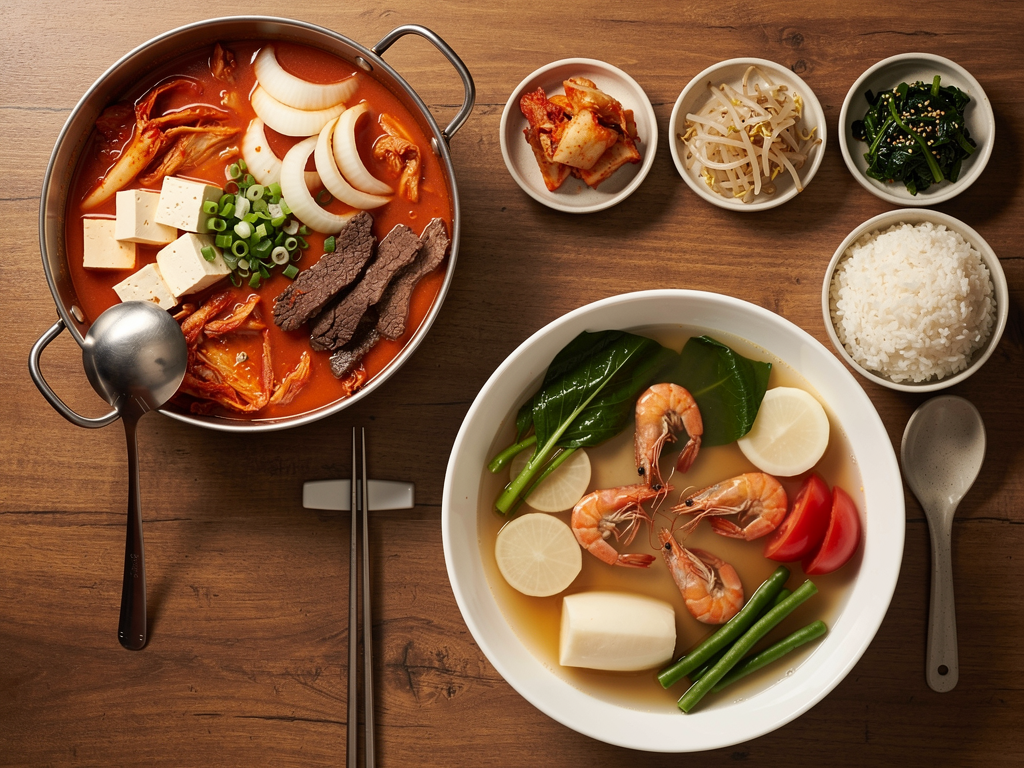
Kimchi jjigae is a thick Korean stew built on fermented kimchi, tofu, scallions, onion and a protein simmered in water or anchovy stock. The Hangul spelling is 김치찌개. It is usually served boiling in a stone pot alongside rice and banchan. Our separate article on where to eat the best kimchi jjigae in Dubai explains the local adaptations in more detail. In the UAE the closest practical match is Mukbang’s Kimchi Jeongol hot pot or its Soondubu Jjigae stew.
What is sinigang?
Sinigang is a Filipino sour soup whose defining feature is a souring agent added to broth containing meat or seafood plus vegetables. Tamarind dominates but green mango, kamias and guava also appear. The soup stays sour rather than spicy and always pairs with rice. It ranks as one of the most widely reported favourite soups in global polls though exact rankings shift yearly.
What are the typical vegetables and proteins in each dish?
Kimchi jjigae usually contains napa cabbage kimchi, firm tofu, scallions, sliced onion and sometimes enoki mushrooms or zucchini. The Korean homeland version lists pork first yet UAE pots at Mukbang use beef. Sinigang vegetables centre on water spinach, radish, eggplant, string beans, okra, taro and tomato. Proteins rotate through shrimp, various fish, beef and chicken in the UAE. The contrast in vegetables reflects the different climates and farming traditions behind each cuisine.
Which neighborhoods in the UAE have the strongest options for both?
Deira and Karama in Dubai offer the densest cluster of affordable Filipino cooking. Al Ghurair Centre and nearby streets hold multiple spots including Chic Boy while Karama’s Susana draws steady crowds for its AED 30 shrimp sinigang. Al Badaa further along the coast houses Boracay Cafe with easy parking and slightly quieter tables. Internet City 2 pulls business diners to Lasa Filipino Bistro where the AED 44-55 bowls match the higher rent.
On the Korean side Mukbang’s Deira branch on Al Ittihad Road sits inside the same broad district as many Filipino restaurants so you could theoretically eat one then the other within minutes. JBR on The Walk provides a more polished setting for the AED 89 hot pot if you want waterfront views. DWTC on Sheikh Zayed Road works for trade-show visitors because it sits steps from the metro.
Abu Dhabi concentrates its options inside Al Danah. Lapaz Batchoy on one corner and the two Mukbang branches on Muroor Road and Electra Street sit within a short drive of each other. The area lacks a metro system so taxis or ride apps handle the short hops between venues. The drive between Dubai and Abu Dhabi runs well over an hour, so most residents pick one city per night.
The Filipino community presence in these neighbourhoods keeps sinigang prices low and quality consistent. Korean expats and curious locals support Mukbang’s five locations so the kimchi hot pots rarely run out. Both cuisines sit inside larger malls or strip centres rather than standalone buildings which makes combining a Korean-Filipino meal logistically simple on weekends.
What practical tips help when ordering kimchi jjigae vs sinigang?
Order the big Kimchi Jeongol at Mukbang only if two or more people plan to share because the AED 89 pot contains enough for refills and banchan. Solo diners should stick to the AED 50 version or switch to Soondubu Jjigae at AED 59 to avoid waste. Ask for extra rice because both soups demand it to balance the sour or heat.
For sinigang decide on protein first since price jumps with beef or certain fish. Shrimp and salmon head stay cheapest and cook fastest. Request the sinampalukang manok if you prefer chicken because it delivers the same tamarind profile without crossing any dietary lines. Tell the server how sour you like it because some kitchens will adjust the tamarind packet on request.
Bring friends when trying Mukbang because the hot pot format works better as a group activity. The table burner keeps the broth active while you eat so pace yourself. Filipino bowls arrive ready to eat immediately so they suit solo lunches or fast dinners.
Check the spice level at Mukbang even though the menu does not print exact numbers. The gochujang base can surprise first timers. Sinigang has no spice unless you add the side chilli vinegar yourself. Pair both soups with cold water or calamansi juice rather than soft drinks because carbonation clashes with the sour base.
Weekend evenings see every listed venue fill quickly. Arrive early or late to skip the rush. Delivery apps carry almost every item but hot pots travel poorly so eat in at Mukbang. Filipino sinigang reheats reasonably well if you order takeaway.
Finally read the full menu rather than assuming every Korean restaurant offers kimchi jjigae or every Filipino spot prints sinigang. Prices change slowly but protein availability can shift weekly so a quick call ahead avoids disappointment. Our companion piece on kimchi jjigae vs tom yum adds useful context if you enjoy comparing sour soups across Asia.
FAQ
Is kimchi jjigae vs sinigang a fair fight in the UAE?
Yes. Both appear regularly on local menus yet one delivers fermented heat and the other fresh tartness. The choice usually comes down to mood and budget rather than objective superiority.
Which is cheaper in Dubai and Abu Dhabi?
Sinigang by a wide margin. Most bowls land between AED 27 and 55 while Mukbang’s Korean kimchi hot pot starts at AED 50 solo and jumps to 89 for the shared size.
Can I get pork versions of either soup?
Pork is traditional in both homelands but every verified UAE price uses beef, shrimp, fish or chicken. Confirm directly with each venue.
Does Mukbang serve actual kimchi jjigae?
Not under that exact name. They offer Kimchi Jeongol hot pot and Soondubu Jjigae, both built on the same fermented-kimchi foundation.
Is sinampalukang manok a good compromise?
It works well. The tamarind chicken version sits at AED 28-39 across multiple Filipino kitchens and keeps the sour profile without other proteins.
Which neighborhoods should I target first?
Start in Deira or Karama for sinigang then move to any Mukbang branch for the Korean pot. Al Danah in Abu Dhabi holds both cuisines within a short drive.
The kimchi jjigae vs sinigang choice ultimately depends on whether you crave deep fermented heat or bright fresh sour. Both soups prove why sour broths occupy such central places in their national diets. Try one of each in the same week and the contrast will stay clear long after the bowls empty.


Comments are closed.