Updated: August 2026
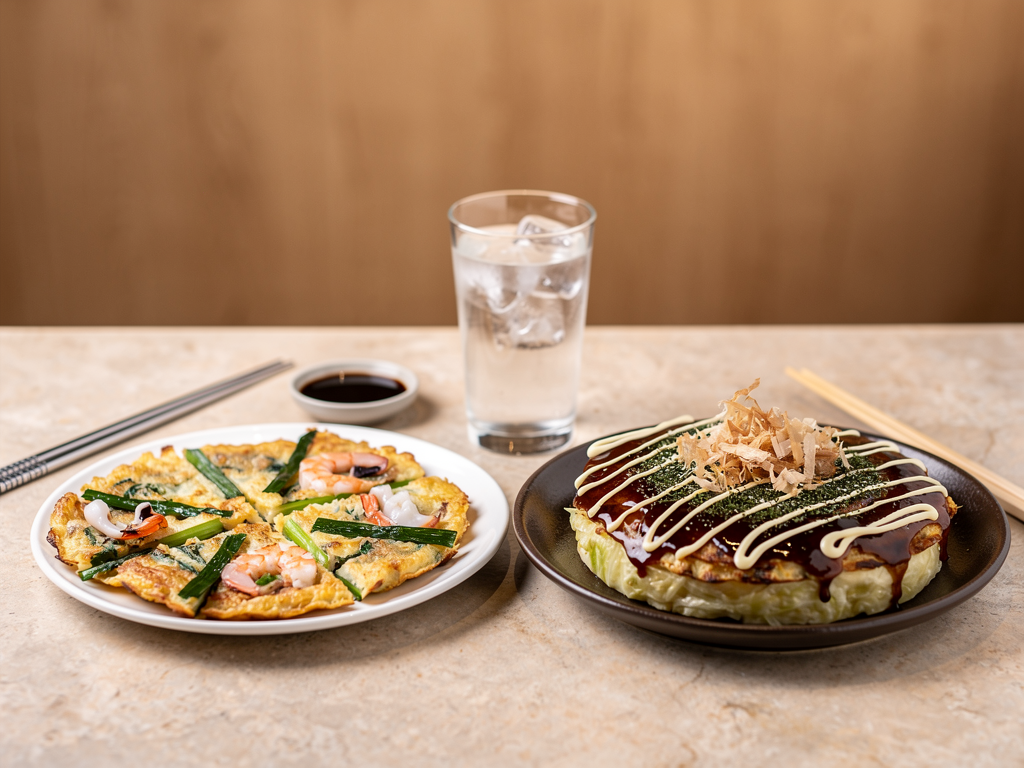
Korean pancake vs okonomiyaki is not a one-to-one dish matchup in the UAE. Korean pancake works as an entire menu section built around filling choice while okonomiyaki lands as one fixed line item, usually a seafood version priced between AED 47 and AED 56 at venues such as Bentoya Kitchen.
TL;DR
– Best overall: Korean pancake, for filling choice and sharing — Mukbang Shows at AED 53, halal with no alcohol
– Best value: Hanok Gamja Jeon at AED 33
– Best single-plate option: okonomiyaki at Bentoya Kitchen, AED 47
What is the real difference between Korean pancake and okonomiyaki in the UAE?
Korean pancake vs okonomiyaki in the UAE comes down to menu structure more than cuisine theory. Korean venues print a whole jeon family with several varieties while Japanese venues list exactly one okonomiyaki. This asymmetry decides what control the diner actually has. Hanok in International City lists four different jeon. HYU in JLT lists two. Mukbang Shows lists two. Bentoya Kitchen lists one okonomiyaki at AED 47 on its own site and AED 56 on its DIFC Deliveroo menu. The reader who wants to pick the pancake by its inside filling finds more options on the Korean side of the city. The Japanese side offers one finished dish where the kitchen has already decided the core composition.
This is a statement about what UAE menus print in 2026, not about the full depth of Japanese regional cooking. In Japan okonomiyaki carries real variation between Osaka-style mixed batter and Hiroshima-style layered with noodles, and dedicated restaurants let customers build their own. That narrowing happens inside the UAE market.
The difference shapes everything that follows. Korean pancake is defined by what is inside it. Okonomiyaki is defined by what goes on top. One arrives basically naked with a side dipping sauce. The other arrives dressed in okonomi sauce, Japanese mayonnaise, dried seaweed and katsuobushi flakes. That single contrast explains the texture gap, the sharing pattern and the halal questions that actually matter. Price does not cleanly separate the two. The cheapest and the most expensive pancakes in this comparison are both Korean.
How do the batters and textures compare?
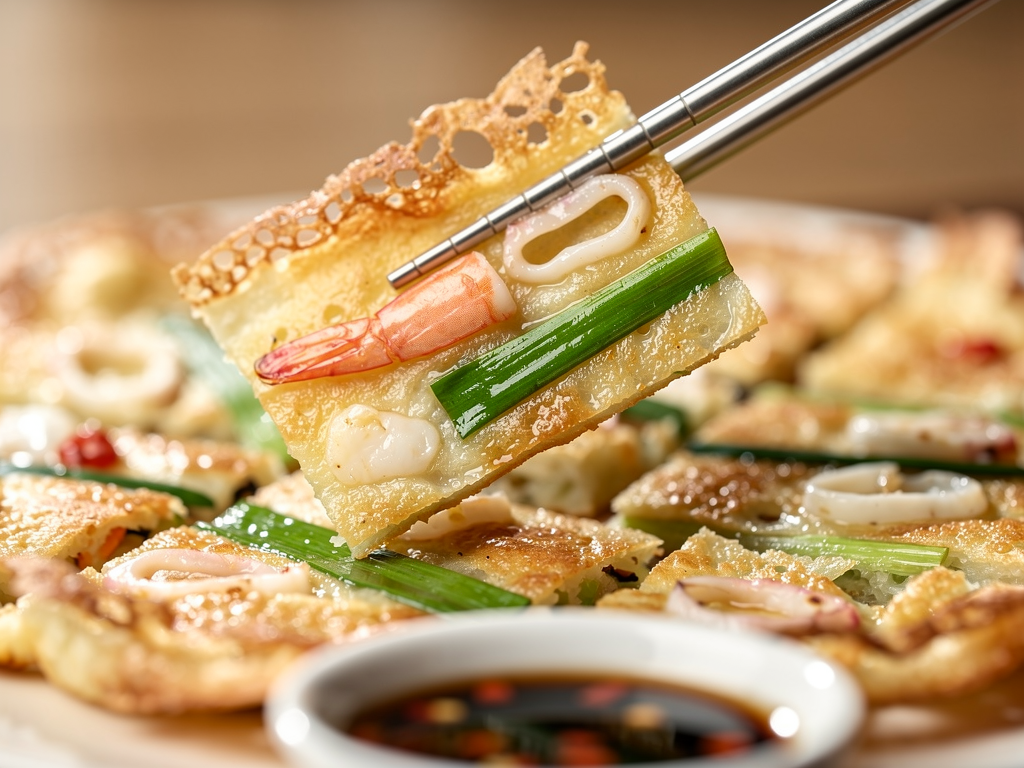
Korean pancake batter is a thin wheat-flour and egg mix whose only job is to bind the named filling. HYU in JLT prints the unusually clear line “Egg is included in flour” under both its seafood pancake and its kimchi pancake. The finished jeon is shallow-fried flat until the edges turn crisp. It is cut into squares and eaten hot with chopsticks from a shared plate. The texture sits closer to a fritter than to an omelette.
Okonomiyaki batter is thicker. It contains flour, egg, dashi stock and a large volume of shredded cabbage, often lifted with grated nagaimo yam. The pancake is cooked thick on a griddle until the centre stays soft. The final plate is closer to a cabbage-bound omelette than to a crisp fritter. Cabbage is structural in okonomiyaki. Remove it and the dish disappears. In jeon the cabbage is optional and the pancake is named after its dominant filling instead.
Neither dish is gluten-free. Both rely on wheat flour. Anyone avoiding gluten should treat both as off the list rather than assuming the Korean version is rice-based. It is not. For a detailed breakdown of wheat in Korean dishes see the guide to whether Korean food is gluten-free.
Which is cheaper in Dubai and Abu Dhabi?
Price does not decide Korean pancake vs okonomiyaki. The range overlaps. Hanok offers the lowest price at AED 33 for its potato gamja jeon and the highest Korean price at AED 43 for several seafood versions. Mukbang Shows prices both its haemul pajeon and kimchi jeon at AED 53. HYU charges AED 55 for kimchi pancake and AED 60 for the seafood pancake marked as popular. Bentoya Kitchen lists okonomiyaki at AED 47 on its own website and AED 56 on the DIFC Deliveroo listing, the usual aggregator mark-up. The mid-band price for okonomiyaki therefore sits inside the Korean range. Readers should choose on filling preference and eating style rather than cost.
| Dish | Venue | Area | Price AED | Halal | What you get |
|---|---|---|---|---|---|
| Korean pancake (jeon) | Mukbang Shows | Deira, JBR, DWTC, Muroor, Electra | 53 | Yes — beef and chicken only, no alcohol | Haemul pajeon or kimchi jeon, inside the AYCE BBQ meal |
| Korean pancake (jeon) | Hanok / The Korean Restaurant | International City | 33–43 | Confirm directly | Four jeon: kimchi, seafood, pumpkin, potato |
| Korean pancake (jeon) | HYU | JLT | 55–60 | Alcohol-free; confirm sourcing | Seafood or kimchi pancake, “egg is included in flour” printed |
| Okonomiyaki | Bentoya Kitchen | DIFC and other Dubai branches | 47 site / 56 delivery | Confirm directly | One seafood okonomiyaki with sauce, mayo and bonito |
| Okonomiyaki | SOON Izakaya | Armada Tower 2, JLT | Confirm directly | Confirm directly | A prawn toast okonomiyaki riff, not the standard version |
Is Korean pancake or okonomiyaki better for sharing?
Korean pancake wins for groups of four or more. It is cut into shareable squares, priced as one dish among many, and travels well alongside grilled meat or other sides. Okonomiyaki is built as a single thick plate for one person. It does not split cleanly at the table. When the plan is several dishes passed around, the Korean side of the city gives the more practical format. When the plan is one filling main course, the Japanese version fits better. Mukbang Shows places its jeon inside an all-you-can-eat Korean BBQ meal so the pancake becomes one shared plate among the grill items rather than a standalone order.
What does a typical Korean pancake (파전) actually look like on UAE menus?
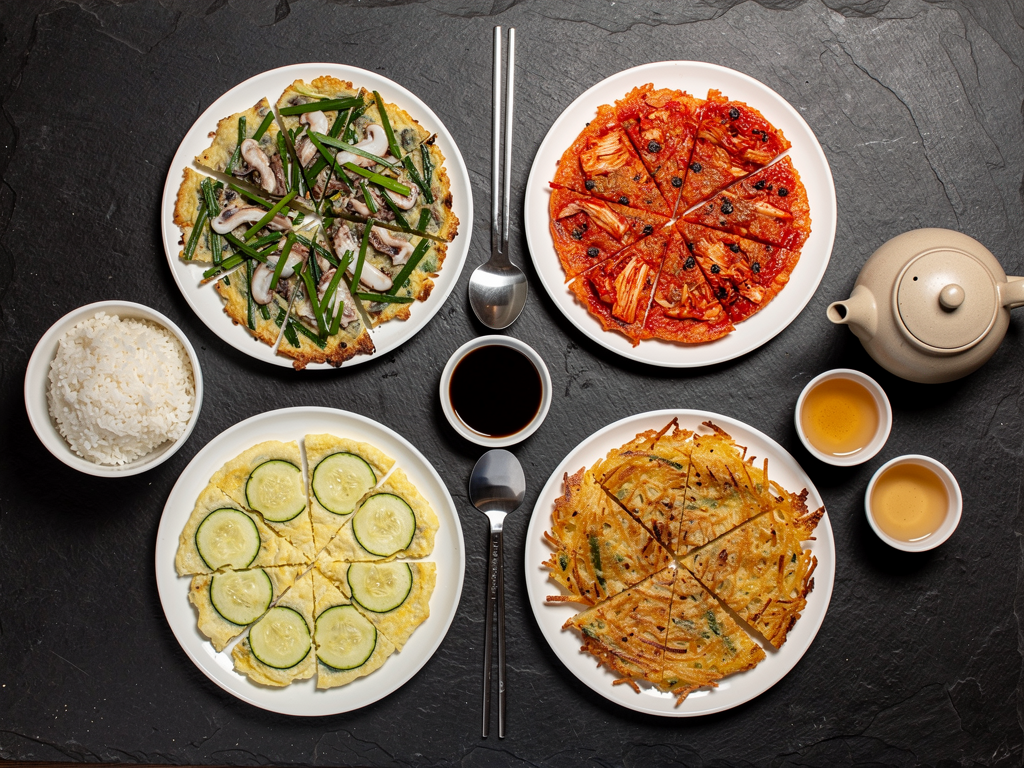
Korean pancake is the umbrella term for jeon, a family of pan-fried savoury pancakes. Pajeon is the spring-onion version. Haemul pajeon adds seafood. Kimchi jeon uses chopped kimchi. Hobak jeon features pumpkin or courgette with spring onion. Gamja jeon is made with potato. The batter binds the filling rather than bulking it. The dish is shallow-fried flat, sliced into squares and served with a soy-vinegar dipping sauce on the side.
Hanok in International City prints the widest selection. Its menu shows Kimchie Jeon at AED 38 vegetable or AED 43 seafood, Haemul Pajon at the same prices, Hobak Jeon pumpkin and spring onion at AED 38 or 43, and Gamja Jeon potato pancake at AED 33. That makes Hanok both the variety leader and the price leader at the same time. One downside is that it sits out in International City rather than central Dubai. Contact numbers listed on the menu are 04-5588962 and 052-5097505.
Mukbang Shows operates five branches across Dubai and Abu Dhabi and prints two jeon at the same price. Haemul Pajeon costs AED 53 and Kimchi Jeon costs AED 53. The choice is therefore purely seafood versus kimchi. These pancakes sit inside an all-you-can-eat Korean BBQ format with tiers from Gangnam AED 69-79 up to Bukchon Hanok AED 129 flat. Other menu items include Korean Corn Cheese AED 39, Gyeran Jjim AED 39, Mandu AED 48 and Tteokbokki AED 55. Mukbang Shows is 100% halal with beef and chicken BBQ only and no alcohol served.
One honest limitation is that it offers only two varieties while Hanok offers four including pumpkin and potato versions that Mukbang Shows does not make. If the pancake itself is the main reason for the trip and lower price or wider choice matters, Hanok has the stronger jeon menu. Mukbang Shows wins when the full meal around the pancake is the goal. For practical buying advice see the best Korean pancake in Dubai and the Abu Dhabi Korean pancake guide.
HYU Korean Restaurant in Cluster A, JLT prices its seafood pancake with spring onion at AED 60 and its kimchi pancake at AED 55. The seafood item is marked Popular on the menu. It is the most expensive Korean pancake in this set yet the only one that volunteers the allergen note “Egg is included in flour” on both items. One downside is the higher price point compared with Hanok.
The batter and vegetables themselves raise few halal questions. The points to check are whether cooking wine appears in the seasoning or the dipping sauce and whether the kimchi contains salted fermented seafood. Confirm directly with the venue on those two items.
Background on the broader role of these pancakes in Korean food culture is available on the Korean Cultural Center site.
What does okonomiyaki look like on UAE menus?
Okonomiyaki appears far less often and always as a single menu line rather than a category. Bentoya Kitchen has offered Japanese casual dining in Dubai since 1997 and prints exactly one okonomiyaki. The description on both its own website and the DIFC Deliveroo listing reads “Traditional Japanese seafood pancake drizzled with classic sauces.” The price is AED 47 on the restaurant site and AED 56 on Deliveroo. Takoyaki sits next to it on the same menu at AED 30. The printed description contains no pork. The common UAE reader assumption that okonomiyaki must contain pork belly therefore does not match what is actually listed in Dubai. The dish is presented as a seafood pancake.
SOON Izakaya in Armada Tower 2, JLT lists a prawn toast okonomiyaki riff rather than the standard version. As an izakaya it promotes happy hour deals so readers should confirm directly with the venue on any specific questions. Its presence still proves the larger pattern: in the UAE okonomiyaki stays a one-off item instead of a menu section with multiple choices.
The real halal checkpoints live in the sauce and toppings rather than the batter. Okonomi sauce is a thick Worcestershire-style sauce. Worcestershire formulations are commonly anchovy-based and some use vinegar derived from alcohol. Katsuobushi dried bonito flakes and Japanese mayonnaise are standard finishes. The correct step is to ask the venue directly about the sauce. Confirm directly with the venue on all sourcing details.
Background on regional Japanese cooking styles is available on the Japan National Tourism Organization site.
Is Korean pancake halal in the UAE?
Korean pancake can be halal in the UAE when the kitchen avoids cooking wine in the seasoning or dipping sauce and when the kimchi does not introduce fermented seafood that conflicts with individual requirements. The batter and vegetables themselves are not the problem. Seafood jeon is simply seafood. Mukbang Shows is 100% halal, serves beef and chicken BBQ only and serves no alcohol at all. At Mukbang Shows the sauce questions raised elsewhere in this guide do not arise at all.
Is okonomiyaki halal in the UAE?
Okonomiyaki halal status in the UAE depends on the sauce and toppings rather than the pancake itself. The printed Bentoya version is a seafood pancake, which removes the pork assumption many UAE diners bring to the dish. The okonomi sauce, Japanese mayonnaise and katsuobushi still require direct confirmation with the venue because Worcestershire-style sauces and bonito flakes carry common non-halal routes. The only permitted phrasing for any unverified venue is to confirm directly with the venue. Never assume; always ask.
What is Korean pancake (파전)?
Korean pancake refers to jeon, the family of pan-fried batter-bound savoury pancakes that form a distinct category on UAE Korean menus. The word jeon covers the whole group. Pajeon is the spring-onion version. Haemul pajeon adds mixed seafood. Kimchi jeon folds in chopped kimchi. Hobak jeon uses pumpkin or courgette with spring onion. Gamja jeon is a potato pancake. The batter is a thin wheat-flour and egg mix that binds the filling instead of creating bulk.
The pancake is shallow-fried flat in oil until the edges crisp, then cut into squares and served with a soy-and-vinegar dipping sauce on the side. It is meant to be shared hot with chopsticks as one part of a larger meal. This format explains why it pairs naturally with Korean BBQ or other banchan. The Korea Tourism Organization’s official English site offers broader background on how jeon fits inside Korean dining culture.
What is okonomiyaki?
Okonomiyaki means roughly “grilled how you like it.” The batter combines flour, egg, dashi and a large amount of shredded cabbage, often lightened with grated nagaimo yam for lift. The pancake is cooked thick on a griddle. Osaka style mixes everything into the batter. Hiroshima style layers the ingredients and adds fried noodles. Once cooked it is finished with okonomi sauce, Japanese mayonnaise, dried seaweed and katsuobushi bonito flakes that dance from the heat. The finished dish is soft-centred, cabbage-heavy and sized as a single plate rather than a shared side. The Japan National Tourism Organization site provides further reading on these regional differences.
Where can you find Korean pancake vs okonomiyaki in the UAE?
Korean pancake options cluster in several Dubai and Abu Dhabi neighbourhoods. Mukbang Shows runs branches in Deira on Al Ittihad Rd in Port Saeed, in JBR at Plaza Level Bahar 7 Unit P33 on The Walk in Marsa Dubai, and at DWTC inside The Apartments Block A on Sheikh Zayed Rd opposite the metro station. In Abu Dhabi it operates on Muroor Road at 547 Sultan Bin Zayed The First St in Al Danah Zone 1 and on Electra Street at Zayed The First St behind Sun and Sand Sports in Al Danah Zone 1.
HYU sits in Cluster A, JLT. Hanok is located in International City. These spots give coverage from central Dubai through JLT and out to International City plus two Abu Dhabi addresses.
The okonomiyaki addresses in this guide are both central. Bentoya Kitchen maintains multiple branches including DIFC. SOON Izakaya is in Armada Tower 2, JLT. The pattern holds that Korean pancake appears in dedicated Korean restaurants and BBQ houses while okonomiyaki shows up as a single appetiser or light-meal choice inside Japanese casual or izakaya menus. No venue in this set offers both dishes on the same menu.
How should you order and what questions should you ask?
Order Korean pancake by its filling name. Ask for haemul pajeon if you want seafood, kimchi jeon if you prefer fermented heat, or gamja jeon if you want the potato version at the lowest price. State whether you want the vegetable or seafood upgrade where prices differ. Tell the server the pancake is for sharing so they bring extra plates and chopsticks. At Mukbang Shows order the jeon as part of the AYCE BBQ tier so it arrives alongside the grill rather than as a lone starter.
For okonomiyaki simply order the one listed item. At Bentoya it arrives as the printed seafood version. No filling choice exists on current UAE menus. Request it early in the meal because it takes time on the griddle.
Practical questions to ask every time:
- For Korean pancake ask whether cooking wine is used in the batter, seasoning or dipping sauce.
- For kimchi jeon ask whether the kimchi contains salted fermented seafood.
- For okonomiyaki ask what exactly is in the okonomi sauce and whether the Japanese mayonnaise or katsuobushi creates any issue.
- Confirm directly with the venue on all sourcing when the menu does not spell out every ingredient.
- If gluten avoidance matters remember both batters are wheat-based and neither is safe.
- When ordering for a group of four or more default to Korean pancake because it divides cleanly; for solo meals the thicker okonomiyaki is the more satisfying single plate.
The same Korea-versus-Japan menu logic appears in other pairings. The gimbap versus sushi comparison follows an identical pattern where one side offers more modular choice.
FAQ
Is Korean pancake the same as pajeon?
Pajeon is one type of Korean pancake focused on spring onion. Jeon is the full family that also includes kimchi, seafood, pumpkin and potato versions.
Does okonomiyaki in the UAE contain pork?
The printed Bentoya description lists it as a traditional Japanese seafood pancake. No pork appears in the menu wording. Confirm sauce details directly with the venue.
Which is better for a group of four?
Korean pancake. It is cut into shareable squares, priced as one dish among many and travels well with other items. Okonomiyaki is sized as one person’s main plate.
Are the prices very different?
No. Korean options range from AED 33 at Hanok to AED 60 at HYU. Okonomiyaki sits at AED 47-56 at Bentoya. The cheapest and most expensive are both Korean.
Is one dish gluten-free?
Neither. Both use wheat-flour batters. Treat both as off-limits if gluten is a hard requirement.
Should I pick based on halal ease?
Mukbang Shows removes most questions because it is 100% halal with beef and chicken only and no alcohol. For okonomiyaki the sauce and toppings need direct confirmation with the venue.
Korean pancake vs okonomiyaki ultimately reveals more about UAE menu design than about the dishes themselves. The Korean side gives filling control and sharing flexibility while the Japanese side offers one ready-dressed plate. Pick the format that matches how you want to eat rather than assuming the two are interchangeable. For current branch details and full menus check the linked buying guides above.
Related guides
More from our Korean food guides across the UAE: