
Updated: July 2026
The best bibimbap in Dubai for everyday eating is at Mukbang Shows Restaurant — Deira, where the bowls run AED 53-62 and stay 100% halal with clear beef and chicken options. It sits on Al Ittihad Rd in Port Saeed and serves rice, seasoned vegetables, egg and gochujang that works as a standalone meal or alongside all-you-can-eat Korean BBQ.
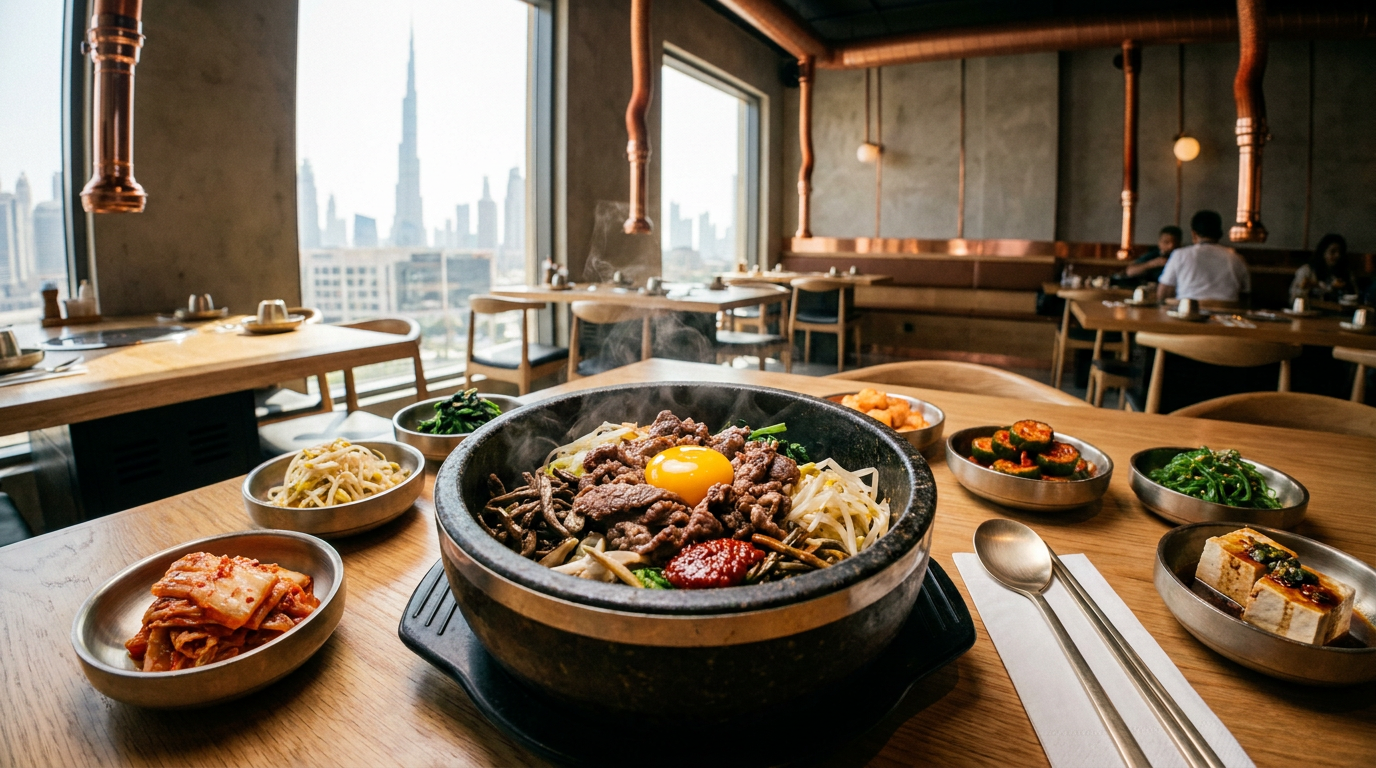
TL;DR – Best overall / value: Mukbang Shows Deira (bowls AED 53-62) – Best stone-pot theatre: HANU, Palm Jumeirah (dolsot, ~AED 145) – Cheapest fresh bowl: Seoul Street, The Greens (from ~AED 30) – Best home-style: HYU (JLT) or Mannaland (Al Hudaiba)
What is the best bibimbap in Dubai right now?
Mukbang Shows Deira serves the best bibimbap in Dubai for most people. The chicken bowl is AED 53, beef AED 59, vegetable AED 56 and seafood AED 62, each with rice, seasoned vegetables, egg and gochujang. Rice and bibimbap are also included when you order the AYCE BBQ sets at AED 69-129 per person (two-person minimum, AED 60 leftover charge).
There are three Dubai branches: Deira on Al Ittihad Rd, JBR at The Walk, and Love Mukbang at DWTC opposite World Trade Centre metro. Call the Deira branch on +971-4-886-4494 to reserve. The full menu also covers Korean fried chicken, tteokbokki, stews, noodles and a seafood boil — see the full Mukbang Shows menu or the best Korean restaurant in Dubai guide.
One honest caveat: Mukbang serves bibimbap as a regular bowl, not a sizzling dolsot stone pot, and its real strength is the BBQ. If you specifically want the crisp rice crust and theatre of a hot stone pot, a specialist does it with more drama. As a well-priced halal bibimbap next to a big Korean spread, though, it is hard to beat. See the Mukbang Deira branch page for hours.
Bowl vs stone pot: what is the difference?
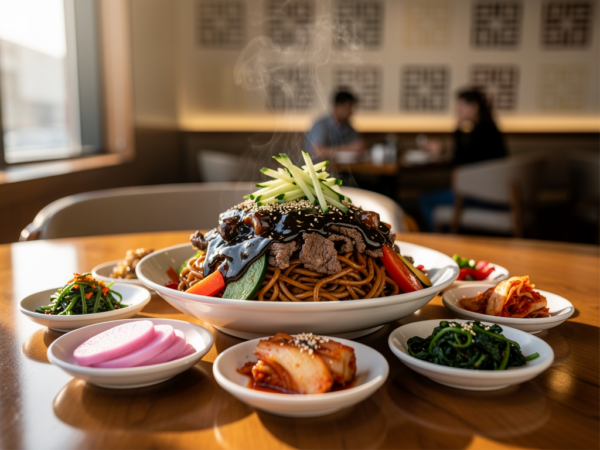
Mukbang’s four bibimbap choices all stay under AED 62 and keep to halal beef and chicken. The beef bowl at AED 59 mixes tender beef with rice, vegetables, egg and gochujang; the AED 62 seafood version adds prawns and squid; the AED 56 vegetable bowl skips animal protein. All of them travel well for delivery.
Stone-pot (dolsot) versions arrive in a screaming-hot stone bowl that crisps the rice into a crust after a couple of minutes. Mukbang’s ceramic bowl skips that theatre but saves money and speeds up the order. The trade-off is simple: you lose the dramatic sizzle and extra texture, but gain speed, a lower price and guaranteed halal ingredients. Most regulars order the chicken bowl and add sides from the menu.
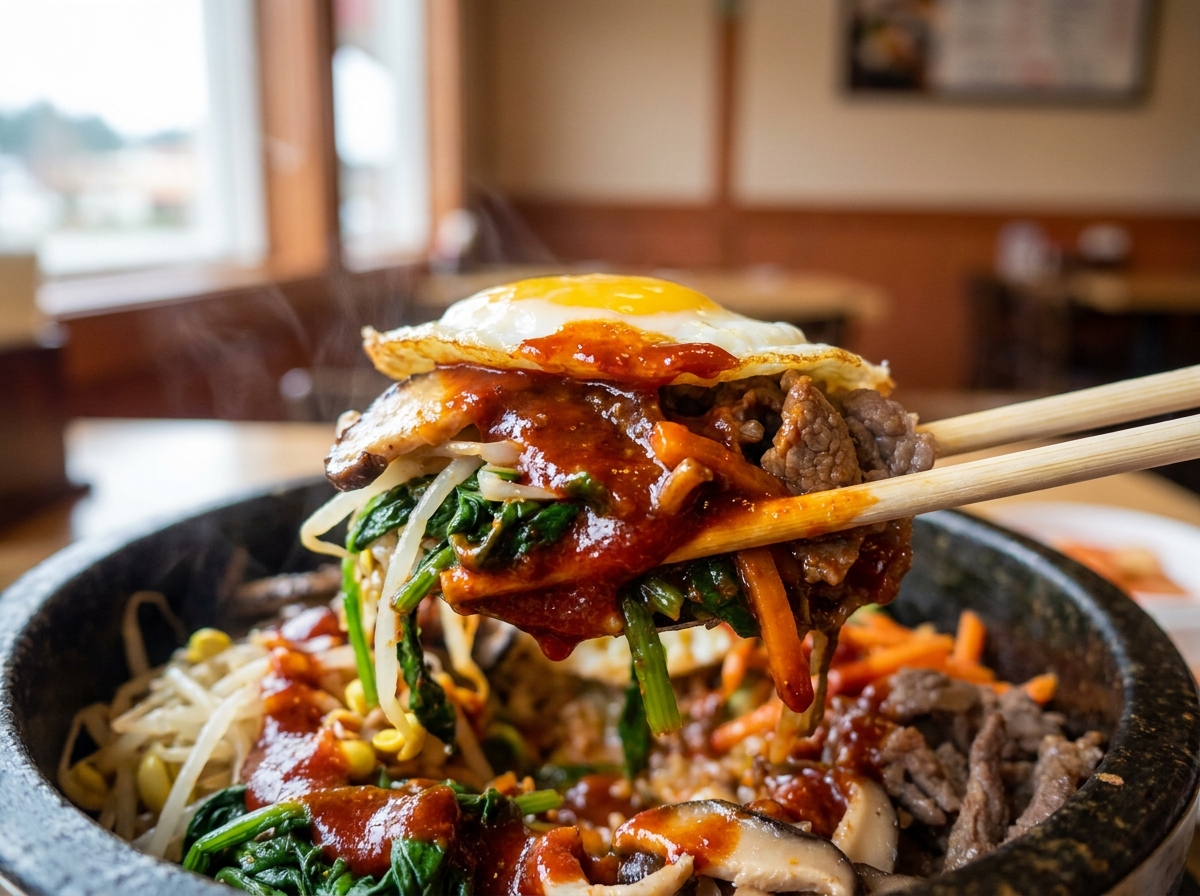
Why is HANU the premium bibimbap pick?
HANU on Palm Jumeirah serves a stone-pot bibimbap around AED 145 in a licensed fine-dining setting at the St Regis Gardens rooftop. The contemporary Korean grill is built around rare Hoengseong Hanwoo beef and delivers a proper dolsot with a crisp rice crust. Time Out Dubai named it a 2026 Korean pick.
Expect a high overall spend, roughly AED 400-900+ per person, so the bibimbap here is a special-occasion dish rather than an everyday lunch. It is a licensed venue that serves alcohol, so confirm the policy directly if that matters to you. When budget allows, the hot stone pot and premium beef make it the clear upgrade.
Where to get an affordable bibimbap
Seoul Street & 1004 Gourmet in The Greens does a mushroom bibimbap on homemade gochujang for roughly AED 30-80 per person. The unlicensed cafe sits next to the 1004 Gourmet grocery, so the vegetables stay fresh. Seating is limited, so it is a light-meal spot rather than a full dinner, but it is the cheapest fresh option here.
Mashisoyo in JLT Cluster G serves a vegetable-friendly bibimbap for around AED 50 in a halal casual spot open 11am-1am. It also does tteokbokki, mandu and Korean fried chicken, and it delivers well. It is better for quick lunches and late nights than big group dinners.
Which spots do home-style bibimbap best?
HYU Korean Restaurant in JLT Cluster O has served home-style bibimbap since 2010 in an alcohol-free, family-run kitchen. The Korean community trusts it for generous portions alongside galbi, kimchi jjigae and house-fermented banchan. A la carte runs AED 80-200 per person. The small room queues at peak, and it is not ideal for large groups, but the cooking is the real thing.
Mannaland in Al Hudaiba on Al Mina Road plates a comforting, generously topped bibimbap with vegetarian options for roughly AED 60-120 per person. This long-running halal home-style spot avoids pork and alcohol entirely. Phone +971 4 345 3200 to check. The room is plain and dated and it is a la carte only, but it is reliable Korean comfort food near Satwa.
Price comparison
| Venue | Area | Price AED | Halal | Standout order |
|---|---|---|---|---|
| Mukbang Shows — Deira | Deira (Port Saeed) | 53-62 | Yes (beef/chicken only) | Chicken bibimbap AED 53 |
| HANU | Palm Jumeirah | ~145 bibimbap; 400-900+ pp | Licensed (confirm) | Stone-pot dolsot bibimbap |
| Seoul Street & 1004 Gourmet | The Greens | 30-80 | Yes (unlicensed cafe) | Mushroom bibimbap |
| HYU Korean Restaurant | JLT Cluster O | 80-200 | Yes (unlicensed) | Home-style bibimbap |
| Mannaland | Al Hudaiba / Al Mina | 60-120 | Yes (no pork/alcohol) | Generously topped bibimbap |
| Mashisoyo | JLT Cluster G | ~50 | Yes | Vegetable bibimbap |
Prices reflect 2026 averages. Mukbang stays the cheapest consistent option under AED 62, while HANU sits at the luxury end.
Is bibimbap halal in Dubai?
Yes — bibimbap is one of the easiest Korean dishes to make halal. The core recipe is rice, vegetables, egg, and beef or chicken, with gochujang paste. Mukbang Shows is 100% halal with beef and chicken only, never pork or alcohol. HYU, Mannaland, Mashisoyo and Seoul Street are alcohol-free; HANU is a licensed venue, so confirm its policy directly. Vegetarian versions exist almost everywhere, which is part of why bibimbap searches stay high across the city.
What is bibimbap (비빔밥)?
Bibimbap (비빔밥) literally means “mixed rice.” The dish combines warm steamed rice with an assortment of namul (seasoned vegetables), a protein such as beef, chicken or seafood, an egg, and a dollop of spicy-sweet gochujang. You stir everything together at the table so each bite carries balanced heat, sweetness, crunch and umami.
Traditional versions trace back to Korean seasonal farming and court cuisine. In Jeonju, one of the most famous regional styles, the rice is cooked for deeper flavour and the bowl often arrives in a hot dolsot stone pot. The pot keeps the rice sizzling and creates a crunchy scorched layer called nurungji along the bottom. Dubai restaurants split between this dramatic stone-pot style and simpler ceramic bowls.
Common vegetables include spinach, bean sprouts, carrots, zucchini, mushrooms and gosari (bracken fern). Each is blanched, seasoned with sesame oil, garlic and soy, then arranged in distinct coloured sections. Gochujang — fermented chilli paste — provides the signature red swirl, and some places add gim (seaweed) or sesame seeds on top. The beauty is customisation: drop the egg for a vegan bowl, swap beef for tofu, or dial the gochujang down for milder heat.
Nutritionally, bibimbap scores well. A single bowl delivers protein, fibre, vitamins from the vegetables and carbohydrates for energy, and the fermented gochujang and kimchi sides add gut-friendly bacteria. Calorie counts usually land somewhere around 550-850 depending on the protein and oil used. Stone-pot versions add a little from the crisped rice, but also extra satisfaction from the texture.
What to order and how to eat it
The ritual matters as much as the ingredients. Servers usually bring the bowl assembled or with components separate. You add the gochujang, pour in a little sesame oil, then mix vigorously with a spoon. First bites taste distinct; after mixing, the flavours marry into something greater than the parts, and any crisped rice at the bottom becomes a prized crunchy finish.
Across Dubai the styles vary. HANU leans premium Hanwoo beef and precise banchan; Mukbang keeps portions generous and prices accessible; Seoul Street highlights mushrooms and house gochujang; HYU and Mannaland stay closest to Korean-home cooking with heavily fermented sides; Mashisoyo tilts younger with vegetable-forward and fried-chicken pairings. Whichever you pick, mix thoroughly before the first proper bite.
How to judge a good bibimbap
A few signals separate a good bowl from a forgettable one. First, the rice should be freshly steamed and slightly firm, not gluey or fridge-cold — in a dolsot it should be hot enough to keep crisping as you eat. Second, the vegetables should be individually seasoned rather than dumped in raw; you want distinct bean sprouts, spinach and carrot, each with its own flavour, not a uniform pile. Third, the gochujang should taste fermented and layered, with sweetness and depth behind the heat, rather than just spicy.
The protein matters too. Beef should be tender and lightly marinated, chicken juicy rather than dry, and any seafood fresh with no strong smell. A runny or just-set egg yolk binds everything once you mix, so ask for it soft if you have a choice, and the rice should never overwhelm the toppings.
On these measures Mukbang scores well for consistency and value, HANU for premium ingredients, and HYU and Mannaland for home-style seasoning. For wider context on how Korean dining has grown in the city, see Time Out Dubai’s best Korean restaurants list and MyBayut’s Korean restaurants in Dubai guide.
Where to find bibimbap in Dubai, by area
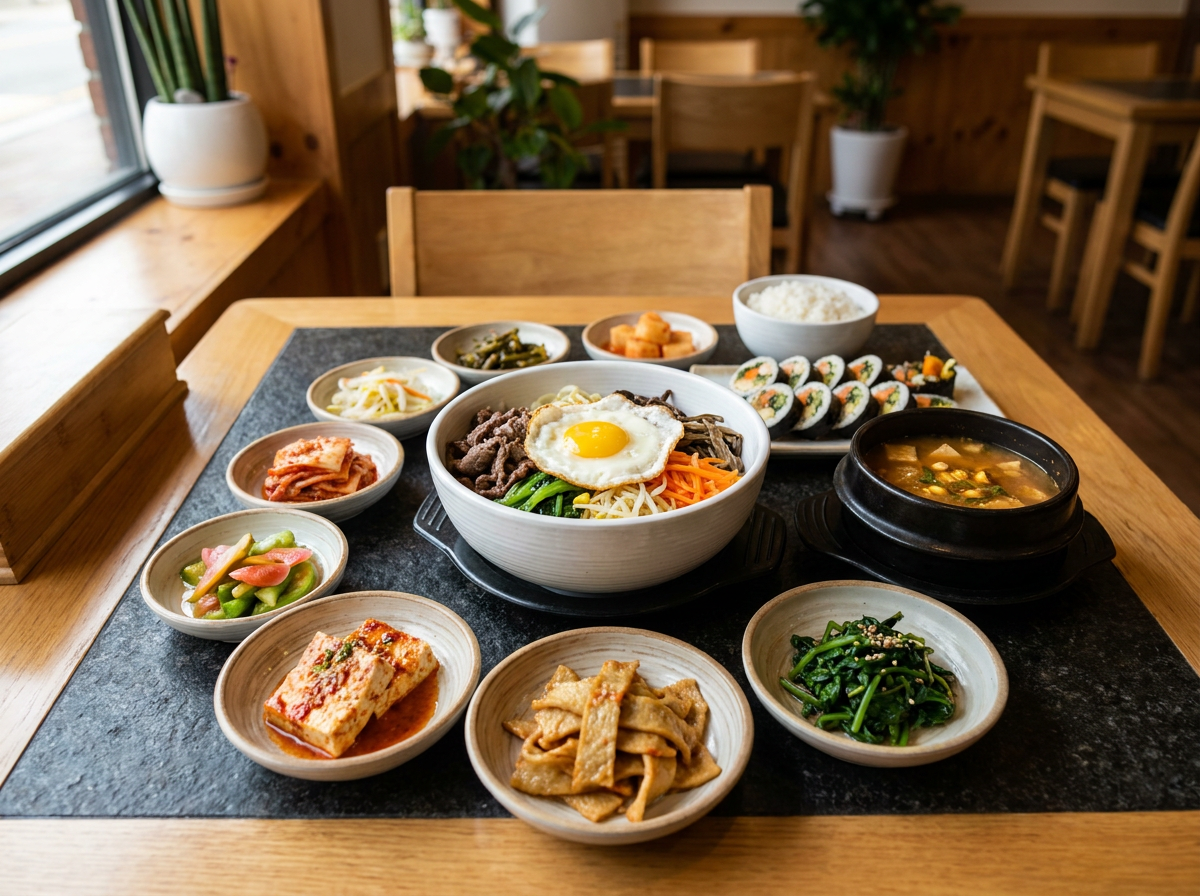
Deira is the easiest budget starting point. Mukbang Shows Deira on Al Ittihad Rd is a short taxi ride from the Deira City Centre and Al Rigga areas, surrounded by budget hotels and office workers who want fast Korean food. Parking is straightforward, though traffic near the airport can snarl at rush hour.
Jumeirah Lakes Towers (JLT) has two strong casual options. HYU in Cluster O and Mashisoyo in Cluster G are both near the JLT/DMCC metro area, with a lakeside promenade for an evening stroll. The mix of young professionals and families keeps both busy from lunch through late dinner, and delivery from here reaches Dubai Marina quickly.
Dubai Marina and JBR give you Mukbang Shows JBR at Plaza Level, Bahar 3 on The Walk, with the Dubai Tram running nearby and the beach a short walk away. The branch trades slightly higher rent for the location but keeps the same AED 53-62 bibimbap pricing; weekends draw hotel crowds.
Palm Jumeirah is the premium zone. HANU sits on the St Regis Gardens rooftop, reached by taxi or the Palm Monorail plus a short walk, with valet parking and a resort atmosphere. This is the spot for a celebration or the full stone-pot experience with skyline views.
The Greens suits those living or working along Sheikh Zayed Road. Seoul Street & 1004 Gourmet inside Onyx Tower 1 is near the Dubai Internet City metro area, and the attached Korean grocery lets you buy gochujang or banchan to cook the dish at home. It is a quieter residential feel than JLT or Marina.
Al Hudaiba and Al Mina Road near Satwa give the most traditional neighbourhood vibe. Mannaland in Shop 5, Al Ketbi Building sits among Satwa’s budget hotels and mixed Filipino, Indian and Arab communities. Street parking is usually possible but fills fast. Prices stay reasonable and portions large — typical of older Korean restaurants.
Downtown and Business Bay residents use Love Mukbang at DWTC. The Apartments Block A on Sheikh Zayed Road is directly opposite World Trade Centre metro station, with paid parking in the building or nearby garages. Metro access makes it the most convenient branch for tourists staying in Downtown hotels. During Ramadan, several branches adjust timings and add iftar sets that include bibimbap.
Practical ordering tips
Decide between bowl and stone pot before you pick the restaurant. If you specifically want the crispy crust and sizzle, book HANU and expect around AED 145 for the bibimbap alone. Everyone else should start with Mukbang, where the four clear versions remove the guesswork. Mention “no spice” or “extra gochujang” when ordering — staff adjust the heat without fuss.
Pair the bowl intelligently. At Mukbang the bibimbap works as a shared starter before the AYCE BBQ: order one per two people, then load the grill with beef and chicken. At HYU or Mannaland, order the bibimbap with one stew such as kimchi jjigae and a couple of sides for a complete meal around AED 110-160, so it never feels like you are eating only rice.
Handle dietary needs early. Mukbang’s 100% halal menu makes it the safest default for mixed groups. Ask for no egg to make a bowl vegan; most places swap in extra mushrooms or tofu at no charge. Seoul Street’s mushroom bibimbap already leans vegetarian. Confirm directly with HANU, since a licensed venue may share equipment.
Use delivery apps wisely. Mashisoyo and Mukbang both deliver reliably across JLT, Marina and Downtown, and bibimbap travels better than stone-pot versions because it does not rely on residual heat. Ask for the gochujang and egg on the side so the rice stays dry in transit, and add tteokbokki or Korean fried chicken to clear the app’s minimum. Aim for before 11:30am or after 9pm to dodge the worst queues.
FAQ
What is the cheapest bibimbap in Dubai?
Seoul Street & 1004 Gourmet in The Greens starts from roughly AED 30. Mukbang’s vegetable bowl at AED 56 is the next reliable low price with guaranteed halal ingredients.
Does anywhere serve dolsot stone-pot bibimbap?
HANU on Palm Jumeirah serves a proper hot stone-pot version with a crisp rice crust for around AED 145. Mukbang uses regular ceramic bowls.
Is vegetarian bibimbap widely available?
Yes. Mukbang’s vegetable bowl (AED 56), Seoul Street’s mushroom version and Mannaland’s vegetarian option all skip meat, and most venues substitute tofu or extra vegetables on request.
Which branch of Mukbang is best for bibimbap?
Deira on Al Ittihad Rd has the largest space and fastest service. JBR and DWTC work well if you are already in Marina or Downtown.
Can I order bibimbap as part of AYCE?
Yes, at Mukbang Shows the rice and bibimbap are included in the AED 69-129 AYCE BBQ sets, with a two-person minimum.
Are there licensed Korean restaurants with bibimbap?
HANU is licensed and serves alcohol. The other venues listed are alcohol-free — confirm current policy directly, as rules can change.
The best bibimbap in Dubai comes down to whether you prioritise price and halal clarity or stone-pot theatre. Mukbang Shows Deira wins for most residents on quality, cost and convenience — try the chicken bowl first, then treat yourself to the dolsot upgrade at HANU when the occasion calls for it.
Related guides
More from our Korean food guides across the UAE:
- dupbap vs Kabsa
- bibimbap vs Donburi
- korean Lunch Box Dubai
- bibimbap vs Poke Bowl
- best Dupbap in Dubai
- best Korean Fried Rice in Dubai
Mukbang Shows pricing: our all-you-can-eat sets start from AED 69 per person at Deira and Abu Dhabi, and AED 79 at JBR and Dubai World Trade Centre. See the full price list for every set and branch.
Comments are closed.