Discover the Golden, Crispy Magic of Korea’s Most Beloved Seafood Pancake
Close your eyes and imagine this: the sizzle of a cast-iron griddle, the unmistakable aroma of fresh seafood mingling with scallions and sesame oil, and the golden-brown transformation of a simple batter into something extraordinary. This is the essence of haemul pajeon, one of Korea’s most iconic and utterly irresistible street foods that represents centuries of culinary tradition meeting modern indulgence.
Haemul pajeon—literally “seafood pancake”—is far more than a simple dish. It’s a celebration of Korea’s coastal heritage, a testament to the country’s mastery of seafood preparation, and an experience that engages all your senses in ways few foods can. Whether enjoyed at a bustling street corner stall in Seoul’s fish markets, at a traditional Korean restaurant, or at Mukbang Shows Korean BBQ & Seafood Restaurant across our five UAE locations, haemul pajeon represents the very best of Korean street food culture: humble ingredients elevated through technique, tradition, and passion.
At Mukbang Shows, we’ve perfected the art of haemul pajeon, crafting each pancake with the same dedication to authenticity and quality that has made our rabokki legendary across Dubai and Abu Dhabi. This comprehensive guide will take you on a journey through one of Korea’s most craveable dishes, exploring its history, components, variations, and the reasons why people return again and again, unable to resist its golden, crispy charm.
What is Haemul Pajeon? Understanding the Masterpiece
Haemul pajeon represents the Korean interpretation of savory pancakes, but calling it a “pancake” fails to capture the sophistication and complexity of this beloved dish. The word “pajeon” comes from “pa” (scallion/green onion) and “jeon” (pan-fried item), though modern haemul pajeon has evolved far beyond these simple components.
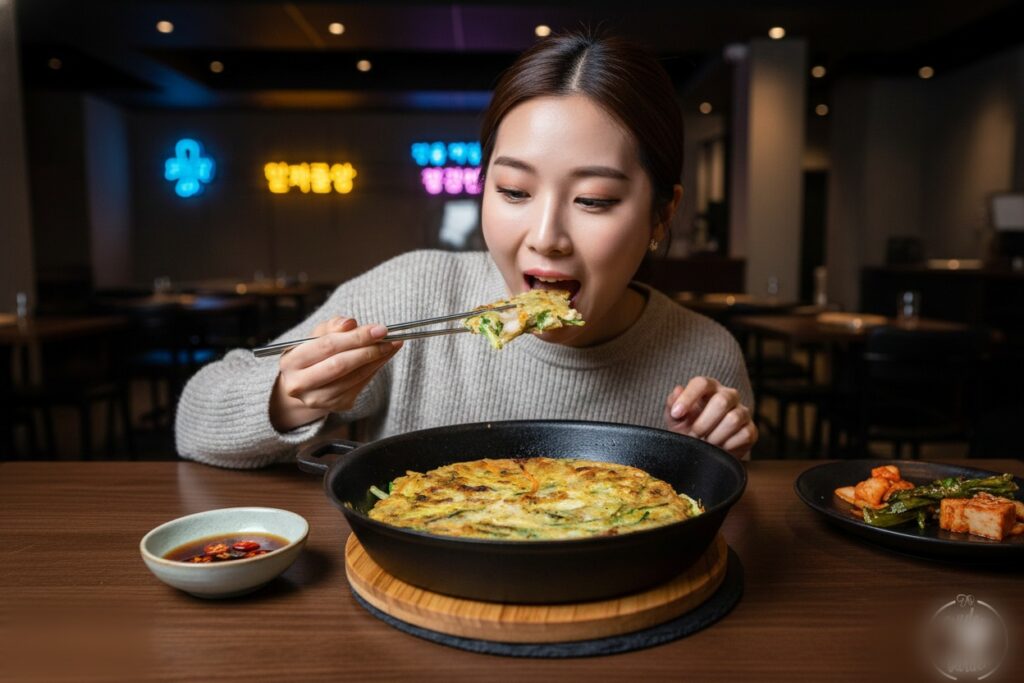
At its foundation, haemul pajeon consists of a delicate batter—typically made from wheat flour, cornstarch, water, eggs, and sometimes rice flour—that’s enriched with a spectacular array of seafood. Fresh shrimp, squid, mussels, clams, and sometimes fish are combined with crisp scallions, creating a mixture that’s then poured onto a hot, oil-slicked griddle or cast-iron pan. As it cooks, the batter develops an impossibly crispy exterior while maintaining a tender, almost creamy interior, enveloping the seafood in layers of textural complexity.
The magic of haemul pajeon lies in its textural contrast. When properly executed, each bite offers crispy, lacy edges that shatter between your teeth, a tender but structured interior, succulent pieces of seafood, the subtle crunch of scallions, and the nutty richness of sesame oil that binds everything together. It’s this interplay of textures and flavors that makes haemul pajeon fundamentally more interesting than it initially appears.
The dish is traditionally served with a dipping sauce—a simple but essential combination of soy sauce, rice vinegar, water, and red chili flakes—that cuts through the richness while adding brightness and heat. This sauce isn’t merely an accompaniment; it’s integral to the complete experience, balancing every component and refreshing your palate with each bite.
The Historical Journey: From Market Staple to Global Icon
Understanding haemul pajeon’s present requires appreciating its past. Pajeon itself has roots reaching back centuries in Korean culinary history, originally emerging as a way to use seasonal ingredients and transform humble components into something worthy of royal courts and special celebrations. Early versions were often simpler, featuring whatever vegetables or proteins were available at the moment.
However, haemul pajeon as we know it today—the spectacular seafood version loaded with premium ingredients—emerged primarily in the 20th century as Korea’s coastal cities developed robust fishing industries and Korean restaurants sought to showcase the abundance of the sea. Busan, Korea’s largest port city, became particularly famous for its haemul pajeon, with specific restaurants building legendary reputations based on their versions of this dish.
The real explosion in haemul pajeon’s popularity came through Korea’s rapid modernization and the emergence of pojangmacha (street food tents and stalls) culture in the 1960s and beyond. Street vendors discovered that haemul pajeon could be prepared quickly, served in portions, and sold at prices accessible to working-class Koreans. The dish became associated with Korean drinking culture—traditionally paired with makgeolli (rice wine) or soju—and gained an almost mythical status as the ultimate comfort food for late-night meals after drinking with friends.
The 1990s and 2000s saw Korean cuisine gaining international recognition, and haemul pajeon became an ambassador for Korean food culture worldwide. Korean restaurants from New York to London, Singapore to Sydney, built strong reputations partly on their execution of this classic dish. Today, haemul pajeon stands alongside bibimbap, bulgogi, and kimchi as one of Korea’s most recognizable and beloved culinary exports.
The Perfect Anatomy: Deconstructing Haemul Pajeon Excellence
Creating truly exceptional haemul pajeon requires understanding each component and how they interact to create the final masterpiece. Let’s examine what separates good haemul pajeon from truly extraordinary versions:
The Batter: Foundation of Perfection
The batter is where haemul pajeon’s magic begins. Unlike Western pancake batters that aim for fluffiness through leavening, pajeon batter targets a completely different result: crispiness through a carefully calibrated ratio of flour to liquid. The ideal batter is thinner than western pancake batter—almost crepe-like in consistency—allowing it to spread thinly across the hot griddle while still maintaining enough structure to hold ingredients.
Traditional pajeon batter typically uses wheat flour as the base, combined with cornstarch (which contributes to crispiness), water, eggs, and sometimes a small amount of rice flour. The ratios are crucial: too much flour creates a dense, tough pancake; too little results in a batter that won’t hold together. Premium establishments often add a touch of dashi (seafood stock) instead of plain water, elevating the flavor profile significantly.
The mixing technique matters as well. Overmixing develops gluten, making the pancake tough and chewy rather than tender and crispy. Expert cooks mix just until combined, keeping the batter relatively rustic. Some incorporate baking soda for extra crispiness, while others rely purely on the ratio and heat management for that crucial textural element.
The Seafood: Celebrating the Ocean
The seafood selection is what transforms pajeon into “haemul” pajeon. The best versions showcase a diverse array of premium seafood, each chosen for its flavor, texture, and ability to complement the others. Traditional combinations typically include:
Shrimp (새우) – Usually medium to large, shrimp bring sweetness and a firm, satisfying texture that contrasts beautifully with the crispy batter.
Squid (오징어) – Sliced into thin rings, squid adds umami depth and a pleasant chewiness that’s neither tough nor mushy when properly prepared.
Mussels (홍합) – Often included as small pieces or half shells, mussels contribute briny, oceanic notes that intensify the seafood character.
Clams (조개) – When included, clams add concentrated umami and a tender texture that practically melts in your mouth.
Fish (생선) – Premium versions sometimes include thin slices of white fish, adding delicate flavor without overwhelming the palate.
The quality of the seafood is non-negotiable. Haemul pajeon made with fresh, high-quality seafood tastes dramatically different from versions using frozen or lower-grade ingredients. The difference registers immediately on the palate—fresh seafood sings with sweetness and clean flavor, while compromised ingredients taste vaguely off, lacking vibrancy and character.
The Aromatics: Building Depth
Beyond seafood, the aromatic components build complexity:
Scallions (파) – The primary vegetable component, scallions provide fresh, sharp notes that cut through richness. They’re typically chopped into 1-2 inch pieces and distributed throughout the batter, emerging from the finished pancake as crispy, flavorful shards.
Sesame Seeds (깨) – Scattered on top of the haemul pajeon during cooking, sesame seeds add nutty flavor and visual appeal. The warmth causes them to release their oils, intensifying their character.
Sesame Oil (참기름) – Used both in cooking and finishing, sesame oil adds the distinctive Korean flavor that ties everything together.
Garlic (마늘) – Some versions incorporate minced garlic into the batter itself, adding pungent depth.
The Cooking Method: Where Technique Matters Most
How haemul pajeon is cooked matters as much as the ingredients. Traditional Korean restaurants cook pajeon on a large, flat griddle or in a shallow pan with sufficient oil—not deep-fried, but with enough oil to create that crucial crispy exterior while the top remains relatively dry and tender.
The heat management is critical. Too-high heat burns the exterior before the interior cooks through; too-low heat results in an oil-soaked, soggy pancake. Expert cooks maintain a medium-high temperature, ensuring the batter sets quickly while the seafood cooks gently. The first side is cooked until deeply golden and crispy—usually 4-5 minutes—then carefully flipped to cook the second side until similarly crispy.
The flip itself is an art form. It requires confidence and timing: flip too early and the pajeon falls apart; flip too late and it burns. Professional cooks make it look effortless, executing a quick, decisive flip that rotates the pajeon perfectly.
The Sauce: The Essential Complement
The dipping sauce might seem like an afterthought, but it’s essential to the complete haemul pajeon experience. The traditional mixture is deceptively simple: soy sauce, rice vinegar, water, and red chili flakes (gochugaru). The proportions vary by preference and region, but typically aim for a balance where none of the components overwhelm—the result should taste savory, slightly sour, and gently spicy.
Some versions add a touch of sugar to balance acidity, while others incorporate sesame seeds or crushed garlic. The key is making a sauce that complements rather than masks the delicate flavors of the seafood and crispy batter. It should refresh your palate and add brightness without overwhelming the dish’s inherent qualities.
Haemul Pajeon Variations: Exploring Endless Possibilities
While traditional haemul pajeon represents perfection to many, creative chefs and vendors have developed fascinating variations that expand the category while respecting its essential character:
Premium Seafood Pajeon
Using only the finest, freshest seafood—often including premium items like scallops, sea urchin, or premium white fish—creates an elevated version suitable for upscale dining. These versions often feature larger pieces of seafood, visible and celebrated in the final dish, and might be served with more refined accompaniments.
Vegetable and Seafood Pajeon
Some regional variations combine seafood with additional vegetables—kimchi, mushrooms, bell peppers, or zucchini—creating more texture and flavor complexity while perhaps making the dish slightly more balanced nutritionally.
Cheese Haemul Pajeon
A modern fusion variation that incorporates melted cheese—either mozzarella or Korean cheese products—into the pajeon, creating a creamy richness that appeals to contemporary palates while maintaining the fundamental appeal of the original.
Mini Pajeon (비트 파전)
Individual, smaller portions of pajeon that are perfect for appetizers or tasting experiences. These might be served in a more refined restaurant setting and often feature more carefully arranged seafood presentations.
Spicy Haemul Pajeon (매운 파전)
Instead of serving spice in the dipping sauce, some versions incorporate gochujang or additional chili directly into the batter or top of the pajeon, creating inherent heat throughout the dish rather than relying on the sauce.
Crispy Haemul Pajeon with Soft Center
A modern variation focusing on extreme textural contrast—a deliberately extra-crispy exterior with an intentionally soft, almost custardy center, requiring specific technique and heat management to execute.
The Cultural Significance: Beyond a Simple Dish
Haemul pajeon’s importance in Korean culture extends far beyond its culinary merits. The dish represents several fundamental aspects of Korean food culture and society:
Symbol of Coastal Heritage
Haemul pajeon celebrates Korea’s relationship with the sea and the central role fishing and seafood play in Korean identity. The dish represents the abundance of Korean waters and the skill of Korean fishermen in bringing quality seafood to tables.
Community and Social Bonding
Haemul pajeon is traditionally a communal food, served on shared platters and eaten together. The act of sharing pajeon—tearing off pieces, dipping in sauce, and eating together—facilitates conversation and connection. It’s the food of pojangmacha (street food tents), where strangers become friends over soju and pajeon.
Democratization of Quality
Like many street foods, haemul pajeon represents the Korean achievement of making quality, delicious food accessible to people across all economic levels. You can eat excellent haemul pajeon for modest prices at street vendors, elevating the everyday dining experience.
Connection to Drinking Culture
Haemul pajeon has deep connections to Korean drinking culture, traditionally paired with makgeolli or soju. This pairing isn’t incidental—the richness of the pajeon balances the sharpness of alcohol, while the alcohol cleanses the palate between bites. The combination represents a complete, balanced sensory experience.
Flavor Profile: A Masterclass in Balance
Describing haemul pajeon’s flavor accurately requires moving beyond simplistic characterizations. The finest versions operate on multiple levels simultaneously:
The immediate impression is savory richness: the umami from seafood and sesame oil creates a foundational depth. But this isn’t heavy or cloying; the crispiness of the batter provides textural relief, and the scallions offer fresh, sharp counterpoints.
The secondary flavors emerge as you eat: sweetness from the shrimp and batter, subtle oceanic notes from the squid and mussels, the nuttiness of sesame seeds and oil, a gentle aromatic quality from the scallions. These flavors don’t compete; they layer, creating a sophisticated whole that’s more interesting than any individual component.
The dipping sauce adds brightness: the tartness of vinegar cuts through richness, the saltiness of soy sauce intensifies the savory character, the subtle heat from chili flakes adds complexity without overwhelming. Each bite dipped in sauce feels like a slight flavor reset, preventing palate fatigue.
The textural experience contributes fundamentally to flavor perception: crispy, shattered batter contrasts with tender seafood and soft batter interior; the crunch of sesame seeds and scallions adds interest; the creaminess of cooked seafood provides indulgence.
The aftertaste is pleasant and lingering: sesame oil leaves a subtle coating that’s satisfying rather than heavy, and seafood umami creates a savory finish that encourages another bite.
Health Perspectives: Indulgence with Nutritional Substance
Haemul pajeon offers more nutritional value than its indulgent reputation suggests. The dish typically delivers:
High-quality protein from the abundant seafood, supporting muscle development and satiety
Omega-3 fatty acids from fish, squid, and other seafood, known for cardiovascular and cognitive benefits
Minerals including iodine, selenium, and zinc from seafood
Carbohydrates from the batter providing energy
Vegetables from scallions adding vitamins, minerals, and fiber
Antioxidants from sesame seeds and sesame oil
Of course, haemul pajeon is also cooked in oil, making it calorie-dense and high in fat. The sodium content is notable, particularly from the soy sauce-based dipping sauce. Like most street foods, it’s best enjoyed as part of a balanced diet rather than as an everyday staple. However, the fundamental composition is more balanced than many indulgent foods, with genuine nutritional value alongside undeniable pleasure.
The Global Spread: Haemul Pajeon Conquers the World
What began as a Korean coastal specialty has begun spreading internationally, following patterns similar to haemul pajeon’s earlier explosion in popularity domestically. Korean restaurants worldwide now feature haemul pajeon prominently, often as a signature dish that distinguishes establishments from competitors.
This globalization has led to fascinating regional adaptations. Some versions incorporate local seafood, others adjust spice levels for local preferences, and a few experiment with entirely new flavor combinations while respecting the essential pajeon structure. In each location, haemul pajeon has found enthusiastic audiences, suggesting its appeal transcends cultural boundaries.
Experiencing Haemul Pajeon at Mukbang Shows
At Mukbang Shows Korean BBQ & Seafood Restaurant, we’ve dedicated considerable effort to creating the definitive haemul pajeon experience in the UAE. Our approach honors traditional Korean preparation methods while ensuring consistency and quality across all five of our locations.
Our Haemul Pajeon Philosophy
We believe authentic haemul pajeon requires three essential elements: premium, fresh seafood that hasn’t been compromised through inferior sourcing or storage; precise technique that comes from understanding the dish’s fundamentals and executing them flawlessly each time; and genuine passion for creating something that brings joy to our customers.
Our seafood is sourced from trusted suppliers who understand our standards. We inspect everything personally, refusing any items that don’t meet our criteria. Our cooking is handled by experienced staff trained extensively in proper heat management, timing, and technique. We don’t rush the process—each haemul pajeon is cooked with the same care and attention we’d apply if serving our own families.
The Mukbang Shows Difference
Across our five locations—Muroor Road and Electra Street in Abu Dhabi, and Deira, JBR, and Dubai World Trade Centre in Dubai—you’ll experience consistent excellence in haemul pajeon preparation. We’ve standardized our recipes to ensure that whether you visit one location or all five, your experience is equally excellent.
We use premium dashi (seafood stock) in our batter, providing depth that plain water simply cannot achieve. Our seafood selection is generous and carefully balanced—each type is present in sufficient quantity to contribute meaningfully to the overall dish. Our dipping sauce is made fresh daily, balanced to perfection.
Premium Variations at Mukbang Shows
Beyond our signature haemul pajeon, we offer carefully developed variations:
Premium Haemul Pajeon – Featuring additional premium seafood including scallops and larger shrimp, this version elevates the experience while respecting traditional preparation.
Spicy Haemul Pajeon – For those who prefer inherent heat, we incorporate gochujang into the batter and top the finished pajeon with additional chili, creating a deeply spiced version that’s still balanced and not brutally hot.
Vegetable & Seafood Pajeon – Combining traditional haemul pajeon with carefully selected vegetables including kimchi and mushrooms, this variation adds complexity without overwhelming the seafood.
Mini Haemul Pajeon – Individual portions perfect for appetizers or tasting experiences, allowing for variety in a single meal or group dining experience.
How to Eat Haemul Pajeon: Technique and Appreciation
While haemul pajeon is fundamentally casual food, eating it well enhances the experience significantly:
The Setup
Your haemul pajeon arrives on a traditional Korean porcelain plate, golden and steaming, with a small bowl of dipping sauce alongside. Take a moment to appreciate the presentation—the golden-brown color, the visible pieces of seafood peeking from the batter, the scattered sesame seeds. This isn’t just aesthetics; it’s part of the sensory experience that creates satisfaction.
The Cutting Technique
Using scissors (the traditional Korean approach) or a knife, cut the haemul pajeon into manageable pieces—typically bite-sized or slightly larger. Don’t cut too small; each piece should contain multiple components—batter, seafood, scallion—to deliver the complete experience.
The Dipping and Eating
Dip each piece into the sauce, ensuring it’s well-coated but not oversaturated. Place it in your mouth and notice the textures: crispy exterior shattering, tender interior giving way, seafood offering resistance then yielding, scallion fragments providing crunch. Don’t rush—appreciate each component’s contribution to the whole.
The Pacing
Eat at a moderate pace, allowing flavors to fully develop and register. Savor the contrast between crispy and tender, between rich seafood and bright sauce, between savory and slightly spicy. Space your bites to avoid palate fatigue; you should remain excited about each piece throughout the meal.
The Pairing
Traditionally, haemul pajeon pairs beautifully with Korean beverages—makgeolli (rice wine), soju, or even Korean beer. If avoiding alcohol, cold Korean beverages like sikhye or even simple cold water provide pleasant contrast. The interaction between pajeon’s richness and these beverages creates a complete experience greater than any component alone.
Why People Crave Haemul Pajeon: The Psychology of Obsession
Beyond flavor and nutrition, haemul pajeon’s popularity reflects deeper psychological appeals:
Multisensory Engagement – The experience engages all senses: visual appeal of golden-brown perfection, aroma of seafood and sesame oil, sound of the sizzle as it cooks, variety of textures from crispy to tender, complex flavors that evolve through the eating experience.
Textural Sophistication – The multiple textures at play—crispy, tender, chewy, crunchy—engage your mouth in ways that keep the eating experience dynamic and interesting.
Comfort with Sophistication – Haemul pajeon feels like accessible comfort food while delivering surprising sophistication in its preparation, ingredient quality, and flavor complexity.
Interactive Experience – The practice of cutting, dipping, and eating pajeon is more interactive than simply consuming a plated dish, creating a sense of agency and engagement.
Cultural Connection – Eating haemul pajeon connects diners to Korean culture, history, and culinary tradition. There’s satisfaction in participating in something with deep cultural roots.
Sensory Novelty – The combination of flavors and textures is unusual enough in global cuisine that it offers novelty while being immediately pleasurable.
Conclusion: The Timeless Appeal of Haemul Pajeon
Haemul pajeon represents something special in global food culture: a dish deeply rooted in coastal tradition yet universally appealing, humble street food yet capable of delivering genuine sophistication, simple in concept yet complex in execution. Whether you’re exploring Korean cuisine, seeking authentic street food experiences, or simply hungry for something that combines incredible flavors with textural sophistication, haemul pajeon delivers on every level.
The appeal of haemul pajeon transcends any single factor. It’s not just the premium seafood, though that certainly matters. It’s not purely the textural contrast, though that’s certainly part of the magic. It’s not simply the cultural significance, though that adds depth. Rather, it’s the total sensory experience—the way all elements work together to create something genuinely greater than the sum of its parts.
At Mukbang Shows Korean BBQ & Seafood Restaurant, we invite you to discover why haemul pajeon has maintained its beloved status in Korean culture for decades and is now earning passionate followers worldwide. Visit any of our five locations and experience the golden, crispy perfection that defines authentic haemul pajeon prepared with premium ingredients and traditional technique.
Whether you choose our signature version or explore one of our variations, you’re embarking on a culinary journey that connects you to centuries of Korean coastal tradition while satisfying immediate, primal cravings for something delicious, satisfying, and utterly memorable.
The next time you’re seeking Korean street food that’s crispy, savory, loaded with premium seafood, and absolutely addictive, remember: haemul pajeon isn’t just food—it’s an experience, a celebration of ocean bounty, and a gateway into the heart of Korean food culture.
Visit Mukbang Shows today and discover why haemul pajeon is Korea’s most legendary seafood dish.
Mukbang Shows Locations
Abu Dhabi:
- Muroor Road: 547 Sultan Bin Zayed The First St, Al Danah, Zone 1 | +971-50-158-9433
- Electra Street: Zayed The First St, behind Sun and Sand Sports, Al Danah, Zone 1 | +971-2-564-0446
Dubai:
- Deira: Al Ittihad Rd, Port Saeed, Deira | +971-4-886-4494
- JBR: Plaza Level, Bahar 7 – Unit P33 – The Walk – Marsa Dubai, Jumeirah Beach Residence | +971-54-523-1898
- Love Mukbang (Dubai World Trade Centre): The Apartments Block A, Sheikh Zayed Rd, opposite metro station | +971-54-524-5904
Experience authentic Korean street food culture at Mukbang Shows.